

We may earn a commission when you buy through links on this page, at no extra cost to you. Learn more.
In Switzerland’s Valais canton, valais vineyards form a chain of sunny, terraced slopes along the upper Rhône and produce distinctive Alpine wines. Leading grapes include Fendant, Petite Arvine, Heida, Cornalin and Humagne Rouge. The vines rise from the river valley to about 1,100 meters, giving the region an unusual range of growing conditions.
Valais is not a single, uniform vineyard but a succession of villages, slopes and side valleys in Switzerland’s southwest. A useful introduction starts with the landscape, then moves through the grapes and wine styles that give each place its character. For a broader framework on comparing origins, start with our Wine Regions overview.
Where the Valais Vineyards Follow the Rhône
The vineyard belt runs for roughly 100 kilometers beside the Rhône, from Lower Valais in the west toward Upper Valais in the east. Most plantings occupy sun-facing slopes above the valley floor, with a patchwork of villages, terraces and smaller side valleys rather than one continuous estate landscape.
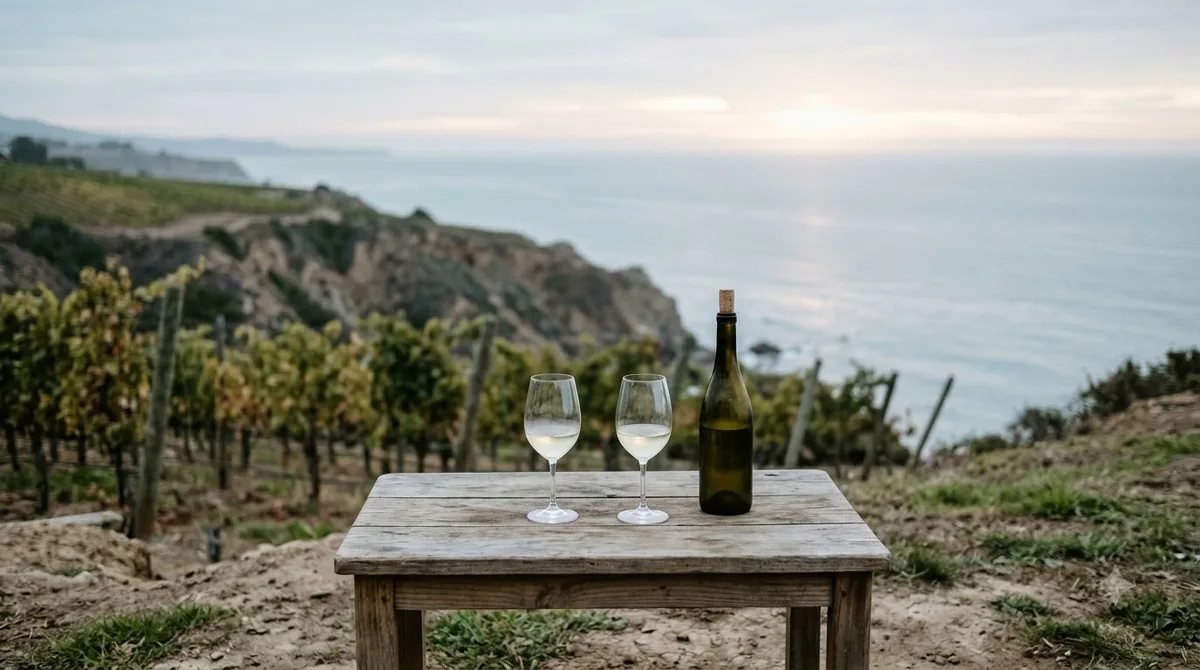
Switzerland Tourism places the vineyards between about 270 and 1,100 meters above sea level. On the main valley’s right bank, important wine villages include Fully and Chamoson in the west, Conthey and Sion in central Valais, and Salgesch farther east. Smaller vineyard areas also occupy the left bank, while vines climb into side valleys around Visperterminen. The long elevation range means that a sunny lower slope and a high site near the mountains can give the same grape very different growing conditions.
Each locality has a distinct point of reference. Fully is associated with Petite Arvine, the terraces above Sion with the Bisse de Clavau irrigation channel, and Visperterminen with Heida, the local name for Savagnin Blanc. Salgesch, also called Salquenen, is a useful place to explore Pinot Noir. The village, grape and producer each add context to a bottle.
Valais represents about one third of Switzerland’s vineyard area, according to Swiss Wine Promotion, but the holdings remain divided among many small plots. A route between Martigny, Fully, Sion and Salgesch reveals a sequence of local styles. Readers comparing regional identities may also enjoy the contrast with the tasmania vineyards, where cool maritime conditions create a very different setting.
Alpine Weather, Terraces and Vineyard Soils
Valais combines a dry, sunny climate with high slopes and an effective natural wind pattern. Swiss Wine Promotion reports approximately 650 millimeters of annual rainfall and 2,500 hours of sunshine, while warm foehn winds help late-ripening grapes reach maturity.
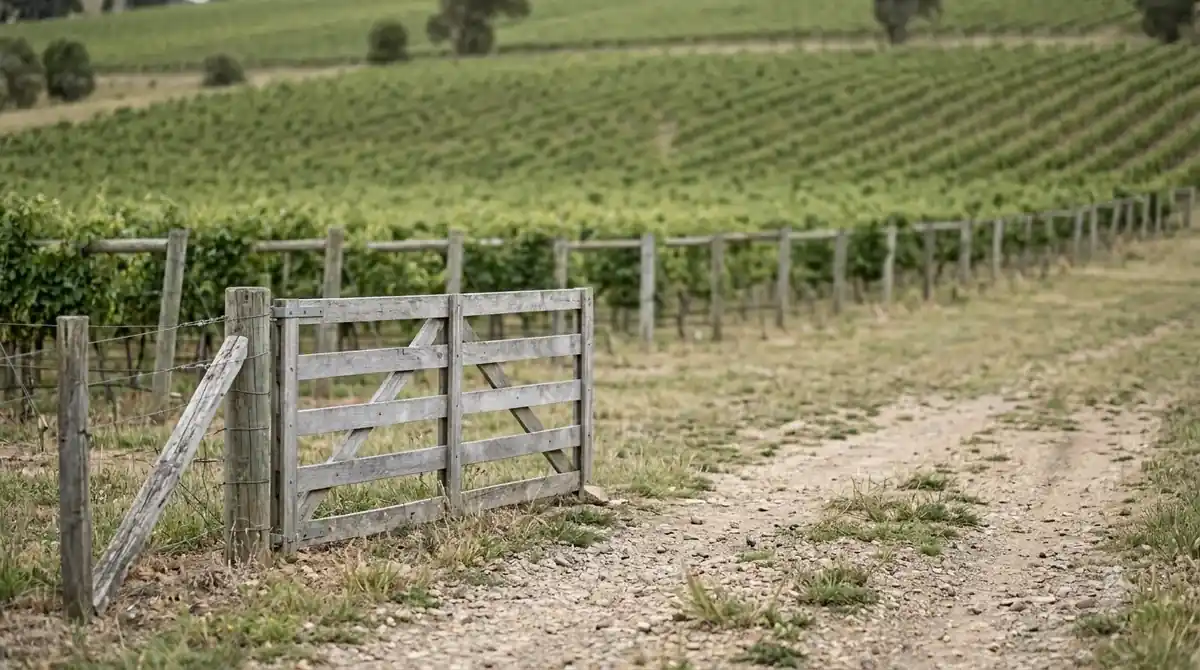
The Rhône valley is sheltered by the Alps, and many of its best-known vineyards face south to capture sunlight. On steep land, growers work terraces supported by dry-stone walls. The walls retain soil and make cultivation possible on slopes that would otherwise be difficult to farm. They also shape the look of the region: narrow vine rows, stone-built edges and abrupt changes in elevation are part of the everyday vineyard scene.
Historic irrigation channels called bisses carry water from mountain sources, including glacial streams, toward the vineyards. They matter in a region with limited rainfall and intense summer sunshine, and paths beside them provide a close look at how water, villages and vine terraces fit together.
Soils vary by slope and village. Decanter names limestone, granite, schist and loess among the area’s principal types. Combined with differences in altitude and exposure, these soils help explain why Valais produces both aromatic whites and structured reds. Terraces are also difficult to mechanize, so vineyard work often depends on careful hand labor. This contrasts with more gently rolling landscapes such as the chianti classico vineyards, where hillside exposure matters but the terrain and grape mix differ.
The White Grapes Behind Valais Wine
Valais has 31 white grape varieties authorized under its AOC system, but a handful explain much of its identity. Fendant, Petite Arvine, Heida and Johannisberg show the range, from easy-drinking and gently textured wines to whites with pronounced acidity, body and age potential.
Fendant: the local name for Chasselas
Fendant is Valais’s name for Chasselas, a grape associated with fresh, restrained wines. Its aromas are often subtle, leaving room for floral, orchard-fruit and mineral impressions shaped by the site. Some examples carry a light spritz. Fendant is a natural opening wine for a tasting because its modest aromatic weight makes it easy to compare with the more assertive whites that follow.
Petite Arvine: citrus, acidity and a salty finish
Petite Arvine is the signature white grape most closely identified with Valais. The regional tourism authority describes dry versions with grapefruit and floral notes, bright acidity and a savory edge. Wine Enthusiast outlines three broad expressions: a fresh, dry style fermented in stainless steel; a richer version aged in neutral barrels; and a late-harvest wine that balances sweetness with acidity. The grape is early-budding but late-ripening, which makes site selection and vineyard timing especially important.
Its strong regional link is clear in the planting figures: Wine Enthusiast reports that 99.7 percent of Switzerland’s Petite Arvine plantings are in Valais. Fully is a useful place to look for it, while producers elsewhere in the canton show how changes in exposure and soil can alter the balance between citrus, texture and savory character. The best examples are not defined by acidity alone; they combine freshness with enough concentration to carry the wine through the finish.
Heida and Johannisberg
Heida, also called Païen, is the Valais name for Savagnin Blanc. It is especially associated with Visperterminen, where vines reach about 1,100 meters. Its wines can show citrus and exotic-fruit notes with a lively structure. Johannisberg, meanwhile, is the local name for Sylvaner. It is the second most widely planted white grape in the canton and can produce dry or sweet wines with floral, orchard-fruit and almond characteristics.
Other whites include Amigne, Humagne Blanche and Ermitage, which add richer or sweeter styles. For a first flight, compare Fendant, dry Petite Arvine and Heida to see how much texture and flavor can differ within one Alpine canton.
Red Grapes and the Region’s Signature Bottlings
Red grapes occupy a little more than half of Valais’s vineyard area, with Pinot Noir the leading variety by planted surface. Cornalin, Humagne Rouge, Gamay and Syrah add different levels of fruit, spice and structure to the region’s red-wine selection.
Swiss Wine Promotion lists Pinot Noir at 1,275 hectares, or 28 percent of its grape-area breakdown. Chasselas follows at 755 hectares and Gamay at 457 hectares. Pinot Noir ranges from fresh and light to more structured examples; the chalk-rich soils around Salgesch and Sierre are associated with especially successful expressions.
Cornalin is a distinctive late-ripening red, known for deep color, black-cherry fruit and clove-like spice. Humagne Rouge offers wild-berry, woodland, citrus-peel and violet notes, and the regional tourism authority suggests enjoying it young or after three to five years of storage.
Syrah, introduced to the canton in 1926, has a darker, peppery profile and elegant tannins; strong vintages may age for five to ten years. Gamay is more immediate and fruit-driven, particularly around Fully and Martigny, where granite is a notable feature. Taste Gamay beside Cornalin to compare a lighter red with a deeper local variety.
Valais Wine Styles, Appellations and Key Numbers
AOC Valais covers a wide family of wines rather than one fixed style. The canton recognizes 55 AOC varieties—31 white and 24 red—and Swiss Wine Promotion lists one regional AOC alongside 10 AOC Grand Cru designations.
Grand Cru names identify selected communal wine categories, while the grape name remains a key label detail. The figures below summarize the region’s scale and the planted surface of several leading varieties.
| Measure | Valais figure | What it tells you |
|---|---|---|
| Total vineyard area | About 4,600 hectares | Largest winegrowing region in Switzerland |
| Authorized AOC varieties | 55 | 31 white and 24 red |
| Vineyard plots | 73,000 | A highly fragmented vineyard landscape |
| Grapes harvested | 34 million kilograms | Harvest total reported for 2024 |
| Pinot Noir | 1,275 hectares | Largest variety in the Swiss Wine distribution |
| Chasselas | 755 hectares | Valais’s Fendant grape |
| Gamay | 457 hectares | Important red grape in Lower Valais |
| Petite Arvine | 259 hectares | Leading regional specialty white in the published breakdown |
The region’s tourism authority lists 4,609 hectares, while the grape-area breakdown from Swiss Wine Promotion rounds the acreage of leading varieties. These numbers provide context, not a prediction for an individual bottle: a white from a high parcel may differ from one grown lower in the valley, and Cornalin can vary by village and producer. The AOC name establishes origin and rules; grape, producer and site help explain style.
Valais differs sharply from the more varietally focused regions of uruguay vineyards, a useful comparison of how climate and local grape traditions shape wine identity.
Food Pairings and Serving Valais Wines
Valais wines pair naturally with the canton’s mountain cooking, especially raclette, cured meats, river fish and dishes built around local cheeses. The most reliable matches follow the structure of the wine: bright whites suit salty or rich food, while lighter and more structured reds work with different levels of fat, protein and seasoning.
Fendant is a classic partner for raclette: its refreshing profile cuts through melted cheese without overwhelming it. Petite Arvine works with grilled fish, shellfish or goat cheese, especially when lemon, herbs or salt echo its savory finish. Heida can stand up to roast chicken, toasted nuts and cream-based dishes.
Pinot Noir suits roast poultry, mushrooms and veal, while Cornalin is a stronger fit for grilled lamb, beef or herb-seasoned game. Humagne Rouge can accompany sausages and roast pork; Gamay is flexible with charcuterie and pâté. Avoid pairing tannic Syrah with oily fish, as its structure is better suited to meat or hearty vegetables.
Serve light whites such as Fendant at 45–50 F, fuller whites such as Heida at 50–55 F, and lighter reds such as Pinot Noir at 55–60 F. More structured reds such as Cornalin and Syrah are usually best around 60–65 F. A 5-ounce pour leaves room to assess the wine’s aroma.
Tip: Taste a chilled Fendant first, then Petite Arvine, Heida, Pinot Noir and Cornalin. That order moves from lighter and less aromatic to fuller and more structured, making differences in acidity, texture and tannin easier to recognize.
Balance matters more than a regional rule: wine should be at least as sweet as dessert, and acidic food needs a wine with equal or higher acidity. Salt and fat soften tannin, while chili heat is amplified by alcohol and tannin.
Planning a Visit to Valais Wine Country
A useful visit links several villages rather than trying to cover the entire canton in one day. The Chemin du Vignoble, the vineyard route between Martigny and Saillon, offers a way to see Lower Valais, while Fully, Sion, Sierre and Visperterminen provide different reasons to stop and taste.
In the west, Martigny and Fully are good starting points for Gamay and Petite Arvine. Chamoson and Conthey offer steep terraces, while Sion provides access to the Bisse de Clavau paths. Farther east, Salgesch is linked to Pinot Noir and Visperterminen to high-altitude Heida. Focus on Fully for Petite Arvine or Visperterminen for Heida if time is limited.
Check cellar opening times and tasting arrangements before setting out, particularly at small family wineries. A half-day built around two appointments, a village walk and a local meal is often more satisfying than trying to visit five or six cellars at speed.
Use the grape name on the front label as a first clue, then consider the village, AOC category and producer. Begin with Fendant or Petite Arvine for whites and Pinot Noir or Cornalin for reds; follow with Heida or Humagne Rouge. The regional Swiss Wine Valais overview summarizes the climate and grape distribution, while Wine Enthusiast’s Petite Arvine profile explains the range of styles made from the grape. Two wines made from the same grape may differ because of altitude, soil, harvest timing and cellar decisions, so tasting them side by side is revealing.
Frequently Asked Questions
What does the bee symbol mean on an Amigne de Vétroz label?
The one-, two- or three-bee mark identifies the wine’s sweetness level. The system is specific to Amigne de Vétroz, the local white grape associated with the village of Vétroz. It gives buyers a quick sweetness cue without requiring them to interpret a technical tasting note.
Is Dôle a grape variety or a Valais wine blend?
Dôle is a regional red wine built around Pinot Noir and Gamay, rather than a single grape. Together those two varieties must account for at least 51 percent of the blend, with Pinot Noir in the majority. Producers may add other authorized red grapes, so the exact profile can vary.
What grape is called Ermitage in Valais?
Ermitage is the Valais name for Marsanne, a white grape that arrived in the canton during the 19th century. The name refers to Tain L’Hermitage in France’s Rhône Valley. Valais versions may be dry or sweet, and the richer examples can develop with bottle age.
What does Johannisberg mean on a Swiss wine label?
In Valais, Johannisberg is the local name for Sylvaner. It is the canton’s second most widely planted white grape and grows particularly well on light, schist-rich and gravelly soils. The wine can be made dry or sweet and has the capacity to develop for more than 20 years.
Is Amigne only grown around Vétroz?
Vétroz remains the heart of Amigne production, but the grape is now planted more widely than it was at the start of the 20th century. It is a late-ripening variety that can produce generous wines with orange and mandarin notes. Its loose bunch structure allows air to circulate around the grapes during the growing season.
Valais is best understood as a collection of Alpine sites, not a single house style: Fendant, Petite Arvine and Heida show the range of its whites, while Pinot Noir, Cornalin and Humagne Rouge lead its reds. Start with one village and two or three grapes, and the region’s geography becomes much easier to taste in the glass.
More in Wine Regions
 Willcox Wine Trail: Discover Arizona’s High-Elevation Wine CountryUpdated Nov 20, 2026
 Yakima Valley Wine Region: Find the Best Styles to TryUpdated Nov 20, 2026
 Vosne Romanee Wine Tasting: Identify Aromas and Choose Better PairingsUpdated Nov 20, 2026
 Yakima Valley Wine Festival: Find the Best Seasonal Wine EventsUpdated Nov 20, 2026
 Wales Vineyards: Discover Cool-Climate Wines and Where to VisitUpdated Nov 20, 2026
 Yountville Wine Festival: Discover Napa Wines and Local FoodUpdated Nov 20, 2026