

We may earn a commission when you buy through links on this page, at no extra cost to you. Learn more.
The rutherford wine region is a historic Napa Valley American Viticultural Area (AVA) in California, celebrated for structured Cabernet Sauvignon, distinctive gravelly soils, and its signature Rutherford Dust character. Located between Oakville and St. Helena, this relatively small appellation benefits from warm summer sunshine, cool evenings, and varied vineyard conditions. Its wines are particularly known for concentrated dark fruit, firm yet refined tannins, and earthy complexity that distinguishes them from Cabernet Sauvignon produced elsewhere in Napa Valley.
Rutherford occupies an important place in California wine history. Although its geographic footprint is modest, the area has influenced Napa Valley’s international reputation through historic producers, carefully farmed vineyards, and a recognizable expression of Cabernet Sauvignon. Understanding its geography, soils, grape varieties, and winemaking traditions makes it easier to appreciate what a Rutherford designation means on a wine label.
Where Rutherford Sits in Napa Valley
Rutherford occupies a central position in Napa Valley, between Oakville to the south and St. Helena to the north. Its location at the valley’s widest point provides abundant sunshine, while the surrounding Mayacamas and Vaca mountain ranges influence vineyard exposure, wind, and temperature.
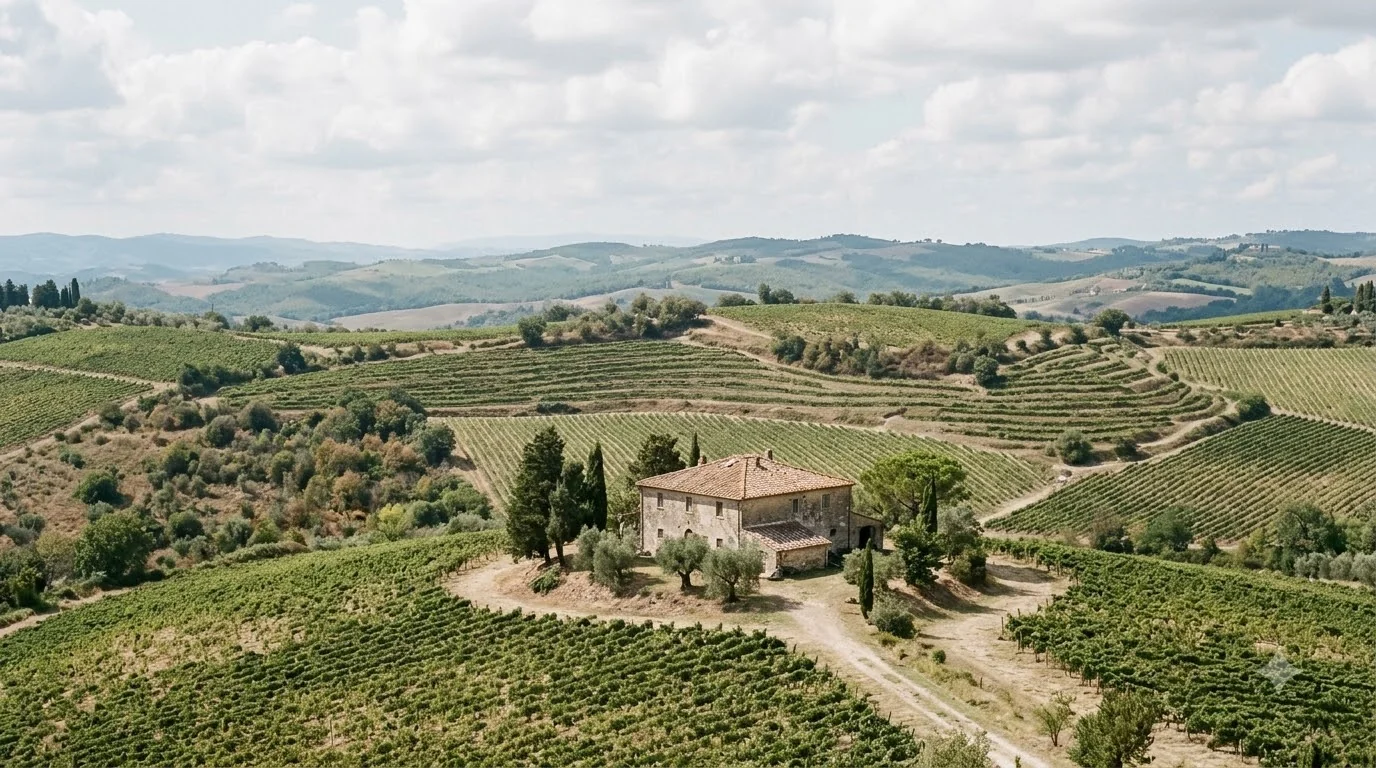
According to the Rutherford Dust Society, the appellation covers approximately 6 square miles. It extends about 3.3 miles from south to north, beginning near Cakebread Cellars and BV Vineyard #2 and continuing to Zinfandel Lane. At its widest point, the growing area stretches approximately 2 miles between Mount St. John on the western side and the Vaca Mountain Range on the eastern side.
Rutherford is part of the larger Napa Valley AVA, but its own designation identifies a more specific growing environment. This distinction matters because Napa Valley contains numerous smaller appellations, each with different elevations, temperatures, soils, and exposures. A Rutherford Cabernet Sauvignon therefore communicates more precise geographic information than a bottle labeled simply Napa Valley.
The area’s elevation ranges from approximately 155 to 500 feet above sea level, according to Napa Valley Vintners. Much of the appellation consists of relatively accessible valley-floor vineyards, although gently rising benchlands and eastern slopes create meaningful differences between individual sites.
Highway 29 runs through the western portion of the area, while Silverado Trail provides another important north-south route through Napa Valley. These roads help orient visitors when comparing Rutherford with neighboring wine-growing communities. The proximity of Oakville and St. Helena also makes it possible to explore several distinct Napa appellations during one regional visit.
Wine drinkers interested in comparing Rutherford with other geographically distinctive appellations can also explore the Savoie wine region and the Switzerland wine region, where elevation, landscape, and local growing conditions create very different expressions of wine.
Climate, Elevation, and Growing Conditions
Rutherford has a moderately warm growing climate with substantial sunshine, occasional morning fog, and cooler evening temperatures. These conditions encourage Cabernet Sauvignon to develop ripe flavors while preserving enough freshness for balanced wines.
The appellation benefits from its position at the widest part of Napa Valley, where vineyards receive considerable solar exposure. Napa Valley Vintners reports that summer temperatures commonly reach the mid-90s Fahrenheit, approximately 35 degrees Celsius. This warmth supports the development of ripe fruit and mature tannins, especially in Cabernet Sauvignon.
However, Rutherford is not simply a uniformly hot growing area. Morning fog can influence temperatures, while marine air and afternoon breezes provide some moderation. The western benchland is particularly affected by the protection of the Mayacamas Mountains, which reduces late-afternoon sun exposure in certain vineyard locations.
Temperature differences between daytime and nighttime are another important feature. The Rutherford Dust Society reports that an average summer day can become approximately 12 degrees Fahrenheit cooler immediately after sunset. This daily temperature change supports a gradual ripening process and helps grapes retain acidity while developing phenolic maturity.
Annual rainfall can reach approximately 38 inches, according to Napa Valley Vintners. Most of the region’s precipitation occurs outside the main summer growing period, so vineyard management and soil water retention play important roles in maintaining healthy vines.
The area’s relatively low elevation also distinguishes it from mountain appellations such as Howell Mountain and Spring Mountain District. Rutherford’s valley-floor conditions generally produce a different balance of ripeness, structure, and concentration than vineyards planted at considerably higher elevations.
| Regional characteristic | Typical figure or condition | Winegrowing significance |
|---|---|---|
| Appellation size | Approximately 6 square miles | Compact growing area with varied vineyard sites |
| North-south length | Approximately 3.3 miles | Distinct local vineyard conditions |
| Elevation | 155–500 feet | Predominantly valley-floor and benchland vineyards |
| Summer daytime highs | Mid-90s°F | Supports ripe fruit development |
| Evening temperature change | Approximately 12°F | Helps preserve freshness during ripening |
| Annual rainfall | Up to 38 inches | Influences vineyard water management |
| AVA recognition | 1993 | Established official appellation identity |
These figures describe the general appellation rather than every individual vineyard. Differences in slope, soil depth, shade, and exposure can produce substantial variation even between neighboring properties.
Rutherford’s Three Distinct Soil Areas
Rutherford’s soil diversity is central to its identity, particularly the gravelly alluvial deposits of its western benchland. The appellation also includes finer river-deposited soils on the valley floor and more volcanic influences toward the eastern side.

The Rutherford Dust Society identifies three principal growing areas: Rutherford Bench, the valley floor, and eastern benchland. Each has a different combination of soil texture, drainage, and vineyard exposure. These distinctions help explain why Cabernet Sauvignon from different Rutherford properties can vary in texture and aromatic character.
Rutherford Bench
The western benchland receives much of its soil material from the Mayacamas Mountains. Ancient streams and geological processes deposited gravel, sand, and sediment across the landscape, creating soils that are generally well drained. The coarsest deposits tend to occur closer to the mountain base, with soil composition changing farther across the fan.
These conditions are particularly suitable for Cabernet Sauvignon. Gravelly soils allow excess water to drain away while encouraging vines to develop deep root systems where soil conditions permit. The resulting wines are frequently associated with concentrated fruit and firm, grainy tannins.
Valley Floor
The valley floor lies between Highway 29 and Silverado Trail, including areas influenced by the Napa River. Its soils contain more fine-grained alluvial and sedimentary material deposited through historical river activity. Soil depth and fertility vary from one vineyard to another.
These sites can produce ripe, generous wines with substantial fruit concentration. Their characteristics depend on water availability, vineyard management, and the particular grape varieties planted.
Eastern Benchland
The eastern side of Rutherford contains more volcanic material, alongside alluvial deposits. Napa Valley Vintners describes these soils as moderately deep and more fertile in comparison with some western benchland sites.
The eastern landscape also includes hills and folds associated with the Vaca Mountain Range. Differences in slope and exposure create smaller growing environments that influence grape development. As a result, eastern Rutherford wines should not automatically be expected to taste identical to those from the western bench.
Tip: When comparing two Rutherford Cabernet Sauvignons, look for vineyard information as well as the appellation name. A wine sourced from western gravelly benchland may show a different tannin texture from one grown on the eastern side or the finer-soiled valley floor.
Cabernet Sauvignon and Other Rutherford Grapes
Cabernet Sauvignon is the defining grape of Rutherford, producing wines known for ripe black fruit, firm tannins, and considerable aging potential. Merlot, Cabernet Franc, and Sauvignon Blanc also contribute to the area’s wine identity.
Cabernet Sauvignon thrives in Rutherford because the combination of warm days, cooler evenings, and well-drained soils supports consistent ripening. Its thick skins and naturally substantial tannins make it particularly suitable for the area’s sunny growing conditions.
Typical Rutherford Cabernet Sauvignon aromas include blackcurrant, blackberry, dark cherry, and plum. More developed examples can show cedar, tobacco, baking spices, dried herbs, and earthy notes. Some wines also develop the bittersweet chocolate and black tea characteristics frequently associated with the local Rutherford Dust description.
In the mouth, these wines generally have medium-to-full or full body, noticeable tannin, and a structured finish. Their fruit concentration can make them appealing relatively young, but their tannin structure and acidity also allow many well-made examples to develop complexity over time.
Merlot
Merlot offers a softer alternative to Rutherford Cabernet Sauvignon. It typically has medium tannin and flavors of ripe plum, black cherry, and red berries. Its rounder texture can make it approachable earlier, particularly when produced without excessive extraction or oak influence.
Cabernet Franc
Cabernet Franc contributes aromatic complexity and structure to Bordeaux-style blends. Common characteristics include red berries, blackcurrant, herbs, and sometimes green pepper or floral notes. In a blend, it can add freshness and aromatic definition to Cabernet Sauvignon’s concentrated fruit.
Sauvignon Blanc
Sauvignon Blanc provides a contrasting white-wine expression. Rutherford’s warmer conditions can produce wines with ripe citrus, tropical fruit, and rounded textures, although producers manage harvest timing and winemaking to preserve acidity.
Its naturally higher acidity distinguishes it from the more tannic Cabernet Sauvignon. Depending on the producer, Sauvignon Blanc may be fermented in stainless steel, aged in oak, or produced using a combination of techniques.
For consumers interested in learning how different grape varieties express their growing environments, the broader Wine Regions collection offers useful comparisons between appellations and their signature styles.
What Rutherford Dust Means in the Glass
Rutherford Dust is a familiar description of the distinctive texture and earthy complexity associated with Rutherford Cabernet Sauvignon. The expression refers to a combination of geological, climatic, and vineyard influences rather than a literal dust flavor in the wine.
The phrase is closely associated with winemaking legend André Tchelistcheff, who helped establish Rutherford’s reputation for Cabernet Sauvignon. His famous observation about the importance of Rutherford Dust became an enduring part of the area’s wine vocabulary.
According to Beaulieu Vineyard’s historical account, Tchelistcheff identified a clean-earth and pencil-shaving impression when evaluating the family’s 1936 vintage. His description helped establish the expression as a shorthand for the distinctive character associated with Rutherford Cabernet Sauvignon. The Beaulieu Vineyard explanation of Rutherford Dust provides further background on the expression and its connection to the winery’s vineyards.
In practical tasting terms, Rutherford Dust is often used to describe a fine, slightly grainy or powdery impression within the tannin structure. Some tasters associate it with cocoa, bittersweet chocolate, black tea, dried earth, and subtle mineral impressions.
However, it is important not to confuse this descriptor with a single measurable flavor compound. Two Cabernet Sauvignons from Rutherford can express different fruit profiles and tannin textures depending on vineyard location, grape maturity, fermentation, extraction, and barrel aging.
Rutherford Dust is also not an official grading category or a guarantee of quality. It is a regional expression used to communicate a recognizable style and sense of place. A well-balanced Rutherford Cabernet should still be judged on its fruit quality, structure, freshness, complexity, and finish.
For wine drinkers, the most useful approach is to consider Rutherford Dust as one part of the overall tasting experience. A wine may express the characteristic earthy texture alongside cassis, blackberry, cedar, and spice, while another may emphasize ripe fruit and smoother tannins.
Historic Wineries and Rutherford’s Wine Heritage
Rutherford’s modern reputation developed through generations of vineyard planting, winemaking innovation, and recognition for Cabernet Sauvignon. Beaulieu Vineyard and Inglenook were particularly important in establishing the area’s reputation during the early development of Napa Valley’s fine-wine industry.
The area’s history reaches back to the nineteenth century. George C. Yount received the original Rancho Caymus land grant in 1838. In 1864, he gave 1,040 acres to his granddaughter Elizabeth and her husband Thomas Rutherford, whose family name eventually became the name of the community and appellation.
The Rutherford family planted vineyards during the late nineteenth century. Although phylloxera damaged many Napa Valley vineyards during that period, Rutherford’s winegrowing activity continued to develop.
Beaulieu Vineyard
Georges de Latour purchased four acres near Rutherford in 1900 and established Beaulieu, a winery that became central to the appellation’s history. His work also helped distribute phylloxera-resistant rootstock to vineyards elsewhere in California.
One important milestone came in 1939, when Beaulieu Vineyard’s 1936 Cabernet Sauvignon received a gold medal at the Golden Gate International Exposition. This achievement helped bring wider recognition to Rutherford as a source of distinguished Cabernet Sauvignon.
André Tchelistcheff’s Influence
André Tchelistcheff became an influential figure in Napa Valley winemaking through his technical knowledge and willingness to introduce new approaches. His contributions included vineyard frost protection, cold fermentation, and malolactic fermentation techniques.
His association with Beaulieu Vineyard helped connect Rutherford with the development of more sophisticated California winemaking practices. The Rutherford Dust expression also became closely associated with his understanding of the area’s unique Cabernet Sauvignon character.
Other Historic Producers
Inglenook is another important name in Rutherford’s wine heritage. Its history reflects the development of Napa Valley from a relatively small California wine-producing area into an internationally recognized fine-wine destination.
Other established producers and contemporary wineries contribute to the appellation’s diversity. Freemark Abbey is among the historic names associated with the region, alongside smaller vineyard businesses and producers that work with different Rutherford sites.
These different producers illustrate why Rutherford should not be reduced to a single Cabernet Sauvignon style. Some emphasize traditional structure and long aging potential, while others explore different vineyard sources, blending approaches, and winemaking techniques.
How to Serve and Pair Rutherford Wines
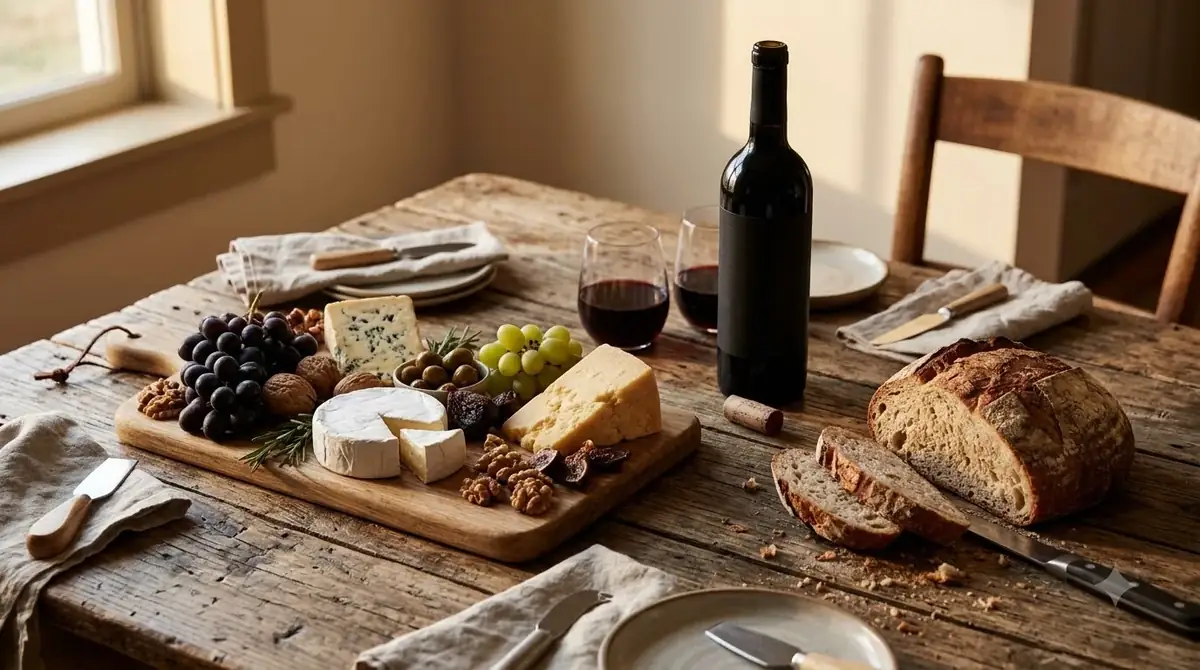
Rutherford Cabernet Sauvignon pairs particularly well with rich foods containing protein and fat, especially grilled beef, lamb, and slow-cooked meats. Its substantial tannins benefit from dishes with enough richness to soften their drying sensation.
A well-structured Rutherford Cabernet Sauvignon is best served at approximately 60–65°F. This temperature range allows dark fruit, oak, spice, and earthy characteristics to show without making the alcohol seem overly prominent.
Young, full-bodied bottles may benefit from 30–60 minutes of decanting. Exposure to air can help soften the initial impression of firm tannins and make the wine’s aromatic layers easier to appreciate.
Food Pairings for Cabernet Sauvignon
Grilled ribeye is a classic pairing because its fat and protein balance the wine’s firm tannins. The browned exterior of the steak also complements Cabernet Sauvignon’s dark fruit, cedar, and savory notes.
Roasted lamb with rosemary and garlic provides another excellent match. The meat’s richness softens the tannin, while the herbs complement the wine’s more savory characteristics.
Beef short ribs, braised brisket, and mushroom-based dishes also work well. Slow cooking develops rich flavors that complement the concentration and structure of Rutherford Cabernet Sauvignon.
Hard aged cheeses such as aged cheddar and Parmesan are useful choices for a wine-focused meal. Their salt and fat help soften tannin perception and balance the wine’s intensity.
Pairings for Other Rutherford Varieties
Merlot works with roasted chicken, pork tenderloin, grilled mushrooms, and moderately seasoned beef dishes. Its softer tannins make it more flexible than Cabernet Sauvignon with lighter preparations.
Cabernet Franc pairs nicely with herb-roasted lamb, grilled vegetables, and tomato-based dishes. Its aromatic character can complement savory herbs and the acidity of well-prepared tomato sauces.
Rutherford Sauvignon Blanc is a good match for grilled shrimp, roasted chicken, fresh goat cheese, and salads with citrus dressing. Its higher acidity makes it particularly useful with dishes that include lemon, lime, or other acidic ingredients.
Serving and Storage Guidelines
Proper serving temperature and storage help preserve the character of Rutherford wines. A full-bodied Cabernet Sauvignon served too warm can seem heavy, while excessive chilling can make its tannins feel more prominent and suppress its aromas.
Store unopened bottles on their sides in a cool, dark environment near 55°F, avoiding significant temperature fluctuations. Once opened, refrigerate still wines and generally consume them within three to five days, depending on their condition and storage method.
For a tasting of several Rutherford wines, pour approximately 5 ounces per glass. A standard 750 ml bottle provides about five such servings, making it convenient for comparing different vineyard sites or grape varieties without overwhelming the tasting experience.
When planning a broader California wine tasting, consider placing Rutherford Cabernet Sauvignon alongside wines from another Napa appellation. This comparison makes differences in tannin texture, fruit concentration, and aromatic character easier to identify.
Frequently Asked Questions
Is Rutherford considered part of Napa Valley?
Yes. Rutherford is a sub-appellation within the larger Napa Valley AVA, rather than a separate California wine region outside Napa. The Rutherford designation identifies a more specific growing area, and its wines can carry both Napa Valley and Rutherford geographic references when the applicable labeling requirements are met.
What is the minimum grape requirement for a Rutherford AVA wine?
Federal AVA labeling rules generally require at least 85% of the grapes in a wine to come from the named American Viticultural Area when that AVA appears as the appellation of origin. This geographic requirement is separate from grape-variety labeling rules, which generally require at least 75% of the named variety for a varietal wine under federal regulations.
Can Rutherford wines be made from grapes grown outside the appellation?
A wine carrying Rutherford as its AVA designation must meet the federal geographic-origin requirement. Under the general 85% rule, a limited proportion of grapes may originate elsewhere, subject to applicable labeling regulations. A wine labeled only Napa Valley has a broader geographic designation and does not make the same specific Rutherford-origin claim.
Does Rutherford produce wines other than Cabernet Sauvignon?
Yes. The appellation produces Sauvignon Blanc, Merlot, and Cabernet Franc in addition to its signature Cabernet Sauvignon. Some producers also work with other Bordeaux varieties, including Petit Verdot and Malbec, particularly for blending. These wines provide alternatives for drinkers who want to explore Rutherford without focusing exclusively on its famous red wines.
Is Rutherford Dust an officially regulated wine characteristic?
No. Rutherford Dust is a traditional regional tasting expression, not an official sensory certification or legally required characteristic of Rutherford AVA wines. Federal appellation regulations define geographic origin rather than requiring a particular flavor or tannin profile. Individual winemakers may interpret the expression differently when describing their Cabernet Sauvignon.
The Rutherford wine region combines a compact geographic footprint with considerable vineyard diversity, a significant winemaking heritage, and a distinctive reputation for Cabernet Sauvignon. Its gravelly western benchland, varied eastern soils, warm days, and cool evenings contribute to wines that balance ripe dark fruit with structured tannins and earthy complexity. Exploring different Rutherford producers and vineyard locations is one of the most rewarding ways to understand why this small Napa Valley appellation has earned such an enduring reputation.
More in Wine Regions
 Willcox Wine Trail: Discover Arizona’s High-Elevation Wine CountryUpdated Nov 20, 2026
 Yakima Valley Wine Region: Find the Best Styles to TryUpdated Nov 20, 2026
 Vosne Romanee Wine Tasting: Identify Aromas and Choose Better PairingsUpdated Nov 20, 2026
 Yakima Valley Wine Festival: Find the Best Seasonal Wine EventsUpdated Nov 20, 2026
 Wales Vineyards: Discover Cool-Climate Wines and Where to VisitUpdated Nov 20, 2026
 Yountville Wine Festival: Discover Napa Wines and Local FoodUpdated Nov 20, 2026