

We may earn a commission when you buy through links on this page, at no extra cost to you. Learn more.
China vineyards span a wide range of climates, from the dry, high-elevation slopes of Ningxia to the maritime hills of Shandong and the steep valleys of Yunnan. The country is not a single wine style or one unified terroir: its vineyard districts differ in altitude, rainfall, winter cold and grape varieties. Ningxia is the best-known fine-wine region internationally, but Xinjiang, Hebei, Gansu, Shanxi, Liaoning and other areas add very different expressions to the map.
For wine drinkers, that variety is the best starting point: Cabernet Sauvignon from the Helan foothills tells a different story from Petit Manseng near the Shandong coast or a high-altitude red from Yunnan. For a wider overview, see our guide to Wine Regions.
China’s wine map is diverse, not one unified appellation
China’s wine country is easier to understand as a collection of distinct growing areas than as one large region. Regional names such as Ningxia and Xinjiang often follow provincial or administrative boundaries, while the most meaningful differences appear at a smaller scale: a river valley, a coastal peninsula, a mountain foothill or a high inland basin.
The same grape can behave differently across the country. Wine Enthusiast’s overview of emerging regions describes a dozen distinct wine regions, noting differences in altitude, latitude, daylight and soils. Its examples include winter vine burial in Ningxia, coastal conditions in Shandong, high-elevation Chardonnay sites in Yunnan and Petit Manseng near the Shandong coast. These are useful clues, not rigid rules; vineyard exposure, water access and seasonal weather still shape each wine.
A regional map also needs to separate wine grapes from the country’s broader grape-growing footprint. Xinjiang, for example, has extensive plantings for table grapes and raisins as well as wine grapes. Some areas have a long history of growing grapes but only a smaller modern fine-wine sector. Others, including parts of Yunnan, are newer and geographically scattered. For a closer regional breakdown, Decanter China’s regional overview explains how the country’s wine districts, provinces and local subregions fit together.
Ningxia’s Helan Mountain foothills lead the fine-wine conversation
Ningxia’s Helan Mountain East region is the country’s most internationally recognised fine-wine address. Its vineyards sit between the Helan Mountains and the Yellow River, where strong sunshine, low rainfall and high elevation create a dry continental growing environment.
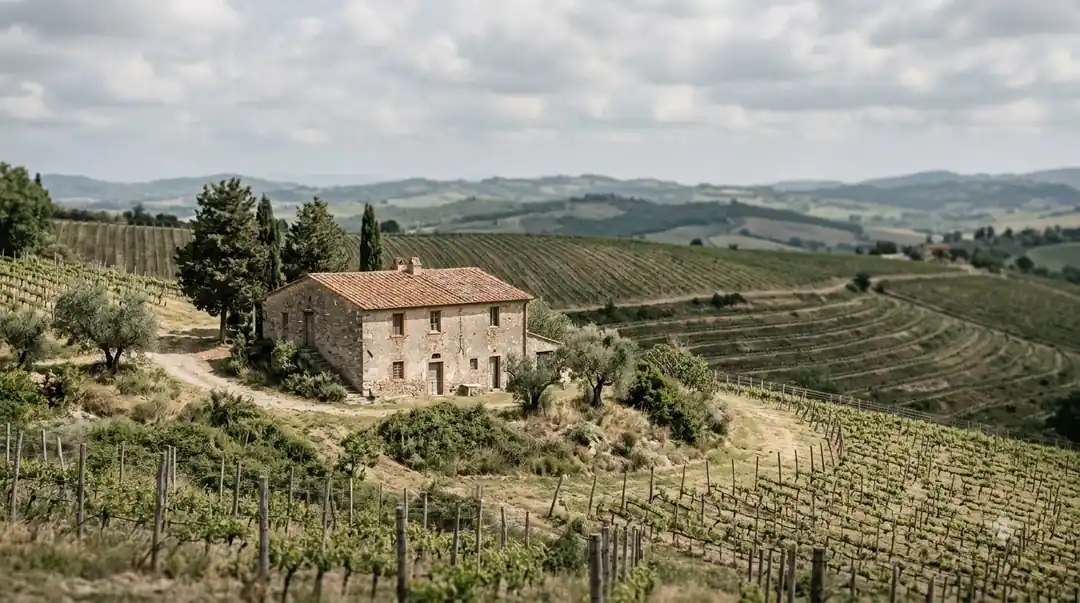
Decanter reports less than 200 millimeters of annual rainfall and about 3,100 hours of sunshine in the Helan foothills. Many vineyards sit around 1,000 to 1,200 meters; the China-EU geographical-indication description gives a broader range of 1,000 to 1,500 meters. Sandy, gravelly and alluvial soils vary by site, and the Yellow River provides essential irrigation.
Winter is the major practical challenge. Temperatures can fall below minus 20 degrees Celsius, so growers bury vine trunks under soil and uncover them in spring. Decanter reports that this labor can add around 30 percent to production costs. Spring frost is another risk, particularly in lower or cooler sites where cold air can settle.
The modern story accelerated when Helan Qingxue’s Jia Bei Lan Grand Reserve 2009 won the International Trophy at the 2011 Decanter World Wine Awards. Ningxia established a provincial wine bureau in 2012 and introduced a Bordeaux-inspired classification system in 2013. The eastern foothills are also an officially recognized geographical-indication wine appellation under the China-EU agreement. Its six main subregions, from north to south, are Shizuishan, Helan, Yinchuan, Yongning, Qingtongxia and Hongsipu. Yinchuan is a producer hub; farther south, Qingtongxia and Hongsipu have different exposures and soils. Producers include Helan Qingxue, Silver Heights, Kanaan Winery and Xige Estate. Red grapes include Cabernet Sauvignon, Merlot, Marselan and Cabernet Gernischt; white plantings include Chardonnay, Riesling and Petit Manseng.
Xinjiang and Gansu show how far inland vineyards can stretch
Xinjiang is a vast inland growing area, but its wine country is made up of subregions with very different water supplies and climates. Gansu’s Hexi Corridor, farther east along the historic Silk Road, offers another dry continental setting, with a cooler profile in some vineyard areas.
Decanter China identifies Xinjiang as the home of China’s earliest plantings of European wine grapes, dating back about 2,300 years. The province’s overall grape-growing footprint is extensive, serving table-grape and raisin production as well as wine. For wine, the Yili Valley, Yanqi Basin, northern Tianshan foothills and Turpan-Hami Basin each have distinct conditions. The Yili Valley receives around 400 millimeters of rain annually, and many vineyards sit on the southern bank of the Yili River at 800 to 1,100 meters. Snowfall offers some protection against winter cold, so growers there do not need to bury vines as deeply as in some northern districts.
The Yanqi Basin is much drier. At about 1,100 meters, it receives less than 80 millimeters of annual rainfall; nearby Bosten Lake helps moderate the continental climate. Tiansai Vineyards and Zhongfei are among the producers associated with Yanqi. In the Turpan-Hami Basin, annual rainfall is below 20 millimeters in some accounts, making irrigation essential. Traditional qanat systems move groundwater through sloping underground tunnels, and Turpan is known for raisins as well as characterful sweet wines.
Gansu’s Hexi Corridor includes the Wuwei and Zhangye subregions. Its cooler continental conditions can suit Pinot Noir and Welschriesling, while later-ripening varieties may struggle to reach full maturity. Producers include Mogao Wine, Qilian Wine Company and Guofeng. The corridor’s long, narrow geography has also made transport from vineyards a practical issue for the wine trade.
Shandong and Hebei balance maritime influence and continental conditions
Shandong and Hebei are important northeastern wine districts, but their climate profiles are not interchangeable. Shandong’s peninsula is influenced by the sea, while Hebei’s principal vineyard areas include inland basins and a coastal subregion near the Bohai Sea.
On the Shandong Peninsula, vineyards are concentrated around Yantai and Penglai. Decanter China reports annual rainfall of roughly 600 millimeters, much of it falling in summer. That timing can reduce sunshine during the growing season and increase disease pressure, so canopy management and vineyard health matter. The maritime influence moderates winter temperatures, and growers generally do not need to bury vines for winter protection in the way common in colder northern districts.
Yantai is also a historic center of modern Chinese wine. Changyu was founded there in 1892, and Penglai is home to major vineyard developments including Changyu’s Tinlot estate and Lafite’s Long Dai. Further south, Qingdao has producers such as Huadong Parry Winery and Chateau Nine Peaks. Cabernet Sauvignon and Cabernet Gernischt are important red varieties, while Chardonnay and Petit Manseng add white-wine interest. The latter is particularly associated with Shandong’s coastal conditions in Wine Enthusiast’s overview.
Hebei is another major wine province. Huailai, northwest of Beijing, sits in a mountain basin and receives around 400 millimeters of annual rain. It is associated with Dragon Eyes, a pink-skinned Vitis vinifera variety grown in China for about 800 years, and was the first Chinese home for Marselan, a French crossing of Cabernet Sauvignon and Grenache. Jieshishan, near the Bohai Sea, receives around 700 millimeters of rain; summer humidity raises disease pressure, and growers still bury vines in winter. Producers include China GreatWall, Chateau Sungod and Domaine Franco-Chinois.
Yunnan and the northeast produce high-altitude and cold-climate wines
Southwestern China and the northeastern provinces are among the country’s most distinctive vineyard environments. Yunnan’s mountain valleys bring altitude and steep slopes, while Liaoning and Jilin face severe winter cold and have developed ice-wine and cold-resistant grape traditions.
In the southwest, vineyards are scattered along upper valleys of the Lancang, Nu and Jinsha rivers, as well as the Dadu and Min river systems in neighboring areas. Decanter China’s overview places many vineyards between 1,600 and 2,800 meters, with annual rainfall around 500 to 600 millimeters. The high elevation and mountain setting can preserve freshness, but the slopes are steep and vineyard parcels are often fragmented. In some places, as many as 10 separate plots can fit within one hectare, making work more labor-intensive than on a broad, flat estate.
Ao Yun, Shangri-La Winery and Xiaoling Estate are among the best-known names in this emerging southwestern area. Cabernet Sauvignon is important, and some higher, cooler sites have potential for Chardonnay and other varieties. Wine Enthusiast specifically points to Chardonnay in Yunnan’s cooler high-elevation sites. The region’s appeal comes from its combination of altitude, sunlight and valley-specific conditions, rather than from a single uniform regional style.
In the northeast, Liaoning and Jilin have a different challenge: long, cold winters. Jilin lies near 42 degrees north latitude and is associated with the native wild mountain grape, Vitis amurensis, which can withstand severe cold. Researchers and growers have used it in breeding work aimed at developing more winter-hardy vines. In Liaoning’s Huanren County, abundant snowfall and the moderating effect of Huanren Lake support ice-wine production, with Vidal widely planted for that purpose. Changyu’s Golden Icewine Valley and Sanhe Winery are among the producers named in Decanter China’s regional account.
Grapes and wine styles to look for across China
Cabernet Sauvignon is a useful entry point because it appears in several major Chinese wine regions, but it is not the only grape worth seeking. Merlot, Marselan, Cabernet Gernischt and Syrah are important red varieties, while Chardonnay, Riesling, Welschriesling, Petit Manseng, Viognier and Vidal help show the range of white and sweet-wine styles.
Cabernet Sauvignon is high in tannin and can work with grilled beef or lamb. Merlot is generally softer, while Pinot Noir tends to have lower-to-medium tannin and higher acidity. Marselan offers another route into reds, especially from Ningxia and Hebei. Compare Cabernet Gernischt by producer and region rather than assuming one uniform style.
White wines broaden the picture. Chardonnay appears in Yunnan, Ningxia and Shandong; Riesling and Welschriesling grow in cooler or higher inland sites. Petit Manseng is associated with Shandong’s coast, while Turpan sweet wines and Liaoning ice wines sit outside the dry-table-wine category.
These reported regional markers are useful orientation points, not guarantees for every vineyard or vintage.
| Region or subregion | Reported annual rainfall | Reported elevation | Useful grape or style clue |
|---|---|---|---|
| Helan Mountain East, Ningxia | Less than 200 mm | About 1,000–1,200 m in Decanter’s profile | Cabernet Sauvignon, Marselan, structured reds |
| Yili Valley, Xinjiang | About 400 mm | 800–1,100 m | Varietal diversity; vines receive winter snow cover |
| Yanqi Basin, Xinjiang | Less than 80 mm | About 1,100 m | Arid-site viticulture and organic growing potential |
| Yantai, Shandong | About 600 mm | Coastal peninsula | Cabernet Gernischt, Cabernet Sauvignon, Petit Manseng |
| Huailai, Hebei | About 400 mm | Mountain basin | Dragon Eyes and Marselan |
| Southwestern valleys | About 500–600 mm | About 1,600–2,800 m | Cabernet Sauvignon and high-altitude Chardonnay sites |
How to choose, serve and pair Chinese wine
Start with the region and grape, then decide whether you want a powerful red, a fresher white or a sweet specialty wine. The label’s producer and subregion can be more revealing than the country name alone, especially for bottles from Ningxia, Shandong or Yunnan. A Cabernet Sauvignon or Marselan from Ningxia is a direct introduction to the country’s best-known dry-red style. Pair tannic Cabernet with grilled beef or lamb, where fat and salt soften its grip. Softer Merlot suits roast pork or mushrooms, while Pinot Noir can work with duck and earthy vegetables.
Serve light whites and rosé at 45 to 50 degrees Fahrenheit, fuller whites at 50 to 55 degrees, and light reds at 55 to 60 degrees. Full-bodied reds suit 60 to 65 degrees; sweet whites are best around 43 to 50 degrees. A young, full-bodied red may benefit from 30 to 60 minutes in a decanter. Match wine sweetness to the dish, and choose equal or higher acidity when food is particularly acidic. Chili heat is amplified by alcohol and tannin, and oily fish can clash with tannic reds; a crisp white is a safer match for either situation.
Tip: Open a Chinese red alongside a familiar reference wine and compare the grape, region and structure rather than judging it only by country. A Cabernet from Ningxia, a maritime red from Shandong and a high-altitude Yunnan wine can tell very different stories even when they share a grape name.
Compare the country’s regional contrasts with our guides to Tasmania vineyards, Uruguay vineyards and Chianti Classico vineyards. Store unopened bottles on their sides near 55 degrees Fahrenheit, away from sunlight and temperature swings. Refrigerate opened still wine and aim to finish it within three to five days.
Frequently Asked Questions
These answers cover practical details about Ningxia visits, Huailai near Beijing, protected origin status and the differences between inland vineyard districts.
Are Chinese vineyards open to visitors?
Some estates in Ningxia offer cellar-door visits, tastings or vineyard experiences, but opening arrangements vary by winery. The official Ningxia wine visitor directory advises travelers to confirm opening hours, language support and reservations directly with each estate before setting out.
Which Chinese wine region is closest to Beijing?
Huailai in Hebei is northwest of Beijing and is one of the capital area’s best-known wine subregions. The nearby Yanqing area also has boutique wineries, while Miyun in Beijing municipality is home to Changyu’s Chateau AFIP.
Does China have a protected wine appellation?
Yes. Helan Mountain East is officially recognized as a wine geographical indication of Ningxia. The China-EU Geographical Indications Agreement entered into force on March 1, 2021, protecting an initial group of 100 Chinese and 100 European product names.
What is the size of Bosten Lake near Yanqi?
Decanter China reports that Bosten Lake covered 1,646 square kilometers in 2020. The snowmelt-fed lake helps moderate the continental climate of the Yanqi Basin in Xinjiang.
Are Chinese wines exported to the United States?
Some are exported to the United States, but the export share of China’s wine production remains small. A few wineries have gained overseas recognition through competitions and specialist importers, so availability may depend on local distribution and the range carried by independent retailers.
China’s vineyards reward a regional approach: Ningxia’s desert foothills, Shandong’s coast, Xinjiang’s inland basins and Yunnan’s mountain valleys all produce different possibilities. Begin with the grape and subregion, then explore beyond the best-known bottles to see how much variation the country’s wine map contains.
More in Wine Regions
 Willcox Wine Trail: Discover Arizona’s High-Elevation Wine CountryUpdated Nov 20, 2026
 Yakima Valley Wine Region: Find the Best Styles to TryUpdated Nov 20, 2026
 Vosne Romanee Wine Tasting: Identify Aromas and Choose Better PairingsUpdated Nov 20, 2026
 Yakima Valley Wine Festival: Find the Best Seasonal Wine EventsUpdated Nov 20, 2026
 Wales Vineyards: Discover Cool-Climate Wines and Where to VisitUpdated Nov 20, 2026
 Yountville Wine Festival: Discover Napa Wines and Local FoodUpdated Nov 20, 2026