

We may earn a commission when you buy through links on this page, at no extra cost to you. Learn more.
A chinon wine tasting introduces you to Cabernet Franc from France’s Loire Valley, with styles that range from fresh, red-fruited reds to structured, cellar-worthy bottlings. The appellation also produces dry rosé and a smaller amount of Chenin Blanc white wine. The most useful way to understand Chinon is to compare wines from its sandy river terraces, gravelly valley floor, and clay-limestone slopes.
Chinon sits in Touraine, where the Vienne River meets the Loire, west of the city of Tours. Cabernet Franc gives most bottles their recognizable combination of crisp acidity, savory detail, and red or dark fruit, but differences in site, vintage, and winemaking make the appellation more varied than a single-grape description suggests. A focused tasting can show how soil and ripeness shape the glass without requiring a large flight or specialist equipment.
What Chinon Wine Tastes Like
Chinon is best known for dry red wine with lively acidity, moderate tannin, and a Cabernet Franc profile that often combines fresh fruit with herbal or earthy notes. Expect anything from a light, juicy red suited to a slight chill to a deeper, firmer wine with enough structure to develop over years.
In a youthful red, look for aromas of raspberry, red cherry, strawberry, and red currant. Depending on ripeness and the producer’s choices, the fruit can become darker, suggesting blackberry, blackcurrant, or plum. A leafy, bell-pepper, or fresh-herb note may appear alongside the fruit; it is part of Cabernet Franc’s character, not automatically a fault. Floral hints, pepper, graphite, and a stony impression can add detail without making the wine taste heavy.
On the palate, Chinon usually feels drier and fresher than its dark color might suggest. Acidity keeps the fruit lively, while tannins tend to be more moderate than those in Cabernet Sauvignon. Lighter examples can feel transparent and supple, with a quick, refreshing finish. More concentrated wines carry firmer tannin, darker fruit, and a longer savory finish. Oak may add cedar, baking spice, or a rounder texture, but many Chinons are made to emphasize Cabernet Franc and the vineyard rather than a strong wood signature.
Not every bottle is red. Chinon rosé is generally dry, brisk, and fruit-led, with citrus and sometimes peppery notes. White Chinon is made from Chenin Blanc and is also dry; it can show floral aromas and fresh orchard-fruit character when young, with richer fruit, honeyed notes, and dried-fruit complexity developing in older examples. The appellation’s red wines are the most familiar, but tasting all three colors offers a fuller picture of the place.
Where Chinon Comes From and Why Terroir Matters
Chinon is an appellation in Touraine, in the western part of the Loire’s Middle Valley, with vineyards spread along the Vienne and near its meeting with the Loire. The local wine syndicate describes 26 communes and three broad soil families, a compact geography that produces noticeably different expressions of Cabernet Franc.
The first family is the sandy and gravelly alluvial terraces beside the Vienne. These sites generally give lighter, more immediately approachable reds, with clear red-fruit aromas and less weight on the palate. At the far western end around Savigny-en-Véron, sandy parcels are particularly associated with the lightest style. Their freshness makes them useful starting points in a tasting because the fruit and acidity are easy to identify.
Gravel deposits on the river valley floor often produce wines with more body and structure than the lightest sandy examples. Limestone slopes and plateaus, where clay and flint meet tuffeau limestone, tend to yield more concentrated wines with deeper fruit, denser texture, and tannins that can benefit from time in bottle.
Soil does not dictate flavor on its own: vine age, exposure, harvest decisions, fermentation, and élevage all matter. Still, comparing a sandy-site Chinon with a clay-limestone example reveals the range. The official INAO description of Chinon places vineyards along the Vienne and the left banks of the Indre and Loire, and notes the oceanic climate and calcareous or sandy soils.
Cabernet Franc, Chenin Blanc, and the Three Wine Styles
Cabernet Franc is the grape that defines red Chinon and most of its rosé, while Chenin Blanc is responsible for the appellation’s dry whites. Knowing which grape is in the glass helps set expectations, but the wine’s color and structure are just as important when building a tasting flight.
Cabernet Franc ripens earlier than Cabernet Sauvignon, a useful trait in the Loire’s relatively northerly climate. In Chinon it makes fragrant, medium-bodied wines with brisk acidity and moderate tannin; a limited amount of Cabernet Sauvignon is permitted in red wines, but Cabernet Franc remains the central variety and many bottlings are entirely from it.
Red Chinon is not one fixed style. A simple, fruit-forward bottling may be fermented and raised to preserve freshness, then released for early drinking. A cuvée from old vines or a favored slope may receive more extraction, longer maturation, or oak élevage, creating a more structured wine. Those choices can shift the balance from crunchy red berries and herbs toward black fruit, spice, and firmer tannin. A tasting should therefore compare producers and sites, not assume every Chinon will taste alike.
Rosé is a dry, lighter expression of Cabernet Franc, with fresh berries, citrus, and a peppery edge; serve it with charcuterie, salads, or grilled vegetables. Chenin Blanc brings a different kind of freshness, pairing citrus, apple, pear, and white-flower aromas with naturally lively acidity; mature examples can develop honeyed or dried-fruit notes. It works well with river fish, shellfish, goat cheese, and poultry with a bright sauce. A Bolgheri wine tasting offers a useful contrast, since Tuscan reds may lean more heavily on Cabernet Sauvignon and other international varieties; for wider context, the site’s Wine Regions overview explains how grape varieties and appellations shape regional identity.
How to Taste Chinon with Confidence
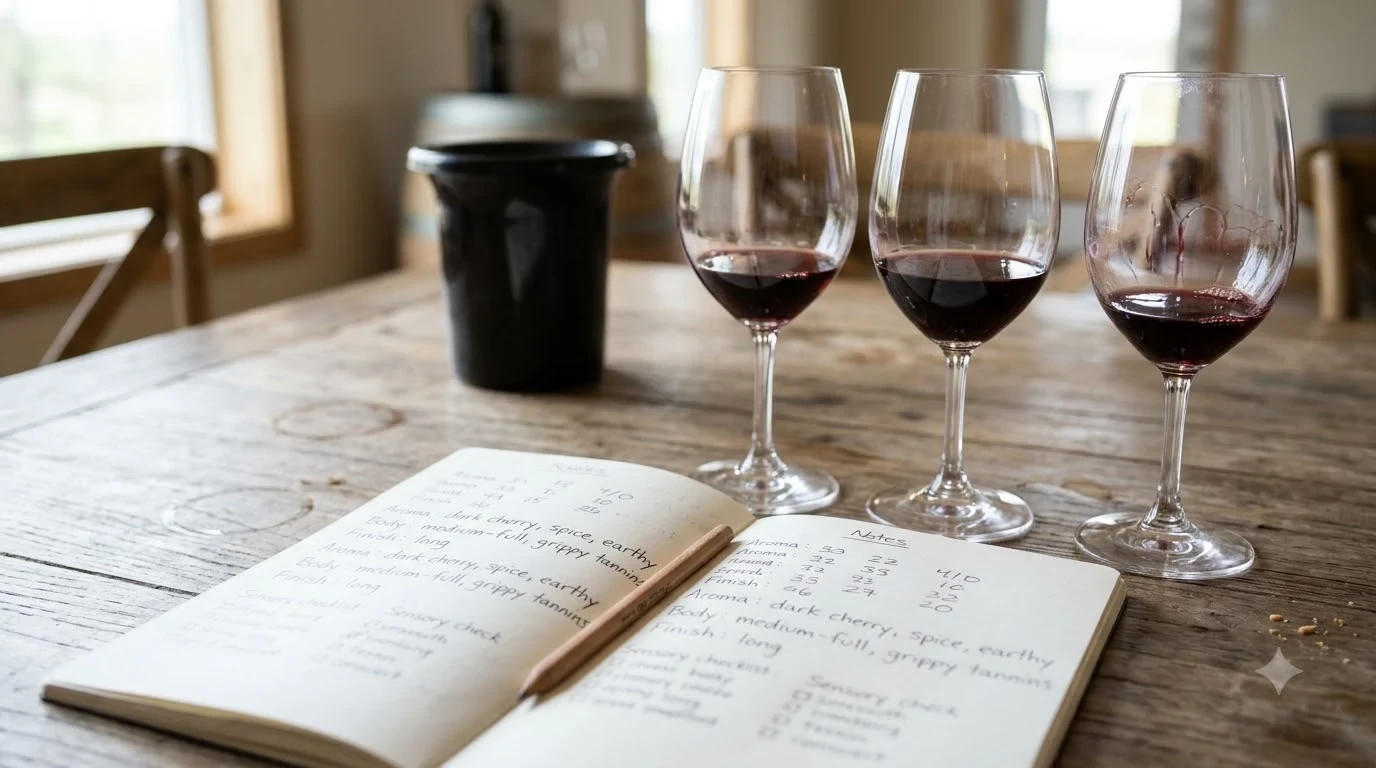
A simple tasting sequence makes differences easier to identify: begin with appearance, move to aroma, assess the palate, and finish by considering balance and length. Taste the wines in a consistent order and take a short note on fruit, acidity, tannin, body, and finish.
Start with the color: a young red Chinon may show a purple or ruby core, while older wines can shift toward garnet. Then swirl gently and sort the aromas into groups: red fruit such as cherry and raspberry; darker fruit such as blackberry and blackcurrant; herbs or bell pepper; and savory notes such as pepper, earth, graphite, cedar, or spice. No single aroma is required for authenticity, since ripeness, site, and winemaking can all shift the emphasis.
Take a modest sip and assess acidity, tannin, body, and finish. Does acidity make your mouth water? Is the tannin fine or drying? Does fruit last through the finish? Cabernet Franc generally has less tannin than Cabernet Sauvignon, so judge Chinon’s grip on its own terms. Fruit, acidity, tannin, and alcohol should feel balanced rather than allowing one element to dominate.
Compare two reds side by side: one lighter and fresh-fruited, the other structured and from a limestone-rich site. Use the same glassware and similar pours, then note differences in fruit brightness, tannin, and finish. A leafy note is not automatically a flaw; it can be part of Cabernet Franc’s character when it sits alongside clean fruit and balanced acidity. Musty, vinegar-like, or aggressively volatile aromas, however, may signal a fault rather than regional character.
Serving Temperature and Food Pairings
Chinon is usually more expressive when served a little cooler than a warm room, with the exact temperature adjusted to the wine’s weight. Lighter reds benefit from a gentle chill, while structured reds need a few degrees more warmth to show their aromas and texture.
Use the following temperature guide as a starting point. Chill the bottle gradually in a refrigerator rather than leaving it in a freezer, and give a very cold wine a few minutes in the glass to open. A 5-ounce pour leaves room to swirl and compare aromas; a standard 750-milliliter bottle provides about five such pours.
| Chinon style | Serving temperature | Why it works |
|---|---|---|
| Light, fruit-forward red | 55–60°F | Preserves freshness and keeps alcohol from seeming warm |
| Structured, fuller red | 60–65°F | Allows deeper fruit, savory aromas, and tannin to show |
| Dry rosé | 45–50°F | Emphasizes crispness and bright berry or citrus notes |
| Dry white Chinon | 45–50°F when fresh; 50–55°F for a fuller or mature bottle | Balances Chenin Blanc’s acidity with its aromatic detail |
Pair a lighter red with roast chicken, pork tenderloin, mushroom tart, lentils, or charcuterie; the wine’s acidity cuts through savory richness and its fruit complements herbs and browned meat. A structured red can handle grilled lamb, duck breast, steak, sausages, or slow-cooked beef, especially when the dish features herbs, mushrooms, or pepper rather than a sweet glaze. Tangy goat cheese is a classic match for Chinon’s fresh acidity.
Dry rosé suits picnic food, tomato salads, grilled zucchini, and salmon without a heavy sauce. White Chinon pairs with trout, white fish, scallops, roast chicken, or goat cheese, particularly when lemon or vinaigrette is involved. Match intensity as well as ingredients: a delicate sandy-site red can disappear beside smoked brisket, while a structured Chinon can overwhelm a simple fish fillet. Chili heat amplifies alcohol and tannin; oily fish are awkward with tannic reds; salt and fat soften tannin, making cured meats and richer cuts natural partners.
Tip: When serving Chinon red, start around 58°F for a lighter bottle and around 62°F for a fuller one. If the wine feels muted, let it warm slightly in the glass before deciding it lacks aroma.
Planning a Chinon Wine Tasting
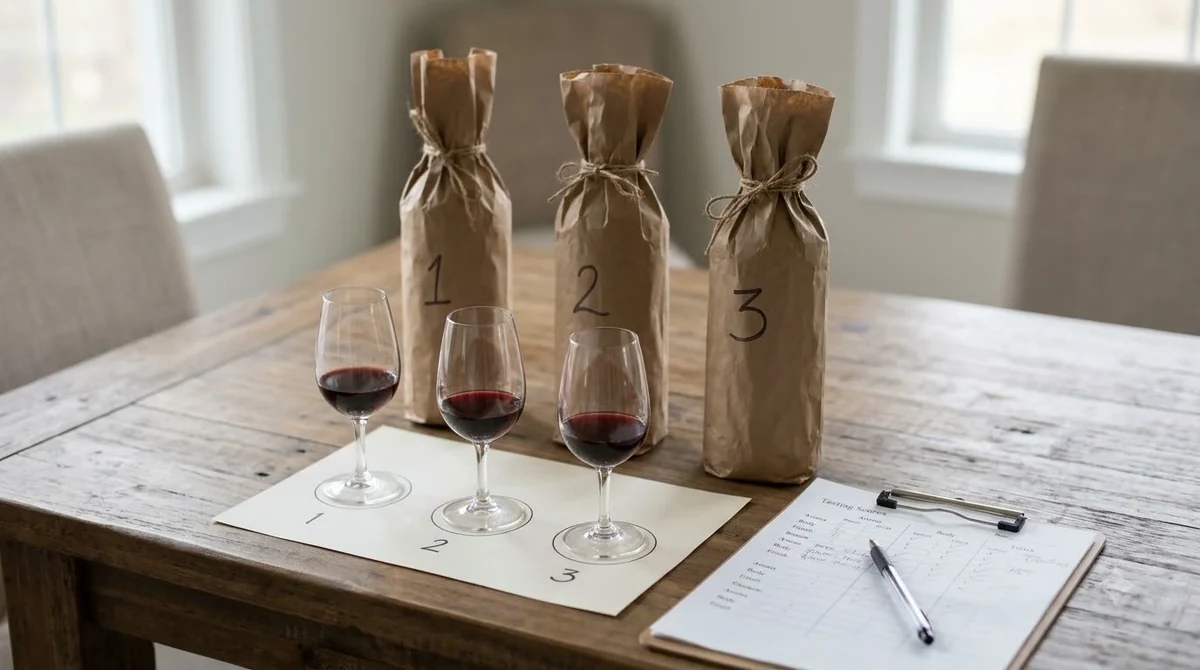
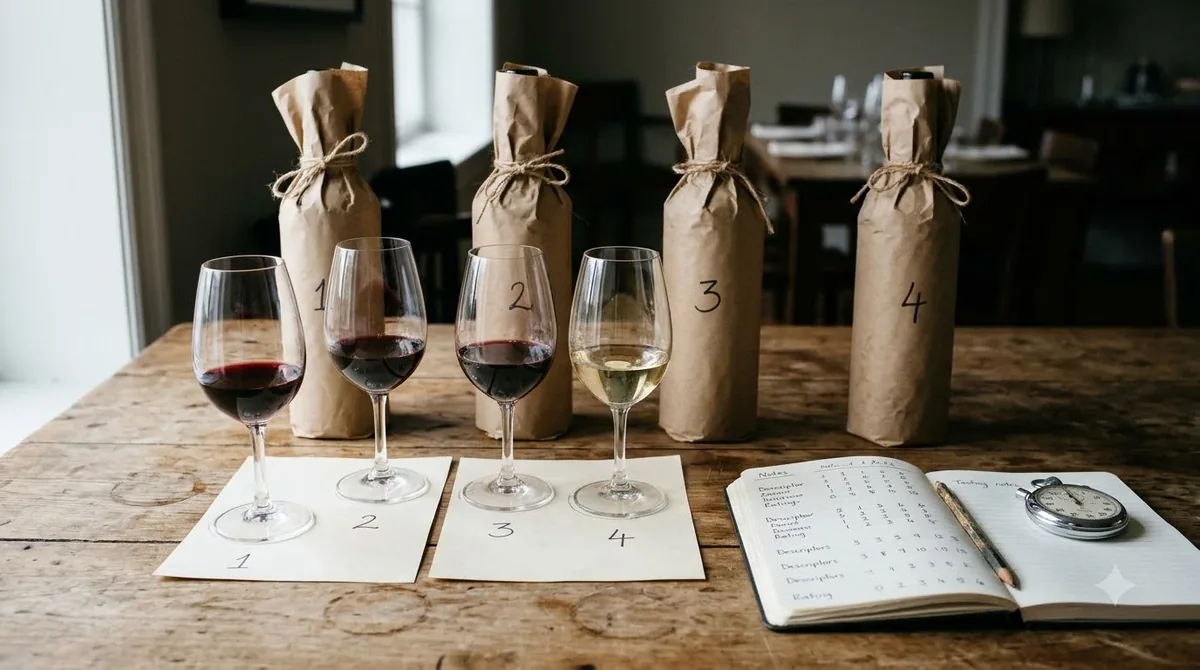
A good tasting does not need a dozen bottles. Three wines are enough to show the appellation’s range: a fresh red from sand or gravel, a more concentrated red from clay-limestone, and either a rosé or a Chenin Blanc white for contrast.
Begin with the lightest wine and move toward the most structured red. For a mixed-color flight, taste white first, rosé second, then reds from lighter to fuller. Pour roughly 2 to 3 ounces per wine, keep water and plain bread nearby, and save strongly flavored foods, coffee, and sweet snacks until afterward. For the red comparison, choose bottles with different site or style cues: a fresh early-drinking Chinon, a gravel-site wine with more structure, and a slope-grown cuvée with deeper fruit and firmer tannin. Record the producer, vintage, and any named vineyard or lieu-dit.
Decanting depends on the wine. Fresh, lighter Chinon is often ready to pour. A young, concentrated red may benefit from 30 to 60 minutes in a decanter, which can soften the first impression of tannin and allow the aromas to develop. Older bottles need a gentler approach: open them carefully, check how they smell and taste, and decant only when sediment or a closed character makes it useful. Extended aeration can cause a mature wine’s delicate aromas to fade.
Age adds another point of comparison. Many straightforward Chinons are made for drinking within a few years, while structured wines from favorable sites can reward longer cellaring. Decanter notes that clay-limestone slope wines can be particularly concentrated and ageworthy compared with lighter sandy-site examples in its Loire Cabernet Franc panel tasting. Store bottles on their sides in a cool, dark place near 55°F with minimal temperature fluctuation. A separate Alsace wine tasting makes a useful contrast between the Loire’s Cabernet Franc reds and another French region’s aromatic white-wine tradition.
Frequently Asked Questions
What does “Breton” mean in Chinon wine descriptions?
Breton is a traditional local name for Cabernet Franc in the Chinon area. The INAO links the name to the grape’s historic spread up the Loire from Nantes and notes its use in the writing of François Rabelais.
What is tuffeau limestone?
Tuffeau is a pale, honey-colored limestone found in the Loire region. It was quarried for local building stone, including the material used in many Loire châteaux and in caves cut into the slopes.
Does Chinon AOC include sparkling wine?
No. The INAO classifies Chinon as a still-wine appellation, covering dry red, rosé, and white wines rather than a sparkling category. Bubbles on a bottle would therefore indicate a different designation.
What are the Caves Painctes in Chinon?
The Caves Painctes are historic wine cellars in the town of Chinon, associated with the local Rabelais tradition. The municipal wine-syndicate page identifies the caves as the syndicate’s home and notes the ceremonies held there by the Confrérie des Bons Entonneurs Rabelaisiens.
When did Chinon become an appellation?
Chinon was recognized as an appellation of origin in 1937. That recognition places it among the Loire’s early controlled wine appellations and formally ties the name to its defined production area and rules.
Chinon rewards tasting with an open mind: the same Cabernet Franc can feel bright and delicate on sand, more substantial on river gravel, or deep and ageworthy on clay-limestone slopes. Start with a fresh red and a structured red, add a Chenin Blanc or rosé for contrast, and let the differences in fruit, acidity, and texture tell the story of the appellation.
More in Wine Regions
 Willcox Wine Trail: Discover Arizona’s High-Elevation Wine CountryUpdated Nov 20, 2026
 Yakima Valley Wine Region: Find the Best Styles to TryUpdated Nov 20, 2026
 Vosne Romanee Wine Tasting: Identify Aromas and Choose Better PairingsUpdated Nov 20, 2026
 Yakima Valley Wine Festival: Find the Best Seasonal Wine EventsUpdated Nov 20, 2026
 Wales Vineyards: Discover Cool-Climate Wines and Where to VisitUpdated Nov 20, 2026
 Yountville Wine Festival: Discover Napa Wines and Local FoodUpdated Nov 20, 2026