

We may earn a commission when you buy through links on this page, at no extra cost to you. Learn more.
Bekaa Valley vineyards are located in eastern Lebanon, where high elevations, sunny Mediterranean weather, cool nights, and varied soils produce distinctive red and white wines. The region is particularly known for Cabernet Sauvignon, Syrah, Cinsault, and Carignan, alongside indigenous white grapes such as Obeidi and Merwah. Historic estates including Château Ksara, Château Musar, and Château Kefraya have helped establish Lebanon as a serious wine-producing country. Exploring these vineyards offers a useful introduction to Lebanese wine, its ancient agricultural traditions, and its increasingly diverse modern styles.
Lebanon occupies a distinctive position in Mediterranean wine history. Its vineyards connect ancient Phoenician trading traditions with French-influenced winemaking and contemporary experimentation. The Bekaa Valley sits at the center of this story, providing the elevation, sunshine, and agricultural conditions that support much of the country’s wine production. For American wine drinkers, understanding its geography, grapes, and leading producers makes it easier to recognize what distinguishes Lebanese bottles from familiar European and New World wines.
Geography and Climate Shape the Bekaa Valley Vineyards
The Bekaa Valley is a high plateau in eastern Lebanon, positioned between the Mount Lebanon range to the west and the Anti-Lebanon Mountains to the east. Its vineyards benefit from substantial elevation, dry summers, abundant sunshine, and cooler nighttime temperatures that help grapes retain freshness as they mature.
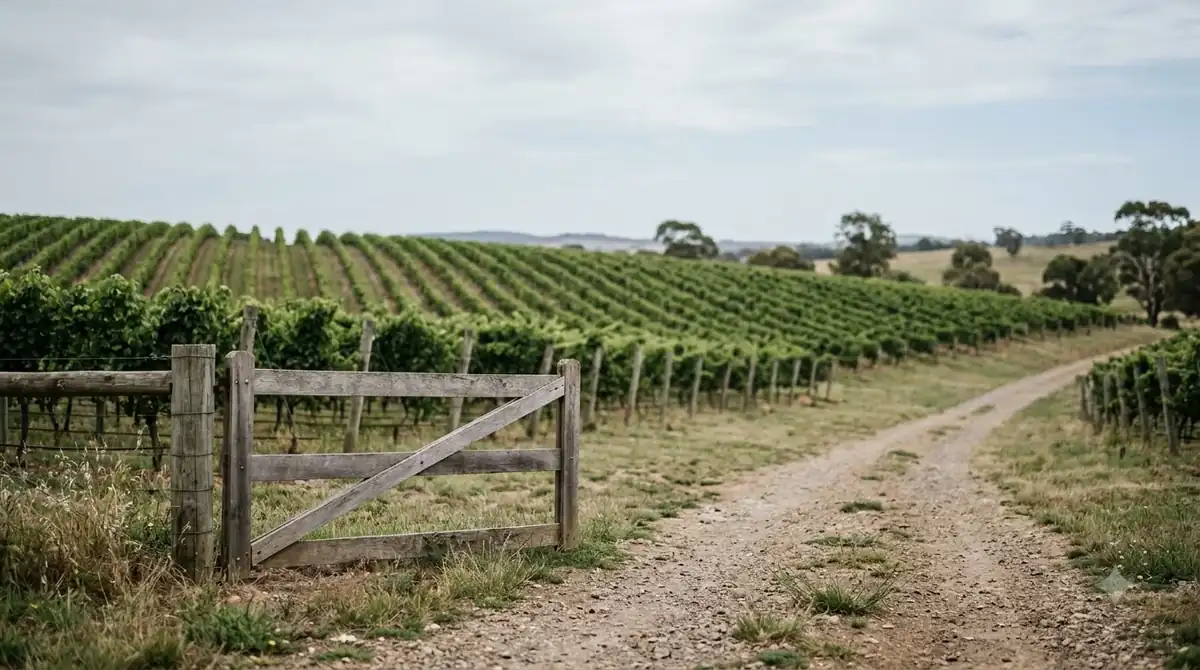
The valley is approximately 30 miles east of Beirut, with the western Bekaa forming an important center of wine production. Many vineyards stand above 3,000 feet, while Château Kefraya describes its own terraced estate at approximately 1,000 meters above sea level. This elevation is important because temperature conditions at higher altitudes differ considerably from those in warmer Mediterranean coastal areas. Warm daytime weather encourages sugar development and phenolic ripeness, while cooler nights help moderate the rate of maturation.
The surrounding mountain ranges also influence the growing environment. They shelter the valley and contribute to its relatively dry conditions. This combination gives growers an opportunity to produce ripe grapes without automatically sacrificing freshness. It also helps explain why both powerful red blends and aromatic white wines can emerge from the same broad geographical region.
Soil conditions vary across the valley, making individual vineyard locations important. Château Kefraya identifies several soil types across its estate, including clay-limestone, clay-chalk, sandy, and gravelly soils. These differences influence water retention, drainage, vine vigor, and the growing conditions experienced by individual blocks.
The estate reports that its vineyards are cultivated without irrigation and have an average planting density of approximately 4,000 vines per hectare. Its average yield is around 35 hectoliters per hectare. These are estate-specific figures rather than universal standards for the entire Bekaa Valley.
For wine drinkers, the practical lesson is that Bekaa Valley should not be treated as a single uniform vineyard site. Wines from different elevations, soil compositions, exposures, and producers can have noticeably different structures. A bottle from a high-elevation West Bekaa vineyard may express different freshness and fruit characteristics from one produced elsewhere in the valley.
Seasonal conditions matter as well. Sunny summers support grape development, while cooler nights help maintain a balance between ripeness and acidity. The resulting wines can combine generous fruit with enough structure to work at the dinner table.
Ancient Winemaking History and the Rise of Modern Estates
Bekaa Valley wine history reaches back thousands of years, connecting Phoenician Mediterranean trade, Roman religious architecture, and the development of Lebanon’s modern commercial wineries. The region’s historic identity remains visible in its archaeological landmarks and established wine estates.
The Phoenicians were important maritime traders who helped spread viticulture and wine commerce throughout the Mediterranean. Lebanon’s position along historic trade routes gave its agricultural products access to markets across the region. Wine was part of this commercial and cultural activity long before the appearance of modern winery brands.
One of the clearest reminders of that history is the Temple of Bacchus at Baalbek. Dating to the second century, the remarkably preserved Roman structure honors the god associated with wine and provides an architectural connection between ancient religious life and the region’s longstanding relationship with viticulture.
Modern Lebanese commercial winemaking developed through several important estates. In 1857, French Jesuit monks planted Cinsault vines at the property that became Château Ksara. Their work helped establish the modern winery tradition in the Bekaa Valley.
Another major development came with the establishment of Château Musar in 1930. Founder Gaston Hochar drew inspiration from French wine traditions while working with grapes grown in Lebanon. The winery later became particularly important to international awareness of Lebanese wine.
Château Kefraya represents another significant stage in the region’s modern history. Its first vineyards were planted in 1951, and the estate began producing wine from its own grapes in 1979, during the Lebanese Civil War. Its early international recognition helped demonstrate that Lebanese wineries could compete for attention beyond their domestic market.
These histories are not simply marketing details. They explain why the Bekaa Valley combines familiar European grape varieties and techniques with indigenous grapes and local agricultural knowledge. The region’s wines reflect both international influences and a distinctive Lebanese identity.
For a broader introduction to the country’s wine styles and historical background, explore our article on Bekaa Valley wine. It provides useful context for understanding the bottles associated with the region.
For additional historical context, Wine Enthusiast’s account of Lebanon’s wine history discusses the Phoenician connection, the development of modern wineries, and the importance of the Bekaa’s high-altitude vineyards.
Red and White Grapes Grown Across the Valley
The Bekaa Valley grows both international grape varieties and indigenous Lebanese grapes. Cabernet Sauvignon, Syrah, Cinsault, Carignan, and Grenache are important red varieties, while Chardonnay, Viognier, Sauvignon Blanc, Obeidi, and Merwah contribute to the region’s white wines.
Cabernet Sauvignon and Merlot
Cabernet Sauvignon is a major grape in the region’s structured red wines. It generally produces substantial tannins, dark-fruit flavors, and the firm framework needed for extended bottle aging. Bekaa Valley Cabernet-based wines often appear in blends with Syrah, Cinsault, or other varieties.
Merlot offers a different profile. Its tannins are generally softer and more moderate than Cabernet Sauvignon’s, and its fruit character can include plum, cherry, and blackberry. In blends, Merlot can contribute roundness and help balance the firmer structure of Cabernet Sauvignon.
Syrah, Cinsault, Carignan, and Grenache
Syrah is particularly relevant to the Mediterranean character of Lebanese red wine. It can contribute dark berries, pepper, savory notes, and medium-plus to high tannins. Its structure makes it useful in blends, especially alongside Cabernet Sauvignon and Grenache.
Cinsault is one of the region’s historically important grapes. Domaine des Tourelles winemaker Faouzi Issa has discussed how the variety responds to the Bekaa’s Mediterranean climate and cool summer nights. The winery produces Cinsault from vines more than 50 years old, using native yeast and concrete vats.
Compared with Cabernet Sauvignon, Cinsault generally produces softer, more approachable wines, with red-fruit character and moderate structure. Carignan can contribute acidity, color, and firm tannins, while Grenache adds ripe red fruit and a generous texture.
Indigenous White Grapes: Obeidi and Merwah
Obeidi and Merwah are two particularly interesting grapes for wine drinkers seeking something beyond familiar international varieties. They provide an opportunity to explore Lebanese agricultural heritage through wines that have increasingly attracted attention from producers and consumers.
Obeidi is a white grape traditionally associated with arak production. According to Wine from Lebanon, it is relatively low in acidity and high in sugar. In wine form, these characteristics can produce a fuller impression, making winemaking choices important for maintaining balance.
Merwah is related to Sémillon and can produce rich, nutty, and floral wines. Its character differs from the more familiar citrus-forward expression of Sauvignon Blanc. It can offer a broader texture and more developed aromatic profile, particularly in wines with appropriate lees contact or barrel treatment.
Mekssessé is another indigenous white variety. Château Kefraya identifies it among the local grapes grown on its estate. The winery also cultivates two historic Lebanese red grapes, Assouad Karech and Asmi Noir, demonstrating that local grape heritage extends beyond the better-known white varieties.
International varieties remain important, particularly Chardonnay, Viognier, and Sauvignon Blanc. Their presence gives the region a broad stylistic range, from familiar aromatic whites to more distinctive indigenous bottlings.
Historic and Contemporary Wineries Worth Knowing
Several producers illustrate the Bekaa Valley’s range, from established historic estates to smaller family wineries. Château Ksara, Château Musar, Château Kefraya, Domaine des Tourelles, and Château Qanafar provide useful starting points for understanding different approaches to Lebanese wine.
Château Ksara
Château Ksara is closely associated with the beginnings of modern commercial winemaking in Lebanon. Its history dates to 1857, when French Jesuit monks planted Cinsault at the property. The winery’s long history makes it an important reference point for the development of the country’s wine industry.
Its portfolio demonstrates the region’s use of international grapes and blending traditions. Cabernet Sauvignon, Syrah, and other varieties help illustrate the structured red styles that have become familiar in Bekaa Valley wine production.
Château Musar
Founded in 1930 by Gaston Hochar, Château Musar is among the most internationally recognized Lebanese wine producers. Its history is closely connected to the work of Serge Hochar, who helped introduce Lebanese wine to international consumers during a difficult period in the country’s modern history.
Musar is particularly associated with red blends involving Cabernet Sauvignon, Cinsault, and Carignan. These wines are known for their distinctive development and ability to age. The winery also produces white wines, including bottlings featuring indigenous Lebanese grapes.
Its vineyards are situated in the southern Bekaa Valley, north of Lake Qaroun, while the winery’s historic international reputation extends well beyond the region.
Château Kefraya
Château Kefraya is an important West Bekaa estate whose vineyards cover more than 300 hectares of terraced slopes. The property sits near Mount Barouk at approximately 1,000 meters above sea level.
Its vineyards include international varieties such as Cabernet Sauvignon, Syrah, Chardonnay, and Viognier, alongside indigenous grapes including Obeidi and Merwah. The estate’s Comte de M is one of its recognized flagship wines.
Château Kefraya is particularly useful for understanding how elevation, varied soils, and vineyard management influence a producer’s wine portfolio. Its range includes reds, whites, rosés, and other styles. The estate also uses French oak barrels and clay amphorae, connecting contemporary cellar practices with older Mediterranean winemaking traditions.
For vineyard information and details about its grape varieties and cellar practices, visit Château Kefraya’s official vineyard and winery information.
Domaine des Tourelles
Domaine des Tourelles was founded in 1868 by the French Brun family and is one of Lebanon’s historic wine businesses. Its long history provides a link between the earliest modern commercial producers and the newer generation of Lebanese winemakers.
Its Cinsault is especially interesting because it demonstrates the potential of older vines and traditional varieties. The use of native yeast and concrete fermentation vessels also provides an alternative to the heavy oak influence sometimes associated with full-bodied international red blends.
Château Qanafar
Château Qanafar offers another perspective on the West Bekaa. According to BIEEL, its vineyards cover 17 hectares at approximately 1,200 meters above sea level, above the village of Khirbet Qanafar. The winery produces an average of approximately 50,000 bottles annually.
The estate illustrates the importance of smaller vineyard locations and family-owned producers within the broader Bekaa Valley wine community. Its altitude also demonstrates that the region’s vineyards are not restricted to a single elevation.
Together, these producers show why the region deserves more attention than a single famous bottle can provide. Their vineyards, grape choices, and winemaking methods offer several ways to explore the character of Lebanese wine.
Bekaa Valley Wine Styles and What to Expect in the Glass
Bekaa Valley wines range from structured, age-worthy red blends to softer Cinsault bottlings and distinctive indigenous white wines. Understanding the grape composition is often the easiest way to anticipate the style of a bottle.
Red wines are particularly prominent. Cabernet Sauvignon-based blends tend to have firm tannins, concentrated dark fruit, and a substantial palate. Syrah can add pepper, savory character, and additional structure, while Carignan contributes acidity and a firmer finish.
Wines containing a larger proportion of Cinsault may feel softer and more immediately approachable. Their red-fruit profile and less aggressive tannins can make them useful choices for people who enjoy Pinot Noir or lighter Mediterranean reds but want to explore a different region.
White wines offer another side of the valley. Chardonnay and Viognier provide familiar reference points for American consumers, while Obeidi and Merwah introduce more distinctive Lebanese characteristics. Merwah can bring nutty, floral, and textural qualities, while Obeidi may have a broader impression because of its naturally lower acidity.
Rosé wines also form part of the regional portfolio. They can be useful with mezze, grilled vegetables, seafood, and lighter summer dishes. Their character varies according to the grapes and production techniques used.
Some producers favor traditional techniques and restrained intervention, while others use modern cellar equipment, oak aging, and international blending approaches. Neither approach defines the whole region. Instead, the variety of techniques gives consumers a broader choice of styles.
The following table provides a practical overview of some representative grapes and their typical contributions to Bekaa Valley wines. These are general grape characteristics, not guaranteed tasting notes for every producer or vintage.
| Grape | Wine color | Typical structure | Common role |
|---|---|---|---|
| Cabernet Sauvignon | Red | High tannin | Firm structure and dark fruit |
| Syrah | Red | Medium-plus to high tannin | Pepper, dark fruit, and depth |
| Merlot | Red | Medium, softer tannin | Roundness and plum fruit |
| Cinsault | Red | Generally softer tannin | Red fruit and approachable texture |
| Carignan | Red | Firm tannin and acidity | Structure and freshness |
| Chardonnay | White | Medium acidity | Body and fruit richness |
| Viognier | White | Generally moderate acidity | Floral aromas and ripe fruit |
| Merwah | White | Producer-dependent acidity | Nutty, floral, textured wines |
| Obeidi | White | Relatively low acidity | Indigenous white wine styles |
These differences matter when selecting a bottle for a particular occasion. Someone who enjoys structured Bordeaux-style reds may prefer a Cabernet Sauvignon blend, while a drinker who favors softer reds may find Cinsault more appealing. Those interested in unusual white grapes should seek out Merwah and Obeidi bottlings.
It is also helpful to distinguish between the grape and the producer’s winemaking choices. Oak aging, extraction, fermentation vessels, and blending proportions can change a wine’s texture considerably. Two wines made primarily from the same grape can therefore taste quite different.
Food Pairings, Serving Temperatures, and Storage
Bekaa Valley wines work particularly well with Lebanese food, including grilled lamb, kibbeh, hummus, tabbouleh, and roasted vegetables. The best pairing depends on the wine’s acidity, tannin, body, and sweetness rather than simply matching a red wine with meat or a white wine with fish.
Structured Cabernet Sauvignon and Syrah blends can accompany grilled lamb, beef kebabs, and roasted meats. The protein and fat in these dishes soften the perception of tannin, helping a firmly structured wine feel more balanced. Spiced lamb with cumin, sumac, and grilled onions can also complement the savory character of Mediterranean red blends.
Cinsault is a useful option for dishes that do not require a powerful red wine. Try it with grilled chicken, roasted eggplant, vegetable kebabs, or lightly seasoned lamb. Its generally softer tannins and fruit-forward character make it more flexible than a heavily structured Cabernet Sauvignon.
For white wines, Merwah and Obeidi can work with grilled seafood, mezze, and dishes featuring herbs or olive oil. A Merwah with greater texture may complement roasted chicken and dishes containing nuts. Chardonnay can accompany creamy preparations, while Viognier can work with aromatic dishes that have moderate spice.
Acidity is particularly important with food pairing. Dishes containing lemon, vinegar, or tomatoes generally need wines with equal or higher acidity to avoid making the wine seem flat. Sauvignon Blanc and Riesling are useful reference points for high-acidity whites, while Chardonnay usually has more moderate acidity.
Spicy Lebanese dishes require some additional care. Chili heat becomes more pronounced with wines high in alcohol and tannin. A softer red or an aromatic white served cool may be a better choice than a powerful, high-alcohol Cabernet blend when the dish contains substantial chili.
Serving temperature can also make a meaningful difference. Full-bodied reds are often served too warm, while whites are sometimes chilled so aggressively that their aromas become difficult to appreciate.
| Wine style | Suggested serving temperature | Temperature in Celsius |
|---|---|---|
| Light-bodied reds | 55–60°F | 13–16°C |
| Full-bodied reds | 60–65°F | 16–18°C |
| Light whites and rosé | 45–50°F | 7–10°C |
| Full-bodied whites | 50–55°F | 10–13°C |
| Sweet whites | 43–50°F | 6–10°C |
A structured Bekaa Valley Cabernet or Syrah blend generally benefits from a serving temperature around 60–65°F. A softer Cinsault can be served slightly cooler, around 55–60°F. White Merwah and Obeidi wines are generally best served cool rather than ice-cold, allowing their aromas and textures to remain apparent.
Tip: If a full-bodied Bekaa Valley red tastes hot or overly alcoholic, allow it to cool slightly before serving. Young, concentrated red blends can also benefit from 30–60 minutes of decanting. This can help soften their initial presentation and release aromatic complexity.
Storage is equally important. Keep unopened bottles on their sides when they have natural cork closures, in a cool, dark location near 55°F. Avoid direct sunlight, frequent temperature changes, and storage next to appliances that produce vibration or heat.
After opening, refrigerate still wines and use them within approximately 3–5 days for the best overall quality. Bring red wine toward its recommended serving temperature before pouring. A standard 750-milliliter bottle provides approximately five 5-ounce glasses, making it easy to plan portions for a meal.
Readers interested in comparing the Bekaa with other wine-growing landscapes can also explore Verde Valley vineyards and Dry Creek Valley vineyards. These regions provide useful comparisons between Mediterranean-influenced Lebanese wine and American wine-growing conditions.
Frequently Asked Questions
Are Bekaa Valley vineyards open to visitors?
Some Lebanese wineries offer visitor experiences, tours, or tastings, although access and scheduling vary by producer. Château Kefraya provides a dedicated visit and discovery section on its official website. Visitors should arrange appointments in advance and confirm current travel conditions before planning a vineyard visit.
Is Lebanese wine made only from French grape varieties?
No. Lebanon grows international varieties such as Cabernet Sauvignon and Chardonnay alongside indigenous grapes including Obeidi, Merwah, and Mekssassi. Château Kefraya also cultivates two historic Lebanese red grapes, Assouad Karech and Asmi Noir, which have received renewed attention through vineyard research and experimentation.
Does Bekaa Valley wine have an official appellation system?
Lebanese wine does not follow the same extensive hierarchy of legally defined vineyard classifications found in regions such as Burgundy or Bordeaux. The Bekaa Valley name identifies a broad geographical growing region rather than guaranteeing a particular quality level. Producer reputation, grape composition, vineyard location, and winemaking choices are useful factors to consider when comparing bottles.
Can Bekaa Valley red wines age for many years?
Some structured Lebanese reds are made for extended cellaring, particularly blends with Cabernet Sauvignon, Syrah, and Carignan. Château Musar is especially associated with long-lived wines, and its historical releases have attracted international attention from collectors. Aging potential still depends on the individual wine, vintage, storage conditions, and bottle format.
What does arak have to do with Bekaa Valley vineyards?
Arak is a traditional Lebanese anise-flavored spirit made by distilling grape-based alcohol and adding anise. Indigenous grapes such as Obeidi have historically been used in its production. Arak is commonly diluted with water and served with ice, which turns the clear spirit cloudy, and is traditionally enjoyed alongside Lebanese mezze.
Bekaa Valley vineyards offer a compelling combination of ancient history, high-altitude agriculture, indigenous grapes, and internationally recognized wineries. Whether exploring a structured Cabernet blend from Château Kefraya, a distinctive red from Château Musar, or an indigenous white made with Merwah or Obeidi, Lebanese wine provides plenty of opportunities to discover something different. Start with a familiar grape variety, then explore the local grapes to appreciate the full character of this important Mediterranean wine region.
More in Wine Regions
 Willcox Wine Trail: Discover Arizona’s High-Elevation Wine CountryUpdated Nov 20, 2026
 Yakima Valley Wine Region: Find the Best Styles to TryUpdated Nov 20, 2026
 Vosne Romanee Wine Tasting: Identify Aromas and Choose Better PairingsUpdated Nov 20, 2026
 Yakima Valley Wine Festival: Find the Best Seasonal Wine EventsUpdated Nov 20, 2026
 Wales Vineyards: Discover Cool-Climate Wines and Where to VisitUpdated Nov 20, 2026
 Yountville Wine Festival: Discover Napa Wines and Local FoodUpdated Nov 20, 2026