

We may earn a commission when you buy through links on this page, at no extra cost to you. Learn more.
How to keep wine cold outside is simple: chill bottles thoroughly before leaving home, transport them in an insulated cooler with ice packs, and use an ice-and-water bucket or insulated wine sleeve to maintain their temperature while serving. Keep bottles in the shade, away from hot surfaces and direct sunlight, and bring out only what you plan to pour. With the right preparation, sparkling wine, white wine, rosé, and even lighter reds can stay close to their ideal serving temperatures throughout an outdoor gathering.
Warm weather creates a particular challenge for wine lovers. A bottle that comes out of the refrigerator perfectly chilled can become noticeably warmer after sitting on a picnic table, patio counter, or barbecue station. Fortunately, keeping wine cold outdoors does not require expensive equipment or complicated preparation. A suitable cooler, plenty of ice, and a little attention to serving temperatures can make a substantial difference. The best approach depends on how long the wine will be outside, how many bottles you need, and whether you are hosting a backyard dinner, picnic, beach gathering, or afternoon celebration.
1. Chill Wine Thoroughly Before Taking It Outside
The most effective way to keep wine cold outdoors is to begin with properly chilled bottles. An insulated cooler slows warming, but it works best when the wine is already cold rather than being asked to chill warm bottles throughout the afternoon.
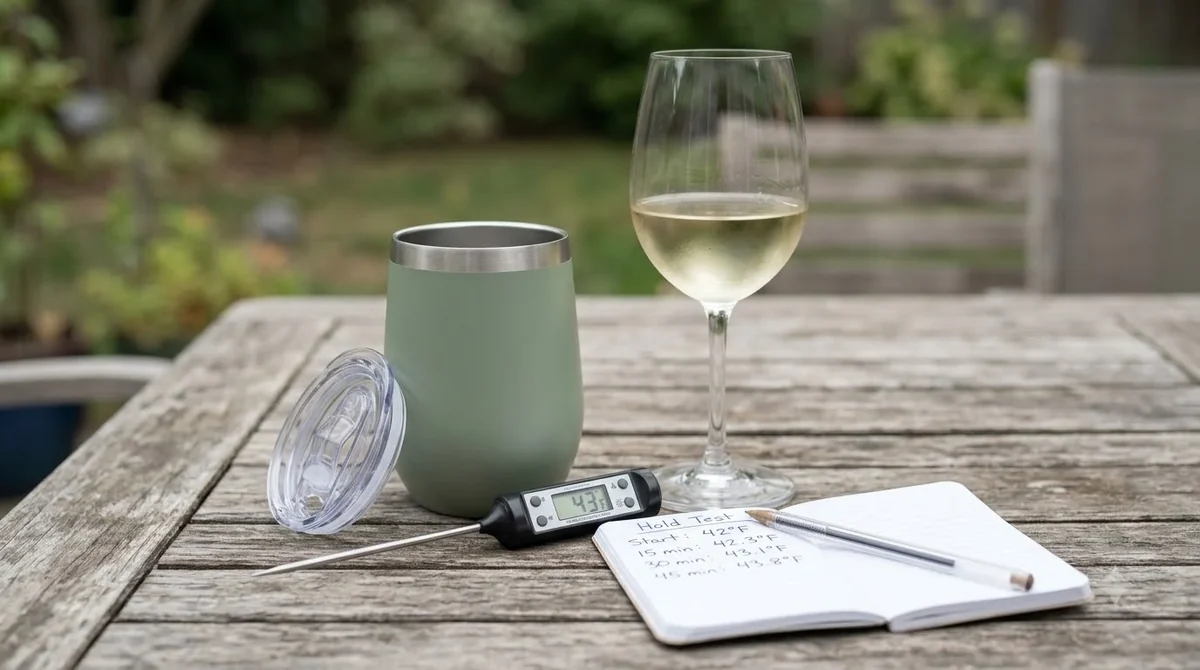
Place white wine, rosé, and sparkling wine in the refrigerator several hours before your event. If you have limited preparation time, an ice-water bath can accelerate the process. The important distinction is between chilling a bottle and maintaining its temperature: a cooler is primarily designed to preserve cold conditions, not replace a refrigerator.
For a faster chill, fill a bucket with approximately equal quantities of ice and water. Submerge the bottle so that the liquid reaches most of its exposed surface. Water fills the gaps between ice cubes, allowing more consistent contact with the glass than an ice-only container. According to the Wine and Spirit Education Trust, an ice bucket should be filled approximately three-quarters full, with equal quantities of ice and water. Its explanation of ideal wine serving temperatures and ice-bucket technique provides further detail on why this combination works.
For an especially warm afternoon, adding salt to the ice bath can make chilling faster. Salt lowers the freezing point of water, producing a colder slushy mixture when the proportions are suitable. Wine Enthusiast also describes using a salted ice bath as a quick pre-serving method for outdoor entertaining. Avoid leaving bottles unattended in an aggressive chilling setup, particularly if you are using a freezer as part of your preparation.
Preparation times depend on the bottle’s starting temperature, the amount of ice, and the surrounding conditions. A bottle coming directly from a warm kitchen will take longer to chill than one that has already spent several hours in the refrigerator. Start early enough that you are not relying on last-minute cooling once guests arrive.
Choose a starting temperature for the wine style
Different wines need different temperatures. A crisp Sauvignon Blanc should generally be colder than a full-bodied Chardonnay, while a light Pinot Noir can benefit from a gentle chill without becoming refrigerator-cold. Starting at an appropriate temperature also gives you room for the wine to warm slightly as it is poured.
For an outdoor event, it can be useful to chill white wines toward the cooler end of their recommended serving ranges. This compensates for the faster warming that occurs when a cold bottle encounters hot outdoor air. However, do not assume that every wine should be served as cold as possible. Excessive chilling can suppress aromas and make some wines seem less expressive.
2. Use an Insulated Cooler for Outdoor Wine Storage
An insulated cooler is one of the most practical ways to keep wine cold outside for several hours. It limits the transfer of heat from the surrounding air and protects bottles from direct sunlight, making it useful for picnics, camping trips, poolside gatherings, and backyard parties.
A hard-sided cooler is particularly useful when transporting several bottles. Choose a size that fits the bottles without leaving excessive empty space, and use frozen gel packs or sealed ice packs to maintain a consistently cold environment. A soft-sided insulated wine bag is a more convenient alternative when carrying only one or two bottles.
Wine bottles should be positioned securely so that they do not roll around during transportation. Separate glass bottles with towels, reusable bottle dividers, or protective sleeves. This reduces the chance of breakage and prevents bottles from knocking against one another when the cooler is moved.
For a larger gathering, divide the wine into separate storage groups. Keep unopened bottles in the main cooler and move only a few bottles to the serving station at a time. This approach limits the number of times the cooler must be opened and helps preserve its cold interior.
Pack the cooler strategically
Place frozen gel packs around the bottles rather than concentrating all the cooling material at one end. If you use ice, keep the bottles protected from excessive movement and make sure the cooler has adequate insulation. A towel can provide separation between glass and frozen packs while helping prevent bottles from shifting.
Leave the cooler in a shaded location, preferably beneath a canopy or table. A cooler sitting directly on hot pavement or a sun-exposed deck will absorb more heat than one positioned on a cooler surface. If the event lasts several hours, check the ice supply periodically and replace melted cooling material when necessary.
Do not keep opening the cooler simply to see what is inside. Every opening allows warmer air to enter. Organizing the bottles before guests arrive makes it easier to retrieve the next bottle quickly without disturbing the remaining supply.
Tip: Pack a separate small cooler for beverages that guests will reach for frequently. Reserve the wine cooler for unopened bottles, and keep it closed between servings. This simple separation can reduce unnecessary temperature fluctuations throughout a long outdoor event.
3. Maintain Serving Temperature with an Ice Bucket
An ice bucket is one of the easiest ways to keep an open or unopened bottle cold on an outdoor table. Unlike a storage cooler, it keeps wine accessible between pours, making it particularly useful for dinner parties, garden lunches, and outdoor celebrations.
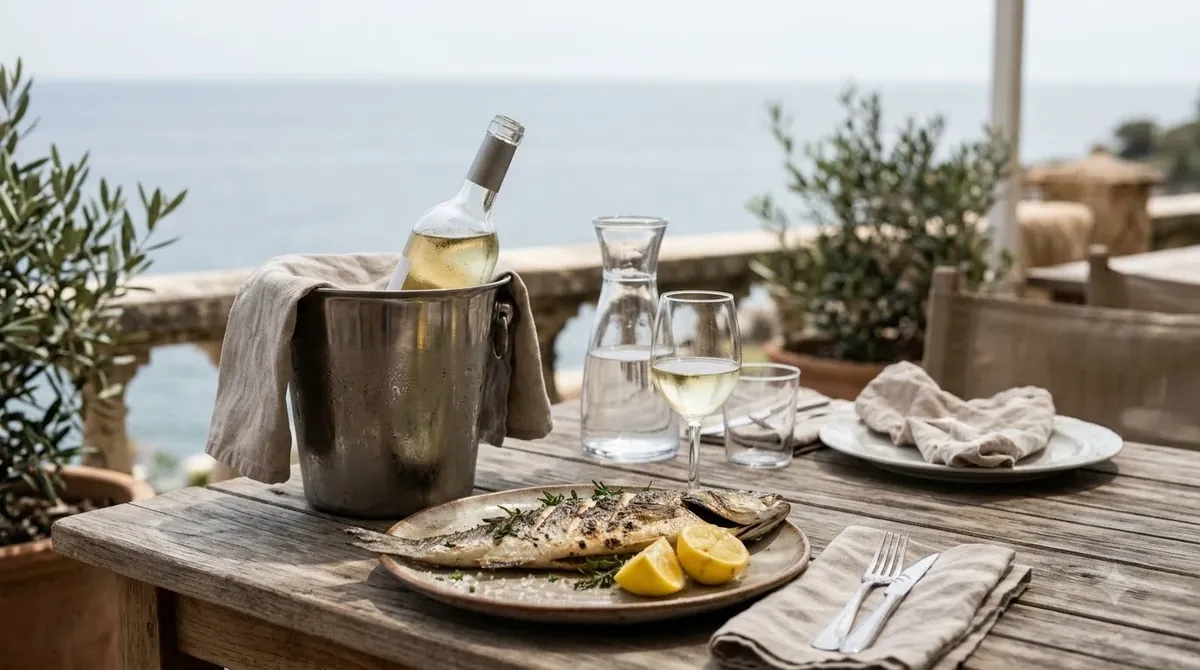
The most important detail is to use both ice and water. Fill the bucket with ice first, then add enough cold water to surround the bottle. According to WSET, water improves heat transfer because it fills the spaces between ice cubes and allows the bottle to make more consistent contact with the cold mixture.
A bucket containing only ice can look impressively full but may cool a bottle slowly because air trapped between the cubes acts as an insulator. The water creates a more effective cooling environment and helps maintain contact around the bottle’s surface.
Choose a container deep enough to cover most of the bottle. A compact single-bottle cooler works well for a small table, while a larger metal or plastic tub is suitable for several bottles. If you are hosting a group, place the tub somewhere accessible but away from direct sunlight.
How to use an ice bucket during service
Keep the bottle in the ice-water mixture between pours. Remove it briefly to serve, wipe the outside with a clean towel, and return it to the bucket. This routine helps maintain a consistent temperature without requiring guests to handle a wet bottle.
For sparkling wine, use a stable bucket with sufficient depth to support the bottle securely. Sparkling wine is generally served colder than still white wine, so keeping it surrounded by ice water is especially useful during a warm outdoor event. A suitable stopper can help preserve carbonation after opening, although an open bottle should still remain cold.
For a table with several wine styles, consider using separate containers. Sparkling wine and light whites can share a colder ice bath, while full-bodied whites and lighter reds may need less aggressive cooling. Keeping everything in one extremely cold bucket can make it difficult to serve each bottle at its best temperature.
4. Choose the Right Wine Temperatures for Outdoor Conditions
Correct serving temperature is important because heat changes how wine smells and tastes. A wine that is too warm can seem alcoholic and heavy, while a bottle that is too cold may lose some of its aromatic character.
Outdoor conditions make temperature management more demanding because bottles and glasses warm continuously during service. The following ranges provide practical targets for planning an outdoor wine station. They reflect common serving recommendations rather than rigid rules.
| Wine Style | Target Serving Temperature | Outdoor Cooling Approach |
|---|---|---|
| Sparkling wine | 40–50°F | Ice-water bucket between pours |
| Light white wine | 45–50°F | Insulated cooler and ice sleeve |
| Rosé | 45–50°F | Pre-chill and use a wine bucket |
| Full-bodied white | 50–55°F | Moderate chilling and shaded storage |
| Light red wine | 55–60°F | Brief chilling and insulated storage |
| Full-bodied red wine | 60–65°F | Keep in a cool shaded cooler |
| Sweet white wine | 43–50°F | Keep in an ice-water bucket |
These ranges help explain why a single cooling method does not suit every bottle. A sparkling wine benefits from colder service, while a fuller Chardonnay needs slightly more warmth to reveal its texture and aromatic complexity. Pinot Noir can be refreshing when lightly chilled, but a powerful Cabernet Sauvignon should not be treated like a crisp white.
Temperature also changes after wine enters the glass. A small pour warms faster than a full bottle in an ice bucket because it has less liquid and more exposure to the surrounding air. Using smaller pours and refreshing glasses when necessary can help maintain a pleasant drinking temperature.
Adjust for unusually hot weather
If the outdoor temperature is particularly high, start with chilled bottles and keep them in insulated storage until needed. For light whites, a starting temperature slightly below the preferred drinking temperature can compensate for rapid warming. The aim is to have the wine reach its ideal range during service, not to keep it ice-cold indefinitely.
A simple wine thermometer can help if you are managing several styles at once. It is particularly useful for larger events where bottles move between coolers, ice buckets, and serving tables. However, regular temperature checks are less important than following a consistent routine: pre-chill, protect from heat, and return bottles to cooling storage between pours.
5. Use Wine Sleeves and Frozen Gel Packs for Portable Cooling
A reusable wine cooling sleeve is a convenient solution when you want to keep a single bottle cold without carrying a large cooler. Many sleeves contain flexible insulating materials or removable gel packs that can be frozen before use.
Place the sleeve in the freezer according to its manufacturer’s instructions before putting it around a chilled bottle. The frozen material absorbs heat from the bottle and slows the warming process. Some designs have an adjustable shape that fits standard wine bottles, making them convenient for transporting a bottle to a picnic or outdoor dinner.
Gel-pack carriers are particularly useful when you are traveling from home to a gathering. They can help protect a chilled bottle during a car journey, provided the bottle is also kept out of direct sunlight. A sleeve is not a substitute for a well-insulated cooler during prolonged exposure to extreme heat, but it is a useful additional layer of protection.
When a cooling sleeve works best
For a short outdoor lunch, one frozen sleeve may be sufficient to maintain a chilled bottle between pours. For a longer afternoon event, combine it with a cooler or an ice bucket. This gives you two stages of temperature protection: insulated transportation followed by active cooling at the serving table.
Another option is to freeze grapes and use them as temporary cooling additions in individual glasses. Unlike ordinary ice cubes, frozen grapes can cool a drink without immediately introducing melted water. They are particularly suitable for informal summer gatherings where presentation is less formal.
Remember that the glass itself also influences warming. A stemmed glass lets guests hold the stem instead of the bowl, reducing the amount of heat transferred from their hands. For outdoor settings where glass breakage is a concern, quality shatter-resistant drinkware can be a sensible alternative.
Choose a cooling sleeve based on its fit and insulation rather than appearance alone. A sleeve that is too loose may not make sufficient contact with the bottle, while one that fits securely can provide more consistent cooling. Keep an additional frozen pack available if the gathering will continue into the evening.
6. Protect Wine from Sunlight, Heat, and Temperature Changes
Keeping wine cold outside involves more than adding ice. Direct sunlight, hot surfaces, and repeated movement between warm and cold environments can all make temperature management more difficult.
Choose a shaded serving location before guests arrive. A covered patio, garden umbrella, or pop-up canopy can protect the wine station from direct sunlight. If there is no natural shade, position the cooler beneath a sturdy table or other suitable cover while ensuring that ventilation is not obstructed.
Keep wine away from outdoor cooking equipment. A barbecue, fire pit, outdoor oven, or heated serving station can create localized temperatures much higher than the general air temperature. Even when a bottle is not directly in the sun, radiant heat from these surfaces can warm it quickly.
Do not leave wine in a parked car while attending an event. The interior of a vehicle can become significantly hotter than the outside environment, even when the weather initially seems moderate. Transport chilled wine in an insulated cooler and bring it directly to the shaded storage area after arrival.
Reduce temperature fluctuations
Frequent movement between hot air and cold storage is not ideal for maintaining a steady serving temperature. Instead of carrying every bottle to the table at once, establish a separate wine station and bring out bottles in manageable quantities.
Keep the main cooler closed, and avoid placing the wine bucket next to a sunny window or heated outdoor wall. If the bucket begins to lose its ice, replenish it before the bottle becomes noticeably warm. These small adjustments are more effective than waiting until the wine is already too warm and trying to cool it again.
For a gathering that lasts most of the day, check the cooling equipment at regular intervals. Replace depleted ice, remove excess standing water if the container is becoming unstable, and make sure the bottles remain properly supported. A little maintenance prevents the serving station from becoming an afterthought during the busiest part of the event.
For more permanent storage principles, see how cold should a wine cellar be. A cellar and an outdoor serving cooler have different purposes, but both benefit from avoiding unnecessary temperature swings.
7. Plan Wine Service for Parties, Picnics, and Outdoor Meals
The best outdoor wine setup depends on the event. A two-person picnic needs a different arrangement from a large backyard barbecue, and a formal garden dinner benefits from a more organized serving station than a casual afternoon gathering.
For a picnic, start with one or two thoroughly chilled bottles and a compact insulated carrier. Frozen gel packs provide convenient cooling without the weight and mess of loose ice. Choose bottles that suit the food and the weather, such as Sauvignon Blanc, dry rosé, or a lightly chilled Pinot Noir.
For a backyard party, use a larger cooler for reserve bottles and a separate ice tub for the wines being served. Keep sparkling wine especially cold and replenish the tub as needed. If the gathering includes several wine styles, label the bottles or arrange them by category so guests can select a wine without repeatedly opening the main cooler.
For a barbecue, remember that red wine does not need to be warm simply because it is red. A Cabernet Sauvignon or Syrah can be served around 60–65°F, while a lighter Pinot Noir may be more refreshing around 55–60°F. Keep both away from the grill and use a shaded storage location rather than leaving bottles on the dining table.
Match the cooling setup to the occasion
For a party with six or more bottles, a large beverage tub can make service easier. Wine Enthusiast writer-at-large Tonya Pitts suggests a six-wine selection for outdoor entertaining that includes one sparkling wine, two whites, one rosé, and two reds. The idea is useful because it offers variety while keeping the number of bottles manageable.
If you are planning a larger celebration, the advice in how to keep wine cold at a party can help you organize bottle storage and service. For sparkling-focused events, how to keep Champagne cold provides additional guidance on preserving the right serving temperature.
Food service should also influence your cooling plan. Place wine near the dining area but away from hot dishes, grills, and direct afternoon sun. Use a dedicated bottle station rather than allowing guests to leave bottles wherever there is space. This keeps the setup orderly and reduces the time wine spends exposed to heat.
Finally, think about the last hour of the event. A cooler that works well during the first part of an afternoon may need fresh ice later, particularly if guests have been opening it frequently. Keeping extra ice and an additional frozen sleeve available gives you flexibility without requiring a major change to your setup.
Frequently Asked Questions
Can wine bottles crack if they are left in a cooler with ice?
Ordinary wine bottles are designed to withstand normal refrigeration and ice-bucket conditions, but rapid freezing can create problems. Wine expands as it freezes, which can push against the cork or damage the bottle. Avoid placing wine in a freezer for extended periods, and do not allow bottles to become frozen during outdoor storage.
Does the color of a wine bottle affect how quickly it warms outdoors?
Clear glass generally provides less protection against ultraviolet light than darker glass. Green and brown bottles can offer some protection from light exposure, although bottle color does not replace proper insulation. Regardless of glass color, direct sunlight should be avoided during outdoor service.
Can canned wine be kept cold using the same methods as bottled wine?
Yes. Canned wine can be stored in an insulated cooler with ice packs or chilled in an ice-water bath. Its smaller individual serving format can make it convenient for picnics and outdoor events because guests do not need to finish an entire bottle after opening it. Keep cans protected from excessive pressure and follow the storage instructions provided by the producer.
Why does sparkling wine sometimes lose its bubbles more quickly outdoors?
Carbon dioxide escapes from sparkling wine after opening, and warmer temperatures can make the release of dissolved gas more noticeable. The shape and cleanliness of the glass can also influence bubble formation. A properly fitted sparkling-wine stopper helps reduce gas loss between servings, although it cannot restore carbonation that has already escaped.
Is a frozen bottle of wine safe to serve after it thaws?
A bottle that has frozen and subsequently thawed may still be drinkable if the glass remains intact and the closure has not been compromised. However, freezing can push the cork outward, create leakage, or alter the wine’s appearance and texture. Inspect the bottle for cracks and leakage before opening it, and avoid serving wine from a damaged container.
Keeping wine cold outside comes down to preparation, insulation, and thoughtful serving. Chill bottles before leaving home, protect them from sunlight in a well-packed cooler, and use an ice-water bucket to maintain their temperature between pours. With the right setup and a little attention to each wine’s serving range, you can enjoy fresh, balanced wine throughout a picnic, barbecue, or summer celebration.
More in Wine Basics
 Which Rose Is Best for Your Taste, Budget, and Food PairingsUpdated Nov 21, 2026
 Is Cheap Wine Bad? How to Find Bottles Worth DrinkingUpdated Nov 21, 2026
 What To Write On A Wine Gift Tag: Thoughtful Messages For Every OccasionUpdated Nov 21, 2026
 Which Wine Is Best For Weight Loss? Compare Lower-Calorie ChoicesUpdated Nov 21, 2026
 What Is The Best Wine For Mimosas? Choose Bubbly That Balances Orange JuiceUpdated Nov 20, 2026
 Which Prosecco Is Best for Your Taste and OccasionUpdated Nov 20, 2026