


We may earn a commission when you buy through links on this page, at no extra cost to you. Learn more.
Dry white wine is a white wine with very little residual sugar left after fermentation, so it tastes crisp and savory rather than sweet. The International Organization of Vine and Wine sets the line at no more than 4 grams of sugar per liter, though acidity also shapes how dry a wine tastes. Popular dry whites include Sauvignon Blanc, Pinot Grigio, unoaked Chardonnay, and dry Riesling. This guide explains what dryness means, how to recognize it on a label, and how to choose a bottle.
Many shoppers see the word dry on a label and assume it means the wine is sour or thin. In reality, dryness describes sugar, not flavor intensity. Once you understand the difference, it becomes much easier to pick a white wine that suits your meal and your taste.
What Dry Means in Wine
A wine is dry when most of the grape sugar has been converted into alcohol during fermentation. What remains is called residual sugar, and it is measured in grams per liter. Even very dry wines rarely fall below about 1 gram per liter, because some sugars cannot be fermented by yeast. Dryness is therefore a matter of degree rather than an absolute state.
The KJ wine guide on dry wine puts it simply: dry wines usually have less than 10 grams of sugar per liter, while sweet wines can have 30 grams or more. Stricter definitions exist too. The International Organization of Vine and Wine uses a line of 4 grams per liter for glucose plus fructose, and a wine can still taste dry at a slightly higher sugar level when its acidity is high enough to balance it.
Why Dry Does Not Mean Sour
Acidity is the key to the taste of a dry white. Wines with bright acidity, such as Sauvignon Blanc and many Pinot Grigios, taste zesty and refreshing even though they contain almost no sugar. That lively acidity gives the impression of crispness, and it is why these wines pair so well with food.
Alcohol and body also affect perception. A dry white with higher alcohol and a rounder texture can taste slightly fuller and softer than a lean, high-acid bottle. Conversely, a wine with a touch of sugar and very high acidity can taste drier than the numbers suggest. Tasting several bottles is the best way to learn how these elements combine.
Common Dry White Wine Styles
Sauvignon Blanc is one of the most recognizable dry whites. It is usually fresh and herbaceous, with notes of grass, citrus, and tropical fruit depending on where it is grown. Pinot Grigio, which is known as Pinot Gris in some regions, tends to be lighter and more neutral, with citrus and pear flavors that make it easy to drink.
Unoaked Chardonnay is another dry style, showing green apple, lemon, and mineral notes without the vanilla or butter that oak aging adds. Dry Riesling can be very crisp and aromatic, with stone fruit and lime, and it often has a sharper edge than the other styles. Albarino from Spain is also a dry white that many people find refreshing and food-friendly.
| Style | Typical flavors | Body and acidity |
|---|---|---|
| Sauvignon Blanc | Citrus, grass, tropical fruit | Light to medium, high acidity |
| Pinot Grigio | Pear, lemon, subtle floral notes | Light, moderate acidity |
| Unoaked Chardonnay | Green apple, lemon, minerality | Medium, balanced |
| Dry Riesling | Lime, stone fruit, floral aroma | Light, bright acidity |
| Albarino | Peach, citrus, saline finish | Light to medium, fresh |
Dry is also a family of terms that appears outside still white wine. Dry sherry, such as Fino or Manzanilla, is made to be bone-dry and is served chilled as an aperitif, and it is covered in more detail in the dry sherry guide. Dry sparkling wine is another useful reference point, since sparkling labels use their own scale, with Brut Nature, Extra Brut, and Brut ranging from the driest to slightly fuller styles.
How to Read a Dry White Label
Few wine labels state the sugar level directly, so you need to look at other clues. The word dry on the front label is the clearest signal, though it is not always used consistently. Terms like Brut and Extra Brut are used for sparkling wines, while still wines are more often described by their grape or region.
Country and region can also help. Wines from cool climates tend to show higher acidity and a drier, crisper profile, while warmer regions may produce riper fruit that tastes softer. Technical sheets or the producer’s website often list residual sugar and acidity, which is the most reliable way to confirm dryness before you buy.
Tip: If a label says off-dry or medium-dry, expect a small amount of sweetness. It can still be pleasant, but it will taste different from a bone-dry Sauvignon Blanc.
How to Serve Dry White Wine
Dry whites taste best cool rather than ice cold. When a wine is too cold, the aromas close up and the acidity can feel harsh. Take the bottle out of the refrigerator about ten minutes before pouring if it has been chilled for a long time. A standard white wine glass keeps the aromas concentrated and gives the wine room to open up.
Once opened, most dry whites keep for three to five days in the refrigerator with a stopper. The wine will gradually lose its freshness, so it is best finished within a few days. Pouring a small amount into a glass and tasting it again after an hour can show how the wine is changing.
Food Pairing With Dry White Wine
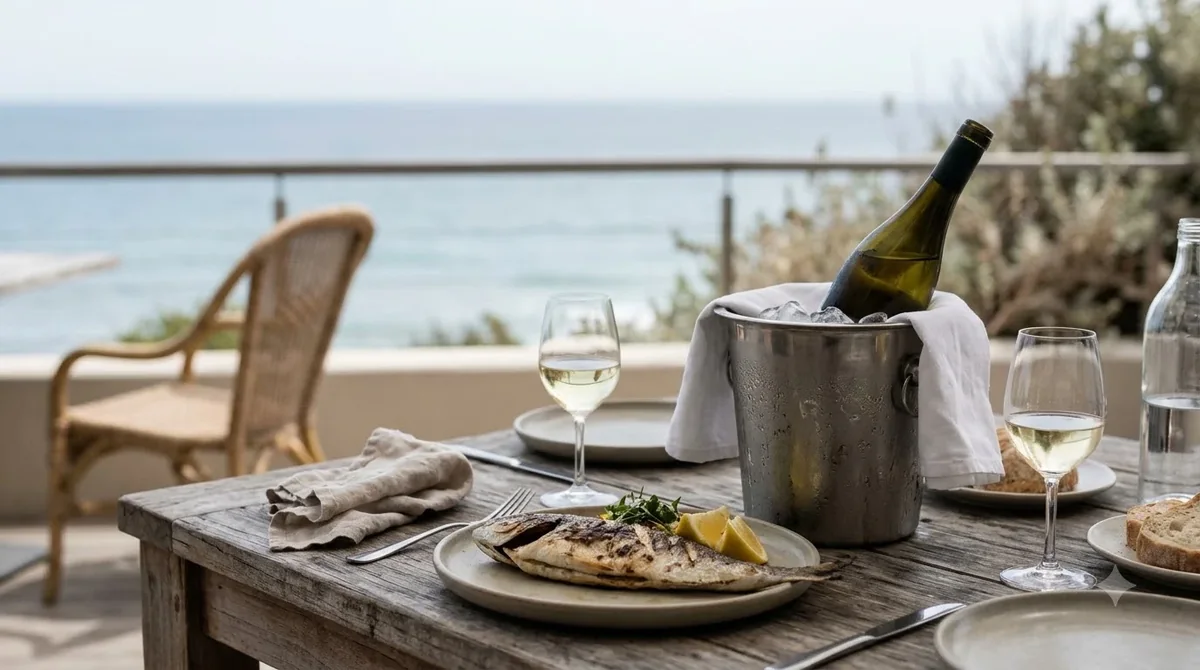
The acidity in dry white wine makes it an excellent partner for food. Sauvignon Blanc works with goat cheese, asparagus, and green salads, because its herbaceous notes match vegetables. Pinot Grigio suits seafood, light pasta, and chicken with lemon. Unoaked Chardonnay handles grilled fish, roast poultry, and creamy sauces without overpowering them.
Dry Riesling is especially flexible, pairing with spicy Thai or Indian food, pork, and rich appetizers. Albarino goes well with shellfish and tapas. As a general rule, match a light wine with a light dish and a fuller white with richer meals.
How to Choose a Dry White Wine
Start with the flavor you enjoy most. If you like citrus and freshness, a Sauvignon Blanc or Pinot Grigio is a safe choice. If you prefer something rounder, an unoaked Chardonnay or a fuller white from a warm region may suit you better. Drinkers who want an aromatic, slightly floral wine should look at Riesling.
When you shop, think about the occasion and the food. For a weeknight meal, a bottle with bright acidity and simple fruit is easy to enjoy. For a special dinner, consider a more structured white from a cool-climate region. Buying one bottle of each style and tasting them side by side is a practical way to learn your preferences.
Frequently Asked Questions
What does dry mean on a wine label?
Dry means the wine has very little residual sugar left after fermentation. It does not describe sourness or intensity of flavor. A wine with high acidity can taste crisp even though it has little sugar.
Is dry white wine the same as sauvignon blanc?
No. Sauvignon Blanc is one grape variety that is usually made dry, but many other white wines are also dry, including Pinot Grigio, unoaked Chardonnay, and some Rieslings. Dryness describes the sugar level, while the grape describes the flavor profile.
Does dry white wine have more alcohol than sweet white wine?
Not necessarily. Alcohol level depends on how much of the grape sugar was fermented, as well as the grape and the region. Sweetness does not reliably predict alcohol, so check the label for the stated alcohol content when that matters to you.
Which dry white wine is best for beginners?
Pinot Grigio is a common starting point because it is light, easy to drink, and not too sharp. Sauvignon Blanc is another good choice for people who enjoy fresh citrus flavors. Trying both side by side helps you find which style you prefer.
Dry white wine is versatile, food-friendly, and easy to understand once you know that dryness refers to sugar rather than taste intensity. Start with a style that matches your palate, serve it cool, and pair it with fresh dishes. To keep exploring, the Wine Buying Guides section covers the basics of choosing bottles, and if you want a contrast, the dry red wine guide shows how the same idea applies to reds.
More in Wine Buying Guides
 Riesling Gift: Choose a Bottle They’ll LoveUpdated Nov 21, 2026
 Sweet Red Wine Gift: Choose a Bottle They’ll LoveUpdated Nov 21, 2026
 Malbec Gift: How to Choose a Memorable Bottle for Any OccasionUpdated Nov 21, 2026
 Sherry Gift Ideas That Match Every Wine LoverUpdated Nov 21, 2026
 Moscato Gift: How to Choose a Sweet Wine They’ll LoveUpdated Nov 21, 2026
 Merlot Gift: How to Choose a Bottle They’ll AppreciateUpdated Nov 21, 2026