

We may earn a commission when you buy through links on this page, at no extra cost to you. Learn more.
If you are wondering should dry red wine be chilled, the answer is yes—cooling dry red wine slightly below modern room temperature to between 55°F and 65°F (13°C to 18°C) brings out fresher fruit and cleaner balance. Light-bodied, low-tannin reds perform best at the cooler end around 55°F to 60°F, while structured, full-bodied bottles shine closer to 60°F to 65°F. Standard American living rooms sit near 70°F to 75°F, which overheats the alcohol and flattens bright fruit aromas.
For generations, wine drinkers repeated the rule that red wine belongs at room temperature, leaving bottles on kitchen counters or dining sideboards until dinner. That advice originated centuries ago in unheated European stone castles and cellars, where ambient indoor air hovered around 60°F. Today, central heating and warm summer weather push household air well past the ideal serving zone, turning otherwise balanced reds into heavy, boozy pours. Giving a bottle a brief rest in the refrigerator restores crispness, structure, and aromatic lift without freezing out the nuance.
Why Modern Room Temperature Hurts Dry Red Wine
Serving a dry red at 72°F disrupts the chemical balance between alcohol, fruit, acidity, and tannin. Because alcohol evaporates faster as liquid warms, an unchilled bottle releases sharp ethanol vapors that mask delicate floral, herbal, and berry notes.
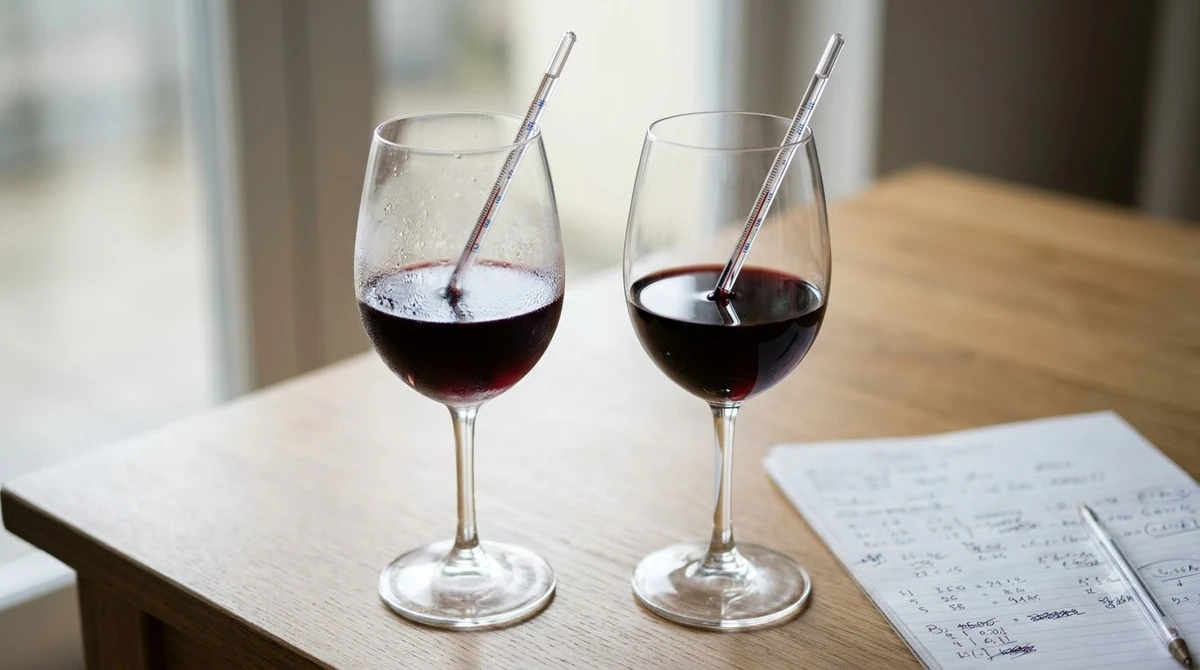
According to wine educators at Wine Folly, a red wine that burns the nose with the smell of alcohol is simply too warm and needs cooling down. Warmth also softens natural acidity, causing juicy red fruit flavors to taste jammy, soupy, or flat on the mid-palate. Even well-made bottles from respected regions lose their sense of freshness when poured at living-room temperatures.
Lower-priced or everyday dry reds benefit especially from a gentle chill. Cooler temperatures slightly mute volatile compounds and rough edges, making simple weeknight bottles taste cleaner and more cohesive. Rather than hiding character, bringing a red down ten degrees lets the winemaker’s intended balance come into focus.
Ideal Serving Temperatures by Red Wine Style
Not every dry red wants the exact same temperature, because grape skin thickness, oak aging, and tannin levels dictate how a wine responds to cold. Lighter styles handle lower temperatures effortlessly, whereas dense, structured reds need a touch more warmth to stay supple.
| Dry Red Wine Style | Common Grapes & Regions | Target Temp (°F) | Target Temp (°C) | Fridge Time from 72°F |
|---|---|---|---|---|
| Light-Bodied, Low-Tannin Reds | Gamay (Beaujolais), Schiava, Frappato, Grignolino | 55°F – 60°F | 13°C – 15°C | 30 – 45 minutes |
| Medium-Bodied Reds | Pinot Noir, Grenache, Sangiovese (Chianti), Barbera, Valpolicella | 57°F – 62°F | 14°C – 17°C | 20 – 30 minutes |
| Full-Bodied, Tannic Reds | Cabernet Sauvignon, Syrah, Malbec, Nebbiolo (Barolo), Bordeaux | 60°F – 65°F | 16°C – 18°C | 15 – 20 minutes |
Light-bodied reds grown in cooler climates carry bright acidity and minimal astringency, so chilling them to around 55°F accentuates their crunchy cranberry, raspberry, and cherry flavors. Reviewers at VinePair note that grapes like Gamay, Mencía, Trousseau, Frappato, and Schiava are prime candidates for a noticeable chill. At this temperature, they drink with the refreshing snap of a structured rosé while retaining red-wine savory depth.
Medium-bodied reds occupy the middle ground where versatility matters most. Pinot Noir, Chianti, Côtes du Rhône, and Mencía lose their vibrant lift above 65°F, yet dropping them below 54°F can mute their earthy, spiced aromatics. Aiming for roughly 58°F to 60°F keeps their fruit lively and their texture silky.
Full-bodied reds present the one boundary where too much cold backfires. Chilling concentrates the perception of tannins, which can make heavily structured Cabernet Sauvignon, Barolo, or young Bordeaux taste rigid, bitter, or metallic. Keeping bold reds between 60°F and 65°F tames their alcohol without locking up their dense aromatics or turning tannins astringent. If you are exploring different body levels across Wine by Type, matching chill time to tannin weight is the easiest way to upgrade every pour.
How to Chill Dry Red Wine Properly at Home
Standard kitchen refrigerators run between 35°F and 40°F for food safety, which is far colder than any red wine should ever be served. Leaving a red bottle in the fridge overnight will numb its bouquet and make the palate feel tight and thin.
The simplest household method is the 20-minute rule: place a room-temperature red bottle in the kitchen refrigerator roughly 20 to 30 minutes before dinner. That short window drops the liquid by about 8°F to 12°F, landing right in the sweet spot without requiring a thermometer. Just as you would ask should dry white wine be chilled only up to a point so it does not turn mute in the glass, timing the fridge stay prevents over-chilling a red.
When guests arrive unexpectedly and the bottle is warm on the counter, an ice-and-water bath works far faster than cold air alone. Submerging the bottle up to its neck in equal parts ice and cold water chills a red wine in 10 to 15 minutes because water conducts heat away from glass much more efficiently than refrigerator air. Avoid stashing bottles in the freezer unless you set an immediate 15-minute phone timer, as forgotten bottles risk freezing, expanding, and pushing out the cork.
Tip: Wine warms up by roughly 2°F to 3°F every ten minutes once poured into a glass at room temperature, so err on the slightly cooler side when pulling the bottle from the fridge.
When Chilling Red Wine Is a Mistake
While most everyday reds improve with a brief cool-down, certain bottles lose what makes them special when served cold. Recognizing those exceptions protects fragile aromatics and expensive cellar treasures from feeling closed off.
Older vintage reds—such as aged Bordeaux, mature Rioja Gran Reserva, or decade-old Barolo—rely on gentle warmth to release complex tertiary aromas of leather, dried rose, tobacco, and forest floor. Cold temperatures suppress volatile aroma molecules, leaving an aged wine smelling muted and tasting overly lean. If your cellar or wine fridge already sits at 55°F, let mature reds stand on the counter for 20 to 30 minutes before serving so they reach 62°F to 65°F.
Heavily oaked reds with pronounced grip also suffer when over-chilled. New French or American oak imparts vanillin, spice, and wood tannins that bind together tightly below 58°F, turning a plush texture into something sharp and woody. By contrast, chilled fruit-forward wine drinks like a batch pitcher—similar to when considering should sangria be chilled—are built around low tannin and bright citrus or berry notes that thrive at colder temperatures.
Real-Life Scenarios: Weather, Food, and Glassware
Adjusting serving temperature to match the setting makes dry red wine noticeably easier to pair with food and outdoor gatherings. A bottle served on an 85°F patio behaves very differently in the glass than the same wine poured beside a winter fireplace.
During summer cookouts, tailgates, or backyard barbecues, start your dry red cooler than usual—closer to 55°F even for medium-bodied bottles—because warm outdoor air heats the glass within minutes. Keeping the open bottle in a shaded insulated sleeve or a bucket of cool tap water prevents the second and third pours from turning lukewarm. Even during winter dinner parties, a roaring fire or radiant floor heating often pushes dining rooms past 72°F, making a 20-minute pre-dinner chill equally worthwhile in January.
Food pairings also shift subtly with temperature. A slightly chilled Pinot Noir or Barbera cuts cleanly through rich salmon, roasted chicken, charcuterie boards, and mushroom pasta because cooler temperatures sharpen perceived acidity. Meanwhile, charred ribeye steaks or braised short ribs pair best with a Cabernet Sauvignon at 62°F to 64°F, where warmth keeps the wine’s tannins supple enough to melt into the marbling of the meat.
Glassware shapes how fast your wine warms once poured. Holding a wine glass by the bowl transfers body heat directly through the crystal, raising the liquid temperature in just a few minutes. Always hold the glass by its stem or base so your dry red stays in its ideal window from first sip to last.
Frequently Asked Questions
Does chilling dry red wine ruin its flavor?
No, a brief chill does not harm dry red wine and actually improves most bottles by taming alcohol heat and sharpening fresh fruit flavors. Only prolonged storage in a 38°F kitchen fridge ruins the experience temporarily by muting aromas and making tannins taste harsh. Letting an over-chilled bottle sit on the counter for 15 to 20 minutes restores its full bouquet.
Can you store unopened dry red wine in a regular refrigerator?
You can chill an unopened bottle in a regular refrigerator for a few hours before serving, but you should not store reds there for weeks or months. Standard refrigerators run around 35°F to 40°F with very low humidity, which can dry out natural corks over time and dull the wine’s development. For long-term storage, keep bottles in a dark spot around 55°F, similar to how dessert bottles are handled when considering should ice wine be chilled before serving.
Is it okay to put ice cubes in dry red wine?
Dropping an ice cube into a glass of casual red wine is completely fine on a hot afternoon if you enjoy it, though melting ice will gradually dilute the wine’s flavor and structure. If you want to cool a warm pour without watering it down, freeze a few red grapes or use chilled stainless-steel wine stones instead. Better yet, chill the bottle itself in an ice-water bath for 10 minutes before pouring.
Which dry red wines taste best served noticeably cold?
Light-bodied, high-acid, low-tannin reds taste best at the coolest end of the red wine range, around 55°F. Top choices include Beaujolais (Gamay), Lambrusco Secco, Italian Frappato, Schiava, Grignolino, and lighter styles of Pinot Noir or Zweigelt. Their bright red-berry character stays crisp and refreshing even after 30 to 45 minutes in the fridge.
Putting your dry red wine in the refrigerator for 20 minutes before dinner is one of the simplest habits you can adopt to make every bottle taste cleaner, brighter, and better balanced. Treat 55°F to 65°F as your target window—cooler for light, fruity reds and slightly warmer for bold, tannic bottles—and let the glass warm naturally at the table. Once you experience a properly chilled red, lukewarm living-room pours will never taste the same.
More in Wine Types & Grapes
 Zinfandel Sugar Content: Dry Red vs. White Zinfandel GramsUpdated Nov 21, 2026
 Best Zinfandel Substitute Options for Sipping and CookingUpdated Nov 21, 2026
 Zweigelt Food Pairing: Best Dishes, Cheeses, and Serving TipsUpdated Nov 21, 2026
 Zinfandel Tannins Explained: How Structure Shapes Every BottleUpdated Nov 21, 2026
 Zinfandel Sweetness Level: Dry Red vs. Sweet White Zin ExplainedUpdated Nov 21, 2026
 Xinomavro Food Pairing: Best Dishes, Styles, and Serving TipsUpdated Nov 21, 2026