


We may earn a commission when you buy through links on this page, at no extra cost to you. Learn more.
When asking should dry white wine be chilled, the answer is yes—ideally between 45°F and 55°F (7°C to 13°C), rather than straight out of a standard kitchen refrigerator. Light, crisp styles like Sauvignon Blanc and Pinot Grigio taste best at the cooler end of that range (45°F to 50°F), while fuller-bodied whites such as oaked Chardonnay shine slightly warmer at 50°F to 55°F. Serving dry white wine too cold locks away its aromatic compounds, whereas serving it at room temperature makes the alcohol feel heavy and dulls its natural acidity.
Temperature is one of the fastest ways to change how a bottle tastes in your glass, often making a bigger difference than the shape of your stemware. Most home kitchens store white wine in a standard food refrigerator set around 35°F to 38°F, which is noticeably colder than what winemakers intend for dry white styles. Getting the chill right takes just a little timing, and once you know the target numbers for different grape varieties, every pour becomes brighter and more expressive.
Ideal Serving Temperatures for Dry White Wines
Dry white wines do not share a single universal serving temperature; instead, the sweet spot depends on the wine’s body, acidity, and oak aging, spanning from 45°F to 55°F (7°C to 13°C). Lighter, high-acid bottles handle a sharper chill, while richer, barrel-fermented wines need extra warmth to show their texture.
According to Wine Folly’s serving temperature guide, light-bodied white wines show their freshest character between 38°F and 45°F, whereas full-bodied white wines perform best between 44°F and 55°F. In practice, sommeliers commonly split dry white wines into three working tiers based on weight and winemaking style. Crisp, unoaked whites such as Pinot Grigio, Albariño, Muscadet, and New Zealand Sauvignon Blanc rely on snappy citrus and mineral notes that stay brisk around 45°F to 50°F. Aromatic dry whites—including dry Riesling, Grüner Veltliner, and dry Gewürztraminer—also sit comfortably at 45°F to 50°F, where floral and stone-fruit aromatics lift out of the glass without losing tension.
Full-bodied dry whites require a gentler approach to temperature. Oaked Chardonnay, white Burgundy, Viognier, and white Rhône blends carry richer textures, lees contact, and subtle oak spice that shut down below 50°F. As reviewers at Wine Enthusiast note, serving complex whites between 50°F and 55°F brings forward layered aromatics and creamy depth, with unoaked or lightly oaked examples leaning closer to 50°F and heavily oaked styles closer to 55°F. Across all Wine by Type categories, matching temperature to body keeps fruit, acid, and structure aligned.
| Dry White Wine Style | Common Grapes & Examples | Ideal Temperature (°F) | Ideal Temperature (°C) | Fridge Rest Before Pouring |
|---|---|---|---|---|
| Light & Crisp | Pinot Grigio, Albariño, Muscadet, Sauvignon Blanc | 45°F – 50°F | 7°C – 10°C | 10 – 15 minutes |
| Aromatic Dry | Dry Riesling, Grüner Veltliner, Torrontés | 45°F – 50°F | 7°C – 10°C | 10 – 15 minutes |
| Medium-Bodied Unoaked | Chablis, Pinot Blanc, Soave, Vermentino | 48°F – 52°F | 9°C – 11°C | 15 – 20 minutes |
| Full-Bodied & Oaked | Oaked Chardonnay, White Burgundy, Viognier, White Rioja | 50°F – 55°F | 10°C – 13°C | 20 – 30 minutes |
Why Temperature Changes What You Taste
Temperature directly controls how fast aromatic molecules evaporate from the glass and how sharply your palate perceives acidity and alcohol. Cold suppresses aroma and sharpens acid, while warmth accelerates evaporation and amplifies alcohol heat.
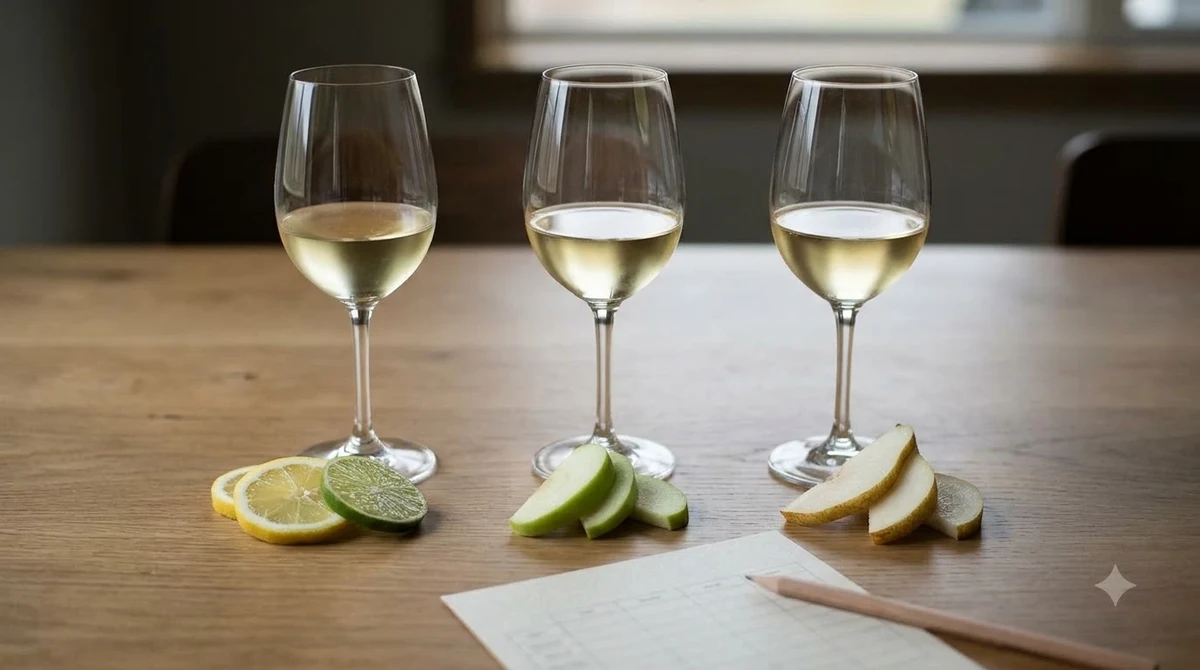
Wine’s scents come from volatile compounds—esters, terpenes, and phenols—that lift into the air above the liquid only when enough thermal energy is present. When a bottle of dry white wine is chilled down to near-freezing kitchen fridge temperatures around 35°F to 38°F, those volatile compounds stay trapped in the liquid. You end up smelling very little, and the wine tastes muted, tight, and overly sharp on the finish. This happens because cold temperatures dull sweet and fruity impressions on the tongue while leaving crisp malic and tartaric acids standing out on their own.
The opposite problem occurs when dry white wine sits out at modern room temperature, which in most American homes hovers around 68°F to 72°F. At that warmth, ethanol evaporates rapidly, creating a noticeable sting in the nose and making the wine feel heavy, flat, or flabby on the palate. Without a cool edge to frame its acidity, even a well-made Sauvignon Blanc loses its snap and finishes warm. Interestingly, this rule of thumb applies in reverse to reds as well—if you have ever wondered should dry red wine be chilled, a brief 20-minute stint in the fridge solves the exact same room-temperature alcohol problem.
How to Chill Dry White Wine Properly
The best way to chill dry white wine depends on how much time you have before dinner, ranging from two hours in a standard refrigerator to 15 minutes in an ice-and-water bath. Because home refrigerators run colder than ideal serving temperatures, pulling the bottle out shortly before pouring is just as important as chilling it.
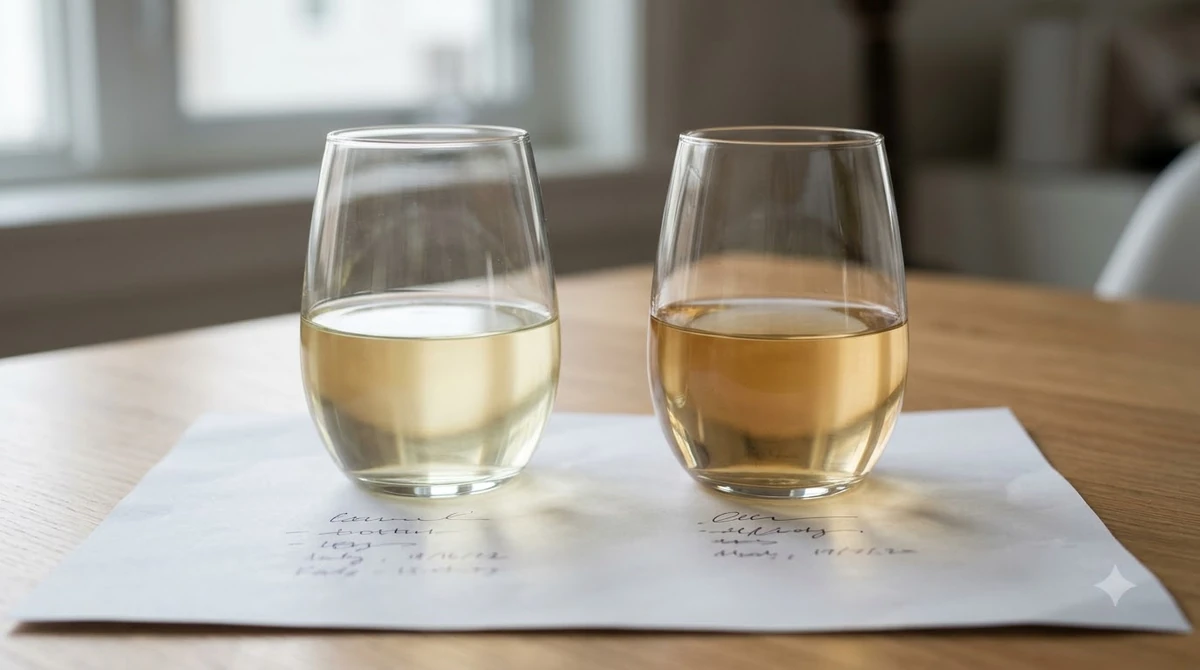
If you are planning ahead for dinner, place a room-temperature bottle on a middle shelf of your kitchen refrigerator about 90 minutes to two hours before serving. Avoid storing it in the fridge for weeks on end, as dry refrigerator air can dry out natural corks and vibration can disturb sediment in older bottles. Once the bottle reaches roughly 38°F, take it out 15 to 20 minutes before pouring—or up to 30 minutes for a rich, barrel-aged Chardonnay—so it warms into its target window. If you store bottles in a wine cooler set to cellar temperature around 55°F, a crisp white only needs about 30 minutes in the kitchen fridge before opening.
When you forgot to chill a bottle ahead of time, an ice-and-water bath is far faster and safer than the freezer. Fill a bucket or deep pot halfway with ice and halfway with cold tap water, then submerge the bottle up to its neck; adding a small handful of kosher salt lowers the freezing point and speeds heat transfer even further. Water conducts cold much more efficiently than air, bringing a 70°F bottle down to 48°F in roughly 15 to 20 minutes. If you do use a freezer in a pinch, limit it to 25 or 30 minutes and set a loud phone timer, because frozen wine expands and can push the cork out or crack the glass.
Tip: When in doubt, serve dry white wine slightly colder than the target range rather than too warm—the liquid in your glass will warm up by roughly 2°F to 3°F every few minutes in a warm dining room.
Common Mistakes When Serving Dry White Wine
Even experienced wine drinkers regularly run into a few avoidable temperature habits that dull flavor or ruin texture. Recognizing these pitfalls makes it easy to adjust a bottle on the fly at home or in a restaurant.
The single most common mistake is leaving a bottle of dry white wine submerged in a restaurant ice bucket for the entire meal. Straight ice-water baths sit close to 32°F, which rapidly over-chills the wine after the first pour and strips away everything except raw acidity. Once a bottle reaches its ideal temperature, lift it out of the bucket and let it rest on the table for 15 or 20 minutes before returning it for a quick five-minute refresh. Holding the wine glass by its bowl instead of the stem also transfers body heat directly into the wine, warming a small pour past its sweet spot within minutes.
Another frequent error is treating all white wines—and all chilled wines—identically regardless of sweetness or body. While dry whites need restraint so their subtle minerality stays intact, sweet styles follow different rules; for example, if you check whether should ice wine be chilled, high residual sugar requires a colder pour around 43°F to 46°F so the sweetness stays crisp rather than syrupy. Similarly, fruit-and-spirit punches have their own serving logic, as covered in our guide on should sangria be chilled. Paying attention to bottle style prevents over-chilling complex dry bottles while keeping lighter pours refreshing.
How Food Pairing Affects Serving Temperature
What you are eating alongside your dry white wine can nudge the ideal serving temperature up or down by several degrees. Cold temperatures emphasize crispness against rich or salty dishes, while slightly warmer pours match savory, roasted, or creamy plates.
When pairing dry white wine with raw oysters, ceviche, goat cheese salads, or fried seafood, lean toward the cooler side of the scale around 45°F to 48°F. The brisk chill sharpens the wine’s acidity, acting like a squeeze of fresh lemon that cuts through brine, oil, and tangy dairy. Light, high-acid whites such as Muscadet, Albariño, and Pinot Grigio thrive in this role, keeping your palate clean between bites.
By contrast, heartier dishes call for a slightly warmer glass in the 50°F to 55°F range. Roast chicken with herb butter, seared scallops, lobster, mushroom risotto, or aged Comté cheese pair best with full-bodied whites like oaked Chardonnay, white Burgundy, or Marsanne-Roussanne blends. Serving those wines a few degrees warmer allows their creamy texture, nutty lees notes, and subtle oak spice to echo the richness of the food rather than clashing with it.
Frequently Asked Questions
Can you put ice cubes in dry white wine?
Dropping an ice cube into dry white wine cools it down quickly on a hot afternoon, though it dilutes the wine’s flavor and acidity as it melts. If you want to chill a glass without watering it down, use frozen grapes or stainless-steel chilling cubes instead. For casual outdoor sipping with an inexpensive, crisp Pinot Grigio, a single large ice cube is completely fine if that is how you enjoy it.
What happens if dry white wine is served too cold?
Serving dry white wine below 42°F suppresses its volatile aromatic compounds, leaving the wine smelling faint and tasting muted or overly acidic. Oak aging, creamy textures, and subtle fruit notes disappear until the liquid warms up. Simply cup your hands around the bowl of the glass for two or three minutes to bring the wine back into its expressive range.
Should dry white wine be stored in the fridge all the time?
A standard kitchen refrigerator is great for chilling dry white wine a few hours before serving, but it is not ideal for long-term storage. Kitchen fridges run too cold at 35°F to 38°F and maintain low humidity that can dry out natural corks over several months, letting oxygen spoil the wine. Keep unopened bottles in a cool, dark cabinet or a wine fridge set around 55°F, then chill them on the day you plan to open them.
How do you warm up dry white wine that is too cold?
Take the bottle out of the refrigerator or ice bucket and let it sit on the kitchen counter for 15 to 20 minutes before pouring. If the wine is already in your glass, gently swirl it and hold the bowl with your palm for a couple of minutes to transfer warmth quickly. Never microwave wine or run the bottle under hot tap water, as sudden heat shocks the aromatics and flattens the flavor.
Chilling dry white wine to the right window—45°F to 50°F for crisp styles and 50°F to 55°F for richer bottles—turns an ordinary pour into a far more aromatic, balanced glass. A quick 15-minute rest on the counter after pulling the bottle from the fridge is usually all it takes to release the flavors the winemaker intended. Keep a kitchen thermometer handy the first couple of times you test it, and you will quickly develop an instinct for the exact chill each bottle deserves.
More in Wine Types & Grapes
 Zinfandel Sugar Content: Dry Red vs. White Zinfandel GramsUpdated Nov 21, 2026
 Best Zinfandel Substitute Options for Sipping and CookingUpdated Nov 21, 2026
 Zweigelt Food Pairing: Best Dishes, Cheeses, and Serving TipsUpdated Nov 21, 2026
 Zinfandel Tannins Explained: How Structure Shapes Every BottleUpdated Nov 21, 2026
 Zinfandel Sweetness Level: Dry Red vs. Sweet White Zin ExplainedUpdated Nov 21, 2026
 Xinomavro Food Pairing: Best Dishes, Styles, and Serving TipsUpdated Nov 21, 2026