

We may earn a commission when you buy through links on this page, at no extra cost to you. Learn more.
What is grand cru in wine? Grand cru is a French classification meaning “great growth,” used to identify distinguished vineyards, wine-producing estates or specific wine origins, depending on the region. It generally signals a recognized level of distinction, but its exact meaning changes between Burgundy, Bordeaux, Alsace and Champagne. Understanding those regional differences helps you read wine labels, compare classifications and choose bottles with greater confidence.
French wine labels often feature terms that look familiar but carry different meanings depending on where the grapes were grown. Grand cru is one of the most important examples. A bottle from Burgundy bearing this designation identifies a particularly distinguished vineyard, while a Bordeaux label may refer to a classified estate. In Alsace, the designation identifies a protected vineyard locality with specific production requirements. Learning these distinctions makes it easier to understand what a classification actually tells you about a wine.
What Grand Cru Means in French Wine
Grand cru literally means “great growth” in French. It is a designation associated with distinguished wine origins, but it does not have one standardized meaning across every French wine region. The geographical origin and classification rules determine what the designation represents.
The word cru relates to something grown or cultivated. In wine terminology, it generally connects a wine with a particular growing area or recognized production category. The word grand indicates distinction within the relevant regional system. Together, they suggest an elevated classification, although the rules behind that classification differ considerably.
In Burgundy, grand cru primarily describes exceptional vineyard sites. In Bordeaux, the expression can identify classified wine estates, particularly in the Médoc, Graves and Sauternes. In Alsace, Grand Cru refers to officially delimited vineyard localities with specific growing and production requirements. Champagne also uses the designation within its own geographical classification system.
These distinctions matter because a classification is meaningful only within its own regional framework. A Burgundy Grand Cru and a Bordeaux Grand Cru Classé are not necessarily comparable categories, even though both use the same French expression.
Grand cru is also not a grape variety, a winemaking method or a universal tasting score. It does not tell you whether a wine is red or white, dry or sweet, or made from Pinot Noir, Chardonnay or another grape. Instead, it provides information about the recognized origin or classification of the wine.
For a useful starting point, think of grand cru as a regional quality designation rather than a single international ranking. Its significance becomes clearer when you examine the rules in the region named on the bottle.
Burgundy Grand Cru: The Importance of Vineyard Sites
Burgundy provides one of the clearest examples of Grand Cru as a vineyard classification. The region recognizes 33 Grand Cru appellations, which represent its highest vineyard category and sit above Premier Cru, village and regional appellations.
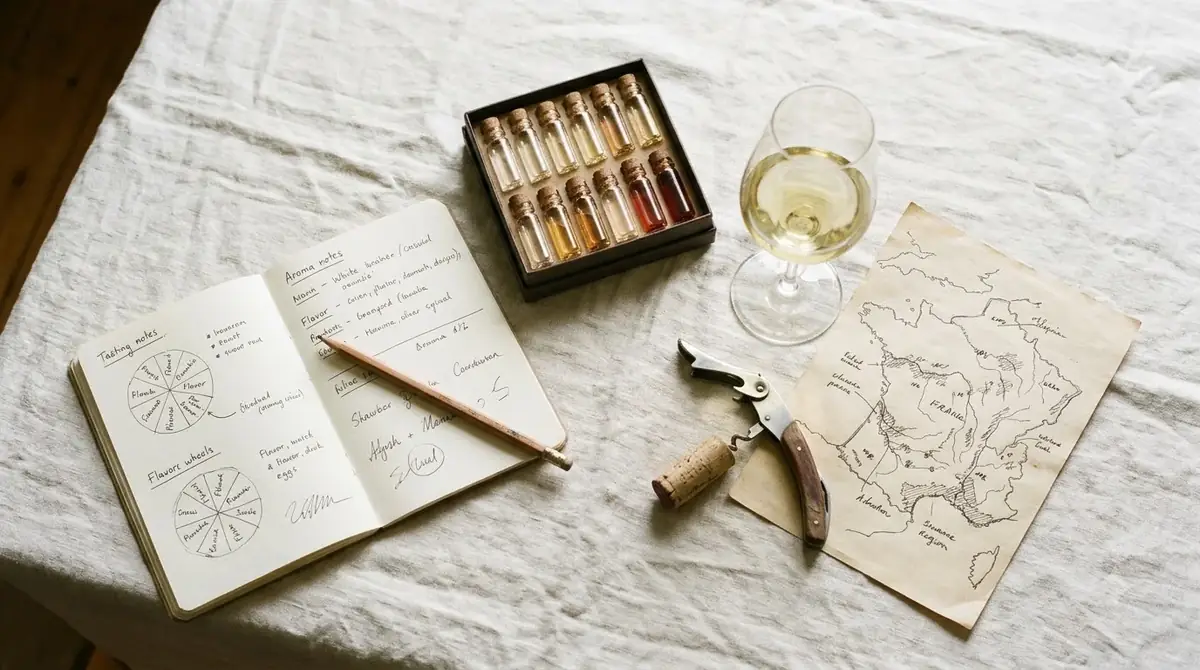
The vineyards are closely associated with the concept of Climats. In Burgundy, a Climat is a precisely defined vineyard site with its own geographical characteristics and history. Differences in slope, soil composition, exposure and local growing conditions help distinguish one site from another, even when two vineyards are relatively close together.
The Bourgogne Wine Board identifies 33 Grand Cru appellations, including well-known names such as Corton, Montrachet, Romanée Saint-Vivant and Clos de Tart. These names identify specific vineyard origins rather than simply describing the winery that made the wine. Its explanation of Burgundy’s appellation classifications provides useful examples of how these vineyard names appear on labels.
One particularly useful detail is how Burgundy Grand Cru labels are written. The village name is generally replaced by the name of the Grand Cru vineyard itself. For example, a bottle labeled Montrachet Grand Cru identifies the vineyard appellation rather than relying on a village designation as its main geographical identifier.
How Burgundy’s classification levels work
Burgundy’s appellation system has four broad levels. Each level provides a different degree of geographical specificity, helping buyers understand how precisely the wine’s origin is defined.
| Classification | Geographical scope | Example |
|---|---|---|
| Regional | A wider Burgundy growing area | Bourgogne Chardonnay |
| Village | A recognized wine-producing commune | Pommard |
| Premier Cru | A specifically identified vineyard within a village appellation | Chablis Premier Cru Montée de Tonnerre |
| Grand Cru | A separately recognized exceptional vineyard appellation | Montrachet Grand Cru |
A Premier Cru vineyard is already a distinguished site, but it occupies the level immediately below Grand Cru in Burgundy’s hierarchy. For example, Chablis Premier Cru Montée de Tonnerre combines the village appellation with the name of a recognized vineyard. By comparison, Chablis Grand Cru identifies one of the region’s highest vineyard categories.
The distinction also explains why a Grand Cru bottle may not prominently display the village name. The vineyard itself has its own appellation, making its identity the primary geographical information on the label.
However, Grand Cru does not mean that every bottle from the same vineyard tastes identical. Individual producers, vineyard ownership, harvesting decisions, fermentation techniques and aging choices all influence the finished wine.
Burgundy is particularly interesting because a single vineyard can be divided among multiple growers. Different producers may make wines from the same Grand Cru site, creating opportunities to compare winemaking approaches while retaining a shared geographical origin.
For a deeper understanding of Burgundy terminology, it helps to learn the difference between an appellation, a vineyard and a producer. These details are especially useful when comparing Pinot Noir from the Côte de Nuits with Chardonnay from the Côte de Beaune.
Bordeaux Grand Cru: Classified Estates and Châteaux
Bordeaux uses Grand Cru differently from Burgundy. In much of Bordeaux, the term relates to the reputation and classification of a wine-producing property rather than an individual vineyard parcel.
The expression Grand Cru Classé is particularly important in the Médoc, Graves and Sauternes. It identifies estates included in particular classification systems. Decanter explains that Bordeaux’s use of grand cru class refers to leading estates in these areas, while Saint-Émilion has its own classification structure.
The distinction between Grand Cru and Grand Cru Classé is important. The presence of Grand Cru on a Bordeaux label does not automatically mean that the estate belongs to an official classified ranking. The additional words and the specific appellation help determine the designation’s significance.
The different Bordeaux classification systems
Bordeaux does not operate under one single classification covering every wine-producing area. Its best-known systems developed in different places and recognize different aspects of estate reputation and wine quality.
The 1855 Classification is associated with leading estates in the Médoc and the sweet-wine producers of Sauternes and Barsac. Its famous growth levels include Premier Cru Classé, Deuxième Cru Classé, Troisième Cru Classé, Quatrième Cru Classé and Cinquième Cru Classé.
These classifications are attached to particular properties. Consequently, the term Grand Cru Classé on a Bordeaux bottle tells you something different from the same general expression on a Burgundy bottle.
Why Saint-Émilion is different
Saint-Émilion has a separate classification system that recognizes estates through a combination of tasting results, reputation, vineyard characteristics and winemaking practices. Its first classification appeared in 1955, and the system is designed for revision approximately every 10 years.
The classification distinguishes three principal levels: Grands Crus Classés, Premiers Grands Crus Classés and Premiers Grands Crus Classés A. The final category represents the highest level within this particular system.
The Saint-Émilion wine organization reports that its 2022 classification included 85 properties. These comprised 71 Grands Crus Classés, 12 Premiers Grands Crus Classés and 2 Premiers Grands Crus Classés A.
The assessment is not based exclusively on a single tasting. According to the regional organization, tasting represents 50% of the final score for both Grand Cru Classé and Premier Grand Cru Classé candidates. Reputation, vineyard and winery characteristics, and winegrowing and winemaking methods contribute the remaining points. The official Saint-Émilion classification explanation describes the assessment criteria and the three classification levels.
This makes Saint-Émilion an especially useful example of why buyers should distinguish between an appellation name and an estate classification. Saint-Émilion Grand Cru is an appellation, while Saint-Émilion Grand Cru Classé identifies an estate that has achieved a higher classification within the regional system.
For consumers, the practical lesson is straightforward: read the complete designation. The words Grand Cru and Grand Cru Classé do not communicate exactly the same level of recognition in Saint-Émilion.
Alsace Grand Cru: Protected Vineyards and Grape Varieties
Alsace has its own distinctive Grand Cru system, built around 51 officially delimited vineyard localities. These areas are recognized for their geographical and climatic characteristics, and wines carrying the designation must meet specific production requirements.
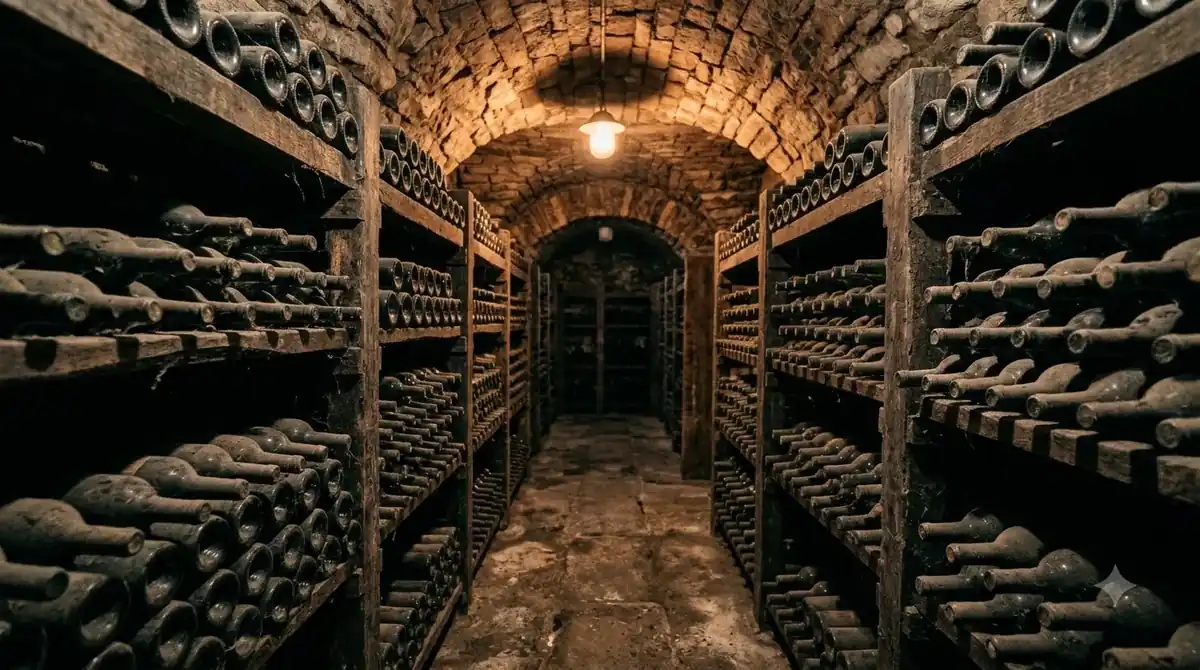
According to Vins d’Alsace, the 51 localities were progressively defined between 1975 and 2007. Their individual vineyard areas range from 3 to 80 hectares, illustrating the differences in scale between recognized Grand Cru sites.
Unlike Burgundy’s vineyard appellations, which are especially associated with Pinot Noir and Chardonnay, Alsace Grand Cru wines are primarily connected with aromatic white grape varieties. The four varieties generally permitted are Riesling, Muscat, Pinot Gris and Gewurztraminer.
There are important exceptions. Altenberg de Bergheim and Kaefferkopf allow blends, while Zotzenberg permits Sylvaner. These regional exceptions demonstrate why it is useful to understand the individual appellation rules rather than assuming that every Grand Cru wine follows identical grape requirements.
Production requirements in Alsace
Grand Cru recognition in Alsace involves more than a prestigious vineyard name. The appellations have specific rules governing vineyard management, grape varieties, harvesting, yields and winemaking.
The basic yield is set at 55 hectoliters per hectare, according to the regional wine organization. A hectoliter represents 100 liters, so this limit corresponds to 5,500 liters of wine per hectare as a basic yield reference. Individual appellation requirements may impose additional restrictions.
The 51 localities became separately protected Alsace Grand Cru appellations in 2011. This change strengthened the recognition of each vineyard name and made the geographical origin more precise on wine labels.
A bottle’s label must identify the relevant Grand Cru appellation and vintage. It generally also names the grape variety, except when the wine is a blend.
These requirements make Alsace Grand Cru labels particularly informative. A name such as Schlossberg, Rangen or Zotzenberg identifies a recognized vineyard locality, allowing buyers to explore differences in soil, exposure and local wine style.
Alsace Grand Cru wines also offer considerable stylistic variety. Riesling can produce dry, high-acidity wines with citrus and mineral characteristics, while Gewurztraminer often has more pronounced floral and spice aromas. Pinot Gris can offer a broader, richer texture, and Muscat is known for its fresh grape and floral character.
The Grand Cru designation therefore describes the origin and applicable production standards, not a single flavor profile. Two wines from different Alsace Grand Cru vineyards can have noticeably different characteristics even when they use the same grape variety.
Champagne Grand Cru and Other Regional Differences
Champagne has another interpretation of Grand Cru, using the designation in connection with the classification of wine-growing villages. This differs from Burgundy’s vineyard-based approach and Bordeaux’s estate-based classifications.
In Champagne, the historical classification system recognizes 17 Grand Cru communes. These villages have traditionally occupied the highest geographical category within the regional system, with Premier Cru representing another recognized level.
The designation relates to the origin of the grapes rather than automatically identifying a particular Champagne producer or cuvée. A Champagne house can purchase grapes from multiple villages and blend them to create a finished wine.
This means that a bottle produced by a famous Champagne house does not necessarily contain grapes exclusively from Grand Cru villages. The producer’s identity and the geographical classification of the grapes are two separate pieces of information.
It is also useful to distinguish the Grand Cru designation from the method used to make Champagne. Traditional-method sparkling wine undergoes its second fermentation in the bottle, but this production technique is not what makes a vineyard or village Grand Cru.
Other French wine regions have their own uses of the expression. For example, the designation appears in Beaujolais-related discussions and in particular appellations outside the major regions commonly associated with the term. The exact legal meaning depends on the relevant appellation regulations.
The following comparison provides a practical summary of the major regional differences.
| Region | What Grand Cru identifies | Important example |
|---|---|---|
| Burgundy | Exceptional vineyard appellations | 33 Grand Cru appellations |
| Bordeaux | Classified estates or regional wine classifications | 1855 Classification and Saint-Émilion |
| Alsace | Protected vineyard localities | 51 Grand Cru appellations |
| Champagne | Classified wine-growing communes | 17 Grand Cru communes |
The numbers in this comparison refer to different kinds of geographical or classification units. Burgundy’s 33 are vineyard appellations, Alsace’s 51 are protected vineyard localities, and Champagne’s 17 are communes. They should not be treated as equivalent counts of wineries or individual wines.
For consumers, this regional variation means that a Grand Cru designation should always be interpreted alongside the wine’s appellation. The geographical name provides the context needed to understand what has actually been classified.
How to Read a Grand Cru Wine Label and Judge Its Quality
Reading a Grand Cru wine label becomes much easier once you identify its region, appellation, producer and vintage. These details help explain what the classification represents and what you can reasonably expect from the bottle.
Start with the geographical name. A Burgundy label might feature Montrachet or Corton, while a Bordeaux label might identify a château and include Grand Cru Classé. An Alsace bottle may prominently display a vineyard locality such as Schlossberg.
Next, look for the precise classification wording. In Burgundy, Grand Cru identifies the highest vineyard category. In Saint-Émilion, Grand Cru Classé and Premier Grand Cru Classé communicate specific estate rankings, whereas Saint-Émilion Grand Cru alone identifies the broader appellation.
The producer’s name is equally important. Two producers working with grapes from the same Grand Cru vineyard can create different wines. Their decisions about harvesting, fermentation, extraction, oak aging and bottling can influence the finished wine considerably.
Does Grand Cru automatically mean better wine?
Grand Cru generally indicates a recognized geographical or classification distinction, but it does not guarantee that every bottle will be superior to every Premier Cru or village wine.
In Burgundy, an outstanding Premier Cru from a skilled producer may offer greater appeal than a less successful Grand Cru from a different producer. The vineyard classification is important, but it is not the only influence on the quality of the finished wine.
The same principle applies in Bordeaux. An estate’s classification provides useful historical and quality information, but vintage conditions and winemaking decisions still influence the wine. A classified estate can produce wines with different levels of appeal across different harvests.
For Alsace, the vineyard designation establishes the origin and production standards, but grape variety and sweetness also influence whether the wine matches your preferences. A dry Grand Cru Riesling is a very different drinking experience from a richly aromatic Gewurztraminer.
Practical buying considerations
Consider these details before selecting a bottle:
- Region: Determine whether the wine comes from Burgundy, Bordeaux, Alsace or Champagne.
- Exact designation: Distinguish Grand Cru from Grand Cru Classé and Premier Grand Cru Classé.
- Producer: Research the winery’s reputation and winemaking approach.
- Vintage: Consider the harvest conditions and the wine’s likely development.
- Grape variety: Identify whether you are choosing Pinot Noir, Chardonnay, Riesling, Gewurztraminer or a Bordeaux blend.
- Drinking window: Consider whether the wine is intended for relatively early drinking or extended cellaring.
Storage and serving conditions also influence the experience. Store bottles on their sides in a cool, dark place near 55°F when appropriate, particularly if you intend to keep them for several years. Avoid temperature fluctuations and direct sunlight.
Serving temperature should reflect the wine style rather than the prestige of its classification. Light-bodied reds generally benefit from 55–60°F, full-bodied reds from 60–65°F, and full-bodied white wines from 50–55°F. Sparkling wines are usually best served between 40–50°F.
Tip: Before choosing a Grand Cru bottle, identify the region and the exact wording on the label. A Burgundy Grand Cru identifies an exceptional vineyard, while a Bordeaux Grand Cru Classé identifies an estate classification. That distinction tells you far more than the words Grand Cru alone.
Finally, think about the occasion and how the wine will be served. A complex Burgundy Pinot Noir may work beautifully with roast duck or mushrooms, while an Alsace Grand Cru Riesling can complement seafood and dishes with fresh acidity. A Bordeaux red may be a natural choice alongside grilled beef or lamb.
If you are planning a larger gathering, understanding bottle sizes and serving portions is also useful. Our guide to how many glasses in a magnum explains how larger bottles affect serving calculations, while how much wine for 100 guests helps with event planning. For additional wine terminology, explore the Wine Glossary.
Frequently Asked Questions
Grand Cru is a regional designation rather than a universal wine grade. Burgundy recognizes 33 Grand Cru appellations, while Alsace has 51 protected localities, and the distinction between an appellation and a classified estate is especially important in Bordeaux.
Is Grand Cru the highest wine classification in France?
Grand Cru is the highest vineyard category in Burgundy, but some regional systems have additional distinctions. For example, Saint-Émilion has Premier Grand Cru Classé and Premier Grand Cru Classé A above its Grand Cru Classé category. Therefore, the highest designation depends on the classification system being used.
Can a Grand Cru wine be white rather than red?
Yes. Burgundy Grand Cru includes white Chardonnay appellations such as Montrachet and Corton-Charlemagne, as well as red Pinot Noir appellations such as Chambertin. Alsace Grand Cru is also strongly associated with white wines made from Riesling, Muscat, Pinot Gris and Gewurztraminer.
Does Grand Cru mean a wine must be aged in oak barrels?
No. Grand Cru does not prescribe one universal aging method. Producers make decisions according to their regional appellation rules and desired wine style. Stainless steel, large wooden vessels and smaller oak barrels can all play a role in different winemaking traditions.
What does monopole mean on a Burgundy Grand Cru label?
Monopole indicates that a single owner controls the entire vineyard site or appellation identified by that name. It is a statement about ownership rather than a separate quality level. This contrasts with Burgundy vineyards that are divided among multiple landowners and producers.
Can a Grand Cru wine be sweet?
Yes. Grand Cru does not automatically mean dry wine. Alsace Grand Cru wines can carry the additional terms Vendanges Tardives or Sélection de Grains Nobles, which identify special sweet-wine categories made from grapes harvested at advanced ripeness or selected noble-rot-affected berries.
Grand Cru is an important French wine designation, but its meaning depends on the region and the classification rules behind it. Understanding the difference between Burgundy vineyard sites, Bordeaux estate rankings, Alsace localities and Champagne communes makes wine labels much easier to interpret. Rather than relying on the words alone, consider the producer, appellation, vintage and grape variety to find a bottle that suits your preferences.
More in Wine Basics
 What Is The Best Wine For Mimosas? Choose Bubbly That Balances Orange JuiceUpdated Nov 20, 2026
 Which Prosecco Is Best for Your Taste and OccasionUpdated Nov 20, 2026
 Which Wine Is Best For Health? Understand the Risks and BenefitsUpdated Nov 20, 2026
 Which Champagne Is Best for Your Taste and OccasionUpdated Nov 20, 2026
 What To Put In A Wine Gift Basket For A Thoughtful, Memorable GiftUpdated Nov 20, 2026
 What Is the Best Wine for Mulled Wine? Choose a Smooth, Fruity RedUpdated Nov 20, 2026