

We may earn a commission when you buy through links on this page, at no extra cost to you. Learn more.
Is it worth repairing a wine fridge? Usually yes, when the fault is a fan, a loose sensor, or a worn door gasket. Repairs inside the sealed refrigerant loop, such as compressor work, are much harder to justify on a small unit. Whether a repair pays off depends on what failed, how old the cooler is, and how much the stored wine matters to you. Most cooling complaints can be narrowed down in under an hour, which lets you decide before committing to any part or service call.
A wine fridge that stops holding temperature gets worse every hour, because the bottles inside are slowly exposed to warmth. The good news is that many coolers labeled broken are not failing at the core. Blocked airflow, a dead fan, a loose temperature sensor, or a tired door gasket account for most complaints, and each of those is inexpensive to check. This guide walks through how to diagnose the fault, when a repair is worth the effort, when replacement is the smarter move, and how to keep the wine safe while the cooler is out of service.
Start With the Type of Cooler You Own
The cooling system inside your unit decides which repairs are realistic. Knowing whether you have a compressor model or a thermoelectric model shapes every decision that follows, so check the label or manual before you buy anything.
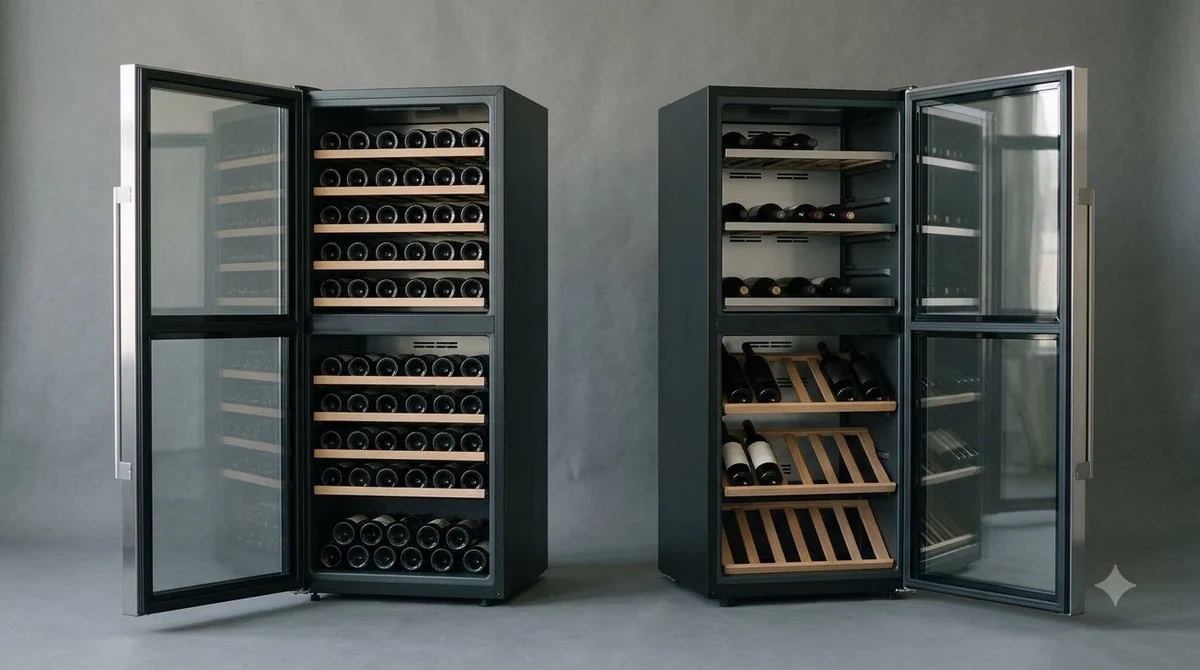
Most full-size and built-in wine coolers use a compressor. In that design, the compressor pushes refrigerant through a sealed loop, and a condenser fan pulls room air across the condenser coil to carry heat away. The fan, coil, thermostat, sensor, and door seal are all accessible parts a homeowner can inspect. The sealed loop itself requires a licensed technician with the right recovery and charging equipment.
Compact units are different. RemoveAndReplace notes that on most compact coolers in the 18 to 46 bottle range, the condenser fan is a small motor mounted right behind the coil, which keeps that repair quick. Repair bills on small thermoelectric models can approach the cost of a new unit, which pushes the decision toward replacement sooner.
Age matters too. A cooler that is already near the end of its normal service life gives you less return on any repair, while a unit that is only a few years old usually justifies a diagnostic check. Look at the cabinet, shelves, and door as well. If those are in good shape, you keep the parts that are hardest to replace.
Diagnose the Fault Before You Buy Any Part
Most cooling failures come from airflow or sensing, not from a dead compressor. Checking the cheap causes first is the fastest way to learn whether the unit is worth saving, and it costs nothing but time.
RemoveAndReplace describes a blocked condenser coil or a stopped condenser fan as the most common reason a wine cooler stops cooling. The compressor may still hum while the heat never leaves the cabinet, so the interior warms gradually instead of holding steady overnight. Unplug the unit, remove the back or bottom panel, vacuum the coil and fan blade with a soft brush attachment, and spin the blade by hand. A stiff or silent fan needs a replacement motor, which is a short job for someone comfortable with a screwdriver.
| Fault | How common | Typical DIY time | Best next step |
|---|---|---|---|
| Blocked coil or stopped condenser fan | Most common | 20 to 45 minutes | Vacuum the coil, then test the fan by hand |
| Thermostat or sensor probe | Common | About 30 minutes | Reseat the probe, then check the control board |
| Worn door gasket | Less common | About 20 minutes | Replace the seal |
| Room too cold for the compressor | Occasional | About 5 minutes | Move the unit to a warmer spot |
| Compressor or sealed system | Rare | Professional only | Get a written quote before deciding |
Tip: Before you order any part, check the fan and coil. Those two checks cost nothing and solve more cooling complaints than any part swap.
The room temperature around the cooler matters more than many owners expect. Most compressor-driven coolers have a low-ambient cutoff that stops the compressor from starting when the surrounding air drops below roughly 50 to 60 degrees Fahrenheit. A garage or unheated basement in winter can trigger that cutoff and make a healthy cooler look broken. Moving the unit to a warmer room is the cheapest fix on the list. If your unit is an Allavino, our guide to allavino wine fridge not cooling covers the same checks for that brand.
Thermostat, Sensor, and Door Seal Repairs
When the fan spins and the coil is clean but the display still disagrees with reality, the problem is usually electronic or mechanical at the sensor rather than in the refrigeration system. These repairs give a homeowner the most value for limited effort.
A sensor probe that has slipped out of its clip is one of the most overlooked causes. RemoveAndReplace describes a dual-zone unit whose display read 55 degrees while the cabinet was actually near 68 to 70 degrees, because the probe was hanging loose near the back wall. Reseating the probe firmly against the cabinet wall and comparing the display with a separate thermometer after an hour is the right first move. Only when the connection is clean and tight should you consider replacing the control board, which is the more expensive part.
The door gasket is the least dramatic failure but still matters. A seal that no longer grips lets cold air escape, so the compressor runs longer and the cabinet never fully cools. The paper test works well here. Close the door on a paper bill so half of it sticks out, then pull. If the bill slides free with no resistance, the gasket has lost its grip and should be replaced. Replacement seals are usually a short job of around 20 minutes.
When the Compressor or Sealed System Has Failed
A compressor or sealed refrigerant fault is the case where repair is hardest to justify, and it is the least common cause in most cooling complaints. Once you have ruled out airflow, sensor, and seal problems, the sealed system becomes the next suspect.
Signs that point to the sealed system include a compressor that never hums or starts even with confirmed power at the outlet, and a sweet or oily smell near the back panel or oily residue on the coil. RemoveAndReplace treats those signs as a probable refrigerant leak, which is not a do-it-yourself repair. Refrigerant handling requires specialized equipment, and a homeowner who attempts it risks injury and further damage. Stop, unplug the unit, and call a technician.
If a technician quotes compressor or sealed-system work, compare that quote with the cost of a comparable new unit before you agree. Sealed-system work is the most expensive category in the repair breakdown above, and on a small cabinet the quote can approach replacement cost. A repair is easier to defend on a larger built-in cabinet with a good service history, and much harder to justify on a small unit that has already been repaired once. Ask for the brand and model number and a written breakdown of parts and labor before you approve anything.
Repair Versus Replace: Running a Simple Test
A repair is worth it when the bill is small compared with the value of the cooler and the wine it protects, and when the unit still has years of normal service left. Replacement wins when the repair is large, the unit is old, or the same failure is likely to return.
Start with a spending check. Wine Spectator suggests asking how much you spent on wine last year, and whether a cooling unit would be less than 25 percent of that annual budget. If it would, a cooler is a sensible investment to protect, and a repair that returns it to working order usually makes sense. If the unit would be a much larger share of your yearly spending, be more careful with expensive repairs and compare the quote with a new unit before proceeding.
Next, compare the repair bill with the cost of a new comparable unit. A common appliance-repair rule of thumb is that a repair costing more than half the cost of a new unit usually tips the decision toward replacement, especially when the cooler is more than about 10 years old. Fan motors, control boards, and gaskets are inexpensive parts, so a repair built around them almost always clears that bar. Sealed-system work is where the math often flips. In practice, most decisions come down to three checks:
- Repair the fan, sensor, or gasket when the parts are cheap and the cabinet is in good shape.
- Get a quote for sealed-system work and compare it with a new unit before saying yes.
- Replace the cooler if the repair is large, the unit is old, or the failure has already happened once.
Keeping the Wine Safe While the Cooler Is Down
Moving the bottles is the most urgent step while the cooler is out of service, because repairs can stretch across weeks. Heat does more damage than most people expect, so the first goal is to keep the wine cool and steady.
Wine Enthusiast recommends storing wine preferably between 53 and 57 degrees Fahrenheit, a range that works for reds, whites, sparkling, and fortified wines. According to Wine Spectator’s storage guide, temperatures above 70 degrees Fahrenheit age wine faster than most people want, and much hotter conditions can leave it tasting flat. Rule out the kitchen, a laundry room, or a boiler room, and keep bottles away from direct sunlight, since UV light can break down tannins over time.
A kitchen refrigerator makes a poor long-term holding spot. Wine Spectator says a household refrigerator is fine for a couple of months, but its average temperature sits well below the safe range and the lack of moisture can dry corks. Humidity between 50 and 80 percent is generally considered safe for storage. Wine Enthusiast adds that lying bottles on their sides keeps corks moist for a couple of years. A cool interior closet or a steady basement is usually the best temporary solution.
Maintenance That Prevents Repeat Failures
Most cooler failures return because the same airflow or sealing problem was never addressed. A short maintenance routine prevents the majority of them and makes any future repair less urgent.
Vacuum the condenser coil and fan twice a year, ideally in spring and fall. RemoveAndReplace calls this the most effective single step against a cooler that stops cooling. Keep the unit away from direct sun and heat sources such as ovens or dishwashers, and leave a few inches of clearance behind a freestanding unit so air can move. For a symptom-by-symptom list, see Wine Fridge Troubleshooting.
Inside the cabinet, avoid packing bottles tight against the vents. RemoveAndReplace notes that blocked circulation causes uneven cooling even when the compressor works properly. Level the cooler so the door closes fully, and limit how often and how long the door stays open, since each opening lets warm, humid air in and makes the compressor work harder to recover. Owners of Magic Chef units can find the same checks for that brand in magic chef wine fridge not cooling. A quick look at the door seal and fan noise every few months catches most early problems.
Frequently Asked Questions
Most owners who search this topic want to know about warranties, resets, lifespan, noise, and leaks. The short answers below cover the points not already discussed above.
Does opening the cooler myself void its warranty?
It can. RemoveAndReplace advises calling a professional if the unit is still under manufacturer warranty, because opening the cabinet yourself can void that coverage. Read the warranty terms before you remove any panel, and keep the receipt and model number handy.
How do I reset a wine cooler that will not start?
Mr. Appliance recommends unplugging the unit and leaving it off for 45 minutes to an hour before plugging it back in. Some models can also be reset by pressing and holding the power button for five to ten seconds.
How long do wine coolers usually last?
Mr. Appliance says wine coolers typically last 10 to 15 years with proper maintenance. Regular coil cleaning and a steady room temperature help a unit reach the longer end of that range.
Why does my wine cooler make rattling or grinding noises?
Minor vibration is normal on compressor models, and leveling the unit or keeping it clear of nearby walls often quiets it. Grinding or buzzing usually points to a condenser or evaporator fan with worn bearings or built-up dirt. Loud banging or rattling that is louder than usual can signal compressor trouble that needs a professional.
Why is my wine cooler leaking water?
Mr. Appliance lists a clogged drain line, a cracked drain pan, and very high ambient humidity as common causes. A clogged drain line is the easiest to check, because debris or mold can back water up and onto the floor.
A wine fridge is usually worth repairing when the fault is airflow, a sensor, or a seal, and the repair stays small next to the cost of a new unit. When the sealed system fails, get a written quote and compare it before agreeing. In both cases, move the wine somewhere cool and steady first so the decision can wait for the facts.
More in Storage & Fridge Care
 How Long Can You Store Wine in a Wine Fridge? Protect Bottle QualityUpdated Nov 20, 2026
 Can You Store Beer in a Wine Fridge? Keep Both Drinks FreshUpdated Nov 20, 2026
 Wine Fridge Condensation: Identify Causes and Fix Moisture ProblemsUpdated Nov 20, 2026
 Wine Fridge Too Cold: Protect Your Wine and Fix the TemperatureUpdated Nov 20, 2026
 How to Reset Wine Fridge: Restore Cooling and SettingsUpdated Nov 20, 2026
 Wine Fridge Fan Not Working: Diagnose Problems and Restore CoolingUpdated Nov 20, 2026