

We may earn a commission when you buy through links on this page, at no extra cost to you. Learn more.
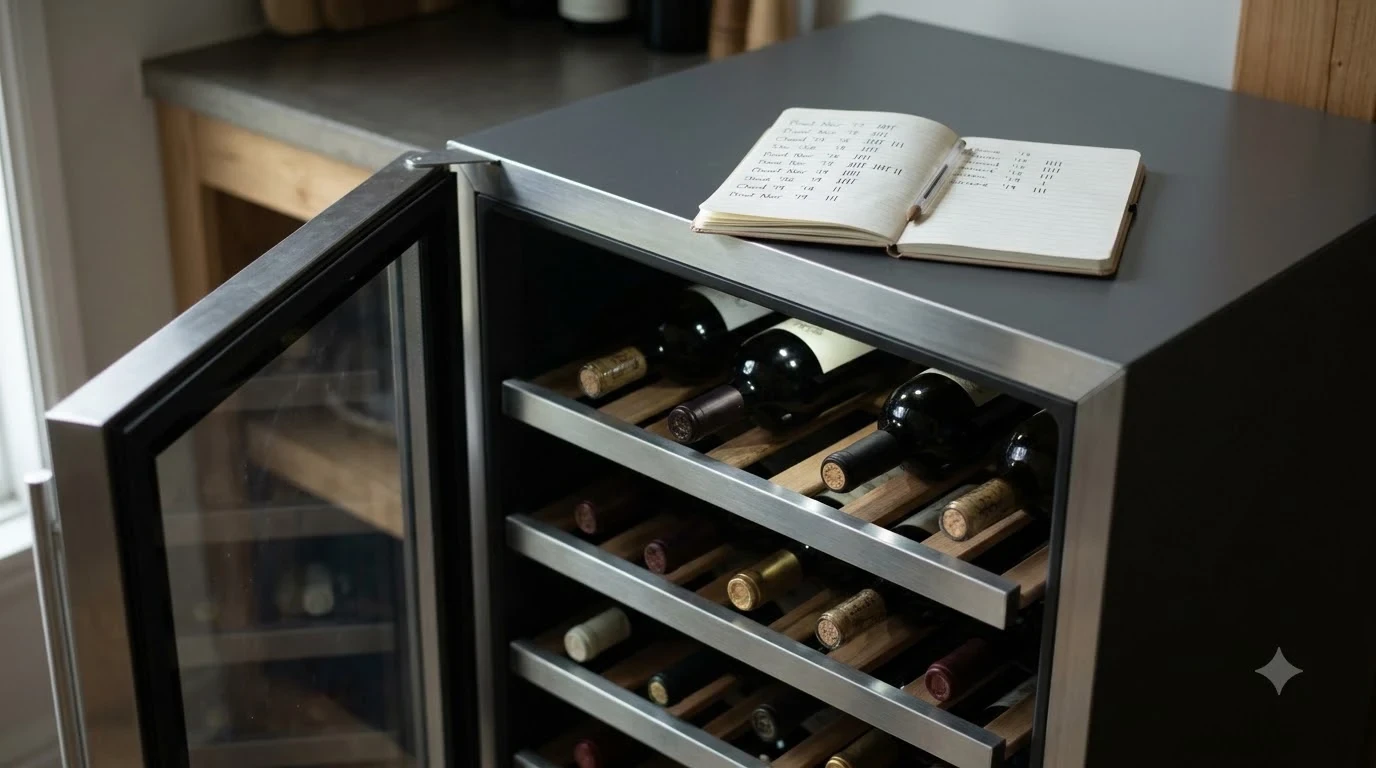
A wine fridge too cold can slow wine maturation, mask delicate flavors, and encourage unwanted crystal deposits, so most collections should be stored around 53°F to 57°F. Temperatures below 41°F deserve particular attention because they fall below the range recommended for proper wine maturation by Miele. A wine refrigerator should maintain a stable temperature rather than simply make bottles as cold as possible. The right setting depends on whether you are storing bottles for long-term aging or preparing them for serving.
A wine refrigerator is designed to protect wine from heat, light, and changing environmental conditions. However, excessive cooling can create a different set of problems. A bottle stored at 40°F is not necessarily ruined, but that temperature is colder than most wines need for extended storage. Understanding the difference between storage temperature and serving temperature helps prevent unnecessary adjustments, protect valuable bottles, and identify a refrigerator that is not operating correctly.
What Temperature Is Too Cold for a Wine Fridge?
For most collections, a wine fridge set between 53°F and 57°F provides an appropriate environment for long-term storage. Temperatures below 41°F are a warning sign because they can interfere with normal maturation, although a brief period of refrigeration does not automatically mean the wine has been damaged.
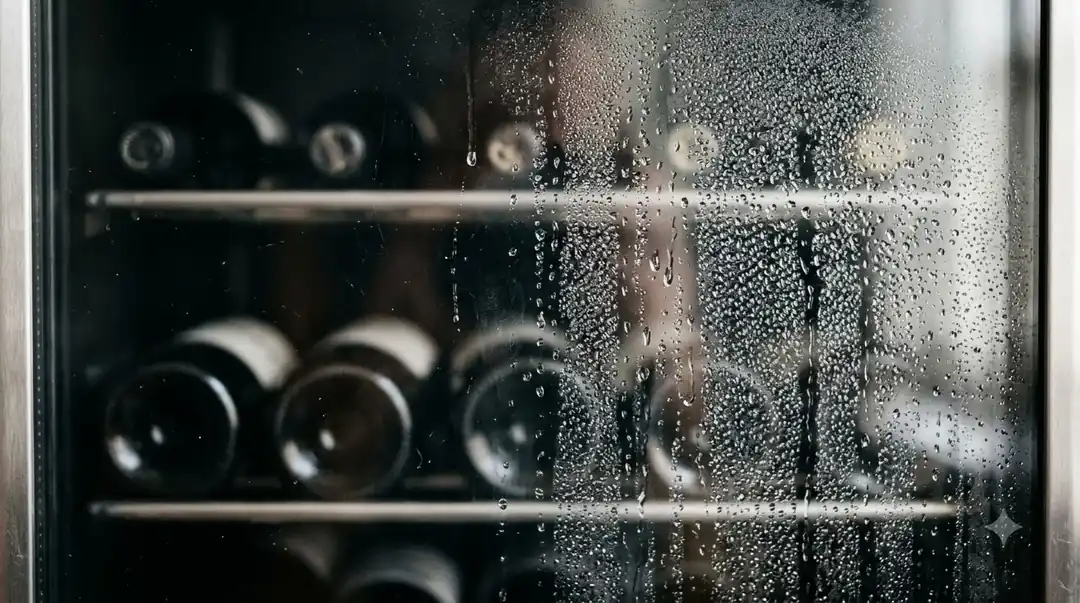
According to Miele, wine can be stored within a broad range of 42°F to 64°F, but the manufacturer identifies temperatures below 41°F as too cold for proper maturation. Wine Enthusiast recommends a narrower range of 53°F to 57°F for longer-term storage. These recommendations address slightly different purposes: the broader range describes acceptable storage conditions, while the narrower range provides a practical target for maintaining a collection.
The distinction matters because a wine fridge is not the same as a kitchen refrigerator. A conventional refrigerator commonly operates around 37°F to 40°F to preserve food. That temperature is colder than most wines need for extended storage. A dedicated wine refrigerator is designed to maintain a more suitable environment, often with adjustable settings that accommodate different storage arrangements.
Consider these general temperature categories when checking your appliance:
| Measured temperature | Assessment | Recommended action |
|---|---|---|
| 32°F or lower | Freezing risk | Investigate immediately and protect bottles from freezing. |
| 33°F–40°F | Very cold for storage | Check the setting, thermometer, and cooling operation. |
| 41°F–49°F | Cooler than necessary | Consider adjusting toward the recommended storage range. |
| 50°F–52°F | Suitable for many collections | Monitor temperature consistency. |
| 53°F–57°F | Preferred long-term range | Maintain a stable setting. |
| 58°F–60°F | Generally acceptable storage | Monitor conditions and collection requirements. |
| 61°F–65°F | Warmer storage range | Evaluate storage duration and ambient conditions. |
These categories are practical troubleshooting guidelines, not universal damage thresholds. A bottle that spends a few hours at 39°F is different from a bottle that remains close to freezing for months. Duration, temperature stability, bottle condition, and the wine’s intended purpose all influence the outcome.
A particularly useful target for a mixed collection is approximately 55°F. This temperature provides a convenient middle ground for Cabernet Sauvignon, Pinot Noir, Chardonnay, Riesling, Champagne, and other common styles. You can then bring individual bottles to their preferred drinking temperatures shortly before opening.
What Happens When Wine Is Stored Too Cold?
Excessive cold usually slows wine’s development rather than immediately making it undrinkable. The more serious concerns arise when temperatures approach freezing, remain unusually low for extended periods, or fluctuate repeatedly.
The first effect is slower maturation. Wine changes gradually inside a sealed bottle through a range of chemical reactions. Cooler temperatures slow those processes, which means a wine intended to develop over several years may take longer to reach its preferred drinking stage. This does not necessarily destroy the wine, but it changes the conditions under which it develops.
Another possible consequence is the formation of tartrate crystals. These small deposits can appear on the bottom of a bottle or attach to the cork. They are naturally occurring salts associated with tartaric acid. Although they may resemble glass fragments, they are generally harmless and do not automatically indicate spoilage.
Freezing presents a more serious problem. Wine contains water, alcohol, and dissolved substances, so it does not freeze in precisely the same way as plain water. Nevertheless, a sufficiently low temperature can cause partial or substantial freezing. As the liquid expands, it can force the cork upward, damage the seal, or cause leakage.
Even when the bottle remains intact, freezing can affect the wine’s appearance and composition. Liebherr identifies protein haze, tartar deposits, and mineral changes among the potential consequences of freezing. Its wine storage guidance also explains why bottles should remain above freezing and why excessively low temperatures encourage crystal formation.
Can Cold Temperatures Ruin the Flavor?
Serving temperature and storage temperature should not be confused. A wine that tastes muted straight from a very cold refrigerator may become more expressive after it warms gradually. Low serving temperatures can suppress aromatic compounds and make the wine seem less flavorful than it really is.
Red wines are especially noticeable in this respect. A Cabernet Sauvignon served directly from a refrigerator operating at 39°F can seem unusually firm, muted, and harsh. Its tannins may feel more prominent because the wine’s fruit aromas are less expressive. A Pinot Noir can similarly lose some of the delicate red-fruit and floral character that makes the variety appealing.
White wines also suffer from excessive chilling at serving time. A Sauvignon Blanc or Riesling served below 43°F may show less aromatic detail, even though both varieties normally benefit from a cool serving temperature.
The good news is that a cold bottle does not always require special treatment. If it has not frozen or leaked, allow it to warm gradually before serving. Avoid placing the bottle beside a heater, on a radiator, or in direct sunlight. Sudden heat exposure can create another temperature problem rather than solving the original one.
How to Check Whether Your Wine Fridge Is Actually Too Cold
The displayed temperature is useful, but it does not always represent the exact temperature surrounding every bottle. An independent thermometer provides a more reliable way to determine whether your appliance is cooling excessively.
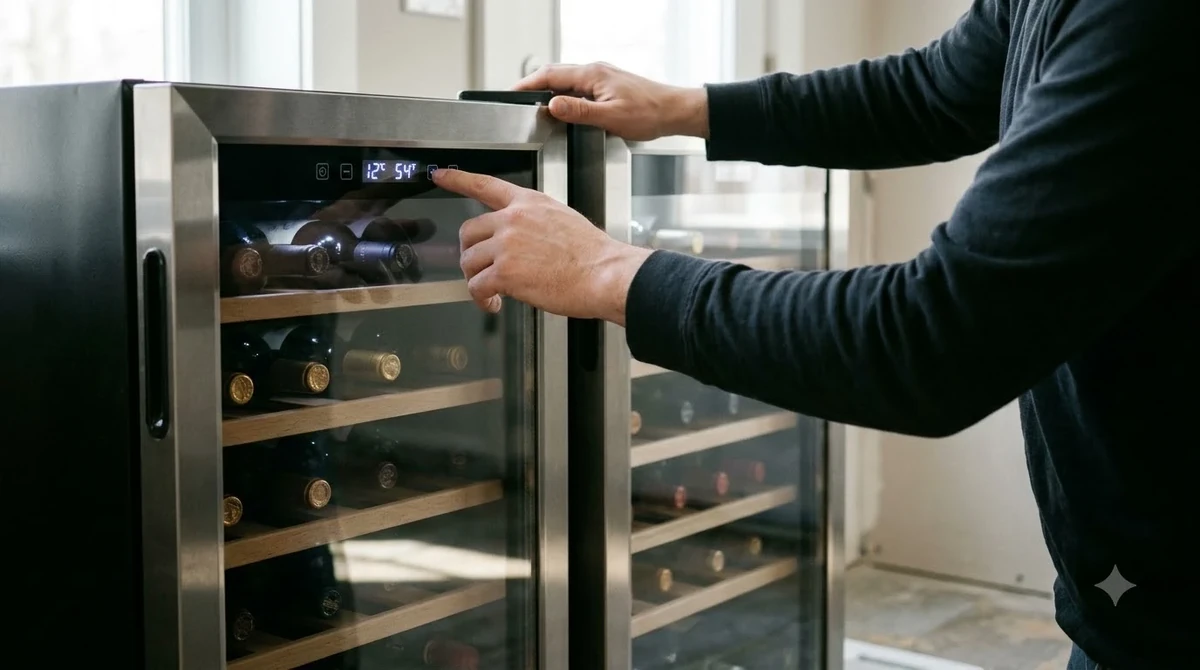
Start by placing a refrigerator thermometer near the center of the cabinet, away from the cooling outlet, interior walls, and door. Allow the appliance enough time to stabilize before drawing conclusions. A newly adjusted wine fridge may need several hours or longer to settle, depending on its capacity, insulation, ambient conditions, and the number of bottles inside.
For a more representative reading, use a temperature logger or a thermometer with a minimum-and-maximum memory function. Record readings over at least 24 hours. This helps distinguish a genuinely low operating temperature from a temporary cooling cycle.
Temperature differences inside the cabinet are also important. Cold air tends to collect lower in a refrigerator, while warmer air may remain near the upper shelves. A single-zone wine fridge may therefore have small temperature differences between its upper and lower sections.
Check the Following Areas
- The digital display: Confirm the selected temperature and make sure the control has not been accidentally changed.
- The independent thermometer: Compare the measured cabinet temperature with the display rather than relying on the control panel alone.
- The cooling vents: Look for bottles or packaging that obstruct airflow around the refrigeration outlets.
- The door seal: Check for damaged rubber, gaps, or a door that does not close completely.
- The thermostat sensor: Look for a sensor that has been displaced or covered by bottles.
- The ambient environment: Check whether the appliance is installed in a location outside its recommended operating conditions.
It is also useful to compare readings at different shelf positions. For example, a thermometer placed on the lowest shelf may read 48°F while the upper shelf reads 54°F. That difference does not necessarily indicate a defective refrigerator, but it may mean the appliance needs better airflow or a different bottle arrangement.
If the display shows 55°F but the independent thermometer repeatedly records 38°F, the discrepancy deserves attention. Check the manufacturer’s instructions for sensor placement and temperature measurement procedures before assuming the thermostat has failed.
Tip: Keep a simple temperature log with readings taken at the same location and approximately the same time each day. A consistent record over 24 to 48 hours is more useful for diagnosing a wine fridge than a single temperature reading immediately after opening the door.
How to Fix a Wine Fridge That Is Too Cold
If your wine refrigerator consistently operates below its intended temperature, start with simple adjustments before investigating internal components. Many problems involve incorrect settings, restricted airflow, or an inaccurate reading rather than a major refrigeration failure.
Step 1: Raise the temperature setting gradually. If your wine fridge is set to 45°F and you want long-term storage, adjust it toward approximately 55°F. Avoid repeatedly changing the setting every few minutes. Give the appliance time to stabilize before deciding whether another adjustment is necessary.
Step 2: Check the operating mode. Some wine refrigerators include separate storage, beverage, quick-cooling, or demonstration modes. A control setting intended for temporary chilling may not be appropriate for long-term storage. Consult the owner’s manual to identify the purpose of each available mode.
Step 3: Inspect the temperature sensor. The sensor measures conditions inside the cabinet and communicates with the cooling controls. If it is displaced, covered by a bottle, or affected by direct cold airflow, the appliance may receive an inaccurate temperature reading. Follow the manufacturer’s instructions rather than moving electrical components or opening sealed refrigeration sections.
Step 4: Check ventilation. Confirm that internal vents are not blocked by bottles, packaging, or accessories. Also inspect the external ventilation openings. Built-in models require the specified clearance and ventilation arrangement to operate correctly.
Step 5: Inspect the door and gasket. Make sure the door closes fully and that the seal is clean and undamaged. Although a poor seal more commonly causes excessive warming and cooling-system overwork, it can also contribute to unstable operation and misleading temperature readings.
Step 6: Restart the appliance if the manual permits it. A controlled power reset may resolve certain electronic control issues. Follow the manufacturer’s shutdown and restart instructions, particularly if the appliance has an electronic thermostat or a compressor with a specified restart delay.
Step 7: Contact a qualified technician if the problem continues. Persistent temperatures significantly below the setpoint can indicate a faulty thermostat, temperature sensor, control board, or refrigeration-system problem. Do not attempt to open refrigerant lines or repair electrical components without appropriate training.
Owners of Allavino appliances can also review Allavino wine fridge troubleshooting for help identifying cooling-related symptoms. If the appliance continues to operate outside its normal temperature range, Allavino wine fridge repair information can help clarify when professional service is appropriate.
The important distinction is between an incorrect temperature setting and a refrigerator that cannot regulate its temperature. A setting change should correct the first problem. If the measured temperature remains substantially colder than the selected setting after the appliance has stabilized, further diagnosis is necessary.
Correct Storage Temperatures for Different Wine Styles
Most wines benefit from a similar long-term storage temperature, regardless of color or grape variety. Serving temperatures are different: sparkling wine, light white wine, full-bodied Chardonnay, and structured red wine each have their own preferred temperature ranges.
Wine Enthusiast recommends storing red, white, sparkling, and fortified wines at the same general storage temperature. This avoids the misconception that red wine must be stored at room temperature while white wine must remain in a conventional refrigerator. Its wine storage temperature recommendations distinguish between short-term storage at 50°F to 59°F and longer-term storage at 53°F to 57°F.
For a single-zone wine fridge, approximately 55°F is a practical target for a mixed collection. A dual-zone model provides more flexibility if you want one compartment for longer-term storage and another for bottles that are nearly ready to serve.
| Wine style | Recommended serving temperature | Storage consideration |
|---|---|---|
| Sparkling wine and Champagne | 40°F–50°F | Store near the general collection temperature and chill before serving. |
| Light white wine | 45°F–50°F | Avoid over-chilling aromatic varieties. |
| Full-bodied white wine | 50°F–55°F | Allow richer styles such as oaked Chardonnay to warm slightly. |
| Rosé wine | 45°F–50°F | Use a cooler serving temperature than long-term storage. |
| Light red wine | 55°F–60°F | Allow the bottle to warm gradually before serving. |
| Full-bodied red wine | 60°F–65°F | Avoid serving directly from a cold storage compartment. |
| Sweet white wine | 43°F–50°F | Serve chilled while preserving enough warmth for its aromas. |
These are serving temperatures, not instructions to program a long-term storage cabinet at seven different settings. A bottle stored at 55°F can be chilled or warmed to its preferred serving temperature shortly before opening.
Why a Dual-Zone Wine Fridge Can Help
A dual-zone refrigerator separates the cabinet into two independently controlled temperature areas. One compartment can maintain approximately 55°F for long-term storage, while another can hold white wines or sparkling bottles at temperatures closer to their serving requirements.
For example, a household that regularly opens Sauvignon Blanc, Chardonnay, Pinot Noir, and Cabernet Sauvignon may benefit from a two-zone arrangement. The upper or lower zone can be assigned according to the manufacturer’s temperature layout, with the second compartment used for bottles that need additional chilling.
Single-zone appliances remain perfectly practical for collections that are primarily intended for storage. They are often simpler to operate because every bottle shares one stable environment. If you already own a single-zone refrigerator, there is no need to keep the entire collection at serving temperature.
For additional guidance on selecting an appropriate setting, see how cold is a wine fridge. The distinction between storage and serving temperatures is particularly useful when deciding whether your appliance is actually too cold.
Preventing Excessive Cooling and Protecting Your Wine Collection
Good wine storage depends on more than the thermostat. Stable temperatures, suitable humidity, limited light exposure, and adequate ventilation all contribute to a consistent environment.
Start by positioning the refrigerator in a suitable location. Avoid unconditioned garages, outdoor patios, and areas exposed to direct sunlight if the appliance is not designed for those conditions. Large changes in surrounding temperature can affect how hard the refrigerator must work and how consistently it maintains its internal environment.
Wine Enthusiast specifically advises against placing wine refrigerators in locations with severe ambient temperature fluctuations. A room that becomes extremely hot during the day and cools substantially at night can make temperature regulation more difficult.
Next, pay attention to humidity. Natural corks need an appropriate moisture environment to remain in good condition. Liebherr identifies 50% to 80% relative humidity as a suitable range for wine storage. Excessively dry conditions can contribute to cork deterioration, while excessive humidity can encourage mold growth.
Light protection is another consideration. Direct ultraviolet exposure can accelerate aging and change wine’s character. Keep bottles away from strong sunlight and avoid leaving the refrigerator door open unnecessarily. If your appliance has UV-protective glass, make sure the door is properly closed when the cabinet is not being accessed.
Storage position matters, too. Bottles sealed with natural corks are commonly stored horizontally to keep the cork in contact with the wine. This helps maintain a suitable seal during longer storage periods. Alternative closures, including screw caps, do not require the same arrangement for cork moisture.
Build a Simple Maintenance Routine
A few regular checks can identify temperature problems before they affect a large collection. You do not need specialist equipment to perform basic maintenance, although a reliable independent thermometer is useful.
- Check the displayed setting at least once a month.
- Compare the display with an independent thermometer periodically.
- Inspect the door gasket for dirt, cracks, and gaps.
- Keep internal cooling outlets clear of bottles and accessories.
- Clean external ventilation openings according to the owner’s manual.
- Check the room temperature around the appliance during particularly hot weather.
- Listen for unusual compressor noises or repeated cooling cycles.
- Keep a record of unexplained temperature changes and service visits.
Also avoid overloading the refrigerator beyond its rated capacity. Excessive loading can interfere with airflow and temperature consistency. Large bottles, sparkling wine bottles, and unusual bottle shapes may require different shelf arrangements, so leave sufficient space for air to circulate.
If your collection includes bottles intended for aging over several years, stability should take priority over achieving the coldest possible setting. A consistent 55°F environment is generally more useful than a cabinet that alternates between 40°F and 58°F.
For more appliance-care information, visit the Wine Fridge Troubleshooting and Storage Care section. Regular maintenance and accurate temperature monitoring can help prevent unnecessary cooling adjustments and identify equipment problems earlier.
Frequently Asked Questions
Is 40°F too cold for unopened wine?
Forty degrees Fahrenheit is colder than the preferred long-term storage range, but a bottle kept at that temperature for a short period is not automatically spoiled. Some wines are temporarily refrigerated before serving without experiencing permanent damage. For extended storage, move the bottle to a more appropriate, stable environment.
Can unopened wine be stored at 35°F overnight?
An unopened bottle can generally tolerate a brief period at 35°F without automatically becoming undrinkable, provided it does not freeze or leak. However, this is colder than necessary for ordinary wine storage. Return it to a stable storage environment and inspect the cork and bottle for signs of pressure or leakage.
Why are there crystals inside my cold wine bottle?
Small crystals can be tartrates, which are naturally occurring deposits associated with tartaric acid and minerals in wine. They sometimes form when wine is exposed to low temperatures. These deposits are generally harmless and can be removed by carefully decanting the wine through a suitable wine filter or strainer.
Does a screw-cap wine bottle need a different storage temperature?
No. A screw-cap closure does not require a separate storage temperature from a natural cork closure. Both types of bottles benefit from a stable environment around 53°F to 57°F for long-term storage. The main difference is that screw caps do not depend on cork moisture to maintain their seal.
Should I turn off my wine fridge if it reaches freezing temperatures?
If independent measurements confirm that the cabinet is approaching freezing, protect the bottles and follow the appliance manufacturer’s shutdown instructions. Do not assume that turning the refrigerator off permanently resolves the issue. A thermostat or control-system fault may require professional diagnosis before the appliance is used for wine storage again.
A wine fridge that runs too cold is usually a manageable problem when identified early. Aim for approximately 53°F to 57°F for long-term storage, monitor actual cabinet temperatures, and investigate persistent differences between the display and thermometer. Keeping temperatures stable is more important than making the refrigerator as cold as possible, and a properly maintained appliance gives your collection a better environment for gradual development.
More in Storage & Fridge Care
 How Long Can You Store Wine in a Wine Fridge? Protect Bottle QualityUpdated Nov 20, 2026
 Can You Store Beer in a Wine Fridge? Keep Both Drinks FreshUpdated Nov 20, 2026
 Is It Worth Repairing a Wine Fridge? Spot the Cheap Fixes Before You ReplaceUpdated Nov 20, 2026
 Wine Fridge Condensation: Identify Causes and Fix Moisture ProblemsUpdated Nov 20, 2026
 How to Reset Wine Fridge: Restore Cooling and SettingsUpdated Nov 20, 2026
 Wine Fridge Fan Not Working: Diagnose Problems and Restore CoolingUpdated Nov 20, 2026