

We may earn a commission when you buy through links on this page, at no extra cost to you. Learn more.
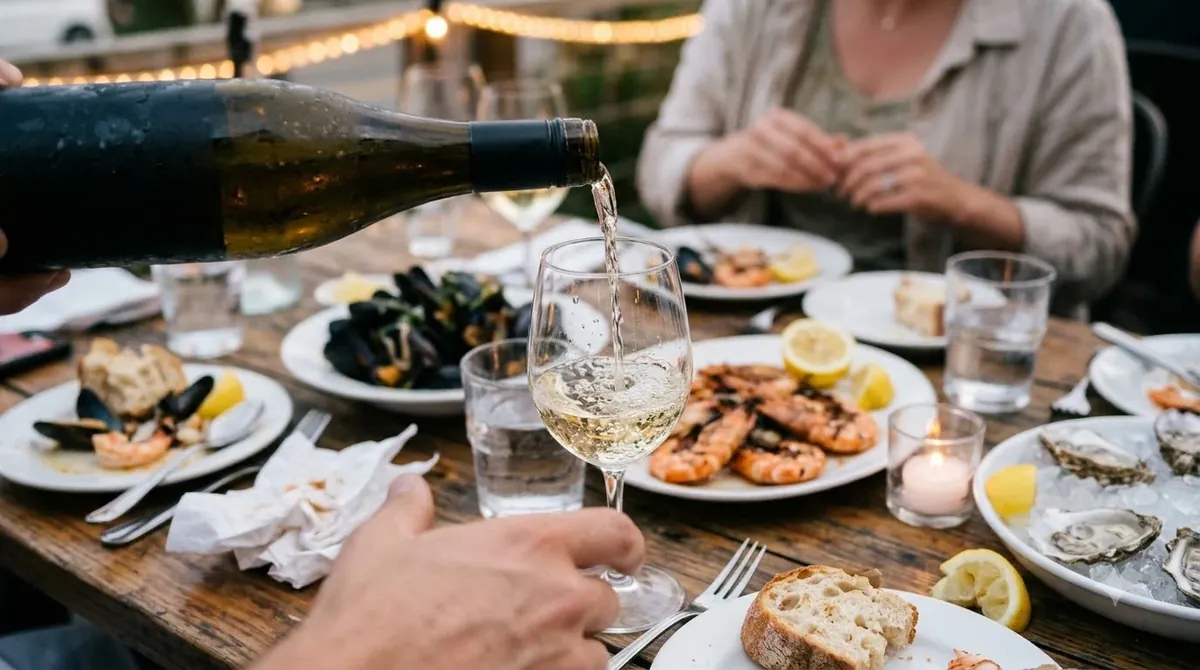
The best savagnin food pairing matches the grape’s piercing acidity and nutty, savory depth with rich, aged cheeses like Comté, earthy mushroom dishes, roasted poultry, and bold, spiced Asian cuisine. Because Savagnin is made in both fresh, topped-up styles and aged oxidative styles like Vin Jaune, you can pair crisp bottles with delicate seafood and vegetables while saving amber, flor-aged bottles for creamy sauces and fiery dishes that overwhelm ordinary white wines.
Often confused with Sauvignon Blanc—its genetically related offspring—Savagnin is the signature white grape of eastern France’s Jura region, offering an electric combination of citrus zest, saline minerality, and toasted nut complexity. Understanding how the wine is aged in the cellar is the secret to unlocking its range at the dinner table.
What Savagnin Is
Savagnin is an ancient, green-skinned white wine grape native to the Alpine foothills of eastern France, best known as the sole variety permitted in the Jura’s famous Vin Jaune. Despite sharing a similar-sounding name with Sauvignon Blanc, Savagnin is actually the parent grape of Sauvignon Blanc and belongs to the broader Traminer family alongside Gewürztraminer.
In the vineyard, Savagnin is a thick-skinned, late-ripening variety that produces naturally low yields and retains remarkably high acidity even when fully ripe. Unlike its aromatic relative Gewürztraminer, which is famous for floral perfume and lychee notes, Savagnin channels its energy into savory, mineral, and nutty expressions.
Winemakers also rely on Savagnin beyond dry varietal bottlings. In the Jura, it is frequently blended with Chardonnay to add backbone and aging potential to dry white wines, sparkling Crémant du Jura, sweet straw-dried Vin de Paille, and fortified Macvin du Jura.
Flavor Profile and Winemaking Styles
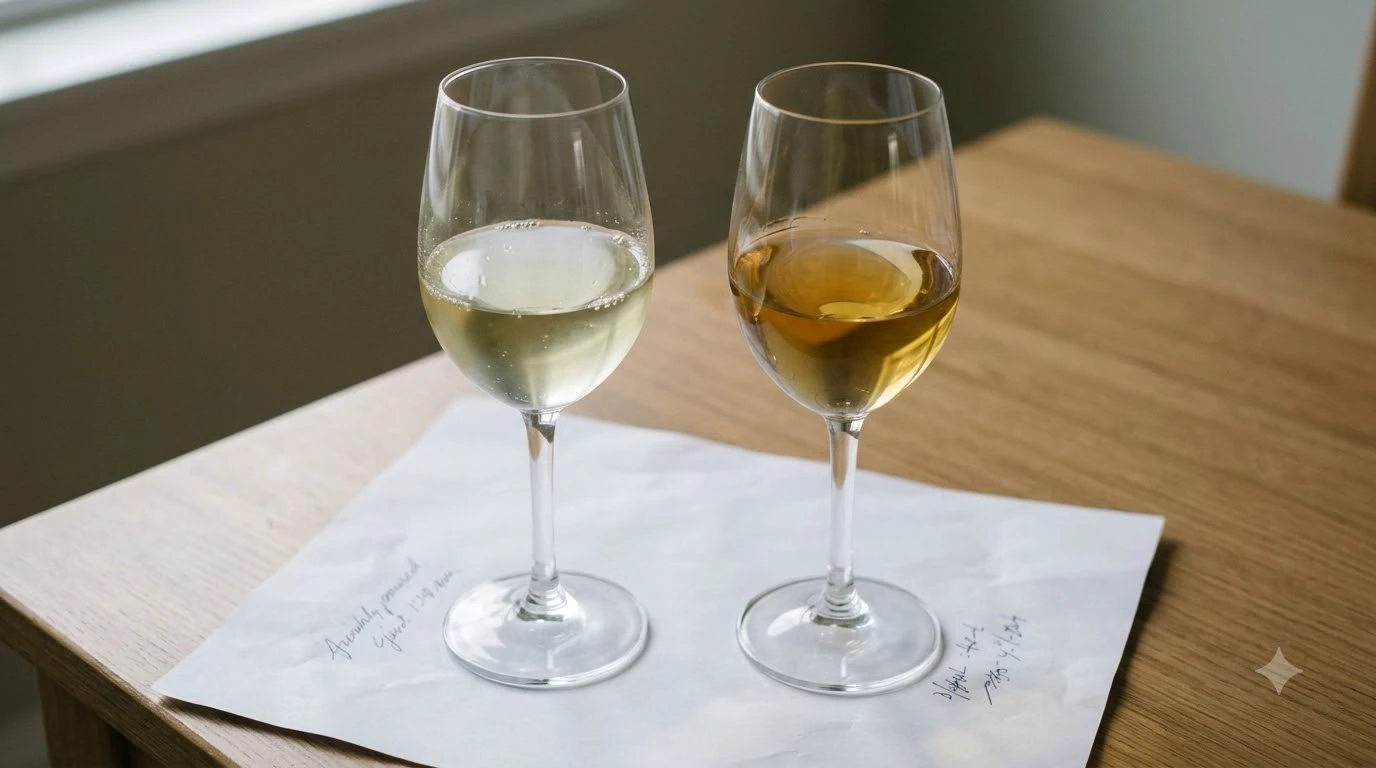
Savagnin divides cleanly into two distinct styles depending on whether the winemaker keeps oxygen away from the wine or encourages controlled oxidation under a layer of yeast. Knowing which style is in your glass dictates everything about how it will taste and what belongs on your plate.
The traditional oxidative style—known locally as sous voile (“under the veil”)—is aged in wooden barrels that are intentionally left untopped. As wine evaporates, a thin film of flor yeast forms on the surface, protecting the wine from turning to vinegar while generating intense flavors of roasted walnuts, hazelnuts, bruised apple, dried pear, fenugreek, and curry spice. The pinnacle of this method is Vin Jaune, which must age in barrel for more than six years before release in its signature squat 620-milliliter clavelin bottle.
The non-oxidative style, labeled ouillé (“topped-up”), is made by regularly refilling barrels so oxygen never touches the wine. Reviewers at Wine Enthusiast note that even topped-up Savagnin carries a subtle hint of almond and marzipan alongside vibrant notes of preserved lemon, crisp green apple, ripe pear, white flowers, and wet stone. Both styles finish bone-dry with mouthwatering acidity and a distinctly salty, mineral edge.
Where Savagnin Grows
While France’s Jura region remains the spiritual and historical heartland of Savagnin, small pockets of dedicated growers cultivate the grape in neighboring Alpine countries and cool-climate New World regions.
Tucked between Burgundy and the Swiss border, the Jura contains roughly 450 hectares of Savagnin across appellations including Arbois, Côtes du Jura, L’Étoile, and Château-Chalon. Château-Chalon is the most prestigious single appellation for Vin Jaune, producing long-lived oxidative wines from steep marl and limestone slopes.
Just across the border in Switzerland’s high-altitude Valais region, the exact same grape is cultivated under the traditional local names Heida and Païen. Grown on terraced alpine vineyards, Swiss Heida is almost exclusively vinified in a crisp, non-oxidative style that emphasizes alpine herbs, citrus, and stone fruit.
Outside Europe, Australian winemakers in cool regions such as Margaret River, Victoria, and South Australia have embraced Savagnin for fresh, textured white wines. In the United States, a handful of adventurous producers in Oregon’s Willamette Valley have also grafted Savagnin vines to craft bright, food-friendly bottlings.
How to Serve Savagnin
Serving Savagnin at the right temperature and giving it adequate air makes a dramatic difference, especially with barrel-aged and oxidative bottlings. Treating a complex Vin Jaune like a poolside Pinot Grigio will mute its savory aromatics.
Chill fresh, non-oxidative ouillé Savagnin to 46 to 54°F (8 to 12°C), similar to a fine white Burgundy. For oxidative sous voile Savagnin and Vin Jaune, serve the wine slightly warmer at 57 to 61°F (14 to 16°C) so the nutty, spiced aromatics can open up fully in the glass.
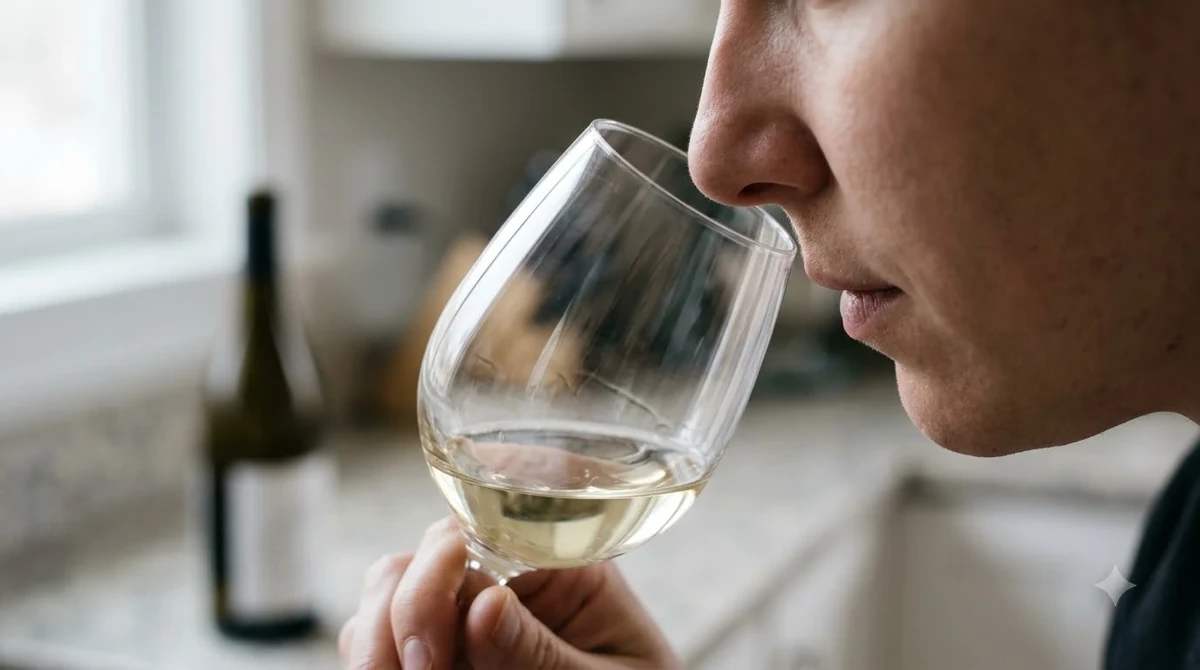
Choose a medium-sized white wine glass with a tulip-shaped bowl rather than a narrow flute or oversized red goblet. If you are opening a young Vin Jaune or an older oxidative Savagnin, decant the bottle one to two hours before dinner—or open it the morning of your meal—to let the volatile, nutty complexity unfurl.
Tip: An opened bottle of oxidative Savagnin or Vin Jaune is remarkably resistant to spoilage because it has already undergone controlled oxidation; recorked in the fridge, it often tastes even better three to five days later.
Savagnin Food Pairing Guide
Few white wines offer the sheer culinary versatility of Savagnin, which bridges the gap between crisp, acid-driven whites and rich, savory reds. Matching the dish to the wine’s aging style guarantees harmony on the palate.
For classic regional harmony, pair oxidative Savagnin or Vin Jaune with aged Comté cheese, walnuts, and rustic sourdough bread. The roasted hazelnut and caramel notes in a 24- or 36-month Comté mirror the flor-derived walnut and curry notes in the wine, while Savagnin’s sharp acidity scrubs the palate clean between bites. Equally iconic is poulet au vin jaune et aux morilles—roast or braised chicken in a cream and morel mushroom sauce, where the wine’s umami depth amplifies the earthy mushrooms.
When working with fresh, topped-up ouillé Savagnin, lean into dishes that showcase its citrus snap and mineral tension. According to Wine Folly, Savagnin excels with notoriously tricky green vegetables like roasted Brussels sprouts tossed with lemon, where its bright acidity cuts through bitter sulfur compounds. Pan-seared river trout, crab cakes, shrimp, seared scallops, and fresh goat cheese also thrive alongside the wine’s zesty lemon and green apple character.
Savagnin is also a secret weapon for bold Asian dishes and crispy fried foods. Wine Enthusiast recommends pairing Savagnin with fiery Sichuan bang bang chicken, noting that the wine’s amaretto, preserved lemon, and nutty complexity stand up to chili heat, sesame paste, and Sichuan peppercorns. Similarly, its high acidity and savory weight cut cleanly through the rich crust of Japanese chicken katsu, Malaysian curries, and Thai dishes scented with lemongrass and galangal.
| Savagnin Style | Key Flavor Notes | Ideal Food Pairings | Serving Temp |
|---|---|---|---|
| Ouillé (Topped-Up) | Preserved lemon, green apple, pear, white flowers, wet stone, subtle almond | Brussels sprouts, pan-seared trout, crab cakes, fresh chèvre, shrimp | 46–54°F (8–12°C) |
| Sous Voile (Oxidative) | Toasted walnut, hazelnut, dried apple, saline mineral, subtle curry spice | Roast chicken with cream sauce, mushroom risotto, aged Gruyère, chicken katsu | 54–58°F (12–14°C) |
| Vin Jaune | Intense walnut, fenugreek, curry powder, bruised pear, sea spray, rancio | 24–36 month Comté, morel mushrooms, Sichuan bang bang chicken, game birds | 57–61°F (14–16°C) |
If you enjoy exploring food-friendly bottles beyond mainstream grapes, Savagnin sits comfortably alongside other versatile dinner companions. While crisp white drinkers might compare its coastal minerality to a grenache blanc food pairing, those seeking red wines with comparable acidity and savory spice for mushrooms and roasted meats can look toward a blaufrankisch food pairing or explore the broader spectrum of Wine by Type.
How to Choose a Bottle of Savagnin
Shopping for Savagnin requires reading the front and back labels carefully so you know whether you are bringing home a crisp, bright white or a deeply nutty oxidative wine. Because both styles come from the exact same grape and appellations, label terminology is your best compass.
Look for the French word ouillé or phrases like “topped up” on the label if you want a clean, energetic white wine driven by citrus, orchard fruit, and saline minerality. Bottles from Switzerland labeled “Heida” or “Païen,” as well as examples from Australia and Oregon, also reliably deliver this fresh, non-oxidative expression.
If you want the classic nutty Jura experience, search for bottles labeled sous voile, “oxidative,” or “Vin Jaune” from appellations like Arbois, Côtes du Jura, L’Étoile, or Château-Chalon. A standard 750-milliliter bottle of sous voile Savagnin typically ages under flor for two to three years—offering a more approachable introduction than a six-year Vin Jaune sold in a 620-milliliter clavelin bottle.
Frequently Asked Questions
Is Savagnin the same grape as Sauvignon Blanc?
No, Savagnin and Sauvignon Blanc are distinct grape varieties, though DNA profiling shows that Savagnin is actually the parent grape of Sauvignon Blanc. Savagnin produces fuller-bodied, nuttier, and more mineral-driven wines than the grassy, tropical style associated with Sauvignon Blanc.
Does Savagnin taste like Sherry?
Oxidative Savagnin and Vin Jaune share noticeable aromas of walnuts, almonds, and sea salt with Fino and Manzanilla Sherry because both age under a protective layer of flor yeast. However, Savagnin is never fortified with grape spirit and retains much higher natural acidity than Sherry.
Is Savagnin a dry or sweet wine?
Varietal Savagnin and Vin Jaune are almost always fermented completely dry, leaving no noticeable residual sugar. The grape’s intense nutty, spiced, and baked-apple aromas can create an impression of richness, even though the finish is crisp and bone-dry.
Can you age Savagnin in a home cellar?
Yes, Savagnin is one of the longest-lived white wines in the world thanks to its high natural acidity and thick skins. Well-made ouillé bottlings easily develop over five to ten years, while top Vin Jaune from Château-Chalon can age gracefully for several decades.
Whether you uncork a zesty ouillé bottle alongside lemon-roasted Brussels sprouts or decant a golden Vin Jaune for aged Comté and morel mushrooms, Wine Folly’s pairing experiments and Wine Enthusiast’s spice pairing guides confirm that few grapes reward adventurous cooks like Savagnin. Once you match the cellar style to the richness on your plate, this Alpine classic becomes one of the most reliable problem-solvers in your wine rack.
More in Wine Types & Grapes
 Zinfandel Sugar Content: Dry Red vs. White Zinfandel GramsUpdated Nov 21, 2026
 Best Zinfandel Substitute Options for Sipping and CookingUpdated Nov 21, 2026
 Zweigelt Food Pairing: Best Dishes, Cheeses, and Serving TipsUpdated Nov 21, 2026
 Zinfandel Tannins Explained: How Structure Shapes Every BottleUpdated Nov 21, 2026
 Zinfandel Sweetness Level: Dry Red vs. Sweet White Zin ExplainedUpdated Nov 21, 2026
 Xinomavro Food Pairing: Best Dishes, Styles, and Serving TipsUpdated Nov 21, 2026