

We may earn a commission when you buy through links on this page, at no extra cost to you. Learn more.
The savagnin grape is a white wine variety best known in France’s Jura region, where it produces both fresh, high-acid whites and the distinctive, nutty wine called Vin Jaune. Its naturally bright acidity and late-ripening character make it suitable for more than one style. The key difference is how the wine is raised: some Savagnin is kept fresh by topping up barrels, while other examples mature for years beneath a surface film of yeast.
That range can make a first bottle hard to place. A young, topped-up Savagnin may feel brisk and citrusy, while a bottle labeled Vin Jaune is dry, intensely savory, and shaped by extended barrel aging. Understanding the grape, the Jura appellations, and a few winemaking terms makes it much easier to choose a style and serve it well. For an overview of how grape varieties and production choices shape categories, see our guide to Wine by Type.
Identity, Names, and History
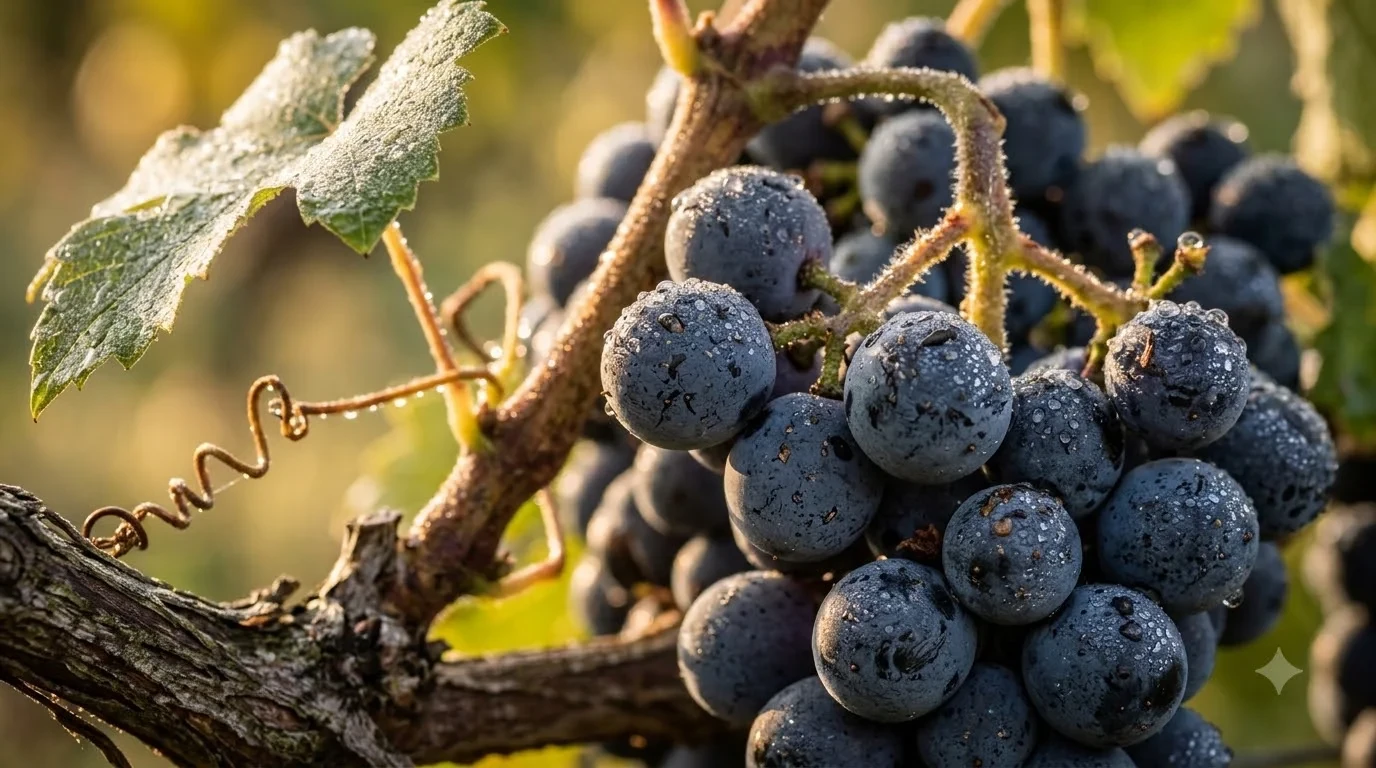
Savagnin is an old white grape associated most strongly with the Jura in eastern France. It is a distinct variety from Sauvignon Blanc, despite the similar spelling, and its thick skins and slow ripening help explain why it is often harvested late.
Decanter reports that Savagnin has been cultivated in France for at least 900 years, with a genetic match identified between the modern grape and a medieval seed recovered in Orléans. The grape is also known as Traminer and, in Switzerland, Heida. Its exact birthplace remains debated, so it is more accurate to describe the Jura as its best-known home than to claim that the region is unquestionably its point of origin.
In the Jura, Savagnin is one of the two principal white varieties alongside Chardonnay. The grapes are small-berried and thick-skinned, and the variety ripens late. Those traits matter in a cool continental growing area: growers need a suitable site and enough time for the fruit to reach maturity, while retaining the natural acidity that gives the finished wine energy. Savagnin is not an aromatic grape in exactly the same way as Gewürztraminer, although the two are related within the Traminer family.
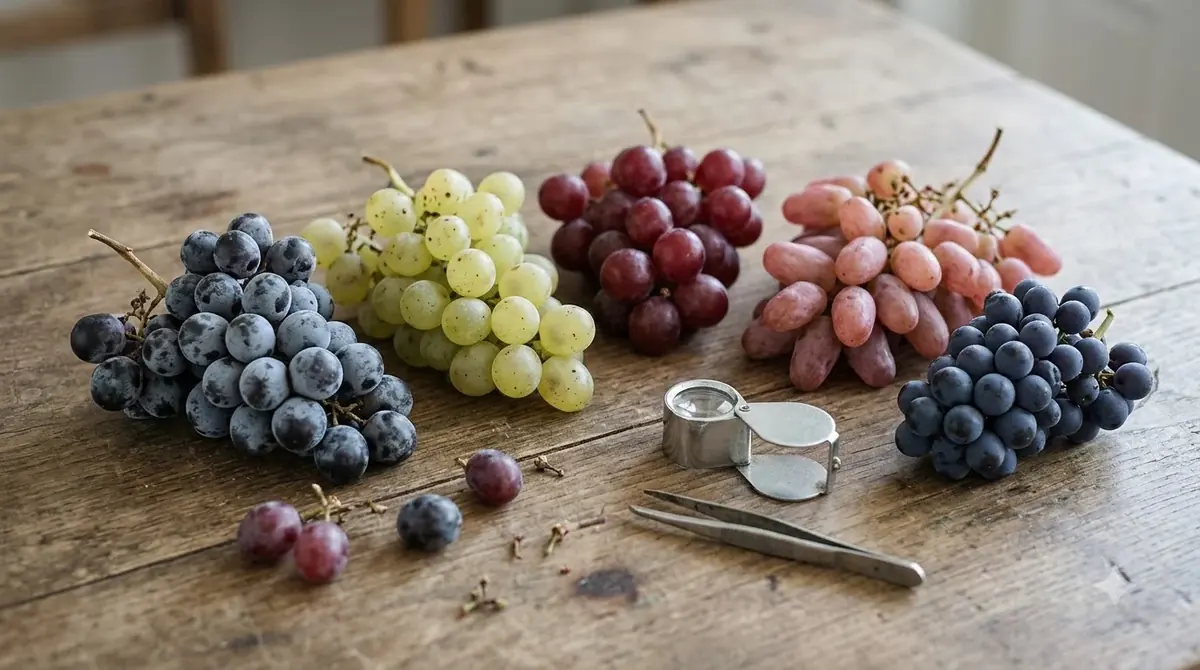
The easiest name confusion to avoid is Sauvignon Blanc: it is a separate variety, while Savagnin is associated with Jura’s floral, mineral, nutty, and oxidative whites. Readers comparing unfamiliar white varieties can also explore the airen grape.
Jura Terroir and Main Growing Areas
The Jura is a small wine region between Burgundy and Switzerland, with hillside vineyards, a continental climate, and soils that commonly include marl and limestone. Its combination of cool conditions and well-exposed slopes supports whites with freshness and strong regional character.
Wine Enthusiast describes the Jura wine-growing area as about 5,000 acres, with roughly 200 vineyards and four principal geographical appellations: Arbois, Côtes du Jura, L’Étoile, and Château-Chalon. Many vineyards occupy south-facing slopes at elevations of about 650 to 1,300 feet. Cold winters, warm summers, and differences between hillside and valley sites create variation from one parcel to another, even within a compact region.
Marl, a mixture of clay and limestone, is especially important to the area’s white wines. Limestone scree on the surface can warm and drain the ground, while deeper soil remains cooler. These contrasts help explain why Jura whites can show ripe fruit alongside a firm, mineral impression.
Savagnin appears across several Jura appellations, but Château-Chalon has a particularly close relationship with the grape: the appellation is devoted to Vin Jaune made from Savagnin. Arbois and Côtes du Jura offer a wider range of wines, including still whites that may be fresh and topped-up, wines with some oxidative development, and Vin Jaune. L’Étoile is another important white-wine appellation. The name on the label therefore gives useful context, but the production term is often just as informative as the place name.
Winemaking Styles: Topped-Up, Sous Voile, and Vin Jaune
The most useful distinction is between Savagnin aged with little air contact and Savagnin deliberately matured under a natural yeast veil. The grape can make excellent dry white wine in either style, but the process changes the aroma, texture, and intensity dramatically.
A fresh style is often described with the French word ouillé, meaning that the barrels are topped up as wine evaporates. Keeping the vessel full limits the wine’s exposure to air and helps preserve primary fruit. These wines tend toward lemon, green apple, white flowers, and stony or saline notes. They are typically dry, brisk, and suitable for drinking as a distinctive white wine without needing the drinker to enjoy oxidative aromas.
In a sous voile style, the wine is left in barrel without topping up. As the level falls, a film of naturally developing yeast forms on the surface. This veil changes the wine as it matures and contributes savory, nutty, and spice-like characteristics. Some producers use a shorter period under the veil, producing a wine with a meeting point between fruit and oxidative complexity rather than the full force of Vin Jaune.
Vin Jaune is the most regulated and recognizable expression. It is made entirely from Savagnin and must mature in oak barrels for at least six years and three months before bottling. The wine is not topped up during this period; the yeast film forms at the surface while slow, controlled oxidation develops its characteristic profile. It is bottled in a distinctive 620-milliliter vessel called a clavelin. The official EU product description also specifies the Savagnin variety, barrel maturation, yeast film, and 62-centiliter bottle as defining elements. For the contrast between fresh dry whites and nutty Vin Jaune, read Decanter’s Savagnin profile; Vin Jaune is its own Jura category, not a name for every oxidative Savagnin.
Tip: Read the production words on a Jura label before choosing by grape name alone. Ouillé points toward a fresher, topped-up style; sous voile signals maturation under a yeast veil; and Vin Jaune identifies the long-aged, regulated wine.
Flavor, Aroma, Acidity, and Structure
Savagnin’s flavor depends heavily on how it is made. A young, topped-up wine usually emphasizes citrus, orchard fruit, and flowers, while extended aging beneath yeast brings forward savory and nutty notes without removing the grape’s underlying freshness.
In a fresh style, look for lemon zest, green apple, pear, white flowers, fresh herbs, and a wet-stone impression. The acidity is usually high, giving the wine a lively line through the palate. Depending on the site and producer, the texture may be lean and taut or broader, with some lees-derived roundness. These wines can be full of flavor without being heavy, and their freshness makes them useful at the table.
Oxidative Savagnin often smells and tastes quite different. Walnut, almond, hazelnut, curry spice, dried citrus peel, and savory or saline notes are common descriptors. Vin Jaune can be intense and broad, but its acidity keeps the finish from feeling flat. It is generally dry rather than sweet; the golden color and rich aromas should not be mistaken for residual sugar.
The grape’s natural acidity is a consistent feature, but body and aromatic intensity are not fixed. Barrel choices, time under the veil, vintage conditions, and whether the wine is topped up all affect the final result. A wine aged for a year or two without topping up may hold onto more fruit than a Vin Jaune that has spent the full required period in barrel. As Wine Enthusiast’s Jura overview explains, the veil and long aging work alongside high acidity, so Vin Jaune can taste richly savory yet sharply fresh. Read tasting notes as clues to a particular bottle, not as a rigid checklist for every Savagnin.
Food Pairings and Serving Temperature
Fresh and oxidative Savagnin are both food-friendly, but they suit different dishes. Pair the fresher wines with seafood, poultry, and delicate vegetable dishes; bring out the more mature wines with aged cheese, mushrooms, cream sauces, and dishes that can stand up to their nutty intensity.
For a fresh, topped-up bottle, try shellfish, grilled trout, roast chicken, or a dish with lemon and herbs. The wine’s acidity can cut through butter or cream, while its citrus and mineral notes complement seafood without overwhelming it. Avoid matching a very delicate dish with an especially intense Vin Jaune, since the wine’s walnut and curry-like character can dominate mild flavors.
For sous-voile Savagnin or Vin Jaune, classic pairings include Comté, morel mushrooms, chicken in a cream sauce, and walnuts. Comté is a natural regional match: its savory, nutty qualities echo the wine rather than competing with it. A chicken and morel dish works for the same reason, joining the wine’s richness with earthy mushroom flavor and a creamy texture. Aged hard cheeses such as Parmesan can also work well with an oxidative style.
| Style | Typical profile | Serving temperature | Food match |
|---|---|---|---|
| Fresh, topped-up Savagnin | Lemon, green apple, white flowers, mineral finish | 50–55°F | Shellfish, trout, roast chicken |
| Sous-voile Savagnin | Orchard fruit with nutty and savory notes | 53–58°F | Mushrooms, creamy poultry, aged cheese |
| Vin Jaune | Walnut, almond, spice, saline depth | 55–60°F | Comté, morels, chicken in cream sauce |
Temperature is important because cold can mute detail in a mature white wine, while excess warmth can make alcohol seem more prominent. Serve fresh Savagnin around 50 to 55 degrees Fahrenheit and Vin Jaune around 55 to 60 degrees, allowing a refrigerated bottle a little time to warm in the glass. Pour a moderate 5-ounce serving in a white-wine glass with room to swirl: a standard 750-milliliter bottle yields about five pours, while the 620-milliliter clavelin yields a little over four. A mature Vin Jaune may benefit from being opened ahead of the meal, but start with a small taste and let it develop in the glass before deciding whether it needs more air.
Buying, Reading Labels, and Storing Bottles
Choose Savagnin by style first, then by appellation and producer. A label that names the grape but not the aging method may identify a dry still white; words such as ouillé, sous voile, and Vin Jaune describe how the wine has been handled and what kind of flavor to expect.
For a first bottle, a fresh, topped-up Savagnin is often the most straightforward introduction: its citrus, apple, and floral notes are easy to recognize, and its acidity works with many meals. A brief sous-voile wine is a useful next step, while Vin Jaune is the most intense option and calls for food with equally deep flavor. Look for the place name as well as the style term: Arbois and Côtes du Jura cover several expressions, Château-Chalon is associated specifically with Vin Jaune, and L’Étoile is another established white-wine appellation. If a bottle says only Savagnin, the producer’s notes may clarify its style.
Store unopened bottles away from direct light and temperature swings, ideally near 55 degrees Fahrenheit. Keep cork-finished bottles on their sides so the cork does not dry out. A stable cellar or wine refrigerator is more suitable than a warm kitchen shelf, especially for a wine with the acidity and structure to develop over time. Mature Vin Jaune is built for extended aging, but a young, fresh Savagnin is often bought for its lively fruit and should not be treated as though every bottle needs years in the cellar.
After opening, put still Savagnin in the refrigerator and use a good closure. Most still wines remain in useful condition for about three to five days, although a mature oxidative wine may hold its character differently from a fresh, fruit-driven bottle. Revisit the wine the next day: the aroma can shift as air reaches it, and that change may be more pronounced in a wine already shaped by barrel aging. The point is to preserve the bottle carefully while allowing its style to show clearly, not to apply one storage rule to every expression.
Frequently Asked Questions
These quick answers clarify a few details that often come up after a first encounter with the grape. They cover its family relationships, its presence outside the Jura, and technical points about Vin Jaune.
Is Savagnin related to Gewürztraminer?
Yes. Gewürztraminer is widely understood to be a pink-skinned mutation of the Savagnin or Traminer family. The relationship helps explain the shared historical naming, although the wines can have very different aromatic profiles.
Is Savagnin grown outside the Jura?
Yes. Decanter notes that it is known as Heida in Switzerland, and a 2009 DNA investigation found that much of an estimated 150 hectares of vines labeled Albariño in Australia were actually Savagnin Blanc. That discovery is a reminder that grape identification and local naming do not always line up.
Is Vin Jaune fortified like some Sherry?
No. Vin Jaune’s Sherry-like character comes from its long maturation beneath a natural yeast veil, not from fortification with distilled spirit. The distinction matters: its dry, savory character develops through barrel aging and the activity of the yeast film.
Why is Vin Jaune sold in a clavelin?
The clavelin is the traditional, legally recognized bottle for Vin Jaune and holds 620 milliliters, or 62 centiliters. That is 130 milliliters less than a standard 750-milliliter wine bottle, reflecting the wine’s distinctive bottling tradition after its long barrel maturation.
Can Savagnin be used in sparkling wine?
Yes. Savagnin is one of the five permitted grape varieties for Crémant du Jura, alongside Chardonnay, Pinot Noir, Poulsard, and Trousseau. The sparkling wine is made by the traditional method, with its second fermentation taking place in the bottle.
Savagnin rewards attention to both grape and method: a fresh, topped-up bottle offers bright citrus and mineral character, while sous-voile wines and Vin Jaune show a deeper savory side. Start with the style that suits the meal, serve it at the right temperature, and let the Jura label terms guide the next bottle.
More in Wine Types & Grapes
 Zinfandel Sugar Content: Dry Red vs. White Zinfandel GramsUpdated Nov 21, 2026
 Best Zinfandel Substitute Options for Sipping and CookingUpdated Nov 21, 2026
 Zweigelt Food Pairing: Best Dishes, Cheeses, and Serving TipsUpdated Nov 21, 2026
 Zinfandel Tannins Explained: How Structure Shapes Every BottleUpdated Nov 21, 2026
 Zinfandel Sweetness Level: Dry Red vs. Sweet White Zin ExplainedUpdated Nov 21, 2026
 Xinomavro Food Pairing: Best Dishes, Styles, and Serving TipsUpdated Nov 21, 2026