

We may earn a commission when you buy through links on this page, at no extra cost to you. Learn more.
Pairing sauternes with cheese succeeds through high-contrast flavor balance, matching the wine’s lush, honeyed sweetness against intensely salty, pungent, or firm nutty cheeses. Blue-veined classics like Roquefort and Stilton create the most famous sweet-and-salty tension, while washed-rind varieties such as Livarot and Époisses rely on the wine’s botrytis-driven acidity to cut through rich, savory funk. For best results, serve Sauternes chilled between 45°F and 52°F alongside room-temperature cheeses.
Many wine drinkers assume cheese boards belong exclusively to dry reds or crisp whites, leaving sweet Bordeaux bottles gathering dust until dessert. In reality, French sommeliers and cheesemongers routinely treat Sauternes as a centerpiece table wine for savory courses, where its concentrated fruit, ginger spice, and bright acidity turn stubbornly sharp cheeses into balanced, creamy bites.
Why Sauternes and Cheese Work So Well Together
The magic behind Sauternes and cheese comes down to structural contrast: high residual sugar and brisk acidity meet high salt, butterfat, and pungent aromas. Rather than clashing, these opposite poles soften each other on the palate, making salty cheeses taste creamier and keeping the wine from feeling heavy.
Sauternes is produced in Bordeaux’s Graves district primarily from thin-skinned Sémillon grapes blended with Sauvignon Blanc and occasionally Muscadelle. According to Wine Folly’s Sauternes Wine Guide, autumn morning fog from the Ciron River encourages a beneficial fungus called Botrytis cinerea, or noble rot, which dehydrates the berries and concentrates their sugars to between 120 and 220 grams per liter. While Sémillon supplies viscous body and flavors of apricot, honey, and marmalade, Sauvignon Blanc contributes the vital backbone of acidity needed to slice through dense dairy fat.
Salt acts as a natural flavor amplifier that tames perceived sweetness. When a bite of briny blue cheese or aged alpine wheel coats your tongue, a sip of chilled Sauternes triggers the same sensory interplay as salted caramel or honey drizzled over fresh curds. Because the wine lacks harsh grape tannins, it also avoids the metallic bitterness that bold red wines often trigger when paired with strongly flavored or mold-ripened cheeses.
Best Blue Cheeses to Pair with Sauternes
Blue-veined cheeses are the undisputed benchmark for Sauternes pairings because their pronounced salinity and earthy penicillin veins directly counter the wine’s concentrated fruit. Both the wine and the cheese owe their complexity to beneficial molds, creating an aromatic bridge alongside their sweet-and-salty contrast.
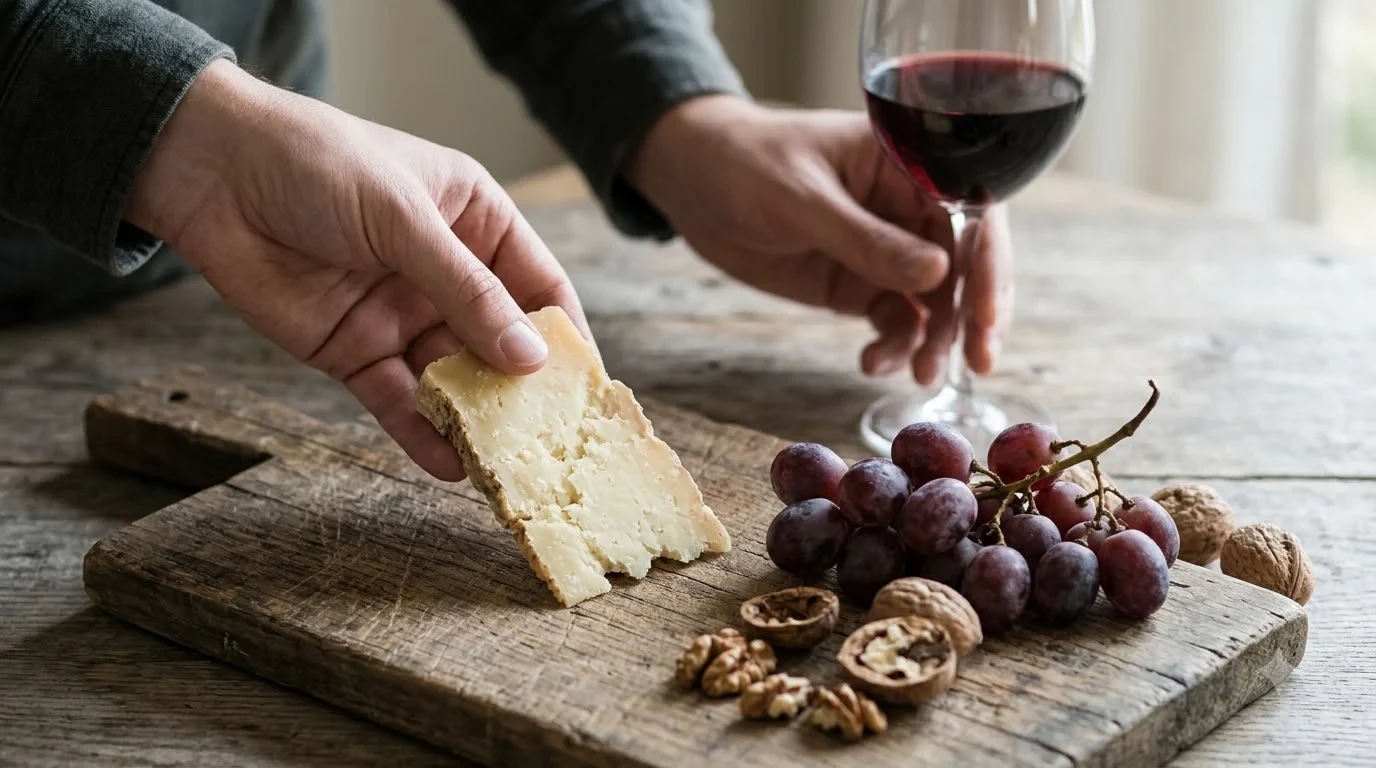
Roquefort stands at the top of traditional French pairings. Crafted from raw sheep’s milk and aged in natural limestone caves in southwestern France, Roquefort delivers a sharp, tangy brine and crumbly paste that melts instantly when followed by Sauternes. As noted in Decanter’s cheese and wine matching guide, Roquefort with Sauternes ranks alongside Stilton with Port as one of the world’s most iconic cheese pairings.
Stilton and Stichelton offer a slightly denser, fudgier English alternative made from cow’s milk. Their buttery richness and savory, peppery veins harmonize particularly well with mature Sauternes that has developed secondary notes of caramel, toffee, and roasted nuts over ten or more years in bottle. If you prefer milder blues, Fourme d’Ambert or Gorgonzola Dolce bring gentle sweetness and creamy textures that pair effortlessly with younger, fresher vintages or lighter-styled wines from neighboring Barsac.
Washed-Rind and Firm Cheeses That Shine
If blue cheese feels too intense, pungent washed-rind cheeses and nutty, aged hard cheeses provide equally compelling ways to enjoy Sauternes. The key is selecting styles with enough savory umami, salt crystals, or aromatic punch to stand up to the wine’s full body.
Washed-rind cheeses—bathed in brine, beer, or local spirits during aging—develop sticky orange rinds and deeply savory, meaty aromas. Wine Folly highlights Livarot from Normandy as a standout match because its gooey texture and funky, savory profile are tamed by the wine’s honeyed apricot fruit. Époisses de Bourgogne and Munster work along the same principle, allowing the wine’s bright citrus and ginger notes to refresh the palate between rich, spoonable bites.
Aged firm cheeses take a different route by echoing the nutty, butterscotch flavors found in bottle-aged Sauternes. Wheels of Comté, Gruyère, aged Gouda, and Parmigiano-Reggiano develop crunchy tyrosine crystals and toasted-hazelnut depth as they mature. If you are building a broader tasting board, exploring how white wine with cheese works across dry and sweet styles makes it easy to transition from crisp bottles to a finishing pour of Sauternes alongside firm alpine wedges.
| Cheese Style | Top Examples | Why the Pairing Works | Best Sauternes Style |
|---|---|---|---|
| Blue-Veined | Roquefort, Stilton, Fourme d’Ambert | High salt and tangy blue veins balance concentrated residual sugar | Classic full-bodied Sauternes or aged vintages |
| Washed-Rind | Livarot, Époisses, Munster | Bright Sauvignon Blanc acidity cuts through rich, funky paste | Young, vibrant Sauternes or fresh Barsac |
| Aged Hard and Alpine | Comté, Gruyère, Aged Gouda, Parmigiano-Reggiano | Crunchy salt crystals and nutty notes mirror toasted oak and honey | Mature Sauternes (10+ years) with caramel depth |
| Rich Triple-Cream | Brillat-Savarin, Delice de Bourgogne | Lactic tang and butterfat create a cheesecake-like harmony | Lighter, high-acid Barsac or young Sauternes |
Cheeses to Approach with Caution
While Sauternes is remarkably adaptable on a cheese board, mild, delicate cheeses with low salt and subtle flavors can easily disappear beneath the wine’s opulent sweetness. Pairing a fragile cheese with a powerhouse sweet wine leaves the cheese tasting flat, waxy, or overly milky.
Fresh, unaged cheeses such as young mozzarella, ricotta, or mild cottage cheese lack the salinity and aromatic intensity required to push back against 120 to 220 grams per liter of residual sugar. Similarly, very young, mild bloomy-rind cheeses like basic supermarket Brie often feel overwhelmed unless they are ripe and pungent or accompanied by salted nuts. If your board centers on fresh, tangy chèvre or mild goat milk logs, a crisp sauvignon blanc with cheese will mirror the bright lactic acidity far more gracefully than a sweet botrytized blend.
Heavily smoked cheeses or overly spiced varieties dusted with hot chilies can also clash with oak-aged Sauternes. Wood smoke competes awkwardly with vanilla and baking-spice notes from French oak barrels, while aggressive capsaicin heat can amplify the perception of alcohol on the finish.
How to Serve Sauternes and Prep Your Cheese Board
Temperature control is the single biggest factor in keeping a Sauternes and cheese pairing lively rather than cloying. The wine needs a firm chill to highlight its acidity, while the cheese must warm up enough to release its aromatics and soften its texture.
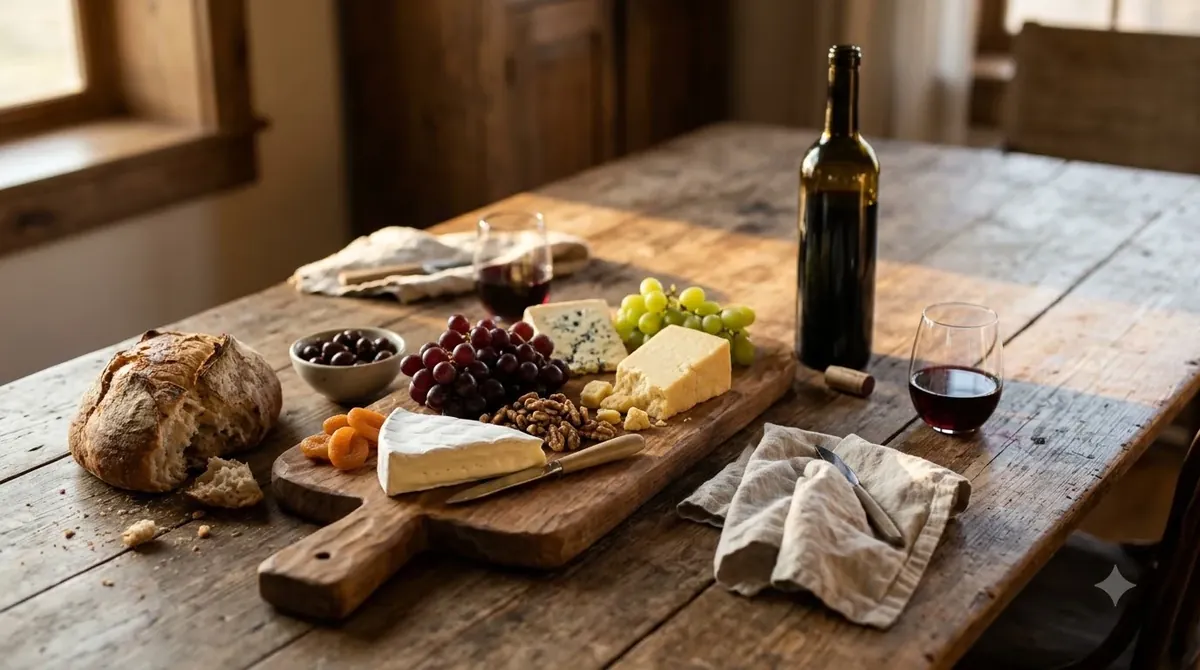
Chill your bottle of Sauternes to roughly 45°F to 52°F (7°C to 11°C)—about 30 to 45 minutes in a standard refrigerator—before pouring. Unoaked or younger bottles show best toward the colder end around 45°F, whereas older, barrel-aged vintages open up with richer honey and marmalade aromatics closer to 52°F. Pour small two- to three-ounce servings into standard white wine glasses rather than tiny cordial glasses so the floral and botrytis aromas have room to swirl.
Remove your cheeses from the refrigerator at least 45 to 60 minutes before guests arrive. Cold butterfat mutes flavor and traps salt, which dulls the exact contrast that makes the pairing sing. Keep accompaniments simple and savory: plain water crackers, crusty French baguette slices, toasted walnuts, or fresh pear slices work far better than sugary jams or honey-drizzled figs, which stack unnecessary sweetness onto an already sweet wine.
Tip: Buy Sauternes in 375 ml half-bottles for dinner parties—one half-bottle comfortably pours four to five tasting glasses alongside a cheese course without leaving extra wine open.
Frequently Asked Questions
What is the single best cheese to pair with Sauternes?
Roquefort is widely considered the gold-standard cheese pairing for Sauternes. Its sharp sheep’s-milk tang, creamy texture, and pronounced saltiness counterbalance the wine’s honeyed sweetness while echoing its earthy botrytis complexity.
Should you serve Sauternes and cheese before or after dinner?
Both options work wonderfully depending on how you structure the meal. Serving Sauternes with blue or washed-rind cheese at the end of dinner replaces sugary desserts with a refined savory-sweet finale, while serving it as an aperitif with aged Comté and toasted nuts wakes up the palate before a meal.
How long does an opened bottle of Sauternes last in the fridge?
Thanks to its high residual sugar and natural acidity, recorked Sauternes holds up much longer than dry white wine. Stored upright in the refrigerator, an opened bottle typically stays fresh and expressive for one to two weeks.
What are good budget-friendly alternatives to Sauternes for cheese pairings?
Look for neighboring Bordeaux sweet appellations such as Barsac, Loupiac, Sainte-Croix-du-Mont, or Cadillac, as well as Monbazillac from nearby Bergerac. These wines use the same Sémillon and Sauvignon Blanc grapes affected by noble rot and offer similar apricot-and-honey balance with salty cheeses.
Whether you anchor your board with crumbly Roquefort, spoonable Époisses, or crystal-studded aged Comté, matching sauternes with cheese turns contrasting flavors into effortless harmony. Exploring Wine by Type can help you compare sweet botrytized whites against other classic dessert and fortified styles for your next gathering.
More in Wine Types & Grapes
 What Does Mourvèdre Taste Like? Flavor Profile, Regions, and PairingsUpdated Nov 20, 2026
 What Does Marsanne Taste Like? Flavors, Styles, and Food PairingsUpdated Nov 20, 2026
 What Does Malvasia Taste Like? Styles, Flavors, and Food PairingsUpdated Nov 20, 2026
 What Does Grenache Blanc Taste Like? Flavor Profile, Styles, and PairingsUpdated Nov 20, 2026
 What Does Garnacha Taste Like? Key Flavors, Styles, and Pairing TipsUpdated Nov 20, 2026
 What Does Fruit Wine Taste Like? A Complete Flavor and Style BreakdownUpdated Nov 20, 2026