


We may earn a commission when you buy through links on this page, at no extra cost to you. Learn more.
Fresh vine wine alcohol content ranges from 12.5% to 13.5% ABV across its commonly documented varietals. The Sauvignon Blanc has 12.5% alcohol, the 2021 Rosé has 13.1%, and the Cabernet Sauvignon, Pinot Noir, and Chardonnay are listed at 13.5%. These percentages put Fresh Vine within the typical alcohol range for American table wine, although the exact strength depends on the varietal and bottle.
Fresh Vine Wine is known for combining familiar California grape varieties with relatively low sugar and carbohydrate figures. However, its lower nutritional figures do not mean that every bottle contains less alcohol. Understanding the difference between ABV, calories, sugar, and serving size makes it easier to compare Fresh Vine wines and choose a suitable bottle for dinner, entertaining, or casual drinking.
Fresh Vine Wine Alcohol Content at a Glance
Most documented Fresh Vine varietals contain between 12.5% and 13.5% alcohol by volume. Sauvignon Blanc is the lightest option by ABV among the documented examples, while several red and white wines reach 13.5%.
Alcohol by volume, commonly shortened to ABV, measures the percentage of a beverage’s total volume that consists of pure alcohol. A wine with 13.5% ABV contains 13.5 ml of alcohol in every 100 ml of wine. This measurement makes it possible to compare bottles even when they have different grape varieties, flavor profiles, or nutritional characteristics.
The following figures represent the documented Fresh Vine varietals and vintages used for this comparison. The Rosé figure specifically refers to the 2021 vintage, so it should not automatically be treated as a permanent specification for every later release.
| Fresh Vine varietal | ABV | Alcohol in 5 oz | Documented calories per 5 oz |
|---|---|---|---|
| Sauvignon Blanc | 12.5% | About 0.63 fl oz | 98 |
| Rosé (2021) | 13.1% | About 0.66 fl oz | 98 |
| Cabernet Sauvignon | 13.5% | About 0.68 fl oz | 103 |
| Pinot Noir | 13.5% | About 0.68 fl oz | 101 |
| Chardonnay | 13.5% | About 0.68 fl oz | 98 |
The alcohol-volume calculations use a standard 5-ounce serving. The calorie figures are the producer’s published average nutritional figures per 5-ounce glass, rather than estimates based on ABV alone. They are useful for comparing the documented products, but different vintages and formulations can have different specifications.
The main takeaway is that Fresh Vine does not have one universal alcohol percentage. Its Sauvignon Blanc is a full percentage point lower in ABV than its 13.5% wines. That difference is noticeable when comparing equal-sized pours, although all five examples remain within a fairly familiar range for commercially produced wine.
How Much Alcohol Is in Each Fresh Vine Varietal?
The varietal makes a measurable difference to Fresh Vine’s alcohol content. Sauvignon Blanc comes in at 12.5%, the documented Rosé at 13.1%, and Cabernet Sauvignon, Pinot Noir, and Chardonnay at 13.5%.
Sauvignon Blanc: At 12.5% ABV, this is the lowest-alcohol example in the documented lineup. Beverage Industry reported the percentage alongside its nutritional information, and Wine Enthusiast independently listed the same alcohol level for the 2021 Sauvignon Blanc. Its citrus-driven character includes lemon, lime, melon, and grapefruit notes.
Rosé: Fresh Vine’s 2021 Rosé was reported at 13.1% ABV. Beverage Industry described this particular release as a blend of Pinot Grigio and Pinot Noir grapes. Its production involved whole-cluster pressing followed by fermentation. The 13.1% figure places it between the Sauvignon Blanc and the 13.5% wines.
Cabernet Sauvignon: The producer lists this red wine at 13.5% ABV. Its flavor description includes blackberry, dark cherry, plum, vanilla, and baker’s chocolate. The wine also has more noticeable tannin than the Sauvignon Blanc, making it a fuller-feeling option for people who prefer structured red wines.
Pinot Noir: Fresh Vine Pinot Noir also contains 13.5% ABV. Its described flavors include blackberry, raspberry, ripe plum, and baker’s chocolate, with additional floral and baking-spice aromas. Although Pinot Noir generally has softer tannins than Cabernet Sauvignon, its Fresh Vine example has the same documented alcohol percentage.
Chardonnay: The producer lists Fresh Vine Chardonnay at 13.5% ABV. Its flavor profile includes pear, green apple, tropical fruit, citrus, hazelnut, and toasty oak. This makes it a useful example of why a wine’s color or grape variety cannot reliably predict its alcohol percentage.
For independent context, Wine Enthusiast’s Fresh Vine Sauvignon Blanc review also records 12.5% alcohol in a 750 ml bottle. That agreement with the producer’s reported figure provides additional support for the Sauvignon Blanc comparison.
These differences are relatively small in percentage terms, but they matter when comparing equal-sized pours. A 5-ounce serving of a 13.5% wine contains more alcohol than the same serving of a 12.5% wine. The difference becomes more noticeable across multiple glasses.
What the ABV Percentage Means in a Glass
ABV is a concentration measurement, not the total amount of alcohol in an entire bottle. Fresh Vine’s standard 750 ml bottle contains approximately five 5-ounce servings, so the alcohol in each glass depends on the percentage and the amount poured.

Consider two Fresh Vine wines served in identical 5-ounce glasses. A 12.5% Sauvignon Blanc contains approximately 0.625 fluid ounces of pure alcohol. A 13.5% Cabernet Sauvignon contains approximately 0.675 fluid ounces. The Cabernet therefore supplies about 0.05 fluid ounces more alcohol in that serving.
The calculation is straightforward:
Pure alcohol = wine serving volume × ABV percentage.
For example, a 5-ounce glass at 12.5% ABV contains:
5 × 0.125 = 0.625 fluid ounces of pure alcohol.
At 13.5% ABV, the same calculation becomes:
5 × 0.135 = 0.675 fluid ounces of pure alcohol.
Although the difference between these examples is only one percentage point, a full bottle also contains more total alcohol at the higher concentration.
Comparing a 750 ml bottle
A standard 750 ml bottle holds approximately 25.36 fluid ounces. Using that bottle size, the approximate pure-alcohol quantities are:
- 12.5% ABV: 3.17 fluid ounces of pure alcohol.
- 13.1% ABV: 3.32 fluid ounces of pure alcohol.
- 13.5% ABV: 3.42 fluid ounces of pure alcohol.
These calculations assume the stated ABV applies throughout the bottle. They also demonstrate why bottle size matters when comparing alcoholic beverages. Two wines can have similar percentages but different total alcohol quantities if their containers hold different volumes.
Why pour size matters
A standard wine serving is commonly measured at 5 ounces. However, home pours can easily reach 6 or 8 ounces, particularly when using large wine glasses. An 8-ounce pour of 13.5% wine contains more alcohol than a 5-ounce pour of the same wine, even though the ABV has not changed.
For a consistent comparison, use the same glass volume when evaluating different Fresh Vine varietals. Otherwise, a larger serving can create the impression that one wine is stronger when the actual difference comes from the amount poured.
Tip: Use a 5-ounce measuring pour when comparing wine alcohol levels. The ABV remains constant, but a larger serving increases the total alcohol consumed.
Fresh Vine Alcohol Content Compared With Regular Wine
Fresh Vine’s documented range of 12.5% to 13.5% ABV is within the familiar range of many conventional table wines. Its lower-sugar positioning does not automatically make it a low-alcohol wine.
Many dry white wines fall around 11% to 13.5% ABV, while many red wines fall around 12.5% to 15% ABV. These are broad reference ranges rather than strict rules. Climate, grape ripeness, fermentation decisions, and winemaking style can all affect the final alcohol percentage.
Fresh Vine Sauvignon Blanc at 12.5% fits comfortably within the typical white-wine range. Its 13.5% Cabernet Sauvignon and Pinot Noir are also familiar strengths for California reds. The Chardonnay’s 13.5% figure is similarly consistent with fuller-bodied examples of that grape.
For a closer comparison with other wine brands, it helps to examine the exact varietal rather than comparing a white wine with a red wine. A Sauvignon Blanc from one producer may have a different ABV from a Cabernet Sauvignon made by another producer, even when both are standard 750 ml bottles.
For example, readers comparing everyday wine options can also examine Beringer Main and Vine alcohol content. That comparison is useful because both the grape variety and the specific product influence the final percentage.
Is Fresh Vine considered a strong wine?
Fresh Vine is not particularly unusual in terms of alcohol strength. Its highest documented figure, 13.5%, is a common concentration for commercially produced California wines. It is stronger than some lighter wines made at 10% or 11% ABV, but it is not at the upper end of the broader wine category.
The 12.5% Sauvignon Blanc is a relatively moderate option within the brand’s lineup. Someone comparing it with a 13.5% red will find that the Sauvignon Blanc contains less alcohol in an equal-sized serving.
However, alcohol strength should not be confused with body or flavor intensity. Cabernet Sauvignon can feel fuller because of its tannin structure, while Chardonnay can feel rounder because of its texture and oak influence. These characteristics do not necessarily indicate a higher ABV.
Fresh Vine’s percentages therefore make more sense when considered alongside grape variety, body, acidity, and serving size rather than relying on the impression created by a wine’s taste.
Alcohol, Calories, Sugar, and Carbohydrates
Fresh Vine’s nutritional figures are a separate part of its product identity from its ABV. The documented wines combine alcohol percentages between 12.5% and 13.5% with relatively low published sugar and carbohydrate figures per 5-ounce serving.
For the Sauvignon Blanc, Beverage Industry reports 98 calories, 0.1 gram of sugar, and 2.8 grams of carbohydrates per 5-ounce glass. The wine also contains 12.5% ABV. These figures describe four different measurements and should not be treated as interchangeable.
Alcohol contributes calories even when a wine contains little residual sugar. This is why a dry wine can still contain a meaningful number of calories. Carbohydrates and sugar are also related but distinct measurements: sugar is one component of the total carbohydrate figure.
The producer’s published figures for several other varietals provide additional comparisons:
- Cabernet Sauvignon: 103 calories, 0.4 gram of sugar, and 3.9 grams of carbohydrates per 5-ounce glass.
- Pinot Noir: 101 calories, 0.3 gram of sugar, and 3.7 grams of carbohydrates per 5-ounce glass.
- Chardonnay: 98 calories, 0.1 gram of sugar, and 2.8 grams of carbohydrates per 5-ounce glass.
- Sauvignon Blanc: 98 calories, 0.1 gram of sugar, and 2.8 grams of carbohydrates per 5-ounce glass.
The documented Rosé ABV is 13.1%, but the nutritional figures for that vintage should be evaluated separately rather than assumed to match another varietal. A similar alcohol percentage does not establish identical sugar, carbohydrate, or calorie content.
Why low sugar does not mean low alcohol
During fermentation, yeast converts grape sugars into alcohol and carbon dioxide. The amount of sugar remaining in the finished wine depends on the fermentation process and the desired style. A wine can therefore finish with very little residual sugar while retaining an ordinary table-wine ABV.
This distinction is particularly relevant to Fresh Vine. Its 13.5% Cabernet Sauvignon can have only 0.4 gram of sugar per 5-ounce serving while still containing a substantial amount of alcohol. Similarly, its Chardonnay has 13.5% ABV despite the reported 0.1 gram of sugar per serving.
Readers interested in comparing the nutritional characteristics of other wines can also review Black Box Pinot Grigio alcohol content and Cavit Pinot Grigio alcohol content. Pinot Grigio comparisons are especially useful because they offer another way to examine how white-wine producers differ in alcohol strength and overall style.
How to Serve Fresh Vine Wine
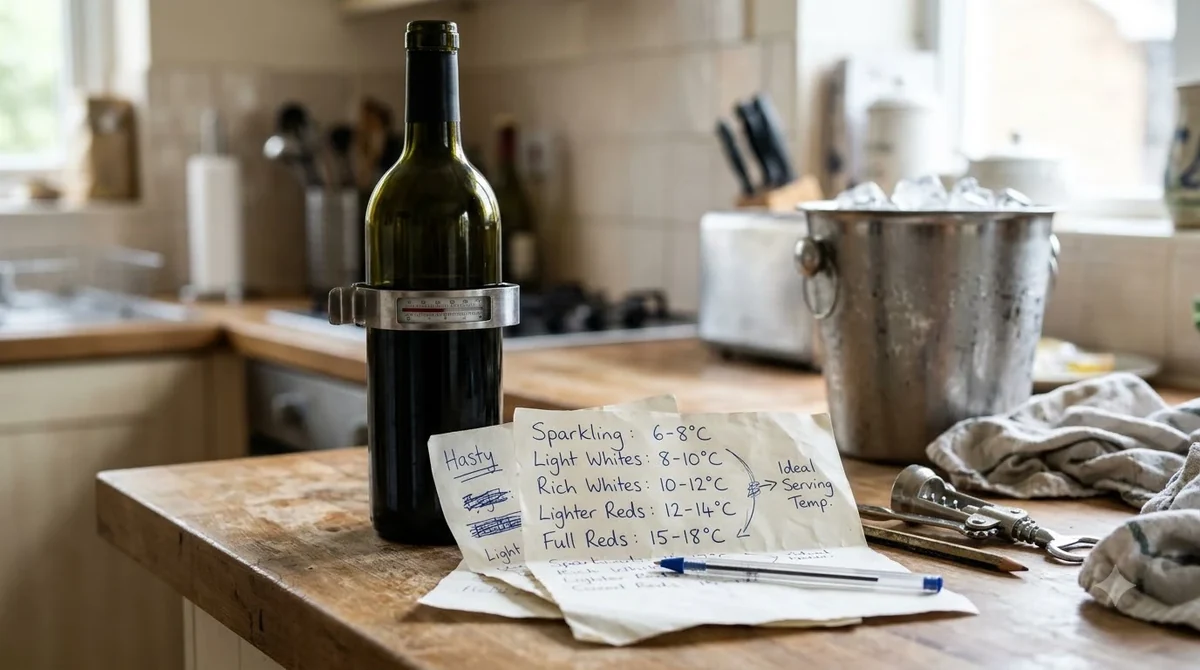
Serving temperature affects how Fresh Vine’s alcohol, acidity, fruit aromas, and texture are perceived. Sauvignon Blanc and Chardonnay benefit from different temperature ranges, while Pinot Noir and Cabernet Sauvignon generally show their best characteristics at slightly warmer temperatures.
Fresh Vine Sauvignon Blanc is best served around 45–50 degrees Fahrenheit. This temperature range keeps the wine refreshing while allowing citrus and melon aromas to remain noticeable. It works particularly well for casual meals, seafood, and lighter dishes.
Fresh Vine Chardonnay is better served around 50–55 degrees Fahrenheit. A slightly warmer serving temperature gives its pear, apple, tropical-fruit, and oak characteristics more room to develop. Serving it extremely cold can make its flavors and texture seem less expressive.
For the red wines, Pinot Noir generally benefits from a temperature around 55–60 degrees Fahrenheit. Cabernet Sauvignon is better suited to approximately 60–65 degrees Fahrenheit. These temperatures are cooler than many typical room temperatures, so a short period in the refrigerator before serving can help.
Food pairing suggestions
The different Fresh Vine varietals also call for different food combinations. Sauvignon Blanc’s citrus character and acidity make it a natural partner for shellfish, goat’s milk cheese, and fresh vegetable dishes. Vivino specifically identifies shellfish, vegetarian dishes, and goat’s milk cheese as suggested matches for Fresh Vine Sauvignon Blanc.
Chardonnay works well with roast chicken, creamy pasta, grilled seafood, and dishes containing butter or mild sauces. Its fuller body and oak-related notes can complement richer preparations without being overwhelmed by the food.
Cabernet Sauvignon is more suitable for grilled beef, lamb, and other dishes with substantial protein and fat. Its high tannin structure works particularly well with fatty foods because salt and fat soften the perception of tannin.
Pinot Noir is a flexible red-wine pairing for roasted poultry, mushroom dishes, pork, and salmon preparations. Its lower-to-medium tannin level and higher acidity make it less forceful than Cabernet Sauvignon.
For spicy dishes, remember that alcohol and tannin can amplify the perception of chili heat. A moderately alcoholic white with refreshing acidity may be more comfortable alongside spicy food than a full-bodied 13.5% red.
Opening and storing the bottles
Fresh Vine’s still wines can generally be handled using ordinary storage practices for table wine. Store unopened bottles away from direct sunlight and major temperature fluctuations, ideally in a cool location around 55 degrees Fahrenheit. Bottles with natural cork closures are traditionally stored on their sides to help keep the cork from drying out.
After opening, refrigerate the remaining wine. Most opened still wines retain their best qualities for approximately 3–5 days, depending on exposure to oxygen and the wine’s structure. A reliable wine stopper can slow oxidation, although it cannot prevent it entirely.
Young, full-bodied Cabernet Sauvignon can benefit from 30–60 minutes of decanting before serving. Pinot Noir usually requires less aggressive aeration, while Sauvignon Blanc and Chardonnay can generally be served directly from the bottle after reaching their recommended temperatures.
Choosing the Right Fresh Vine Wine for Your Preferences
The best Fresh Vine varietal depends on whether you prioritize lower ABV, a fuller body, bright acidity, or richer fruit flavors. The 12.5% Sauvignon Blanc is the clearest choice for someone seeking the lowest documented alcohol percentage in the lineup.
For a lighter white-wine experience, Sauvignon Blanc offers citrus, melon, and grapefruit characteristics alongside its moderate 12.5% alcohol level. It is a practical choice for shellfish, goat’s milk cheese, vegetable dishes, and warm-weather meals.
Chardonnay is a better match for drinkers who prefer a fuller-bodied white wine. At 13.5% ABV, it has the same documented alcohol strength as the two Fresh Vine red wines, but its pear, apple, tropical-fruit, and oak characteristics create a very different drinking experience.
Rosé offers a middle point in the documented lineup. Its 2021 vintage was reported at 13.1% ABV, making it slightly stronger than Sauvignon Blanc but lower in alcohol than the 13.5% wines. Its Pinot Grigio and Pinot Noir grape combination also gives it a different identity from a conventional single-varietal white or red.
For red-wine drinkers, Cabernet Sauvignon and Pinot Noir share the same documented 13.5% ABV. Their differences are primarily related to grape characteristics and winemaking style. Cabernet Sauvignon has more prominent tannin and darker fruit flavors, while Pinot Noir generally offers softer tannins, brighter acidity, and more delicate red-fruit notes.
A useful comparison strategy is to begin with the alcohol percentage, then consider body and food pairing. This avoids assuming that a lighter-colored wine necessarily has less alcohol or that a wine with little sugar must also be low in alcohol.
Readers exploring more producers and grape varieties can browse the Wine Brands section for additional brand-specific alcohol comparisons. Looking at similar grape varieties across producers is often more informative than comparing unrelated wine styles.
Frequently Asked Questions
What is the alcohol content of Fresh Vine Sparkling Rosé?
Fresh Vine’s earlier product lineup included a Sparkling Rosé in addition to its still Rosé. The documented 13.1% ABV figure belongs to the 2021 still Rosé and should not be automatically assigned to the sparkling version. Sparkling wines can have different alcohol levels depending on their production and final formulation.
Does Fresh Vine Wine contain sulfites?
Vivino identifies sulfites as an allergen in its Fresh Vine Sauvignon Blanc listing. Sulfites are commonly present in wine as a result of fermentation and winemaking practices. Their presence is separate from the wine’s ABV measurement.
Does Fresh Vine Wine use oak aging?
Fresh Vine Chardonnay’s published description mentions toasty oak notes, while its Cabernet Sauvignon description includes vanilla and baker’s chocolate characteristics. These flavor descriptions indicate an oak-related profile, although the precise barrel program should not be assumed to be identical across all varietals.
Is Fresh Vine Sauvignon Blanc made from a single grape variety?
Fresh Vine identifies this wine as Sauvignon Blanc, and Vivino lists Sauvignon Blanc as its grape variety. This differs from the documented 2021 Rosé, which was described as a Pinot Grigio and Pinot Noir blend. The distinction helps explain why the two wines have different styles and alcohol percentages.
Where is Fresh Vine Sauvignon Blanc from?
Vivino identifies Fresh Vine Sauvignon Blanc with Solano County in California. Wine Enthusiast also places its reviewed 2021 vintage in California’s North Coast region. These geographic descriptions provide more specific context than simply identifying the wine as American Sauvignon Blanc.
Fresh Vine Wine generally contains 12.5%–13.5% ABV, depending on the varietal, with Sauvignon Blanc offering the lowest documented percentage. Its relatively low published sugar and carbohydrate figures do not mean that it is a low-alcohol wine. Comparing the exact varietal, serving size, and ABV provides the clearest way to understand what is in each glass.
More in Wine Brands
 Underwood Wine Price: Compare Bottles, Cans, and Pack SizesUpdated Nov 21, 2026
 Zenato Wine Price: Compare Styles and Choose the Right BottleUpdated Nov 21, 2026
 Zuccardi Wine Price: Compare Bottles and Find the Right RangeUpdated Nov 21, 2026
 Yellow Tail Moscato Review: Taste, Sweetness and Serving TipsUpdated Nov 21, 2026
 Wolf Blass Yellow Label Review: Choose Your Best StyleUpdated Nov 21, 2026
 Wolffer Estate Rose Review: Choose the Right Bottle for Your TableUpdated Nov 21, 2026