

We may earn a commission when you buy through links on this page, at no extra cost to you. Learn more.
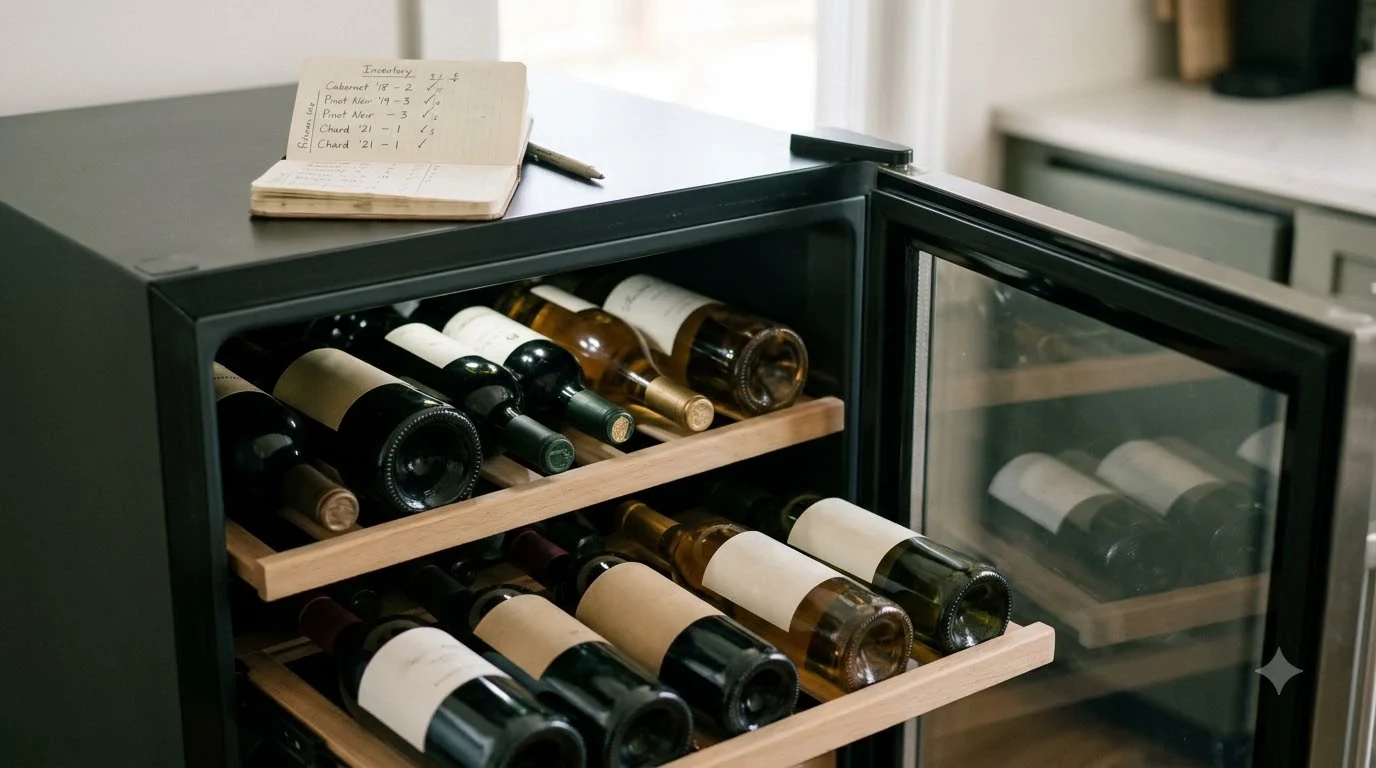
A wine fridge in hot garage space can hold bottles near 55°F, but only while the room stays below roughly 85°F and the unit is rated for that heat. Beverage Factory notes that many wine refrigerators begin to work harder once the surrounding air climbs above 85°F, and Wine Enthusiast warns that entry-level coolers struggle once a garage reaches the upper 80s and beyond. Shade, airflow, and a cabinet built for heat matter far more than the brand name on the door.
Most people buy a wine fridge for the kitchen or living room, then run out of space and look toward the garage. The appeal is easy to understand. A garage has floor space, the cabinet stays out of sight, and the bottles are close at hand for a weekend gathering. The trouble is that a garage is one of the least stable rooms in a house. Temperatures can climb from a mild morning to a punishing afternoon, and many garages have little insulation to soften that swing. A wine cabinet holds its interior temperature by moving heat out of its own box, so a hot room makes that job harder. The strain does not always show up on the thermometer right away, which is why it helps to understand the limits before the first heat wave arrives.
Why Garage Heat Puts Wine at Risk
Heat is one of the biggest threats to a bottle stored in a garage, and its damage is often invisible until the wine tastes flat, stewed, or tired. Knowing how heat acts on wine explains why a few hot degrees matter so much.
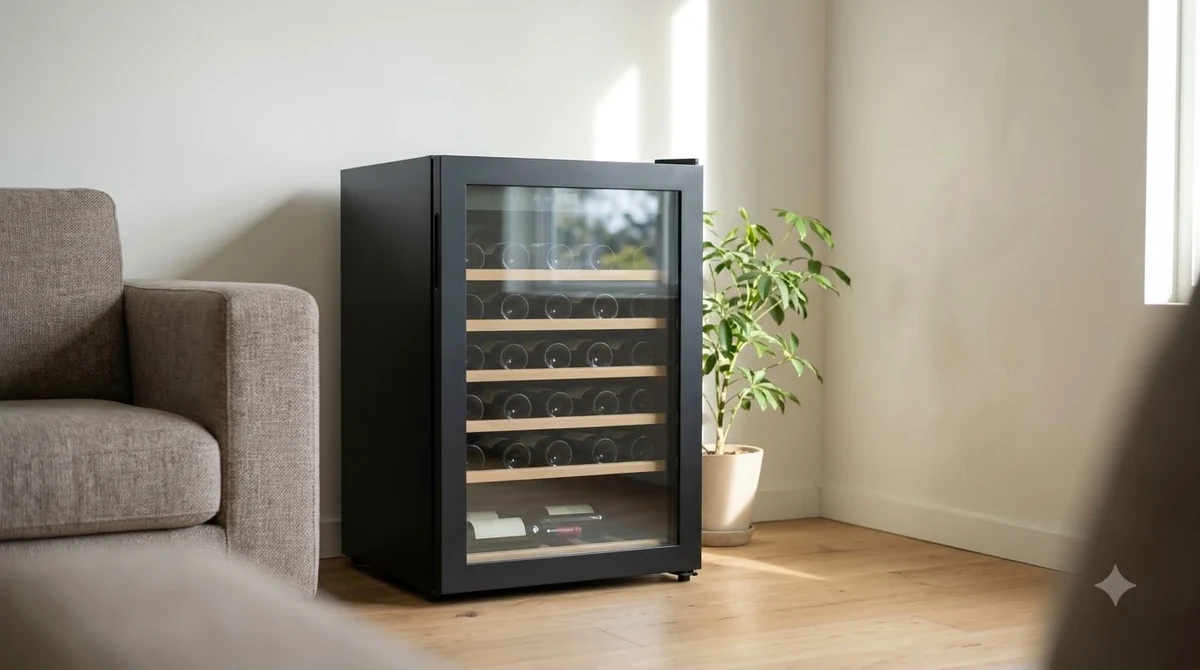
Marshall Tilden, Chief Revenue and Education Officer at Wine Enthusiast, identifies about 55°F as the sweet spot for storing reds, whites, sparkling, and fortified wines. Anna-Christina Cabrales, the magazine’s Tasting Director, describes what happens when that line is crossed. Overheated wine can undergo maderization, a process that turns the wine into something closer to vinegar, and the change cannot be reversed. The result is a bottle that has lost its fruit and freshness, even though it may look perfectly normal on the shelf.
Heat speeds up the chemical reactions that age wine. A bottle that spends one hot summer in a warm garage will not necessarily be ruined, but it will age faster than the winemaker intended. That matters most for wines built to be enjoyed young. Wine Enthusiast points out that many wines are not meant for long aging at all, and crisp whites, rosés, and light reds have little structure to absorb extra years of heat. Those are the bottles that lose their appeal first, so they deserve the most protection.
Cold deserves attention too. Beverage Factory points out that refrigeration equipment works harder at the extremes in both directions, and Cabrales warns that wine expands as it freezes and can push its cork out. A garage in a mild climate may stay comfortable most of the year and still produce a few days of stress during a cold snap or a heat wave. The question is not only how hot the room gets, but how often and how quickly it swings.
Safe Temperature Limits for a Wine Fridge in Hot Garage Conditions
The number that matters most is the highest ambient temperature your unit is rated to handle. Beverage Factory and Wine Enthusiast point toward the same practical limits, and both are worth keeping in mind when you check a garage thermometer.
Beverage Factory recommends storing wine between 50°F and 59°F. It also gives 32°F to 100°F as the ambient range in which a wine refrigerator should run optimally, and it says many units begin to labor when the surrounding air rises above 85°F or falls below 40°F. Those figures describe a comfort zone rather than a hard cliff. The closer a garage runs to 100°F, the less margin the cabinet has, and the more often it must run to hold its set point. A reading in the upper 80s is a warning sign, not yet an emergency.
The table below turns those limits into everyday decisions. Each garage is different, so treat it as a planning guide and use the rating printed on your own unit’s spec sheet as the final word.
| Garage air temperature | What it means for a wine fridge | Practical response |
|---|---|---|
| Under 40°F | Many units begin to work harder, and freezing can push corks out | Move near-term bottles indoors during cold snaps |
| 40°F to 85°F | Usually inside the comfortable operating window | Keep the unit out of direct sun and away from heat sources |
| Above 85°F | Many units begin to work harder | Confirm the maximum ambient rating and improve ventilation |
| Upper 80s to low 90s | Entry-level coolers struggle, while premium units cope better | Consider a unit built for heat, or move bottles inside during the hottest afternoons |
| Around 100°F | A unit set to 55°F may run closer to 70°F inside, based on Beverage Factory’s example | Move bottles indoors until the room cools |
Spec sheets often list both a minimum and a maximum ambient temperature. A unit rated to 90°F will be stressed in a garage that regularly reaches 100°F, even if it performs well in a kitchen. Check the rating before you buy, and check the room before you assume the rating still applies.
How Extreme Heat Forces the Cooling System to Work Harder
A wine cabinet does not create cold from nothing. It moves heat from inside the box into the room around it, so the larger the gap between inside and outside, the more work the system must do. Summer heat shrinks that gap from the wrong direction.
Beverage Factory explains that wine refrigeration depends on the temperature difference between the inside and outside of the cabinet. When the surrounding air is hot, the unit must push heat out against a stronger pull, which means longer run times and less spare capacity. The company offers a simple illustration: a unit operating in 100°F heat and set to 55°F could be about 70°F inside. That gap explains why a garage that only feels warm can still cause real trouble for a bottle collection.
Constant running has effects beyond the temperature reading. A system that cycles almost nonstop has little room to recover after a door opens or after a hot afternoon peaks. Marshall Tilden III of Wine Enthusiast describes how owners often notice a unit running constantly or creeping a few degrees warmer during summer, and how the environment around the unit is often the reason. Paying attention to how often the unit runs is one of the easiest early warnings to watch, because it changes before the wine does.
Placement and Ventilation Fixes That Actually Help
Most of the improvement you can make comes from where the cabinet sits and how air moves around it, not from buying a bigger machine. Start with the location, then check the airflow.
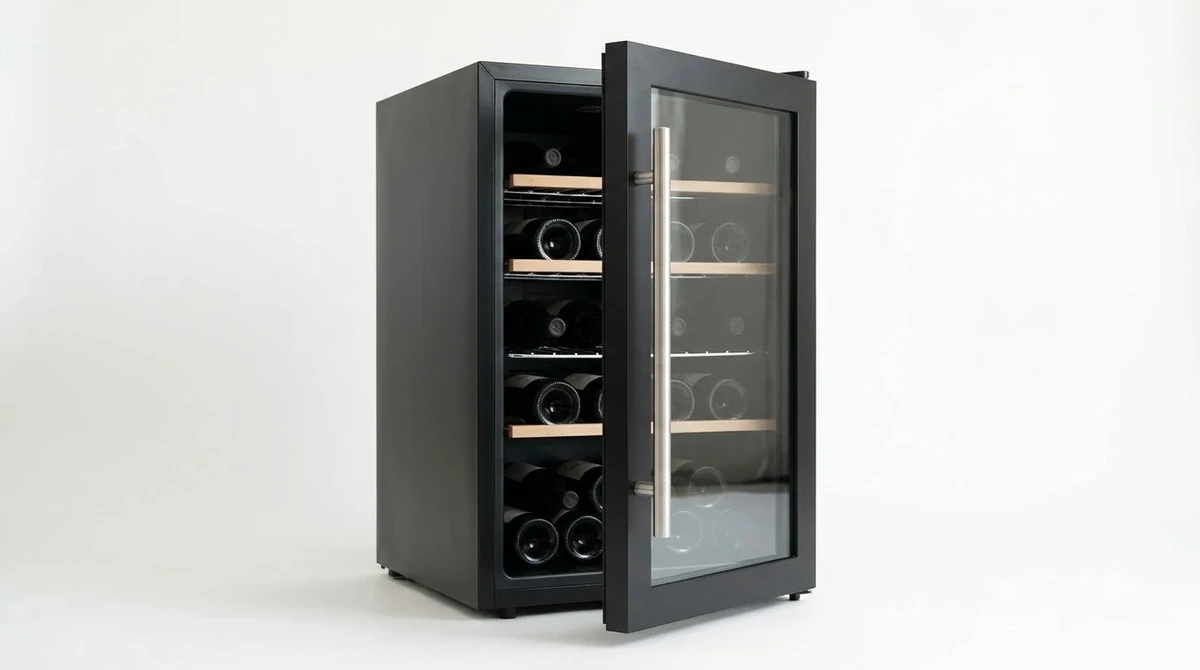
Choose the coolest corner you can. Beverage Factory notes that direct and even indirect sunlight raise the workload on a unit, and that windows in a garage or a frequently opened garage door make the problem worse. An interior wall, away from the main door and any appliance that gives off heat, usually keeps a cabinet cooler than a spot beside a window. If the garage gets afternoon sun, that location is the first thing to change, because a cabinet fighting constant solar exposure has less margin than one in shade.
Airflow matters just as much. Wine Enthusiast’s summer guide recommends proper ventilation and keeping the unit out of direct sunlight whenever possible. Leave the clearance the manufacturer specifies around the back and sides so heat can leave the cabinet, and do not stack boxes or tools against the vents. A clear gap costs nothing to maintain. Wine Enthusiast’s summer storage guide walks through the seasonal checks in more detail, including the humidity and ventilation points that matter most in a warm room.
If your cabinet has two temperature zones, the summer guide also suggests a seasonal shift. Move the whites, sparkling wines, and rosés you drink most often into the service zone, so they are chilled and ready without a rushed stop in the freezer.
Tip: Place a basic thermometer and humidity gauge inside the cabinet and another in the garage. Compare the two readings during the hottest part of the afternoon, and a large gap will show you whether the room or the unit needs attention first.
Humidity, Light, and Odors in a Hot Garage
Temperature gets most of the attention, but humidity, light, and smell can damage wine just as quietly in a garage. Each one has a practical fix that costs little to maintain.
Tilden recommends humidity somewhere around 50 to 80 percent so corks stay moist and oxygen stays out. Heat complicates that balance because warm air holds more moisture, and a cabinet can collect condensation each time its door opens in humid weather. Wine Enthusiast’s summer advice suggests keeping an eye on levels once humidity climbs above about 80 percent. A few dry sponges inside the cabinet can absorb extra moisture, and wiping away visible condensation on shelves, the floor, or near the door seal keeps it from building up.
Light is the second concern. Beverage Factory says light exposure can cause wine to age prematurely, and it notes that even indirect sunlight can affect a unit’s performance. Many cabinets use UV-tinted glass doors, which block some harmful rays, but the same company warns that glass is a poor insulator and can add to temperature fluctuation. A solid door, a cover, or a placement away from windows gives more reliable protection. Garage doors that stay open for long stretches also let in sunlight, so close them when you can.
Smell is the most overlooked risk. Tilden warns that off odors from a room or garage can get into a bottle over time, because wine breathes through its cork. Paint, fuel, cleaning chemicals, garden products, and trash all count as pungent sources. Keep those materials in another space, and keep the cabinet away from anything that smells strong.
Planning for Seasonal Swings in a Garage
A garage rarely holds one temperature for long, so the best setup accounts for both the summer peak and the winter low. Plan around the worst weeks of the year, not the average ones.
Heat waves are the obvious threat, but winter matters too. Beverage Factory flags that wine refrigerators begin to work harder when the surrounding air drops below 40°F. Cabrales adds that wine expands when it freezes, which can force a cork out and let oxygen in. In colder regions, the practical answer may be moving bottles indoors during the coldest stretch rather than asking a garage cabinet to handle conditions it was not designed for.
A workable plan has three parts. First, find out the hottest and coldest weeks in your area, then log the garage temperature for several days during each. Second, decide ahead of time which bottles can move indoors during extreme weather, usually the ones you plan to open soon. Third, keep a small buffer of everyday wine inside the house so something is ready when the garage falls outside its comfort range. Storage is not a permanent decision. Everyday bottles can live happily in a cool, dark closet or pantry, while wines you plan to keep for years need a steadier home. For broader setup and upkeep steps, the Installation & Care resources are a useful next stop.
What to Do If Your Unit Starts Running Warm
A cabinet that cannot hold its set point needs quick action, and the first moves are usually free. Start with the room, then the airflow, and only then consider the machine itself.
Begin by comparing the garage temperature with the unit’s maximum rating and confirming that the vents are clear. Close the door as much as you can, and move the bottles you plan to open soon to a cooler room. Resist the urge to lower the set point to compensate, because a colder target asks the system to run harder in the same heat. Keep notes on the readings for several days, since a pattern tells you more than a single hot afternoon.
If the cabinet still struggles after the room and airflow are fixed, the cause may be mechanical. If that brand is in your garage, this allavino wine fridge not cooling page is a reasonable place to start troubleshooting. If a component has already failed, an allavino wine fridge repair is a separate decision from changing placement, and it is best handled before more heat exposure builds up. Owners of Magic Chef models can review the magic chef wine fridge not cooling page for related steps.
Frequently Asked Questions
Can a wine fridge in a garage keep running through a heat wave?
Many units keep running through a heat wave, but the margin shrinks as the surrounding air approaches the unit’s maximum rating. Beverage Factory recommends about 70 percent humidity inside the cabinet, which makes a useful target when you check your gauge during a heat wave. If interior humidity keeps climbing or the unit runs nonstop, move the most valuable bottles to a cooler room until the weather breaks.
Is a regular kitchen fridge a good backup for wine?
A standard household refrigerator is usually a better short-term option than a hot garage. Wine Enthusiast notes that these appliances average about 40°F, which is colder and drier than wine prefers for long storage. Cold does slow aging and protect against maderization, though, so a fridge makes sense for a few days of storage, especially for bottles you plan to pour soon.
Should bottles lie down inside a wine fridge?
Yes, when the cabinet has racks that allow it. Cabrales advises placing bottles on their sides so the cork stays hydrated at all times, which helps keep oxygen from working its way past a dry cork. Lying bottles down is a simple habit that costs nothing and works in any cabinet.
What should I do with an opened bottle stored in the garage?
Cabrales recommends pouring the wine into a glass and replacing the cork right away, so the bottle is exposed to oxygen for as little time as possible. Tilden uses a vacuum pump to draw air out of an open bottle, then refrigerates it to slow oxidation further. Keeping an opened bottle cold and sealed is the simplest way to protect what remains.
Does vibration matter for a wine fridge in a garage?
It does. Tilden explains that vibration can shift sediment and create heat and friction inside a bottle, which can change the wine’s structure over time. Wine refrigerators often include features that control for vibration and odors, which a standard refrigerator is not built around. That makes a dedicated cabinet more useful than a repurposed appliance when the storage space is a garage.
A wine fridge in hot garage conditions can work, but only when the room, the unit’s rating, and the bottles’ needs line up. Start with placement and airflow, watch humidity and light, and plan for the hottest and coldest weeks of the year. A careful setup protects the flavor you paid for.
More in Storage & Fridge Care
 How Long Can You Store Wine in a Wine Fridge? Protect Bottle QualityUpdated Nov 20, 2026
 Can You Store Beer in a Wine Fridge? Keep Both Drinks FreshUpdated Nov 20, 2026
 Is It Worth Repairing a Wine Fridge? Spot the Cheap Fixes Before You ReplaceUpdated Nov 20, 2026
 Wine Fridge Condensation: Identify Causes and Fix Moisture ProblemsUpdated Nov 20, 2026
 Wine Fridge Too Cold: Protect Your Wine and Fix the TemperatureUpdated Nov 20, 2026
 How to Reset Wine Fridge: Restore Cooling and SettingsUpdated Nov 20, 2026