

We may earn a commission when you buy through links on this page, at no extra cost to you. Learn more.
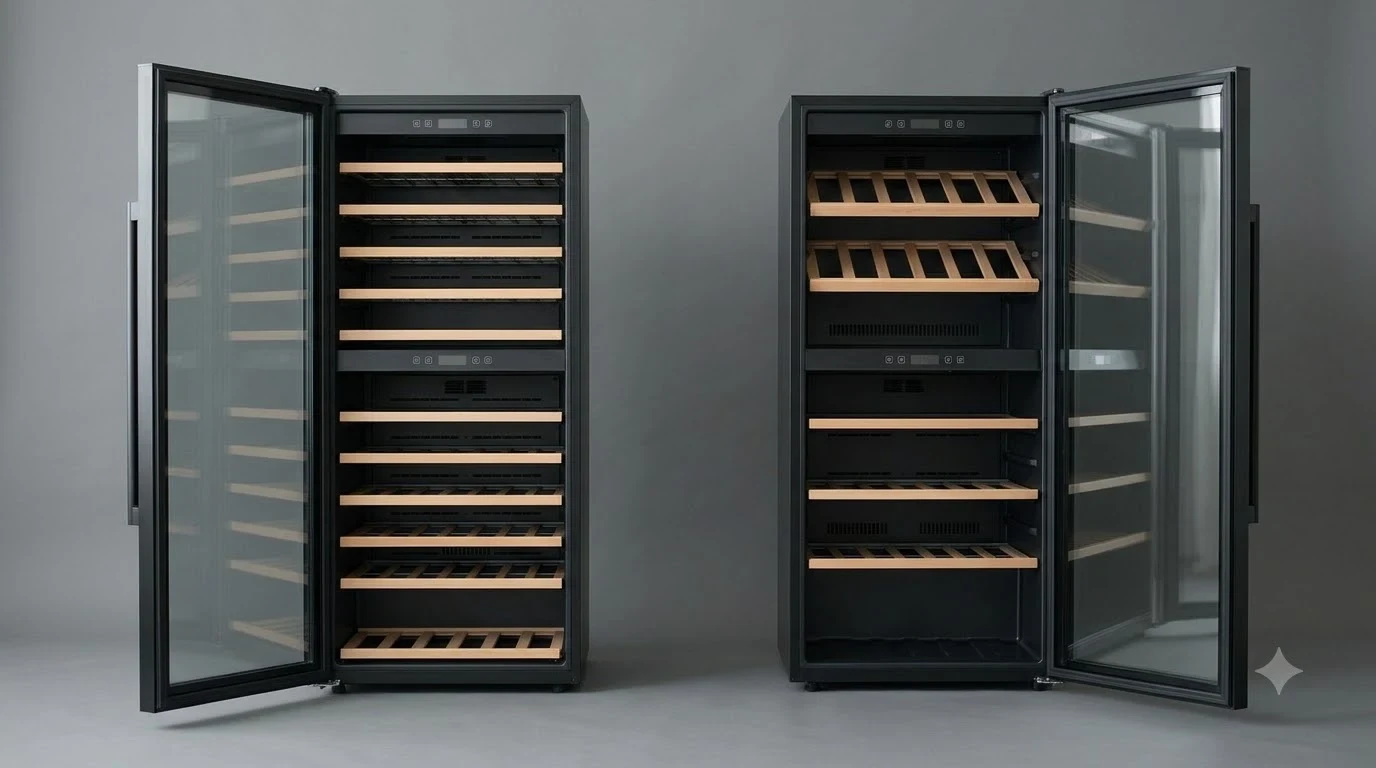
The answer to “what is a dual zone wine fridge” is a wine refrigerator with two independently controlled temperature compartments, allowing you to store red, white, sparkling, and other wines at different temperatures in one appliance. Unlike a single-zone model, it lets you adjust each section separately to accommodate different storage and serving preferences. It is particularly useful for households that regularly enjoy both red and white wine or want bottles ready to serve without constantly changing the refrigerator’s settings.
Choosing a wine refrigerator involves more than deciding how many bottles it should hold. Temperature consistency, storage duration, bottle arrangement, and everyday drinking habits all affect which type of appliance makes sense. Understanding how dual-zone technology works will help you decide whether its additional flexibility is useful or whether a simpler single-zone refrigerator would be sufficient.
What a Dual-Zone Wine Refrigerator Actually Does
A dual-zone wine refrigerator divides its interior into two temperature-controlled sections. Each section has an adjustable temperature setting, allowing the upper and lower compartments to maintain different conditions simultaneously.
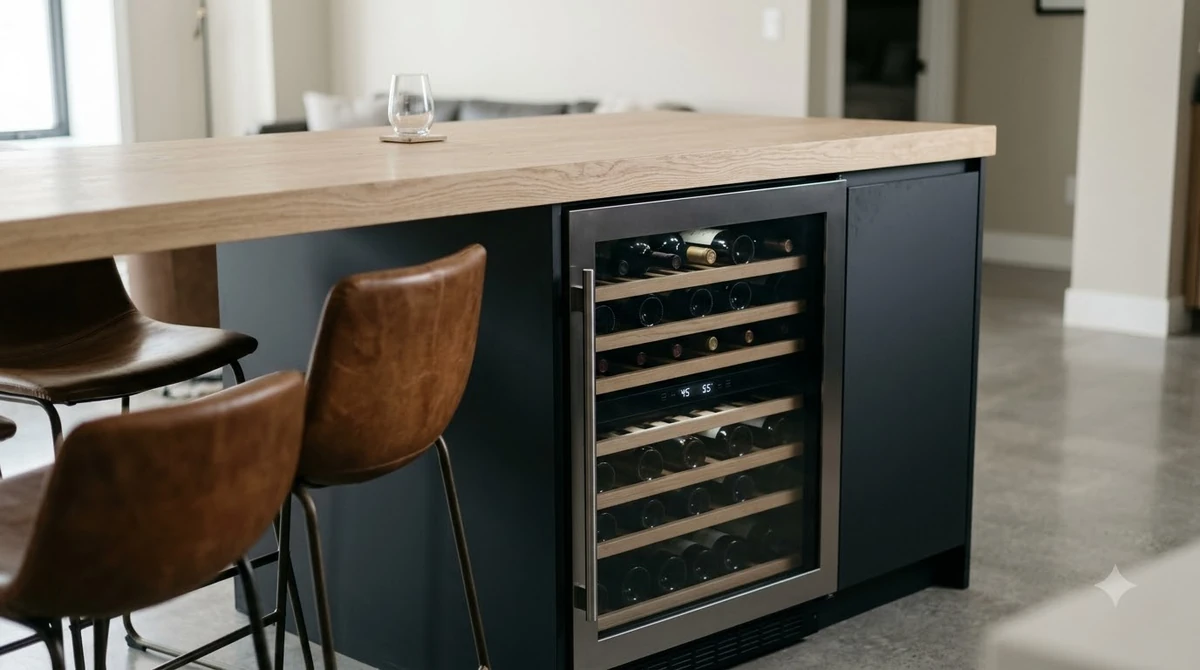
For example, you might set one compartment to 48°F for bottles of Sauvignon Blanc, Riesling, and sparkling wine, while keeping another at 60°F for lighter reds and fuller-bodied wines approaching serving temperature. The exact arrangement depends on the appliance’s design, because some models place the warmer section above the cooler section while others reverse that arrangement.
The important feature is independent temperature adjustment. A regular refrigerator has one primary cooling environment, and changing its setting affects everything inside. A dual-zone wine fridge provides two separate temperature targets, making it easier to accommodate different wine styles without repeatedly adjusting the appliance.
Most dual-zone models use separate controls or a digital interface to select the desired temperature for each compartment. Some have individual displays, while others show both settings on one control panel. The refrigerator then regulates its cooling system to maintain the selected temperatures within the manufacturer’s operating specifications.
Although the two compartments have different temperature settings, they share one appliance and its overall cooling infrastructure. This means the zones are not necessarily completely isolated from one another. Their performance depends on insulation, airflow, internal construction, ambient room temperature, and the cooling technology used.
Two zones do not necessarily mean two completely separate refrigerators
Some appliances use a common compressor with a temperature-management system designed to regulate the two compartments. Others use different internal configurations to distribute cooling. Consequently, two refrigerators labeled dual-zone can behave differently even if their advertised temperature ranges look similar.
It is also important to distinguish a dual-zone wine refrigerator from a refrigerator with two shelves or two temperature displays. Shelves organize bottles, but they do not automatically create independent temperature environments. A genuine dual-zone appliance must allow users to adjust two distinct temperature settings.
For buyers, the practical question is straightforward: can the upper and lower sections maintain different temperatures without changing each other’s settings? That is the feature that makes the appliance a dual-zone model.
Why Red and White Wines Benefit From Different Serving Temperatures
Different wine styles are generally served at different temperatures because chilling and warming influence how their aromas, acidity, fruit characteristics, and alcohol are perceived. A dual-zone refrigerator provides a convenient way to keep two groups of bottles closer to their preferred serving temperatures.
Light-bodied white wines, including Sauvignon Blanc and Pinot Grigio, generally benefit from cooler service around 45-50°F. Sparkling wines are commonly served around 40-50°F, depending on the style. These cooler temperatures help maintain a refreshing impression and preserve the lively character expected from these wines.
Fuller-bodied whites require slightly warmer conditions. Chardonnay, particularly richer or oak-aged examples, often shows more of its aromatic character around 50-55°F. Serving these wines excessively cold can make their flavors seem restrained.
Red wines also have different serving requirements. Pinot Noir and other lighter reds are generally more enjoyable around 55-60°F, while fuller-bodied Cabernet Sauvignon, Syrah, and Merlot are typically served around 60-65°F.
These distinctions explain why a dual-zone refrigerator can be convenient for mixed collections. Instead of keeping every bottle at one serving temperature, you can organize wines into two practical temperature groups.
The following table summarizes useful serving-temperature targets. These are serving recommendations, not instructions that every bottle must follow during long-term storage.
| Wine style | Typical serving temperature | Examples |
|---|---|---|
| Sparkling | 40-50°F | Champagne, Cava, Prosecco |
| Light white | 45-50°F | Sauvignon Blanc, Pinot Grigio |
| Rosé | 45-50°F | Dry Provence-style rosé |
| Full-bodied white | 50-55°F | Chardonnay, Viognier |
| Light red | 55-60°F | Pinot Noir, Beaujolais |
| Full-bodied red | 60-65°F | Cabernet Sauvignon, Syrah |
| Sweet white | 43-50°F | Moscato, sweet Riesling |
These ranges provide a useful starting point, although individual wines can benefit from small adjustments. A delicate sparkling wine might be served colder than a complex vintage Champagne, for example, while an elegant Pinot Noir may show better toward the warmer end of its range.
For additional guidance, the Wine Enthusiast serving-temperature recommendations explain how temperature influences different wine styles and provide practical chilling guidance.
How to Set the Two Temperature Zones
The best dual-zone settings depend on whether you prioritize long-term storage or convenient serving temperatures. For a household that opens bottles regularly, one compartment can be configured for whites and sparkling wines while the other holds reds closer to their preferred serving temperature.
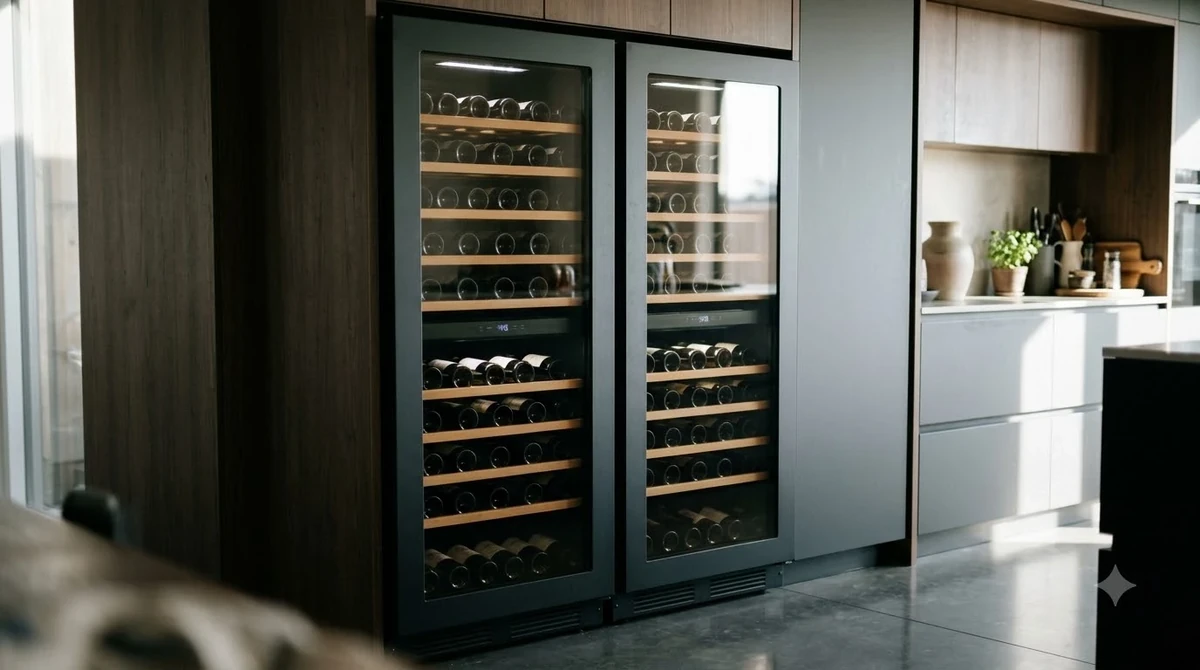
A practical starting arrangement is approximately 45-50°F in the cooler compartment and 55-60°F in the warmer compartment. This arrangement works well for many everyday bottles, although the ideal settings depend on the wines in your collection and the refrigerator’s operating range.
Setting the cooler compartment
The cooler compartment is useful for Sauvignon Blanc, Pinot Grigio, dry rosé, and sparkling wines that benefit from a refreshing serving temperature. A setting around 46-48°F offers a reasonable compromise for a collection containing several styles.
If you regularly drink Champagne, Cava, or Prosecco, you may prefer a setting closer to 42-45°F. This provides a convenient starting point before serving. Fuller-bodied whites such as Chardonnay may benefit from being placed in the warmer compartment instead.
Setting the warmer compartment
The warmer compartment can hold Pinot Noir, Merlot, and other reds that are more enjoyable slightly below ordinary room temperature. A setting around 57-60°F works as a practical everyday starting point.
For Cabernet Sauvignon, Syrah, and other fuller-bodied reds, a temperature closer to 60-65°F is generally appropriate for serving. If your refrigerator cannot reach those temperatures, you can remove the bottle and allow it to warm gradually before opening.
Remember that the temperature displayed on the control panel may not perfectly match the temperature of every bottle. Air temperature changes more quickly than the temperature inside a full wine bottle. Allow sufficient time for the appliance and its contents to stabilize after changing a setting.
Tip: Avoid making frequent, large temperature adjustments. Choose settings that suit your regular collection, allow the compartments to stabilize, and use a separate wine thermometer if you want to check actual bottle or compartment temperatures.
There is another important consideration: serving temperature and long-term storage temperature are not identical concepts. A bottle intended for aging does not need to be stored at its eventual serving temperature throughout its life.
Dual-Zone Storage Versus Long-Term Wine Storage
A dual-zone wine fridge is convenient for everyday drinking, but two different temperatures are not automatically better for preserving a collection over several years. Long-term wine storage generally benefits from one stable temperature rather than frequent temperature changes or unnecessary temperature differences.
Wine Enthusiast recommends approximately 53-57°F for longer-term storage. Its guidance also identifies 50-59°F as a suitable consistent range for shorter-term storage lasting less than six months. These recommendations illustrate why a single-zone refrigerator can be perfectly suitable for mixed wine collections.
Red and white wines do not require separate long-term storage temperatures simply because they have different serving requirements. Both can be kept in the same stable environment and brought to their preferred serving temperatures when needed.
This distinction matters particularly for collectors who purchase bottles intended to age. A Cabernet Sauvignon that will remain in storage for several years does not need to sit at 63°F simply because that is a convenient serving temperature. A stable storage environment around 55°F is generally more appropriate.
When two storage temperatures make sense
There are situations where different zones provide practical value beyond serving convenience. For example, one section might hold bottles intended for consumption over the next few weeks, while another holds bottles that will remain in storage longer.
However, the distinction should be based on the appliance’s capabilities and the intended storage duration, not an assumption that all reds belong in a warm section and all whites belong in a cold section.
If your collection consists primarily of bottles purchased for aging, a single-zone refrigerator set near 55°F may be simpler and more appropriate. You can remove individual bottles before serving and adjust their temperatures outside the appliance.
For collectors who want both stable storage and immediate serving convenience, a dual-zone model offers more flexibility. The important thing is to determine whether its temperature settings and compartment arrangement support your actual storage habits.
Dual-Zone Versus Single-Zone Wine Fridges
The main difference between single-zone and dual-zone wine refrigerators is temperature flexibility. A single-zone model maintains one temperature throughout its storage compartment, whereas a dual-zone appliance allows two separately controlled temperature environments.
Neither configuration is automatically superior. The right choice depends on how frequently you drink wine, how many different styles you keep, and whether your priority is long-term preservation or having bottles ready for service.
Advantages of a single-zone refrigerator
Single-zone refrigerators are straightforward to operate. You choose one temperature, arrange your bottles, and allow the appliance to maintain a consistent environment.
For someone with a collection of 20-30 bottles intended mainly for storage, this arrangement can be entirely sufficient. You can keep red, white, and sparkling wines together at a suitable storage temperature and chill individual bottles when necessary.
Single-zone models are also generally easier to organize because the entire interior follows one temperature setting. There is no need to decide which wines belong in the upper compartment or whether the warmer section is appropriate for a particular bottle.
Advantages of a dual-zone refrigerator
Dual-zone models are particularly useful for mixed collections. Imagine keeping 12 bottles of white wine and sparkling wine in one section while storing 18 bottles of red wine in another. Separate temperature controls allow each group to be maintained closer to its preferred serving conditions.
This flexibility can be valuable if you entertain regularly, serve different wines throughout a meal, or prefer not to spend time chilling bottles before guests arrive.
It also reduces the need to compromise on one setting. Instead of choosing between a cooler temperature for whites and a warmer temperature for reds, you can configure both compartments according to your preferences.
However, dual-zone units often have more complicated internal designs and controls. They may also have different capacity distributions between the two compartments, so the advertised total bottle capacity does not necessarily tell you how many bottles of each style will fit comfortably.
Before choosing a configuration, consider whether you actually need a wine fridge based on your collection size, storage environment, and drinking habits. A dedicated wine refrigerator is useful in many situations, but a dual-zone model is not essential for everyone.
What to Check Before Buying a Dual-Zone Wine Fridge
Buying a dual-zone wine refrigerator requires more consideration than checking its advertised bottle capacity. Temperature range, compartment dimensions, cooling technology, installation requirements, and everyday operating conditions all influence whether a model will work well in your home.
1. Independent temperature controls
Start by confirming that both compartments have independent temperature settings. Some appliances advertise multiple storage areas without offering the level of separate control that buyers expect.
Look for a clear explanation of the upper and lower temperature ranges. If you want to store sparkling wine around 43°F and reds around 60°F, make sure the appliance can maintain both settings simultaneously.
2. Temperature range and stability
Most standard wine refrigerators offer an approximate operating range of 40-65°F. However, individual models differ, and a unit’s minimum and maximum settings do not guarantee equal performance in every room.
Consider where the appliance will be installed. A refrigerator placed in a climate-controlled kitchen generally operates under different conditions from one installed in a hot garage or an enclosed patio.
Wine Enthusiast notes that substantial ambient temperature fluctuations can place additional demands on wine refrigerators. Choosing a suitable installation environment can therefore help the appliance maintain consistent conditions.
3. Bottle capacity and arrangement
Manufacturers commonly calculate capacity using standard Bordeaux-style bottles. Real collections often include wider Champagne bottles, Burgundy bottles, and unusual bottle shapes that require more room.
A refrigerator advertised for 40 bottles might hold fewer when filled with a mixture of sparkling wine, Burgundy, and larger-format bottles. Examine the shelf spacing and compartment dimensions rather than relying exclusively on the advertised number.
Also consider how many bottles you want in each zone. A refrigerator with a 60-bottle total capacity might have a 30-bottle upper compartment and a 30-bottle lower compartment. That distribution may be inconvenient if you keep substantially more reds than whites.
4. Compressor or thermoelectric cooling
Cooling technology affects the refrigerator’s operation. Compressor wine coolers are common and can generally achieve lower temperatures in warmer surroundings. Thermoelectric models are known for quieter operation, although they are not as readily available in some markets.
Neither technology alone guarantees better wine preservation. Pay attention to temperature stability, room conditions, vibration management, and the manufacturer’s installation recommendations.
5. Installation and ventilation
Some wine refrigerators are designed for freestanding installation, while others are approved for built-in placement beneath a counter. These configurations are not interchangeable.
Freestanding appliances commonly require open space around ventilation areas to release heat. Installing one inside a tightly enclosed cabinet can restrict airflow and make temperature regulation more difficult.
Built-in models are designed with their ventilation requirements in mind. Check the manufacturer’s clearance specifications, door-opening requirements, and electrical recommendations before purchasing.
6. Energy consumption and operating noise
A wine refrigerator operates continuously, so energy consumption matters over the appliance’s lifetime. Compare the manufacturer’s energy information, insulation design, and expected operating conditions rather than assuming that every dual-zone model consumes the same amount of electricity.
Compressor systems can produce noticeable operating sounds, particularly when cooling cycles begin. If the refrigerator will sit in a living room, dining area, or open-plan kitchen, noise levels may be an important consideration.
For a more detailed buying comparison, review wine fridge energy efficiency before deciding which model offers the best balance of capacity, cooling performance, and electricity consumption.
Who Should Buy a Dual-Zone Wine Refrigerator?
A dual-zone wine refrigerator makes the most sense for people who regularly keep different wine styles and want more control over their serving temperatures. It is particularly useful for mixed collections containing reds, whites, rosés, and sparkling wines.
Consider a household that typically keeps 24 bottles: 12 whites and sparkling wines, eight lighter reds, and four fuller-bodied reds. A dual-zone arrangement can accommodate the cooler bottles separately from the reds, making it easier to prepare for a meal or informal gathering.
Someone who primarily drinks one style may not receive the same benefit. If your collection consists of 25 bottles of Cabernet Sauvignon intended for long-term storage, a single-zone refrigerator set around 55°F may be a more practical choice.
Buyers who benefit most
Dual-zone refrigeration is especially useful for people who regularly entertain. Having Sauvignon Blanc ready in one section and Pinot Noir or Merlot in another can simplify planning for dinner parties.
It also suits households where different people prefer different wine styles. One person might regularly drink Chardonnay and sparkling wine, while another prefers Cabernet Sauvignon and Syrah. Separate compartments provide a convenient arrangement without requiring multiple appliances.
Wine enthusiasts who purchase bottles throughout the year may also appreciate the flexibility. A collection that gradually expands from 15 bottles to 40 bottles can become more varied, making separate temperature settings increasingly useful.
When a dual-zone model may be unnecessary
A small collection does not automatically justify a dual-zone refrigerator. If you own 8-12 bottles and typically open one at a time, a compact single-zone model may provide everything you need.
The same applies if you store wine mainly for aging. Stable temperature, appropriate humidity, protection from light, and minimal disturbance are more important than having two different temperature settings.
Budget and available space also matter. Before comparing individual models, consider how much does a wine fridge cost and whether the additional flexibility of a dual-zone appliance justifies its overall purchase and operating costs.
For more general buying advice, the Buying Basics section can help you evaluate wine-related purchases according to your collection and household requirements.
Frequently Asked Questions
Can I turn off one zone in a dual-zone wine fridge?
Some dual-zone refrigerators allow one compartment to be switched off or placed in a standby mode, but this is not a universal feature. Other models require both zones to remain active for proper temperature regulation. Consult the appliance’s operating instructions before attempting to disable a compartment.
Can I put beer and other beverages in a dual-zone wine fridge?
You can place other beverages in some wine refrigerators if the bottle dimensions and manufacturer’s recommendations permit it. However, wine shelves are often designed around standard wine bottles rather than cans or tall beverage containers. Beer also has different serving-temperature preferences, so a dedicated beverage refrigerator may be more practical for a mixed drinks collection.
Does opening the door frequently affect the two temperature zones?
Yes. Opening a refrigerator door allows warmer room air to enter and can temporarily change the compartment temperature. Frequent or prolonged opening can increase cooling demand and make temperature regulation less consistent. Keeping the door closed between bottle selections helps maintain a more stable environment.
Can a dual-zone wine fridge accommodate magnum bottles?
Some models accommodate magnums, but their larger dimensions can limit shelf capacity and affect bottle arrangement. A standard magnum contains 1.5 liters, twice the volume of a conventional 750 ml wine bottle. Look for removable shelves or adjustable storage arrangements if you regularly purchase larger formats.
Do dual-zone wine refrigerators require special maintenance?
They generally require the same basic care as other wine refrigerators, including cleaning interior surfaces, checking door seals, and keeping ventilation areas clear. Some models also have filters or drainage components that require periodic attention. Follow the manufacturer’s maintenance schedule because the recommended cleaning intervals and replacement parts vary by appliance.
A dual-zone wine fridge offers two independently adjustable temperature compartments, making it a convenient option for households with varied wine collections and different serving preferences. It is particularly valuable when you regularly enjoy red and white wines and want both ready for service. However, if your main objective is long-term storage at a consistent temperature, a well-designed single-zone refrigerator may be all you need. Choose according to your collection, available space, and everyday wine-drinking habits.
More in Wine Buying Guides
 Cheap Red Blend: How to Find a Flavorful Bottle for LessUpdated Nov 20, 2026
 Pinot Grigio Gift: How to Choose a Bottle They’ll EnjoyUpdated Nov 20, 2026
 Best White Wine at Total Wine for Every MealUpdated Nov 20, 2026
 Wine Fridge Replacement Shelves: Find the Right FitUpdated Nov 20, 2026
 Best Sparkling Wine Under 20: Find Bubbles Worth BuyingUpdated Nov 20, 2026
 Best Wine For Birthday Celebrations With Perfect Party PairingsUpdated Nov 20, 2026