

We may earn a commission when you buy through links on this page, at no extra cost to you. Learn more.
Riesling with cheese is an excellent pairing, especially when you match the wine’s sweetness and acidity to the cheese’s richness, saltiness, and intensity. Dry Riesling works particularly well with Gruyère, young Gouda, and fresh goat cheese, while off-dry and sweet Riesling complement Brie, Camembert, and pungent blue cheeses. The grape’s naturally high acidity keeps creamy textures from feeling heavy, making it one of the most versatile white wines for a cheese board.
Riesling deserves a place alongside familiar cheese-board wines such as Chardonnay and Sauvignon Blanc. Its combination of fresh acidity, aromatic fruit, and varying sweetness levels gives it several ways to complement different cheeses. A crisp German Riesling can bring freshness to a mild Alpine cheese, while a richer, sweeter bottle can stand up to the saltiness of Roquefort. The important distinction is the wine’s actual style, not simply the grape name on the bottle.
Why Riesling Works So Well With Cheese
Riesling combines refreshing acidity with fruit flavors and, in many examples, a touch of natural sweetness. These characteristics help balance the richness, saltiness, and sharpness found in different cheese styles.
Cheese contains fat, protein, salt, and varying levels of acidity. A creamy Brie coats the palate, while aged Gouda develops a concentrated savory character. Blue cheese brings a particularly strong combination of saltiness, richness, and pungency. A wine needs enough character to complement these differences without overwhelming the cheese.
Riesling’s acidity provides one of its biggest advantages. It refreshes the palate after a bite of triple-cream cheese or a piece of buttery Camembert. Instead of allowing the cheese’s richness to dominate, the wine introduces a bright contrast. Citrus, green apple, pear, and stone-fruit flavors also provide useful connections to the creamy, nutty, and earthy notes found in many cheeses.
Sweetness creates another opportunity. A slightly sweet Riesling can balance salty cheese, while a richer dessert-style example can complement particularly intense blue cheese. This contrast is especially useful because salty foods can make a dry wine seem sharper or more austere. A little sweetness helps soften that impression.
There is also a practical advantage to choosing Riesling for a cheese board: one grape can cover several different styles. You can serve a dry bottle with fresh goat cheese and young Gouda, or select an off-dry bottle that works with Brie, Camembert, and mildly spicy washed-rind cheeses. For a more dramatic finish, sweet Riesling can accompany blue cheese.
The most reliable principle is to match intensity. Delicate fresh cheese needs a lighter wine, while mature, salty, and strongly flavored cheese can support a more concentrated Riesling. This prevents either element from overpowering the other. For readers exploring other combinations, this broader guide to white wine with cheese explains why white wines frequently make excellent partners for different cheese styles.
Dry, Off-Dry, and Sweet Riesling Explained
The best Riesling for cheese depends on sweetness as much as acidity. Dry bottles are generally the starting point for mild, fresh, and firmer cheeses, while off-dry and sweet examples offer more balance with creamy, salty, and pungent varieties.
Dry Riesling has little perceptible sweetness and emphasizes acidity, citrus, green apple, and mineral character. It is particularly useful with fresh goat cheese, young Gouda, and Gruyère. The bright acidity complements the cheese’s texture and brings freshness to each bite. However, extremely acidic dry wines can make certain firm cheeses taste sharper or slightly bitter, so a fruity, balanced example is often preferable.
Off-dry Riesling retains noticeable residual sugar without tasting like a dessert wine. It is one of the most flexible choices for a mixed cheese board. The sweetness softens salty flavors and works particularly well with Brie and Camembert. It can also accompany mildly spicy washed-rind cheeses, where an entirely dry wine might feel too sharp.
Sweet Riesling is the natural choice for intense blue cheeses and particularly salty varieties. Its concentrated fruit and sweetness balance the strong flavors of cheeses such as Roquefort. High acidity remains important because it keeps the wine from becoming heavy or cloying. The strongest dessert-style wines should be reserved for equally intense cheeses rather than delicate fresh varieties.
Understanding German Riesling terminology
German labels can offer useful clues about grape ripeness and wine style. Kabinett, Spätlese, Auslese, Beerenauslese, and Trockenbeerenauslese describe different levels of grape selection and ripeness. They do not, by themselves, guarantee a particular finished sweetness level. Fermentation determines how much grape sugar remains in the finished wine.
The word trocken indicates a dry style, while halbtrocken generally identifies a semi-dry style. A Spätlese can be dry or noticeably sweet, depending on how the winemaker makes it. Reading these terms together helps narrow down the right bottle. The Wine by Type resource provides additional background for understanding how grape varieties and wine styles differ.
Tip: For a mixed cheese board, start with a balanced off-dry Riesling. It provides enough freshness for creamy cheeses and enough sweetness to complement moderate saltiness. Add a separate sweet Riesling if you plan to serve powerful blue cheese.
The Best Cheeses to Pair With Dry Riesling
Dry Riesling is best suited to cheeses with fresh, nutty, or moderately savory flavors. Fresh goat cheese, Gruyère, young Gouda, and Comté are useful starting points because they provide enough character to complement the wine without requiring substantial sweetness.
Fresh goat cheese is one of the most natural partners. Its tangy, slightly acidic character echoes the lively acidity in Riesling, creating a bright and refreshing combination. A dry Riesling from Alsace or Australia’s Clare Valley can work particularly well, especially when the cheese is served plain or with fresh herbs. The official Alsace wine pairing recommendations specifically identify Riesling d’Alsace as a partner for goat and sheep cheeses.
Gruyère offers a different experience. This Swiss cheese has a firm texture and savory, nutty flavors that become more pronounced as it matures. A fruity dry Riesling provides contrast without overwhelming those characteristics. A young Gruyère is especially suitable because it has enough richness to stand up to the wine while retaining a relatively approachable flavor.
Young Gouda also makes an appealing match. Its creamy texture and mild buttery flavor provide a comfortable partner for Riesling’s crisp fruit. The wine adds freshness, while the cheese softens the impression of acidity. Medium-aged Gouda can work too, particularly with a Riesling that has a fuller fruit profile.
Comté deserves consideration for a more substantial cheese board. Its nutty and savory character becomes more concentrated with age, so a richer dry Riesling can be more successful than a particularly lean example. A fruity wine from the Mosel or Pfalz offers an interesting contrast to the cheese’s developed flavors.
Dry Riesling can also accompany young sheep’s milk cheeses and mild Alpine varieties. These cheeses often have enough natural richness to balance acidity while preserving their own delicate character. Avoid choosing an extremely austere wine for a particularly sharp or mature cheese, as the combined intensity can make the pairing seem harsh.
Pairing Off-Dry Riesling With Brie, Camembert, and Soft Cheese
Off-dry Riesling is an especially useful match for soft-ripened cheeses because its gentle sweetness balances creamy richness and mild savory flavors. Brie, Camembert, and selected washed-rind cheeses are excellent candidates.
Brie has a soft, buttery interior and a bloomy white rind. Its richness benefits from Riesling’s refreshing acidity, while a small amount of residual sugar adds a rounded fruit character. A semi-dry German Riesling is a particularly suitable option because it provides both freshness and enough sweetness to complement the cheese. Wines of Germany also identifies semi-dry Riesling as a suitable match for mildly spicy white-mold cheeses.
Camembert has a similar soft texture but can develop more pronounced earthy and mushroom-like flavors as it matures. A fruity off-dry Riesling works well with a young or moderately mature Camembert. If the cheese becomes especially pungent, choose a wine with greater sweetness and aromatic concentration rather than a delicate, bone-dry bottle.
Washed-rind cheeses require a little more attention. Their orange or reddish rinds can develop powerful savory aromas, and their interiors are often soft and rich. A moderately sweet Riesling can soften the overall impression, particularly with a cheese that is mildly spicy rather than overwhelmingly pungent. Stronger examples may need a more expressive wine. Munster, Maroilles, and Livarot, for instance, are particularly powerful cheeses that can be challenging for a delicate Riesling.
Triple-cream cheeses are another attractive option. Their exceptionally rich texture benefits from a lively wine with sufficient acidity. An off-dry Riesling introduces a fruitier contrast, while the wine’s freshness prevents the combination from feeling excessively heavy. Choose a bottle with balanced sweetness rather than an intensely sweet dessert style.
For serving, allow Brie and Camembert to lose their refrigerator chill before placing them on the board. Their aromas and textures become easier to appreciate when they are not excessively cold. Serve the Riesling slightly chilled so its acidity and fruit remain refreshing.
Sweet Riesling and the Best Blue Cheese Pairings
Sweet Riesling is one of the strongest partners for salty, pungent blue cheese. Its concentrated fruit and residual sugar balance intense flavors, while its natural acidity keeps the combination lively.
Roquefort is a classic example. This French blue cheese has a distinctive salty, sharp, and creamy profile. A sweet German Riesling provides a contrasting flavor that softens the cheese’s intensity. A Trockenbeerenauslese is a particularly concentrated option for this style of pairing.
Gorgonzola offers several possibilities depending on its maturity and texture. A mild, creamy Gorgonzola Dolce can work with an off-dry or moderately sweet Riesling. Its smooth consistency and gentle blue-cheese character do not necessarily require the most concentrated dessert wine. A stronger, more mature Gorgonzola Piccante benefits from a sweeter and fuller-flavored bottle.
Stilton is another good candidate. Its firm, crumbly texture and pronounced savory flavors provide enough intensity for a richly sweet Riesling. An Auslese or Beerenauslese can create an appealing balance, particularly when the cheese is served in moderate portions.
Blue cheese pairings are also an opportunity to explore German Prädikat wines. The categories provide different levels of grape selection and potential concentration:
- Spätlese: A useful starting point for milder blue cheeses or moderately salty cheeses.
- Auslese: A richer choice for more developed blue cheese, including aged varieties.
- Beerenauslese: A concentrated sweet wine suitable for pungent cheese with substantial saltiness.
- Trockenbeerenauslese: An intensely concentrated style that can complement particularly powerful blue cheese such as Roquefort.
- Eiswein: A sweet wine made from grapes frozen on the vine, offering another option for rich and salty cheeses.
Match the strength of the wine to the cheese rather than automatically choosing the sweetest bottle available. A mild blue cheese can lose its character beside an extremely concentrated dessert wine. Similarly, a powerful Roquefort can overwhelm a lightly sweet Kabinett. Balance is more important than sweetness alone.
For additional pairing inspiration, Wines of Germany’s cheese and wine recommendations discuss sweet Riesling styles with blue cheese and other strongly flavored varieties.
Regional Riesling Styles and Cheese Pairing Ideas
Riesling’s regional differences provide another way to select the right cheese pairing. German wines offer an especially wide sweetness range, while Alsace and Australia are useful sources of drier, more structured examples.
Mosel, Germany: Mosel Riesling is frequently associated with lively acidity, delicate body, and citrus or orchard-fruit character. Off-dry examples are excellent with Brie and Camembert, while fruity dry wines can accompany young Gruyère. A sweeter Spätlese also makes an appealing partner for a moderately salty blue cheese.
Rheingau, Germany: Rheingau produces Riesling in a range of styles, including dry, structured examples and concentrated sweet wines. A dry bottle can complement aged Comté or medium-aged Gouda, while a richer Auslese is suitable for stronger cheese selections. The region offers useful options when the cheese board includes both mild and mature varieties.
Pfalz, Germany: Pfalz Riesling can offer a fuller-bodied, fruit-forward profile. Riper peach and citrus characteristics make these wines useful with medium-aged Gouda, Appenzeller, and other cheeses with savory or nutty flavors. Select a dry example for firmer cheeses and a sweeter one for more intense varieties.
Alsace, France: Alsace is particularly associated with dry, expressive Riesling. The region’s wines are well suited to fresh goat cheese and sheep’s milk cheese because their acidity complements the tanginess of the milk. A fuller example can also work with moderately mature cheeses, although particularly strong pressed-rind varieties may be better suited to Pinot Gris from the same region.
Clare Valley and Eden Valley, Australia: Australian Riesling is commonly dry, with distinctive lime and citrus characteristics. Its crisp profile is particularly appealing with fresh goat cheese, young sheep’s milk cheese, and mild hard cheeses. Choose a fruitier example if the cheese has developed a stronger savory character.
These regional differences matter because two bottles labeled Riesling can taste quite different. A dry Australian Riesling is not interchangeable with a sweet German Beerenauslese. Choosing by style and intensity gives a much better result than selecting by grape variety alone. The wine’s appearance can also provide useful context, and the guide to Riesling color explains the visual characteristics commonly associated with the grape.
Serving Temperature and Building a Riesling Cheese Board
Serve Riesling chilled but not excessively cold, and arrange cheeses from mildest to strongest. A thoughtful serving order makes it easier to appreciate the differences between wine styles and cheese textures.
For most dry and off-dry Riesling, a serving temperature around 45–50°F is a useful target. Sweet Riesling also benefits from a cool serving temperature, generally around 43–50°F. Excessive chilling can suppress aromatic fruit, while warmer temperatures can make the wine seem heavier and less refreshing.
Take the cheese out of the refrigerator approximately 30–45 minutes before serving, depending on its size and texture. Soft cheeses such as Brie and Camembert generally benefit from a little more time to soften. Keep the cheese protected while it comes toward serving temperature, particularly if the room is warm.
A 750 ml bottle provides approximately five standard 5-ounce glasses. For a tasting board, smaller pours allow guests to compare several cheeses without filling their glasses too frequently. A single bottle can accompany several mild cheeses, but a second, sweeter Riesling is helpful when blue cheese is part of the selection.
| Cheese | Recommended Riesling | Serving Temperature | Pairing Reason |
|---|---|---|---|
| Fresh goat cheese | Dry Riesling | 45–50°F | Acidity complements tanginess |
| Young Gruyère | Dry or fruity Riesling | 45–50°F | Balances nutty, savory flavors |
| Young Gouda | Dry Riesling | 45–50°F | Refreshes creamy richness |
| Brie | Off-dry Riesling | 45–50°F | Balances buttery texture |
| Camembert | Off-dry Riesling | 45–50°F | Complements earthy, creamy flavors |
| Gorgonzola Dolce | Medium-sweet Riesling | 43–50°F | Balances mild blue-cheese intensity |
| Roquefort | Sweet Riesling | 43–50°F | Contrasts saltiness and pungency |
| Stilton | Auslese or Beerenauslese | 43–50°F | Matches concentrated savory flavors |
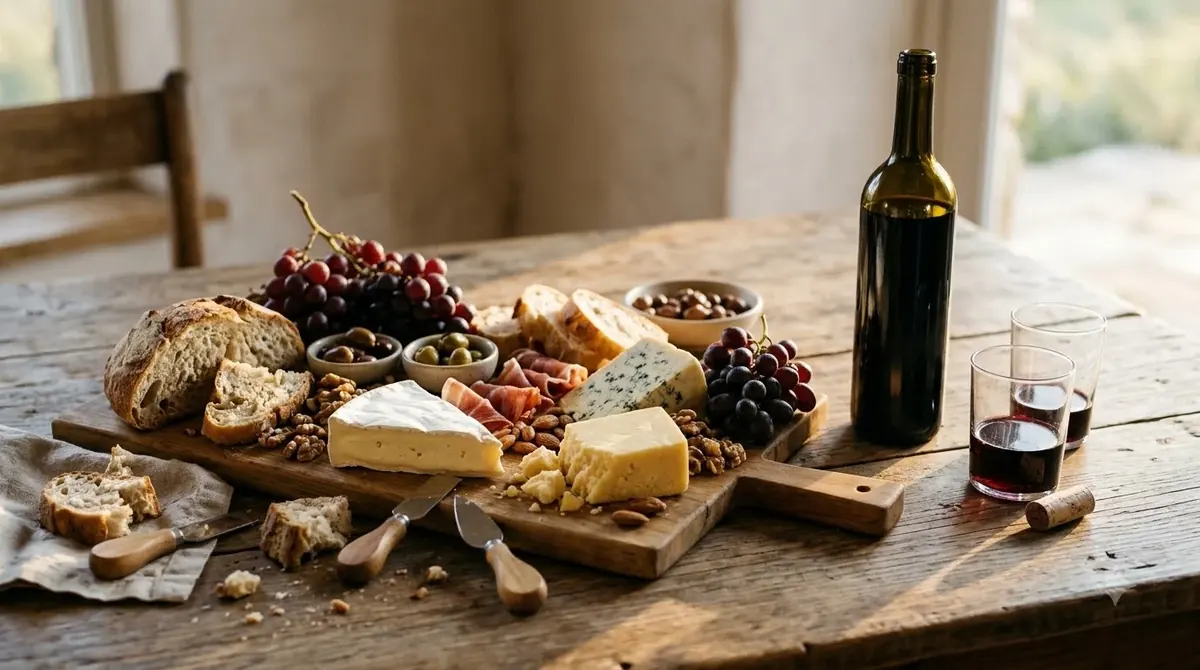
For a practical cheese board, begin with fresh goat cheese, young Gouda, and Gruyère. Add Brie or Camembert for a richer middle course, followed by a small portion of blue cheese. This progression moves from delicate and tangy flavors toward stronger, saltier ones.
Accompaniments should support rather than dominate the wine and cheese. Plain crackers, sliced baguette, fresh pear, and apple provide useful neutral or lightly sweet additions. Honey can complement goat cheese and Brie, but avoid covering the cheese in sweet toppings if you want to appreciate the wine’s natural fruit character.
When serving multiple Riesling styles, pour the driest wine first and move toward sweeter bottles. This keeps a concentrated dessert-style wine from making a crisp dry Riesling seem excessively sharp. You can also offer two glasses side by side to compare how the same cheese changes with different levels of sweetness.
Frequently Asked Questions
Does Riesling go better with cheese than Chardonnay?
Neither grape is universally better, but they offer different pairing advantages. Riesling is particularly flexible because it can be dry, off-dry, or sweet while retaining refreshing acidity. Chardonnay is often a better choice for buttery cheeses when its fuller texture complements the cheese’s richness.
Can Riesling be paired with smoked cheese?
Yes, particularly when the smoked cheese has moderate saltiness and a pronounced savory character. A fruit-forward off-dry Riesling can balance the smoky flavor without overwhelming it. Very intensely smoked cheese may require a richer wine with greater aromatic concentration.
Does Riesling pair with vegan cheese?
It can, although the best match depends on the ingredients and production method. Cashew-based soft cheese may work with off-dry Riesling, while firmer nut-based cheeses can suit a fruity dry example. The salt, acidity, and fat content of the finished cheese are more useful pairing clues than the plant ingredient alone.
Can aged Riesling accompany mature cheese?
Yes. Bottle-aged Riesling can develop honeyed, toasty, and complex aromatic characteristics that complement mature cheeses. A structured aged example can be interesting with aged Comté or mature Gruyère, provided its acidity and intensity remain balanced with the cheese.
Should Riesling be decanted before serving cheese?
Most young Riesling does not require decanting and can be served directly from the bottle. Older bottles may benefit from careful opening and gentle handling, particularly if sediment has developed. A large wine glass with enough room for the aromas is generally more useful than an elaborate decanting routine.
Riesling offers a practical and enjoyable way to explore cheese pairings, from fresh goat cheese and young Gruyère to Brie, Camembert, and salty blue cheese. Start with a balanced dry or off-dry bottle for everyday cheese boards, then explore sweeter German styles for more intense cheeses. Matching sweetness, acidity, and flavor intensity will help you find combinations that make both the wine and the cheese taste their best.
More in Wine Types & Grapes
 Zinfandel Sugar Content: Dry Red vs. White Zinfandel GramsUpdated Nov 21, 2026
 Best Zinfandel Substitute Options for Sipping and CookingUpdated Nov 21, 2026
 Zweigelt Food Pairing: Best Dishes, Cheeses, and Serving TipsUpdated Nov 21, 2026
 Zinfandel Tannins Explained: How Structure Shapes Every BottleUpdated Nov 21, 2026
 Zinfandel Sweetness Level: Dry Red vs. Sweet White Zin ExplainedUpdated Nov 21, 2026
 Xinomavro Food Pairing: Best Dishes, Styles, and Serving TipsUpdated Nov 21, 2026