

We may earn a commission when you buy through links on this page, at no extra cost to you. Learn more.
Is Merlot keto friendly? Yes, dry Merlot is generally keto friendly in moderation, with approximately 3.7 grams of carbohydrates in a standard 5-ounce glass. This makes it a practical red wine option for people who track daily carbohydrate intake while following a ketogenic diet. However, the carbohydrate content varies between bottles, and alcohol itself can affect how your body processes energy, so serving size and wine selection both matter.
Merlot is known for its smooth texture, dark fruit flavors, and relatively approachable tannins. Unlike sweet dessert wines, most traditional Merlot is fermented until nearly all the grape sugar has been converted into alcohol. That makes a dry bottle considerably easier to accommodate within a low-carbohydrate eating plan than a sweet red blend or fortified wine. Understanding the difference between dry and sweet styles, estimating carbohydrates, and measuring your pour can help you make an informed choice.
How Many Carbs Are in a Glass of Merlot?
A standard 5-ounce serving of dry Merlot contains approximately 3.7 grams of carbohydrates. This relatively modest amount can fit into many ketogenic carbohydrate budgets, although the actual figure depends on the wine’s residual sugar and production style.

For a useful starting point, Atkins estimates approximately 3.7 grams of carbohydrates per 5-ounce Merlot serving. Wine Enthusiast also places dry wines generally within a range of 0 to 4 grams of carbohydrates per serving. These estimates make ordinary dry Merlot a reasonable option compared with wines containing substantial residual sugar. The Atkins guide to shopping for low-carb wines provides additional comparisons and a practical method for estimating carbohydrates from residual sugar.
Here is how a typical Merlot serving compares with larger pours and a full bottle when using the 3.7-gram estimate:
| Serving size | Approximate volume | Estimated carbohydrates |
|---|---|---|
| Small pour | 3 oz | 2.2 g |
| Standard glass | 5 oz | 3.7 g |
| Large glass | 6 oz | 4.4 g |
| Restaurant pour | 8 oz | 5.9 g |
| Half bottle | 375 ml | 9.4 g |
| Full bottle | 750 ml | 18.5 g |
These figures are estimates calculated proportionally from 3.7 grams per 5 ounces, not laboratory measurements of every Merlot. A bottle with more residual sugar can contain more carbohydrates, and individual wines should not be assumed to share identical nutritional values.
The serving size makes a meaningful difference. A measured 5-ounce glass contains considerably fewer carbohydrates than an oversized restaurant pour of 8 ounces. Two standard glasses provide approximately 7.4 grams of carbohydrates, while three provide approximately 11.1 grams. Someone following a strict daily carbohydrate limit should account for those amounts rather than treating wine as carbohydrate-free.
Merlot also contains calories from alcohol. Wine Enthusiast estimates approximately 125 calories in a 5-ounce serving and around 625 calories in a 750-milliliter bottle. A low carbohydrate count does not mean that the drink is calorie-free or nutritionally equivalent to a nonalcoholic beverage.
For comparison with other wines, see our guides to whether Pinot Grigio is keto friendly and whether Chardonnay fits a ketogenic diet. Both offer useful reference points when choosing between red and white wines.
Why Dry Merlot Is Better Than Sweet Merlot for Keto
The most important distinction when choosing Merlot is whether the wine is dry or sweet. Dry Merlot generally contains fewer carbohydrates because fermentation converts most of the grape sugar into alcohol, leaving relatively little residual sugar behind.
During winemaking, yeast consumes the natural sugars in grape juice and produces alcohol and carbon dioxide. When fermentation finishes with very little fermentable sugar remaining, the resulting wine is considered dry. A wine can still contain a small amount of residual sugar and qualify as dry, so the word does not necessarily mean that every trace of sugar has disappeared.
Sweetness is also different from fruitiness. Merlot commonly has aromas and flavors of ripe plums, black cherries, blackberries, and cocoa. Those characteristics can make the wine seem sweet even when its actual sugar content is relatively low. The impression of ripe fruit does not automatically indicate a high carbohydrate count.
Understanding residual sugar
Residual sugar, commonly abbreviated as RS, measures the sugar remaining after fermentation. It is generally expressed in grams per liter (g/L). A wine with more residual sugar will usually contain more carbohydrates than an otherwise comparable wine with less residual sugar.
The Australian Wine Research Institute uses less than 4 g/L as a typical reference for dry wines in its guidance on wine energy calculations. This is a useful technical benchmark, although wine classification and labeling conventions can vary between markets.
Consider the following simplified comparison:
- Bone-dry Merlot: Has very little residual sugar and is generally a favorable choice for limiting carbohydrates.
- Traditional dry Merlot: Contains relatively little remaining sugar and usually fits a moderate low-carb wine allowance.
- Off-dry Merlot: Retains more sugar and may contribute additional carbohydrates.
- Sweet red Merlot: Contains noticeably more residual sugar and is less suitable for a strict ketogenic carbohydrate budget.
Sweet red blends sometimes include grape concentrate or other sweetening components that change the finished wine’s sugar content. A bottle described as smooth, soft, or fruit-forward is not necessarily sweet, but an explicitly sweet wine deserves closer attention.
When comparing two Merlots, residual sugar information is more useful than judging the wines by their aroma or perceived sweetness alone. A fruit-forward wine with low residual sugar may be a better choice than a wine that tastes less fruity but retains considerably more sugar.
Tip: Look for a dry Merlot and investigate its residual sugar when that information is available. Do not assume that a wine with strong plum or cherry flavors contains a large amount of actual sugar.
How Alcohol Content and Wine Production Affect Carbs
Alcohol content and residual sugar are two useful measurements when comparing Merlot bottles. Fermentation converts grape sugar into alcohol, but a wine’s final carbohydrate content depends on more than its alcohol percentage alone.
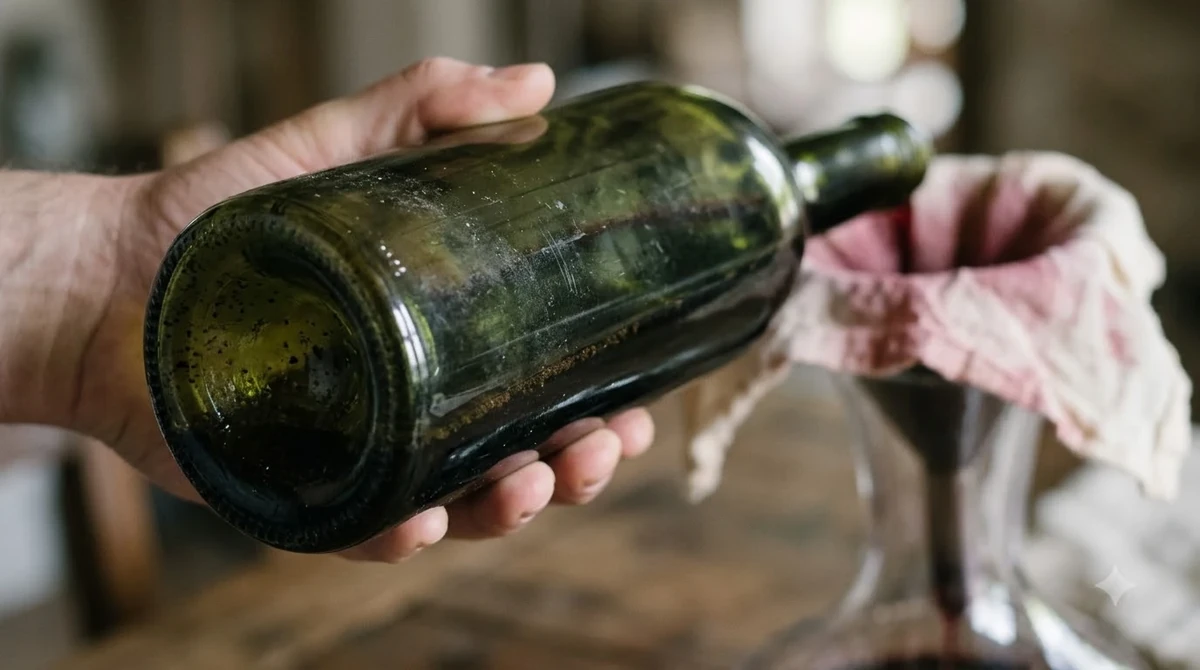
Merlot commonly has an alcohol content between 13% and 14% ABV in cooler European regions such as France, according to Wine Enthusiast. Examples from warmer growing regions, including California, Chile, and Australia, can approach 14.5% ABV. These differences reflect growing conditions, grape ripeness, and winemaking decisions.
During fermentation, yeast converts sugars into alcohol. If fermentation continues until most fermentable sugar is consumed, the wine becomes dry. If fermentation stops with more sugar remaining, the finished wine can have a sweeter profile and a higher carbohydrate contribution.
However, a higher ABV does not guarantee fewer carbohydrates. Riper grapes can contain more sugar at harvest, potentially producing wine with both relatively high alcohol and some residual sugar. Winemaking practices also influence the final result. Therefore, alcohol percentage should be treated as supporting information rather than a precise measurement of carbohydrates.
Residual sugar calculations
When a producer publishes residual sugar in grams per liter, it is possible to estimate the sugar contribution in an individual glass. Atkins provides a practical calculation that multiplies the residual sugar measurement by 0.15 to estimate the amount in a 150-milliliter serving.
For example, consider a hypothetical Merlot with 2 g/L of residual sugar. Multiplying 2 by 0.15 produces approximately 0.3 grams of residual sugar in a 150-milliliter serving.
This calculation estimates the remaining sugar, not the complete carbohydrate content. Wine also contains other compounds, including organic acids and glycerol, that contribute to its nutritional composition. Consequently, the estimated residual sugar should not be mistaken for an exact total carbohydrate figure.
The Australian Wine Research Institute explains that energy calculations for wine distinguish available carbohydrates, organic acids, glycerol, and alcohol. Its guidance identifies typical values for several of these components in dry red wine, illustrating why a simple sugar measurement does not describe every part of a wine’s nutritional profile.
Another practical consideration is that many wine bottles do not display a conventional nutrition panel. Technical information from a producer can therefore be more useful than relying on the grape variety alone. When choosing between two bottles, prioritize specific nutritional information over assumptions based on region, vintage, or ABV.
For a broader explanation of different wine styles, grape varieties, and production methods, explore our Wine by Type resource.
How Merlot Compares With Other Wines on a Keto Diet
Merlot is a reasonably low-carbohydrate red wine, but it is not the only option for someone monitoring carbohydrate intake. Dry Pinot Noir, Cabernet Sauvignon, Chardonnay, and certain sparkling wines can also fit into a carefully planned low-carb beverage choice.
Atkins provides the following approximate carbohydrate estimates for standard 5-ounce wine servings:
| Wine type | Estimated carbs per 5 oz | General keto suitability |
|---|---|---|
| Pinot Noir | 3.4 g | Good dry-wine option |
| Merlot | 3.7 g | Good dry-wine option |
| Chardonnay | 3.2 g | Good dry-wine option |
| Sauvignon Blanc | 3.0 g | Good dry-wine option |
These figures are approximate reference values rather than universal measurements. A sweeter bottle can contain more carbohydrates than the typical estimate for its grape variety. The production style and remaining sugar are important when comparing actual bottles.
Merlot versus Pinot Noir
Pinot Noir is a lighter-bodied red with relatively high acidity and low-to-medium tannins. Its estimated 3.4 grams of carbohydrates per 5-ounce serving is slightly below Merlot’s approximate 3.7 grams. The difference is small, so the choice can reasonably depend on personal taste and the particular bottle.
Merlot generally offers a softer, fuller mouthfeel, with plum and black cherry characteristics. Pinot Noir tends to show red cherry, raspberry, earthy notes, and brighter acidity. Both can be appropriate dry red options for someone tracking carbohydrates.
Merlot versus Cabernet Sauvignon
Cabernet Sauvignon is usually more structured than Merlot, with higher tannins and dark fruit characteristics. Its carbohydrate content can be similar to that of Merlot, meaning that switching to Cabernet does not automatically provide a substantial carbohydrate reduction.
The main difference is the drinking experience. Merlot typically has softer tannins and a smoother texture, while Cabernet Sauvignon often has a firmer structure. Both pair well with red meat, although the softer profile of Merlot makes it especially versatile at the dinner table.
Merlot versus sparkling wine
Dry sparkling wine can also be a suitable alternative. Brut and Extra Brut styles generally contain less residual sugar than sweeter sparkling categories. However, sweetness classifications matter because Extra Dry sparkling wine is actually sweeter than Brut.
Our guide to whether Cava is keto friendly explains how sparkling wine sweetness levels influence carbohydrate choices. A dry Brut Cava can be an alternative to Merlot when a lighter, more refreshing drink is preferred.
How to Choose a Keto-Friendly Bottle of Merlot
Choosing a suitable Merlot starts with selecting a dry wine rather than a sweet red blend. Checking producer information, comparing residual sugar, and paying attention to serving size can make the selection process more reliable.
Use these practical considerations when shopping:
- Choose a dry style: Traditional dry Merlot is generally a better option than sweet red wine or dessert-style blends.
- Look for residual sugar: A lower g/L figure generally indicates less remaining grape sugar.
- Review producer information: Some wineries publish technical specifications that include residual sugar and alcohol percentage.
- Be cautious with sweetened blends: Products with added grape concentrate or noticeable sweetness may contain more carbohydrates.
- Measure your pour: A 5-ounce glass provides a consistent reference point for carbohydrate calculations.
- Track the complete serving: Wine-based cocktails, fruit additions, syrups, and sweet mixers can add carbohydrates beyond those in the wine itself.
Does the growing region matter?
Merlot is grown in several important wine-producing regions, including Bordeaux in France, California in the United States, and Chile. Climate influences grape ripeness, which can affect the final alcohol content and the decisions a winemaker makes during fermentation.
Cooler-region Merlot often has a more restrained alcohol profile, while warmer-region examples can be fuller and more concentrated. However, neither geographical category guarantees a particular residual sugar measurement. A dry Merlot from California can be just as appropriate for carbohydrate tracking as a dry Merlot from Bordeaux.
It is better to compare individual bottles than to assume that European wine is always lower in carbohydrates or that New World wine is always sweeter. Producer information offers a more dependable basis for comparison.
What about low-carb wine marketing?
Some producers market wines as low carb or keto friendly. Such descriptions can be useful starting points, but they should not replace actual nutritional information. Look for a specific carbohydrate measurement or residual sugar value whenever possible.
A wine labeled low carb is not necessarily dramatically different from ordinary dry Merlot. Since conventional dry Merlot already tends to contain relatively little carbohydrate, the difference between two dry examples may be quite small.
Also consider the entire drinking occasion. A glass of dry Merlot served without sweet mixers is different from a wine cocktail containing fruit juice, flavored syrup, or a sugary soft drink. The additions can change the carbohydrate total substantially.
How to Enjoy Merlot While Tracking Carbohydrates
Portion control is the simplest way to make Merlot easier to account for within a ketogenic eating plan. A measured 5-ounce serving provides a consistent baseline, while larger restaurant pours can contribute considerably more carbohydrates.
For example, a 5-ounce glass using the typical 3.7-gram estimate contributes 3.7 grams of carbohydrates. Two glasses contribute approximately 7.4 grams, leaving less room for carbohydrates from vegetables, dairy products, sauces, and other foods throughout the day.
Someone following a strict 20-gram daily carbohydrate target would use approximately 18.5% of that allowance for one standard glass. With a 30-gram target, the same glass represents approximately 12.3%. These percentages are illustrations based on the estimated carbohydrate content, not recommended daily drinking amounts.
Pairing Merlot with lower-carbohydrate meals
Merlot works naturally with many foods that can be incorporated into a low-carbohydrate meal. Its moderate acidity, soft tannins, and dark fruit flavors complement rich proteins, roasted vegetables, and savory dishes.
- Grilled steak: Beef provides a rich, savory match for Merlot’s plum and blackberry flavors. The protein and fat in the meal also complement the wine’s moderate tannins.
- Roasted chicken: Herb-seasoned chicken offers a lighter alternative to red meat, particularly when served with mushrooms or roasted vegetables.
- Grilled lamb: The richness of lamb works well with Merlot’s dark fruit character and gentle tannic structure.
- Mushrooms: Roasted or sautéed mushrooms bring earthy flavors that complement the wine’s cocoa and herbal notes.
- Aged cheese: Firm cheeses provide salt and fat that soften the perception of tannin, creating a balanced pairing.
- Roasted eggplant: Its savory, slightly smoky character works well with medium- to full-bodied red wine.
Pay attention to sauces and side dishes. A steak may fit comfortably into a low-carbohydrate meal, but a sweet barbecue glaze or sugary marinade can add significant carbohydrates. The same applies to roasted vegetables prepared with honey, balsamic reductions containing added sugar, or creamy sauces thickened with flour.
Serving temperature and storage
Merlot generally shows its best characteristics when served slightly cooler than a typical warm room. A serving temperature of 60–65°F helps preserve the wine’s fruit aromas while preventing alcohol from dominating its flavor.
If the bottle has been stored at room temperature, approximately 15 minutes in the refrigerator can help bring it closer to the preferred range. Avoid serving it excessively cold because low temperatures can mute the wine’s aromas and make its tannins seem more pronounced.
A young, particularly full-bodied Merlot may benefit from 30–60 minutes of decanting. Exposure to air can help soften the wine’s initial impression and allow its fruit and secondary aromas to become more expressive.
Store unopened bottles on their sides in a cool, relatively stable location near 55°F. Once opened, reseal the bottle and keep it refrigerated. Most opened still wines remain enjoyable for approximately 3–5 days, although their aromas and freshness gradually change.
These serving practices do not reduce the wine’s carbohydrate content. Their purpose is to improve the drinking experience without relying on sweet mixers or additional ingredients.
Frequently Asked Questions
Does Merlot contain more sugar than other red wines?
Not necessarily. Merlot’s actual sugar content depends on fermentation and the winemaker’s choices rather than the grape name alone. A dry Merlot can have very little residual sugar, while a sweet red blend made from other grape varieties can contain considerably more. Comparing residual sugar measurements is more useful than comparing grape varieties.
Does aging Merlot reduce its carbohydrate content?
No, bottle aging does not meaningfully remove the carbohydrates already present in finished wine. Aging can change aromas, tannins, and texture as the wine develops. An older Merlot may develop softer fruit characteristics and more complex aromas, but its carbohydrate content should not be assumed to decrease with age.
Can homemade Merlot wine be keto friendly?
Homemade Merlot can be low in carbohydrates if fermentation converts most fermentable sugar into alcohol and the finished wine contains little residual sugar. However, home winemaking can produce inconsistent results, particularly when fermentation is stopped early or additional sugar is introduced. Measuring the finished wine’s residual sugar is more reliable than estimating its carbohydrate content from the recipe.
Does freezing Merlot change its carbohydrate content?
Freezing wine does not destroy its residual sugar or remove its carbohydrates. If wine partially freezes, its liquid and frozen components can separate, potentially producing an uneven concentration of ingredients. Thawing the wine does not make it a lower-carbohydrate beverage.
Is nonalcoholic Merlot automatically lower in carbohydrates?
No. Removing alcohol does not automatically remove the sugar left in wine. Some alcohol-free wines retain sweetness or receive additional grape ingredients to improve their flavor, which can increase their carbohydrate content. Compare the finished product’s nutritional information rather than assuming that an alcohol-free version is automatically more suitable for keto.
Dry Merlot can be a practical red wine choice for people following a ketogenic eating pattern because a typical 5-ounce serving contains approximately 3.7 grams of carbohydrates. Choose a dry bottle, pay attention to residual sugar, and measure your portions to keep your carbohydrate calculations consistent. With those considerations in mind, Merlot can remain an enjoyable option alongside a carefully planned low-carb meal.
More in Wine Types & Grapes
 Zinfandel Sugar Content: Dry Red vs. White Zinfandel GramsUpdated Nov 21, 2026
 Best Zinfandel Substitute Options for Sipping and CookingUpdated Nov 21, 2026
 Zweigelt Food Pairing: Best Dishes, Cheeses, and Serving TipsUpdated Nov 21, 2026
 Zinfandel Tannins Explained: How Structure Shapes Every BottleUpdated Nov 21, 2026
 Zinfandel Sweetness Level: Dry Red vs. Sweet White Zin ExplainedUpdated Nov 21, 2026
 Xinomavro Food Pairing: Best Dishes, Styles, and Serving TipsUpdated Nov 21, 2026