

We may earn a commission when you buy through links on this page, at no extra cost to you. Learn more.
The alvarinho grape is a high-acid white wine grape best known in northern Portugal, where it makes dry, aromatic wines with citrus, stone-fruit, floral, and mineral notes. It is the same grape known as Albariño across the border in Spain’s Galicia region. Its most recognized Portuguese home is Monção e Melgaço in Vinho Verde, while Rías Baixas is its best-known Spanish stronghold. Expect freshness and fragrance, but also enough texture and concentration to work at the table.
Alvarinho is a useful grape to know if you enjoy lively whites but want more fruit intensity and structure than a very lean, neutral style can offer. Understanding its two names, Atlantic growing regions, and range of winemaking choices makes it easier to find a bottle that suits your food and your preferred level of richness.
What Is the Alvarinho Grape?
Alvarinho is a white wine grape associated with the northwestern corner of the Iberian Peninsula. Portuguese producers call it Alvarinho; Spanish growers and wine labels use Albariño. These are regional names for the same grape variety, not two closely related grapes, and bottles from both countries can share a recognizable combination of bright acidity, ripe fruit, and floral fragrance.
In Portugal, the grape is especially identified with Monção and Melgaço, two municipalities in the Minho area near the Spanish border. It is an authorized white variety for the Vinho Verde protected designation of origin, and the regional rules specifically recognize it in Monção e Melgaço. It also appears elsewhere in the Vinho Verde region and in other parts of Portugal, where producers use it for varietal wines or blends.
Across the Minho River in Galicia, the same variety is called Albariño and is particularly important in Rías Baixas. The Galician wine museum also records Portuguese names such as Galego and Galeguiño, reflecting the grape’s cross-border history. This shared identity helps explain why a Portuguese Alvarinho and a Spanish Albariño may taste related even though their regional climates, soils, and cellar choices can create clear differences.
Where Alvarinho Grows in Portugal and Spain
The grape’s classic expressions come from two neighboring Atlantic-influenced areas: Monção e Melgaço in Portugal and Rías Baixas in Spain. Both regions provide a maritime setting, but the Portuguese subregion’s specific grape-growing conditions help distinguish its wines from the often cooler, wetter Galician examples.
Monção e Melgaço sits in the northern part of Vinho Verde, close to the Minho River and the Galician border. The Vinho Verde regional commission identifies Alvarinho as the leading variety here and notes that it has spread to other parts of the region because of its quality. Within the region’s rules, Monção e Melgaço has its own authorized white-grape group: Alvarinho, Loureiro, and Trajadura. That distinction helps explain why a bottle from this subregion can be more specifically tied to Alvarinho than a Vinho Verde wine sourced from the wider area.
On the Spanish side, Albariño is closely associated with Rías Baixas, whose five subzones are Val do Salnés, O Rosal, Condado do Tea, Ribeira do Ulla, and Soutomaior. The Rías Baixas regulatory council reports that Albariño accounts for 96 percent of grape production and 95 percent of wine production in the designation, with the highest concentration in the Salnés Valley. Those figures show how central the variety is to the region, even though growers also cultivate 13 other indigenous varieties.
Galicia’s Albariño plantings are not limited to Rías Baixas. The Galician wine museum identifies the grape as the region’s most widely cultivated white variety and notes that it also appears as a complementary grape in Ribeiro, Monterrei, and Ribeira Sacra. The regional differences matter: a bottle labeled Alvarinho from Monção e Melgaço and one labeled Albariño from Rías Baixas share a variety, but the place name gives useful context about the wine’s likely climate and style.
What Alvarinho Tastes Like: Aroma, Acidity, and Body
Most Alvarinho is dry, aromatic, and lively, with a clear line of acidity supporting ripe fruit. Common notes include lemon, lime, grapefruit, peach, apricot, quince, passion fruit, and sometimes lychee, while orange blossom and other floral tones can add lift. Depending on the site and winemaking, the palate may feel taut and citrus-driven or broader and more rounded, with a subtle saline or mineral impression.
Its fruit profile is not limited to green citrus. The official Vinho Verde technical description includes banana, passion fruit, lychee, quince, peach, lemon, orange blossom, violet, hazelnut, walnut, and honeyed notes. Decanter’s Portugal white-grape guide describes honeysuckle alongside ripe citrus, pear, peach, and apricot, while Wine Enthusiast’s Albariño overview highlights the contrast between floral and tropical aromas and a brisk, high-acid palate. That range explains why two wines made from the same variety can feel quite different without either being atypical.
Acidity is one of the grape’s defining structural traits. It keeps ripe fruit from tasting heavy and gives the wine a refreshing finish, while moderate to fuller body can make it feel more substantial than some other crisp white wines. In Monção e Melgaço, Alvarinho can be concentrated and textured; in a cooler or earlier-picked style, citrus, green fruit, and a sharper impression of freshness may take the lead. Alcohol levels can also rise with ripeness: the Galician wine museum notes that the variety has the sugar-producing capacity to exceed 12 percent alcohol by volume.
| Measure | Reported figure | How to read it |
|---|---|---|
| Alvarinho maximum yield in Vinho Verde | 69.3 hl/ha | The regional rules set a lower yield ceiling for this variety than for several other grapes. |
| Maximum yield stated for other varieties | 80 hl/ha | The comparison helps explain the emphasis on Alvarinho’s naturally low-yielding clusters. |
| Albariño share of Rías Baixas grape production | 96 percent | The variety dominates plantings in the Spanish designation. |
| Albariño share of Rías Baixas wine production | 95 percent | Most wine made under the designation is centered on this grape. |
| Rías Baixas subzones | 5 | Val do Salnés, O Rosal, Condado do Tea, Ribeira do Ulla, and Soutomaior. |
The yield figures come from the Vinho Verde regional commission, which sets a 69.3-hectoliter-per-hectare ceiling for Alvarinho compared with 80 hectoliters per hectare for other varieties. The Rías Baixas regulatory council supplies the Spanish production shares and the five-subzone structure. These are regional production facts, not tasting scores or guarantees that every bottle will have the same intensity.
How Winemaking Shapes Alvarinho Wine
Alvarinho’s natural aroma and acidity give winemakers room to produce both direct, refreshing whites and richer, more layered wines. The final style depends on harvest timing, fermentation vessel, lees contact, and whether the producer chooses a single-variety bottling or a blend.
Stainless-steel fermentation is a common choice when the goal is to preserve citrus, orchard-fruit, and floral character. Temperature-controlled fermentation can retain freshness and keep the fruit profile clear. Many bottles are released without obvious oak influence, making them well suited to aperitif service or seafood meals. In these wines, the grape’s acidity and aromatic detail provide the structure rather than vanilla, toast, or a pronounced barrel flavor.
Lees contact can give the wine more volume and a softer, creamier texture. Depending on how long the wine remains on its lees and how it is handled, the result may move from crisp and linear toward broader and more savory without losing its freshness. Some producers use oak fermentation or aging for added texture and complexity; well-judged oak can introduce spice, nut, or pastry-like notes, while excessive wood can obscure the grape’s citrus and floral character.
Single-variety Alvarinho is an important style in Monção e Melgaço, but blending is also part of the region’s vocabulary. The Vinho Verde technical sheet specifically notes Alvarinho’s suitability for blending with Trajadura. On the Spanish side, Rías Baixas makes both varietal Albariño and blends using recognized local grapes such as Loureira, Treixadura, and Caíño Blanco. A varietal bottling tends to foreground the grape’s individual profile; a blend may add floral lift, a different texture, or a broader balance. Age is another stylistic variable. Many crisp, unoaked examples are made to be enjoyed while their primary fruit is vivid, but Alvarinho is not automatically a wine that must be consumed immediately. More concentrated examples, especially those with lees work or careful maturation, can develop broader savory and nut-like notes over time. A producer’s decisions and the wine’s balance matter more than the grape name alone, so choose a fresh, fruit-led bottle for immediate drinking and a structured example when you want to explore how the variety changes in the cellar.
What to Eat With Alvarinho and How to Serve It
Alvarinho’s high acidity and aromatic fruit make it especially effective with seafood, salty foods, and dishes that include herbs or citrus. It can refresh the palate between bites while its fruit gives enough flavor to stand alongside well-seasoned food.
Start with oysters, mussels, clams, grilled prawns, or simply prepared white fish. The combination works because the wine’s acidity brings freshness to briny flavors, while its citrus and peach notes complement lemon, parsley, coriander, and light sauces. Galician octopus, sushi, ceviche, and fish tacos are also natural choices. For richer seafood, such as prawns with butter or grilled fish with an olive-oil dressing, a rounder Alvarinho with lees texture can match the weight better than an extremely lean example.
The wine is flexible beyond seafood. Try it with Vietnamese spring rolls, herb-heavy salads, Thai dishes with coconut milk, steamed dumplings, roast chicken with lemon, or soft cheeses. Its acidity can balance the richness of butter, egg, and creamy sauces, while its fruit makes a good partner for mild spice. Very hot chili can make alcohol feel more pronounced, so choose a lower-alcohol, fruit-forward example and keep the heat moderate rather than pairing it with an intensely spicy dish.
Serve Alvarinho chilled but not icy, around 45 to 50 degrees Fahrenheit. A colder pour can mute its peach, floral, and tropical aromas; allowing the glass to warm slightly can reveal more detail. Use a standard white-wine glass with enough bowl space to collect the aromas, and pour about 5 ounces so the wine has room to move without warming too quickly.
Tip: Take the bottle out of the refrigerator a few minutes before serving if it feels very cold. Pour a small first taste, then let the wine warm in the glass for 5 to 10 minutes; the change in temperature can make its fruit and texture easier to notice.
How to Choose, Open, and Store a Bottle
For a first bottle, look for Alvarinho from Monção e Melgaço if you want the Portuguese expression most closely associated with the grape. A Rías Baixas Albariño is the logical Spanish comparison. The country and subregion give more useful clues than the broad grape name alone, because climate and producer decisions have a strong effect on ripeness, texture, and aromatic emphasis.
Read the wine’s description for cues about style. Words such as citrus, green apple, and mineral often point toward a leaner, fresher profile; peach, tropical fruit, creamy texture, lees, or barrel aging suggest more ripeness or weight. These are clues rather than strict rules, and a producer may balance ripe fruit with high acidity. If you are building a broader understanding of white grapes, comparing Alvarinho with the Airén grape can show how different Spanish white varieties can occupy very different stylistic roles.
Once opened, keep the bottle in the refrigerator with a stopper. Most still wines retain their best character for about 3 to 5 days after opening, although the aroma may gradually become less vivid. A 750-milliliter bottle gives roughly five standard 5-ounce pours, making it practical for a dinner with several courses. For unopened bottles, store them away from direct sunlight and major temperature swings; a cool, stable location near 55 degrees Fahrenheit is a good target, and bottles with natural corks are generally stored on their sides.
Alvarinho belongs among dry, aromatic white wines, but it does not describe every white-wine style. A reader exploring other grape-led profiles may find the contrast with the sweet-fruited Brachetto grape useful, while the broader Wine by Type section can help place varietal wines alongside blends, sparkling wines, and fortified styles. The important buying question is whether you want brisk citrus freshness, a richer stone-fruit profile, or a more layered wine shaped by lees or oak.
Frequently Asked Questions
These quick answers cover a few vineyard details that help explain why Alvarinho performs differently from one site to another. They complement the regional and tasting guidance above.
Does Alvarinho form large or small grape clusters?
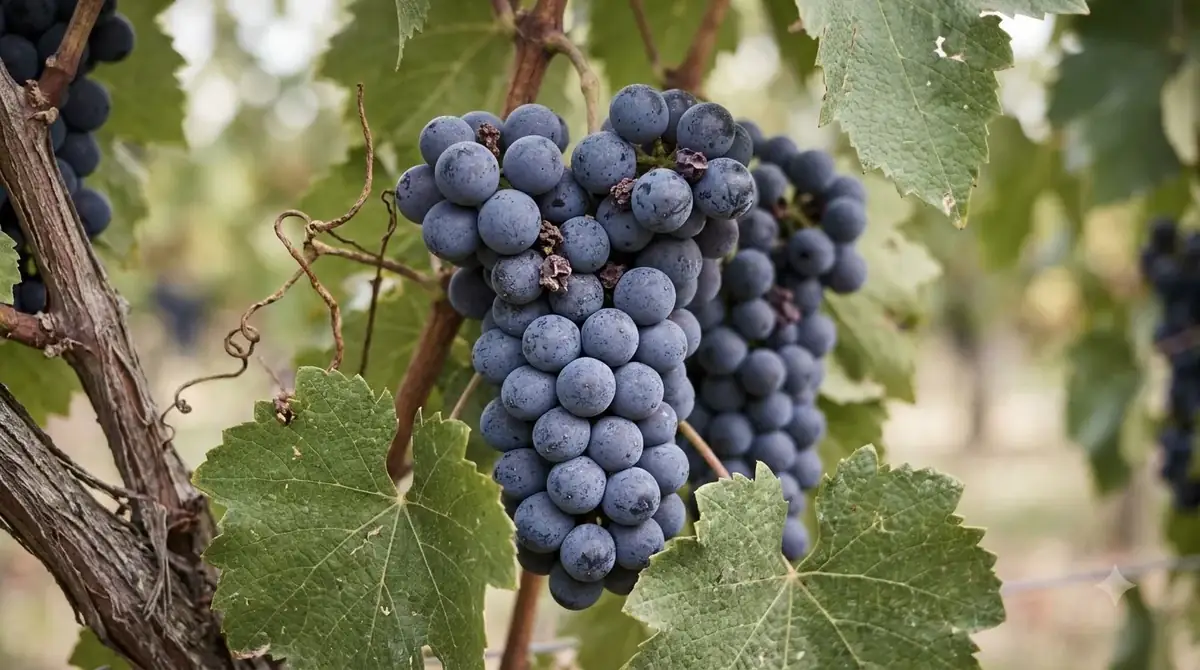
The Vinho Verde regional commission describes Alvarinho bunches as small, winged, and sometimes double-winged, with moderately compact clusters. Bunches exposed to direct sun can take on a pinkish tone, even though the grapes are used to make white wine.
Does Alvarinho ripen early in the vineyard?
Yes. The technical profile published by the Vinho Verde regional commission classifies its ripening as early. It also places véraison in the early-to-medium window, seven days later than Fernão Pires under the comparison used in that regional profile.
When does Alvarinho begin its growing season?
Its budburst is described as early, although the regional comparison places it six days after Fernão Pires. Flowering is also early and is listed as three days later than Fernão Pires, so the exact calendar date will depend on the season and site.
Is Alvarinho vulnerable to vineyard diseases?
Yes. The Vinho Verde technical sheet identifies susceptibility to downy mildew and powdery mildew, high susceptibility to acariasis, and a tendency toward esca. These are vineyard management concerns rather than flavors or defects that should be expected in a finished bottle.
Can the same grape grow outside Portugal and Galicia?
Yes. Wine Enthusiast describes Albariño plantings on the United States West Coast, including cooler parts of California’s Central Coast such as Monterey and Santa Barbara. Those wines use the Spanish name Albariño, even though the same variety is called Alvarinho in Portugal.
Alvarinho is a strong choice for drinkers who want a white wine with lively acidity, aromatic fruit, and enough texture to accompany food. Start with Monção e Melgaço and Rías Baixas to understand its two classic regional expressions, then compare stainless-steel, lees-aged, and oak-influenced examples to find the style you prefer.
More in Wine Types & Grapes
 What Does Mourvèdre Taste Like? Flavor Profile, Regions, and PairingsUpdated Nov 20, 2026
 What Does Marsanne Taste Like? Flavors, Styles, and Food PairingsUpdated Nov 20, 2026
 What Does Malvasia Taste Like? Styles, Flavors, and Food PairingsUpdated Nov 20, 2026
 What Does Grenache Blanc Taste Like? Flavor Profile, Styles, and PairingsUpdated Nov 20, 2026
 What Does Garnacha Taste Like? Key Flavors, Styles, and Pairing TipsUpdated Nov 20, 2026
 What Does Fruit Wine Taste Like? A Complete Flavor and Style BreakdownUpdated Nov 20, 2026