

We may earn a commission when you buy through links on this page, at no extra cost to you. Learn more.
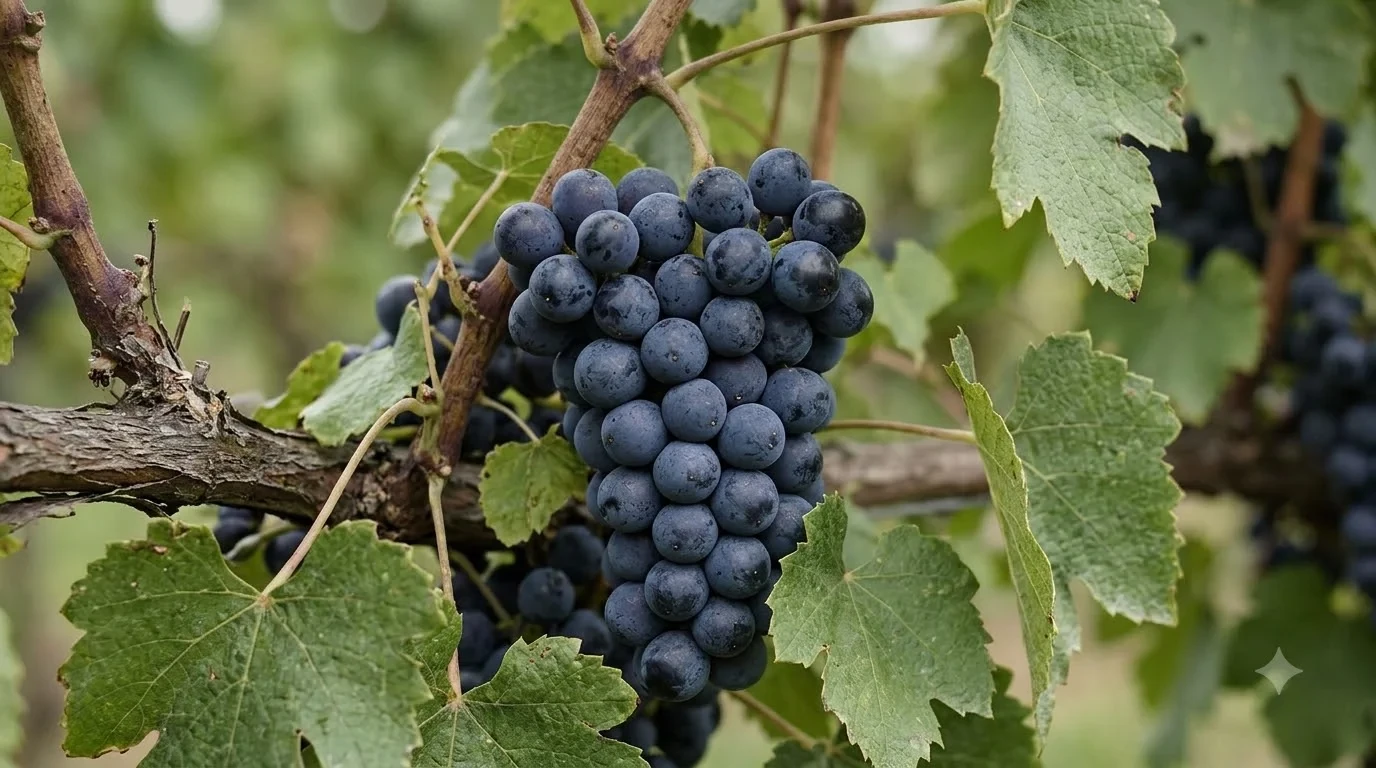
Carmenere history begins in Bordeaux, France, where this distinctive red grape nearly disappeared after the nineteenth-century phylloxera epidemic before finding a new home in Chile. Imported during the 1850s, Carménère spent more than a century mistaken for Merlot in Chilean vineyards. Its identification in 1994 transformed the country’s wine industry by giving Chile a distinctive grape variety with an extraordinary connection to its French past.
The story of Carménère is one of survival, mistaken identity, and rediscovery. Once associated with the celebrated vineyards of Bordeaux, the variety gradually disappeared from its original European home but continued growing across the Atlantic. Today, it is closely associated with Chilean wine, where its dark fruit flavors, herbal character, and distinctive history have made it an important part of the country’s wine identity. Understanding its past also explains why Carménère tastes different from other familiar Bordeaux varieties.
1. The Bordeaux Origins of Carménère
Carménère originated in southwestern France, particularly in the Médoc wine district of Bordeaux. Before the nineteenth century’s vineyard crisis, it was an established part of the region’s red wine-growing tradition, valued for its intense color, body, and distinctive character.
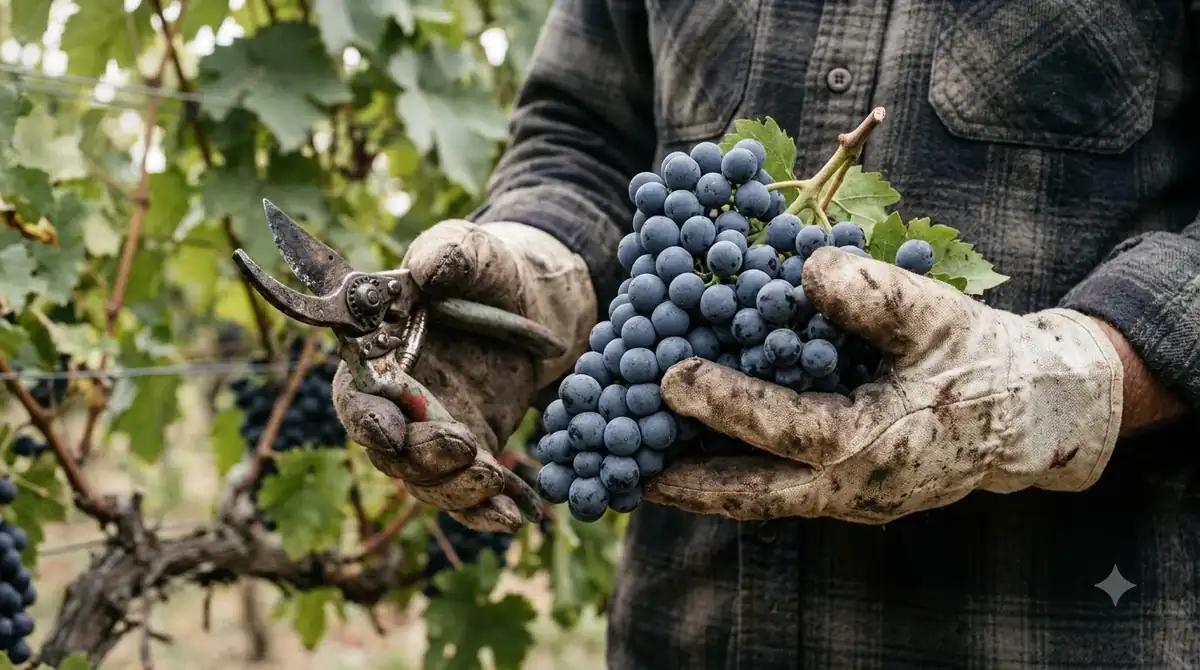
Historical descriptions identify Carménère as a separate grape rather than simply a variation of Cabernet Franc or Merlot. In the 1901 ampelography by Viala and Vermorel, Georges Cazeaux-Cazalet described the variety among the Bordeaux Cabernet-related grapes and discussed its distinctive wine characteristics. He highlighted its strong color, body, and relatively soft tannins. These descriptions help explain why the variety was once considered an important component of Médoc wine production.
The grape has several historical synonyms, including Grande Vidure, Carmenelle, Cabernelle, Grant Carmenet, and Carbouet. These alternative names appear in historical wine literature and reflect the complicated naming conventions that developed around older European grape varieties. Grande Vidure is particularly important in Carménère’s modern history because the name was used in connection with early Chilean bottlings following its rediscovery.
Modern genetic research provides additional information about its ancestry. Carménère is thought to descend from a crossing of Cabernet Franc and Gros Cabernet, placing it within the broader family of Bordeaux red grapes. It also shares a parent with Cabernet Sauvignon, although the varieties have developed their own distinctive characteristics.
Its historical importance should not be confused with its present-day prominence. Carménère was not the only grape associated with Bordeaux, where Cabernet Sauvignon, Cabernet Franc, Merlot, and Petit Verdot also played important roles. Instead, it was one member of a traditional collection of varieties that helped establish the reputation of the region’s red wines.
2. Phylloxera and the Disappearance of a French Grape
The nineteenth-century phylloxera epidemic was the major turning point in Carménère history. This destructive vine pest devastated European vineyards, forcing growers to replant large areas and reconsider which grape varieties were practical to cultivate.
Phylloxera attacks grapevine roots, weakening and eventually killing susceptible vines. The epidemic spread across France during the second half of the nineteenth century, creating an agricultural crisis that affected Bordeaux and other major wine-producing regions. Carménère was particularly vulnerable to the changes that followed because its cultivation already presented practical difficulties.
Two characteristics made its recovery especially challenging: poor fruit set and late ripening. Poor fruit set can produce uneven or sparse grape clusters, reducing the amount of fruit available for harvest. Late ripening creates another problem because grapes need sufficient time and suitable autumn weather to reach full maturity. In cooler or unpredictable conditions, growers can struggle to achieve consistent ripeness.
Following the epidemic, French vineyards had to be replanted using phylloxera-resistant rootstocks, generally from American grapevine species or hybrids. Although grafting offered a way to preserve European wine grapes, it also changed vineyard management and sometimes increased the vigor of the resulting vines. Carménère’s existing production difficulties became more troublesome under these conditions.
Growers increasingly favored varieties that offered more dependable harvests and commercial opportunities. Merlot, which was better suited to the changing conditions and had strong market demand, gradually replaced Carménère in parts of Bordeaux. The older grape became increasingly uncommon in its original growing region.
By 1994, historical research cited in the Chilean viticulture literature recorded only approximately 10 hectares of Carménère remaining in France. Its disappearance was not the result of a single decision or a sudden extinction. Instead, it reflected decades of vineyard destruction, replanting, agricultural selection, and changing commercial priorities.
This distinction matters because Carménère was never truly extinct worldwide. While it had nearly vanished from French commercial vineyards, plantings established in Chile during the nineteenth century had preserved the variety far from its original home.
3. How Carménère Reached Chile in the 1850s
Carménère crossed the Atlantic during the 1850s, when Chilean wine growers began importing European grape varieties to improve their vineyards. Along with Cabernet Sauvignon, Merlot, and other Bordeaux varieties, Carménère became part of the expanding Chilean wine-growing landscape.
French grape varieties were attractive to Chilean growers because European wines already had international recognition. Planting familiar Bordeaux varieties offered an opportunity to develop a more sophisticated wine industry and produce wines that could compete in international markets.
Chile also provided a favorable environment for preserving European grape varieties. Its wine-growing regions offer considerable climatic diversity, influenced by the Andes Mountains, the Pacific Ocean, and the country’s long north-to-south geography. These different growing conditions eventually allowed Carménère to establish itself in several important wine-producing areas.
The most interesting part of the story is that the imported vines were not consistently identified correctly. Some plantings believed to be Merlot were actually Carménère. The two varieties share certain visual similarities, particularly in their leaves and general vine appearance, making identification difficult without careful examination.
For decades, Chilean growers cultivated these vines under the Merlot name. The mistake was not necessarily deliberate. Many vineyards had been established using imported planting material, and accurate identification of every individual variety was not always possible with the methods available at the time.
The confusion became particularly important as Chilean wine exports developed during the late twentieth century. Merlot was a commercially recognized variety, whereas Carménère was largely forgotten outside specialist European viticulture. Discovering that some vineyards contained a different grape created both a scientific question and a commercial challenge.
Nevertheless, the mistaken identity had an unexpected benefit. While Carménère disappeared from much of France, Chilean growers continued maintaining vines that preserved its genetic heritage. Without those plantings, the variety might have become much harder to recover.
4. The 1994 Rediscovery That Changed Chilean Wine
Carménère’s modern rediscovery took place in November 1994, when French ampelographer Jean-Michel Boursiquot identified vines labeled as Merlot at Viña Carmen in Alto Jahuel, near Santiago, as Carménère. His identification turned a long-standing vineyard mystery into one of the most significant stories in modern South American wine history.
The discovery had important earlier developments. In 1991, French ampelographer Claude Valat had already questioned the identity of Chilean Merlot vineyards. He suspected that some vines might actually be Cabernet Franc. His observations circulated among a limited group of Chilean wine professionals, but the correct identification had not yet been established.
The decisive moment came during the Sixth Latin American Congress of Viticulture and Enology, held in Santiago from November 20 to 25, 1994. Technical vineyard visits were organized for international participants, including Boursiquot, who had expertise in grapevine identification.
On November 24, the group visited a recently planted Merlot vineyard at Viña Carmen in Alto Jahuel. Boursiquot recognized that the vines were not Merlot or Cabernet Franc, as previously suspected, but Carménère. The identification surprised the Chilean professionals accompanying him because the variety was largely unfamiliar in the country’s modern wine industry.
Boursiquot continued examining vineyards after the congress and identified additional plantings that had been incorrectly labeled as Merlot. His work helped establish that the confusion was not restricted to a single vineyard but affected a much broader collection of Chilean plantings.
Subsequent DNA fingerprinting provided further scientific confirmation. Researchers could distinguish Carménère from Merlot and Cabernet Franc using genetic information rather than relying exclusively on the appearance of leaves, shoots, and grape clusters.
The discovery also created an opportunity for Chile. Rather than treating the identification as a problem, wine producers and agricultural researchers began recognizing Carménère as a variety that could distinguish Chilean wine from other international offerings.
For a deeper look at the historical identification and the people involved, the academic study La invención del cv. Carménère en Chile by Philippo Pszczólkowski provides a detailed account of the events surrounding the rediscovery.
5. How Carménère Became Chile’s Signature Red Grape
Following its rediscovery, Carménère developed from a forgotten vineyard variety into one of Chile’s most recognizable red wine grapes. Its association with the country grew through research, vineyard identification, commercial bottling, and a broader effort to establish a distinctive Chilean wine identity.
The Pontifical Catholic University of Chile proposed Carménère as an emblematic national variety. This was significant because Chile had traditionally been identified through a collection of international grape varieties rather than one particularly distinctive red grape.
In the years following 1994, wineries began separating Carménère from the Merlot plantings with which it had previously been confused. Accurate vineyard identification allowed winemakers to experiment with dedicated bottlings and develop production techniques suited to the grape’s characteristics.
One important early development involved Viña Carmen. In 1996, the winery produced a wine from a vineyard block identified as Carménère, using the historical name Grande Vidure. This helped introduce the rediscovered variety to consumers and demonstrated its potential as a separately bottled wine.
Its geographical identity also became increasingly important. The Rapel Valley emerged as a major growing area, with Colchagua and Cachapoal particularly significant. These areas provided conditions that supported the grape’s development and helped establish a recognizable Chilean style.
Historical planting statistics presented in the Chilean National Library’s wine heritage publication illustrate the importance of these regions. In the statistics discussed in that publication, Rapel accounted for 52.87% of Carménère plantings, with Colchagua representing 34.16% and Cachapoal 18.71% of the national area.
| Chilean wine-growing area | Share of Carménère plantings |
|---|---|
| Rapel subregion | 52.87% |
| Colchagua zone | 34.16% |
| Cachapoal zone | 18.71% |
These figures describe the distribution reported in the historical planting statistics, rather than a current vineyard census. They nevertheless demonstrate how strongly the variety became associated with central Chile, particularly the Rapel wine-growing area.
Individual districts such as Peralillo, Pencahue, Palmilla, Santa Cruz, and Marchigüe also became important locations for Carménère cultivation. The grape’s distinctive reddish autumn foliage has contributed to its visual presence in these vineyard landscapes.
Chile’s wine industry eventually embraced Carménère as more than a commercially useful grape. It became part of the country’s agricultural heritage and an example of how a European variety could find a new identity in a different continent.
6. What Makes Carménère Different From Other Bordeaux Grapes?
Carménère retains its Bordeaux ancestry, but its wine profile is distinctive. Deep color, moderate-to-structured tannins, dark fruit, and characteristic herbal aromas help distinguish it from Merlot, Cabernet Sauvignon, and Cabernet Franc.
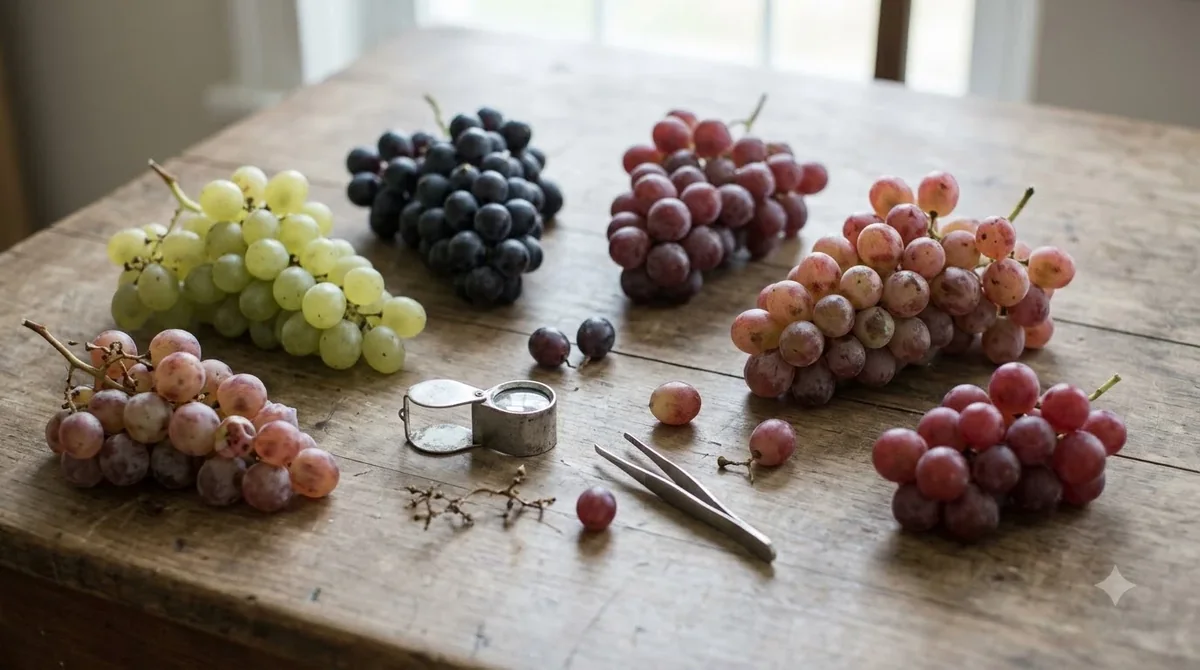
One of its most recognizable characteristics comes from methoxypyrazines, aromatic compounds that can produce green, vegetal, and herbaceous notes. These compounds are particularly important in Carménère because the grape can accumulate relatively high concentrations of them in its berries.
Depending on grape ripeness and winemaking decisions, Carménère may show aromas resembling green bell pepper, fresh herbs, or leafy vegetables. Riper examples often emphasize blackberries, black cherries, plums, and sweet spices. The balance between fruit and herbal character is an important part of the variety’s identity.
A peer-reviewed study published in G3: Genes, Genomes, Genetics examined the Carménère genome and discussed the genetic factors associated with its aromatic characteristics. Researchers identified the importance of the VviOMT gene family in methoxypyrazine production, providing additional scientific context for its recognizable vegetal aromas.
The variety also has a distinctive relationship with ripeness. Because Carménère can ripen relatively late, picking too early may leave pronounced green characteristics. Allowing the grapes to reach appropriate maturity can produce a rounder wine with more developed fruit flavors and softer impressions of herbal character.
Winemaking decisions influence the final style. Some producers use oak aging to introduce additional spice, structure, and texture, while others favor fruit-focused wines with more restrained oak influence. Carménère can also appear in Bordeaux-style blends alongside Cabernet Sauvignon, Merlot, and Cabernet Franc.
Carménère Compared With Other Red Grapes
The following comparison explains how Carménère differs from several varieties that share historical or stylistic connections with it.
| Grape | Tannin level | Typical characteristics |
|---|---|---|
| Carménère | Medium to structured | Dark fruit, herbs, green pepper, spice |
| Merlot | Medium, softer | Plum, black cherry, chocolate |
| Cabernet Sauvignon | High | Blackcurrant, cedar, firm structure |
| Cabernet Franc | Medium | Red fruit, herbs, floral notes |
| Pinot Noir | Low to medium | Red cherry, raspberry, earthy notes |
Carménère’s relationship with Merlot is particularly interesting because the two varieties were confused in Chile for so long. Merlot generally produces softer, rounder wines with plum and black cherry characteristics. Carménère can share some of those dark fruit notes but often has a more noticeable herbal character.
Cabernet Sauvignon usually offers firmer tannins and a more structured profile. Carménère tends to provide a different balance of fruit, spice, and vegetal aromas. For readers interested in how another internationally recognized red variety developed its own identity, the history of Pinot Noir offers an interesting comparison.
Understanding its grape characteristics also helps explain why Carménère deserves its own place in a broader Wine by Type reference. Although its Bordeaux origins connect it with several famous French varieties, its Chilean development has given it a recognizable identity of its own.
Tip: If you are exploring Carménère for the first time, look for a Chilean bottling that combines ripe blackberry or plum flavors with gentle herbal notes. Serve it at approximately 60–65 F for a fuller-bodied style, and try it with grilled beef, roasted vegetables, or dishes featuring herbs and savory spices.
7. Carménère Today: From a Forgotten French Variety to an International Wine
Carménère is now strongly associated with Chile, although its historical roots remain French. Its journey from the Médoc to the vineyards of South America has created a distinctive international identity that continues to attract wine producers and consumers.
Chile remains the grape’s principal home, with important plantings across central wine-growing regions. Rapel, Colchagua, and Cachapoal are particularly associated with its cultivation. These areas have helped develop a range of styles, from fruit-forward wines intended for early drinking to more structured examples that receive extended oak aging.
However, the modern story is not limited to Chile. Carménère has also attracted renewed attention in France, where the variety has been reconsidered by growers interested in recovering older Bordeaux grapes. Its presence in the country’s permitted regional varieties is a reminder that a grape can regain attention even after losing much of its historical importance.
Other wine-producing countries have also explored Carménère, including Italy and parts of the New World. The variety’s historical confusion with Cabernet Franc in Italy provides another example of how challenging grape identification could be before modern genetic testing became widely available.
Scientific research has also become an important part of its modern development. In 2019, researchers from the University of California, Davis, published a genome assembly for Carménère clone 02. The work examined genetic variation, potential aroma-related genes, and characteristics that may help explain differences between Carménère and other grape varieties.
The study is particularly interesting because it shows that Carménère’s identity is not simply a matter of vineyard tradition or historical naming. Its genetic characteristics provide a scientific basis for understanding its differences from Cabernet Sauvignon, Merlot, and Cabernet Franc. The full research paper, Diploid Genome Assembly of the Wine Grape Carménère, offers further details about the research.
For consumers, the most important result is a grape with a recognizable personality. Carménère offers a combination of dark fruit, herbs, spice, and structured but approachable tannins. It can work particularly well with grilled meats, roasted mushrooms, tomato-based dishes, and savory preparations featuring herbs.
Its history also provides useful context when comparing wines from different regions. A Chilean Carménère may emphasize ripe black fruit and soft texture, while a cooler growing environment or a different winemaking approach may produce more restrained fruit and pronounced herbal characteristics.
For those beginning to explore the variety, understanding what Carménère is and learning how to pronounce Carménère are useful first steps. Its name may have been unfamiliar to wine drinkers for generations, but its story is now an important part of understanding Chilean wine.
Frequently Asked Questions
What does the word Carménère mean?
The name is generally associated with the French word carmin, referring to a crimson or deep red color. This connection is appropriate for a variety known for producing intensely colored wines. Its historical synonyms include Grande Vidure and Carmenelle.
Is Carménère genetically related to Cabernet Sauvignon?
Yes. Genetic pedigree research identifies Cabernet Franc as a parent shared by Carménère and Cabernet Sauvignon. Their other parent varieties differ, which helps explain why the two grapes have distinct fruit, tannin, and aromatic profiles.
Why does Carménère sometimes smell like green bell pepper?
The characteristic aroma is associated with methoxypyrazines, particularly 3-isobutyl-2-methoxypyrazine, commonly abbreviated as IBMP. Research has measured IBMP concentrations in Carménère grapes ranging from 5.0 to 44.4 nanograms per liter, depending on genetic and growing differences.
Was Carménère ever grown in Italy under another name?
Yes. Carménère was historically confused with Cabernet Franc in parts of northeastern Italy, particularly around Treviso and the Piave Valley. Genetic identification helped distinguish the two varieties and clarify the identity of those Italian plantings.
Did Carménère have a different name when it first returned to commercial production?
Yes. Viña Carmen released a wine in 1996 using the historical synonym Grande Vidure for grapes from a vineyard block identified as Carménère. This early bottling helped introduce the rediscovered grape to the Chilean wine market before its modern varietal identity became widely established.
Carménère’s journey from Bordeaux to Chile is one of the most remarkable survival stories in wine history. Its rediscovery in 1994 gave Chile an internationally recognizable red grape while preserving a variety that had nearly disappeared from its French birthplace. Today, every bottle tells part of that story, connecting nineteenth-century European vineyards with the modern character of Chilean wine.
More in Wine Types & Grapes
 What Does Mourvèdre Taste Like? Flavor Profile, Regions, and PairingsUpdated Nov 20, 2026
 What Does Marsanne Taste Like? Flavors, Styles, and Food PairingsUpdated Nov 20, 2026
 What Does Malvasia Taste Like? Styles, Flavors, and Food PairingsUpdated Nov 20, 2026
 What Does Grenache Blanc Taste Like? Flavor Profile, Styles, and PairingsUpdated Nov 20, 2026
 What Does Garnacha Taste Like? Key Flavors, Styles, and Pairing TipsUpdated Nov 20, 2026
 What Does Fruit Wine Taste Like? A Complete Flavor and Style BreakdownUpdated Nov 20, 2026