

We may earn a commission when you buy through links on this page, at no extra cost to you. Learn more.
The villany wine region in southern Hungary is best known for structured Cabernet Franc, rich Bordeaux-style red blends, and traditional Portugieser wines shaped by a warm, Mediterranean-influenced climate. Located in Baranya County, Villány is one of Hungary’s most distinctive red-wine districts. Its limestone, loess, and clay soils support grapes that produce ripe, concentrated wines, while its protected Villányi Franc designation gives Cabernet Franc a particularly important place in the region’s identity.
Hungary has several established wine-growing areas, but Villány stands apart for its emphasis on full-bodied reds. Its vineyards combine a favorable southern location, varied hillside exposures, and a long history of wine production. Whether you are exploring Hungarian wine for the first time or looking for alternatives to Cabernet Sauvignon and Bordeaux blends, understanding Villány’s grapes, growing conditions, and regional traditions makes it easier to recognize what distinguishes its bottles.
Where Villány Sits in Hungary and What Makes Its Location Special
Villány occupies a southern position in Hungary’s Baranya County, relatively close to the Croatian border and the historic city of Pécs. It belongs to the wider Pannon wine region, a southern Hungarian wine-producing area that also includes Pécs, Szekszárd, and Tolna. Its location helps explain why the district produces some of the country’s richest and most recognizable dry red wines.

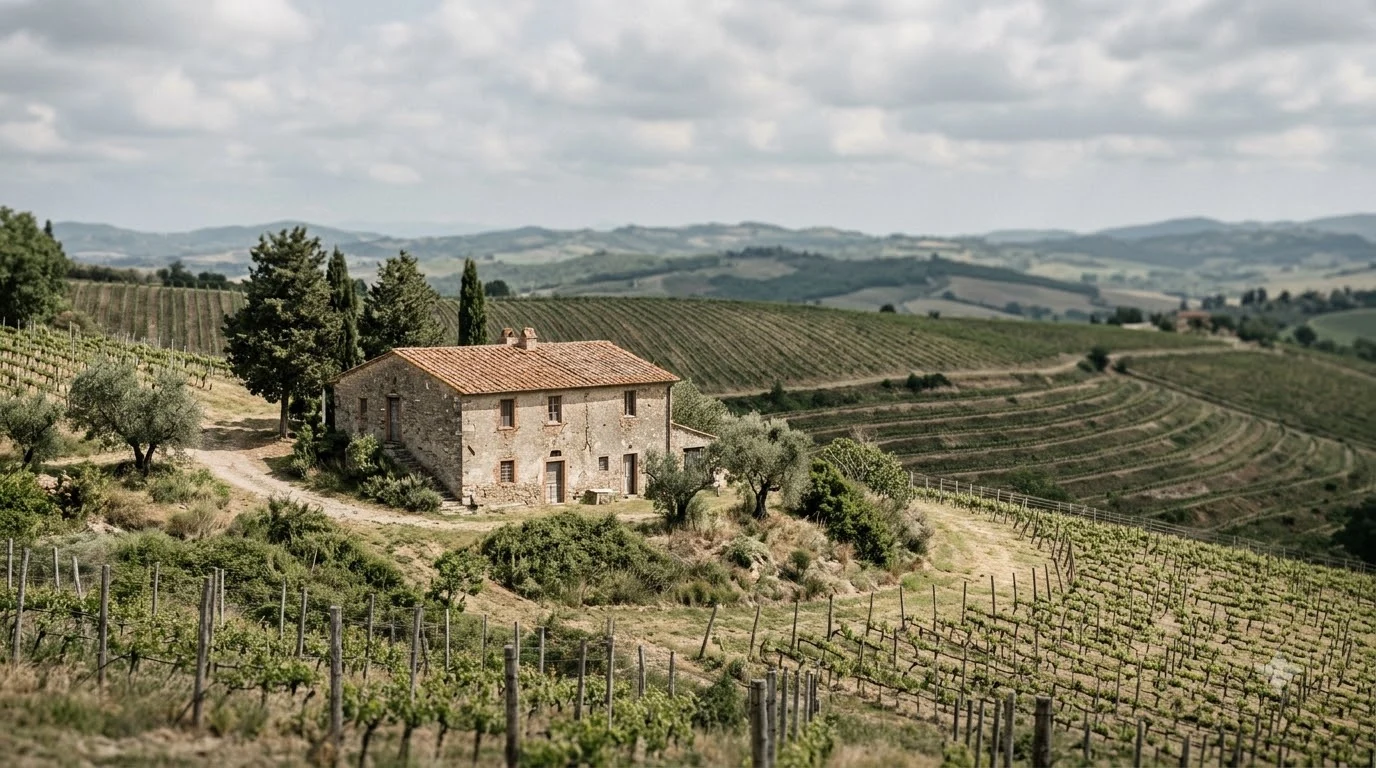
The landscape is shaped by the Villány Mountains, whose southern and eastern slopes provide important vineyard sites. The hills offer different exposures and elevations, creating variations in sunlight and temperature between individual growing areas. According to the Hungarian Wine information published by the Budapest Chamber of Commerce and Industry, southern-facing slopes can be approximately 2–4°C warmer than northern-facing slopes. This difference matters because grape ripening depends heavily on the amount of warmth and sunlight available throughout the growing season.
The wider Pannon region has a continental climate influenced by Mediterranean weather patterns from the south. According to the European Union’s geographical indication description for the Pannon wine region, average annual temperatures are approximately 10–12°C, annual sunshine exceeds 2,000 hours, and precipitation is generally around 600 millimeters. These are regional figures rather than measurements for every individual Villány vineyard, but they help explain the area’s favorable conditions for both white and red grapes.
Villány’s southern location also contributes to a relatively long growing season. Information published by the Hungarian Wine resource at KKIK describes a frost-free period exceeding 200 days on the southern slopes. Warm conditions allow later-ripening red varieties, including Cabernet Franc and Cabernet Sauvignon, to reach satisfactory maturity.
The region is not simply one uninterrupted hillside. Vineyard exposures, local elevations, and soil composition create meaningful differences between sites. A Cabernet Franc grown on a well-exposed hillside may develop a different balance of fruit, acidity, and tannin from one grown on a cooler or heavier-soil site. This variation is one reason vineyard names can be useful clues when comparing wines from the same producer.
Climate, Limestone, and Soil: The Foundations of Villány Wine
Villány’s warm growing conditions and varied soils help explain its reputation for ripe, concentrated reds. Limestone, marl, loess, clay, and loam all contribute to the district’s vineyard character, while differences in slope orientation influence how individual parcels ripen.
The Villány Mountains contain substantial limestone formations, sometimes covered by loess and loam. Other local soils include marl and clay, with sandy components in certain areas. These materials affect drainage, water retention, and vine growth. Heavy soils can retain useful moisture during dry periods, while differences in soil depth and composition influence how deeply roots can develop.
According to the regional description published by KKIK, the area’s soils include marl and limestone covered in places by clay or sand. The source also identifies Szársomlyó as a prominent limestone hill. Such geological variety is important because wine character does not come from climate alone. Soil structure, water availability, vineyard orientation, and farming decisions all interact during grape development.
Warm summers encourage ripeness in Cabernet Franc, Merlot, and Cabernet Sauvignon. In suitable conditions, these varieties can develop generous dark-fruit characteristics, substantial body, and noticeable tannin. Oak maturation may add further complexity, including cedar, baking spice, vanilla, and toasted notes, depending on the barrel and winemaking approach.
However, warm conditions do not mean every Villány wine tastes the same. Portugieser generally produces a more approachable style than the district’s premium Cabernet Franc. Kékfrankos can provide a different balance of fruit and acidity, while Merlot often contributes a softer texture to blends. Producers also make decisions about harvest timing, extraction, fermentation, and barrel maturation that create significant differences between bottles.
Tip: When comparing Villány reds, look at both the grape variety and the vineyard designation. Two Cabernet Franc wines from different sites may have noticeably different structures, even when they come from the same producer.
For context, Villány’s southern climate can be contrasted with cooler European areas such as the Savoie wine region, where mountain influences and different growing conditions encourage another range of grape varieties and wine styles. Villány’s particular advantage is its combination of warm conditions and hillside vineyard diversity.
Cabernet Franc and the Importance of Villányi Franc
Cabernet Franc is the signature grape of modern Villány winemaking. The variety gained considerable popularity in the district during the 1990s, and its importance has since grown to the point that qualifying Cabernet Franc wines can receive the protected Villányi Franc designation.

Cabernet Franc is widely grown in several European wine regions, including the Loire Valley and Bordeaux. In Villány, warm growing conditions allow it to produce a relatively ripe, substantial style. Depending on the producer and vineyard, the wines can show black cherry, plum, blackberry, dark currant, herbs, and pepper, with oak adding notes of spice or cedar.
The variety generally has high acidity and medium-plus tannin, although the actual balance varies with ripeness, vineyard conditions, and winemaking. Villány examples often emphasize ripe fruit and a full-bodied structure. More ambitious bottlings may spend extended periods in barrels before release, helping integrate tannins and develop additional layers of flavor.
Villányi Franc is the regional designation associated with Cabernet Franc wines from Villány. It provides a recognizable identity for the area’s flagship grape and distinguishes qualifying wines from generic Cabernet Franc bottlings. Its production rules are more specific than simply requiring a Cabernet Franc label. For example, the official Hungarian wine information explains that the Premium category can contain a limited proportion of other varieties, whereas Super Premium Villányi Franc must be entirely Cabernet Franc.
Producers organize their premium Villányi Franc wines within a quality framework that includes three familiar category names:
- Classicus: The introductory category within the Villányi Franc quality structure, offering an accessible expression of the variety.
- Premium: A higher classification intended for more ambitious wines with greater concentration and complexity.
- Super Premium: The highest of the three categories, associated with particularly selective production and more demanding wine standards.
These classifications provide a useful starting point when comparing bottles, but they do not guarantee that every wine in one category will taste identical. Vineyard origin, vintage conditions, oak treatment, and the producer’s preferred style remain important.
Some wines emphasize fresh black fruit and a relatively direct structure, while others have more pronounced oak, concentrated fruit, and firm tannins. A young, powerful Villányi Franc may benefit from additional time in the bottle or aeration before serving. Mature examples can show more integrated tannins and developed savory characteristics.
For American wine drinkers familiar with Cabernet Sauvignon, Villányi Franc offers an interesting alternative. Cabernet Sauvignon generally has high tannin and a recognizable black-currant character, whereas Cabernet Franc can offer more herbal complexity and a different balance of fruit and acidity. Both varieties can produce serious, age-worthy wines in the right conditions.
For further details about the region’s protected wine identity and production categories, consult the official Hungarian Wine overview of the Villány wine district.
Portugieser, Kékfrankos, Merlot, and Other Local Grapes
Although Cabernet Franc receives much of Villány’s international attention, the region has a wider grape portfolio. Portugieser remains an important traditional variety, while Kékfrankos, Merlot, and Cabernet Sauvignon contribute different expressions of southern Hungarian red wine.
Portugieser: The Traditional Everyday Red
Portugieser has a long association with Villány. According to Hungary’s official tourism information, German-speaking settlers introduced the variety during the 18th century. It was formerly known locally as Kékoportó, a name that remains familiar to some wine enthusiasts.
Compared with the district’s more concentrated Cabernet Franc and Cabernet Sauvignon, Portugieser usually produces a lighter, softer, more immediately approachable red. Expect red cherry, raspberry, and other fresh-fruit notes, with moderate structure and relatively gentle tannins. These characteristics make it a useful introduction to the region.
Portugieser is particularly suitable for relaxed meals and casual drinking. It generally does not require extensive decanting or prolonged cellar aging. A slight chill can also make the wine more refreshing, especially during warmer weather.
Villányi RedY: A Modern Expression
Villányi RedY is a contemporary, approachable red-wine style associated with Portugieser. It was developed to give younger drinkers and casual wine enthusiasts an accessible way to explore Villány. The wines are typically fruit-forward and designed for relatively early enjoyment rather than extended aging.
RedY is particularly useful for understanding the difference between Villány’s everyday and premium wine styles. A fresh Portugieser-based bottle offers a contrasting experience to a concentrated Cabernet Franc that has spent time in oak. Both styles belong to the same regional identity, but they serve different occasions.
Kékfrankos and Bordeaux Varieties
Kékfrankos, also known as Blaufränkisch, is another established red grape in the area. It can provide dark cherry and berry fruit, noticeable acidity, and savory spice. Its structure differs from that of Cabernet Sauvignon, making it useful in blends as well as single-variety wines.
Merlot contributes ripe fruit and a softer texture, while Cabernet Sauvignon brings firmer tannins and a more powerful structure. These varieties are often combined in Bordeaux-inspired blends. Such wines can offer a more complex profile than a single-variety bottling because each grape contributes a different element.
Other grapes, including Kadarka and Syrah, also have connections with Villány’s broader wine culture. White varieties such as Chardonnay, Olaszrizling, and Hárslevelű are grown in the area, although white wine is less central to Villány’s reputation than it is to neighboring Siklós.
| Grape or style | Typical structure | Common flavor profile | Best use |
|---|---|---|---|
| Cabernet Franc | Medium-plus tannin, high acidity | Black cherry, currant, herbs, spice | Premium single-variety reds |
| Portugieser | Low-to-medium tannin | Red cherry, raspberry, fresh fruit | Young, approachable reds |
| Kékfrankos | Medium tannin, lively acidity | Dark cherry, berry, savory spice | Single-variety reds and blends |
| Merlot | Medium, relatively soft tannin | Plum, blackberry, ripe red fruit | Rounder red wines and blends |
| Cabernet Sauvignon | High tannin | Black currant, dark fruit, cedar | Structured, age-worthy reds |
| Chardonnay | Medium acidity | Apple, citrus, stone fruit | White wine production |
This comparison is a general guide rather than a fixed tasting formula. Harvest conditions, fermentation, oak use, and bottle age can significantly change the finished wine. For a broader introduction to grape varieties and their regional expressions, explore the site’s Wine Regions resource.
Vineyard Sites, Wine History, and the Villány Cellar Tradition
Villány’s wine identity developed through centuries of settlement, agricultural adaptation, and trade. Named vineyard sites and historic cellar villages provide a closer connection to that history, while the region’s modern producers continue to develop its international reputation.
Winegrowing in the area has ancient roots. Historical information published by KKIK associates local viticulture with the Celtic and Roman periods. A Roman-era altar stone discovered on the Szársomlyó hillside records an area of vine planting, offering evidence of the region’s early relationship with wine production.
Later settlement patterns shaped the grapes grown in Villány. Serbian settlers brought Kadarka into the area, helping establish the region’s red-wine traditions. German-speaking settlers subsequently introduced Portugieser during the 18th century and influenced local vineyard and cellar practices.
The phylloxera epidemic caused substantial damage to vineyards throughout Europe, including Hungary. Villány subsequently played an important part in the revival of Hungarian winemaking. The region also became an early center for Hungary’s protected-origin wine system, helping establish a stronger connection between geographical identity and wine quality.
Important Vineyard Names
Several vineyard names appear regularly in discussions of Villány’s more serious wines:
- Kopár dűlő: A notable western vineyard site described by KKIK as protected from northern influences.
- Jammertal: A well-known vineyard name whose German-derived meaning is Valley of Tears.
- Csillagvölgy: Also known as Star Valley, a vineyard area located west of Villány.
- Remete dűlő: A growing site associated with smaller plots on sloping terrain.
- Ördögárok: A vineyard name translated as Devil’s Trench and associated with local folklore.
These sites illustrate why regional origin is only part of the story. Individual vineyard conditions can affect ripeness, concentration, and the overall character of the finished wine. Producers may select particular parcels for their more ambitious Cabernet Franc or Bordeaux-style bottlings.
Cellar Villages and Regional Architecture
Wine tourism in Villány is not limited to vineyard visits. The surrounding villages preserve distinctive architectural traditions connected to wine storage and production.
Villánykövesd is particularly notable for its three-storey cellar village. Its colorful gates and rows of traditional wine cellars create a recognizable feature of the local landscape. These buildings reflect the practical importance of winemaking to the area’s rural communities.
Nearby Palkonya is another worthwhile destination. Hungary’s official tourism information describes a historic collection of 53 wine-press houses, with small and medium-sized family wineries welcoming visitors. These historic buildings provide an opportunity to understand how wine production was integrated into village life.
The region also offers a useful contrast to other European destinations. Travelers comparing wine-focused areas such as the Switzerland wine region can see how local climate, architecture, and historical settlement influence wine tourism in different parts of Europe.
How Villány Wines Taste and What to Eat With Them
Villány’s wines range from light, fruit-driven Portugieser to concentrated Cabernet Franc and Cabernet Sauvignon. The best food pairing depends on the grape variety, tannin level, acidity, and degree of oak influence rather than simply the wine’s country of origin.
For a traditional pairing, consider Hungarian goulash, grilled beef, roasted pork, and hard cheeses. These foods have enough flavor and texture to complement the district’s fuller-bodied reds. A Cabernet Franc with substantial tannin can work particularly well with a grilled steak or slow-cooked beef dish.
Salt and fat soften the perception of tannin, which is why fatty meats and rich sauces can make structured reds feel more balanced. Grilled lamb, beef short ribs, and roasted pork shoulder are practical choices for a more concentrated Villány wine. Hard cheeses such as aged Gouda or mature cheddar can also complement a tannic red.
For Cabernet Sauvignon, choose foods with substantial protein and savory depth. Its high tannin can make delicate dishes seem thin, so a simple grilled chicken breast is often less suitable than a rich beef stew. Cabernet Franc offers a little more flexibility, especially when its acidity and herbal notes are pronounced.
Pairings for Lighter Villány Wines
Portugieser and RedY generally suit less elaborate meals. Their lighter tannin and fresh red-fruit flavors can work with roasted chicken, grilled sausages, mushroom dishes, and moderately seasoned pork. They can also accompany casual Hungarian dishes without overpowering the food.
Kékfrankos is a useful partner for paprika-seasoned dishes, roasted vegetables, and grilled meats. Its acidity can provide freshness alongside rich ingredients. For a regional-style meal, try it with pork stew or dishes featuring smoked sausage and roasted peppers.
Merlot-based blends can work with mushroom risotto, roasted lamb, and tomato-based meat dishes. Because Merlot generally has softer tannins than Cabernet Sauvignon, it can be easier to pair with moderately rich foods rather than only heavily grilled meats.
Foods to Approach Carefully
Very spicy foods can exaggerate the sensation of alcohol and tannin in powerful reds. A heavily oaked, high-alcohol Cabernet Franc may therefore be less comfortable alongside dishes containing substantial chili heat. For spicy meals, a softer Portugieser or a wine with less tannin may be a better choice.
Oily fish is another difficult match for tannic reds. The combination can make both the fish and the wine taste less harmonious. If serving salmon or tuna, a lighter, lower-tannin wine is usually a more practical direction than a strongly structured Cabernet Sauvignon.
For acidic foods, select a wine with equal or higher acidity. Tomato-heavy sauces, vinegar-based dressings, and dishes with strong citrus components can make lower-acidity wines seem flat. The key is to balance the intensity of the food with the structure of the wine.
Buying, Serving, and Storing Villány Wine
Choosing a Villány bottle becomes easier when you decide whether you want a fresh everyday red or a more serious Cabernet Franc. Serving temperature, aeration, and storage also influence how clearly the wine expresses its character.
For an approachable introduction, begin with Portugieser or RedY. These wines are generally intended for relatively early consumption and do not need the same amount of aging as more concentrated reds. Kékfrankos is another useful option if you prefer a wine with lively acidity and more noticeable savory character.
If you want a fuller-bodied wine, consider a Cabernet Franc or a Cabernet Sauvignon-based blend. Look for the Villányi Franc designation when you specifically want a qualifying regional Cabernet Franc. The Classicus, Premium, and Super Premium categories can help indicate the intended quality level.
Producer identity is another useful buying consideration. The region includes established names such as Gere, Bock, Sauska, Heumann, Günzer, and Jackfall. Their wines cover different styles, from traditional varietal bottlings to more elaborate blends. Comparing two producers’ Cabernet Franc wines can be particularly informative because it highlights differences in vineyard selection and oak treatment.
Serving Temperatures
Full-bodied Villány reds generally show their structure best at 60–65°F. Serving a powerful wine too warm can make alcohol feel more prominent and reduce freshness. Conversely, excessive chilling can make tannins seem firmer and mute some aromatic details.
Lighter Portugieser and fruit-driven RedY can benefit from a slightly cooler serving temperature of 55–60°F. This helps preserve their fresh-fruit character and makes them particularly suitable for casual meals during warmer months.
Decanting and Glassware
Young, concentrated Cabernet Franc and Cabernet Sauvignon wines may benefit from 30–60 minutes of decanting. Exposure to air can help soften the initial impression of a firm wine and allow aromas to become more expressive. Not every bottle needs the same treatment, however. An older wine may require more careful handling because prolonged aeration can cause delicate aromas to fade.
Use a large red-wine glass that provides enough space for swirling. This allows the aromas of black cherry, plum, herbs, and oak to become easier to recognize. For everyday Portugieser, a standard red-wine glass is perfectly suitable.
Storage and Bottle Aging
Store Villány reds in a cool, dark environment, ideally close to 55°F. Bottles with natural cork closures should generally be kept on their sides to maintain contact between the cork and wine. Avoid frequent temperature changes, direct sunlight, and locations near heat-producing appliances.
More concentrated Cabernet Franc and Cabernet Sauvignon wines can benefit from bottle aging, depending on the producer and vintage. Portugieser, by contrast, is usually more rewarding when enjoyed young. Premium classification alone should not be treated as a guarantee of a particular aging period.
Once opened, reseal the bottle and refrigerate it. Most still wines remain in reasonable condition for approximately 3–5 days, although fruit intensity and freshness can decline before that period ends. Allow refrigerated red wine to warm slightly before serving.
A standard 750-milliliter bottle provides approximately five 5-ounce glasses. This makes it convenient to compare two Villány styles at a dinner table, perhaps pairing a Portugieser with the first course and a Cabernet Franc with the main dish.
Frequently Asked Questions
Is Villány the southernmost wine region in Hungary?
Villány is widely identified as Hungary’s southernmost wine district. Its proximity to the Croatian border contributes to its distinctive southern growing conditions. The district forms part of the larger Pannon wine region, which contains four principal wine-growing areas.
What does the colchicum symbol mean on a Villány wine?
The colchicum flower is the regional symbol associated with protected Villány wines. It communicates a connection with the area’s protected geographical identity and authenticity system. It is a useful visual clue when identifying regional wines.
Why was the name Kékoportó replaced by Portugieser?
Kékoportó was the traditional local name associated with the grape. The name Porto is geographically protected for wines from Portugal, so the international grape name Portugieser is used instead. Older Hungarian wine references and some historical discussions may still use Kékoportó.
Does Villány produce organic wine?
Organic production is represented among the region’s wine producers, although farming practices differ from one winery to another. An organic certification concerns vineyard and production requirements rather than guaranteeing a particular flavor profile. Buyers interested in certified organic wine should look for the appropriate certification on the individual bottle.
What language is spoken in Villány’s wine villages?
Hungarian is the principal language of the area, while German has historical connections with the local wine-growing communities. The German influence is reflected in certain vineyard names and the traditional cellar architecture. English-language information and wine-tourism services are also available through some local wineries.
The Villány wine region offers a distinctive combination of southern Hungarian history, warm-climate vineyards, and expressive red grapes. Cabernet Franc provides its most recognizable premium identity, while Portugieser, RedY, Kékfrankos, and Bordeaux-style blends demonstrate the range of wines produced in the district. For anyone exploring Hungary beyond its famous Tokaj sweet wines, Villány is an excellent place to begin discovering the country’s structured dry reds.
More in Wine Regions
 Willcox Wine Trail: Discover Arizona’s High-Elevation Wine CountryUpdated Nov 20, 2026
 Yakima Valley Wine Region: Find the Best Styles to TryUpdated Nov 20, 2026
 Vosne Romanee Wine Tasting: Identify Aromas and Choose Better PairingsUpdated Nov 20, 2026
 Yakima Valley Wine Festival: Find the Best Seasonal Wine EventsUpdated Nov 20, 2026
 Wales Vineyards: Discover Cool-Climate Wines and Where to VisitUpdated Nov 20, 2026
 Yountville Wine Festival: Discover Napa Wines and Local FoodUpdated Nov 20, 2026