

We may earn a commission when you buy through links on this page, at no extra cost to you. Learn more.
GE wine fridge repair starts with checking the power supply, temperature settings, door seal, ventilation, and cooling performance before replacing any components. Many common problems, including warm interiors, excessive condensation, unusual noises, and frequent compressor cycles, have relatively simple explanations. However, persistent cooling failures, electrical faults, and sensor errors may require a qualified appliance technician. Identifying the exact GE model helps determine which troubleshooting steps and replacement parts are appropriate.
A GE wine refrigerator protects bottles from temperature fluctuations and provides a convenient place to store wine at consistent conditions. When the appliance stops cooling, makes unfamiliar noises, or develops moisture around the door, it can be difficult to determine whether the problem involves normal operation or a mechanical failure. A careful inspection can help identify the cause before unnecessary parts are purchased or professional service is scheduled.
GE has produced several wine-center and beverage-center configurations, including compact freestanding models and larger wine-storage appliances. Their controls, temperature ranges, components, and diagnostic features are not necessarily interchangeable. The following troubleshooting process covers common symptoms, practical owner maintenance, and situations that call for professional repair.
Identifying Your GE Wine Fridge Model and the Source of the Problem
The most useful first step in GE wine fridge repair is identifying the exact model number. GE uses different control systems and replacement components across its wine-center product families, so the model number helps establish which instructions apply.
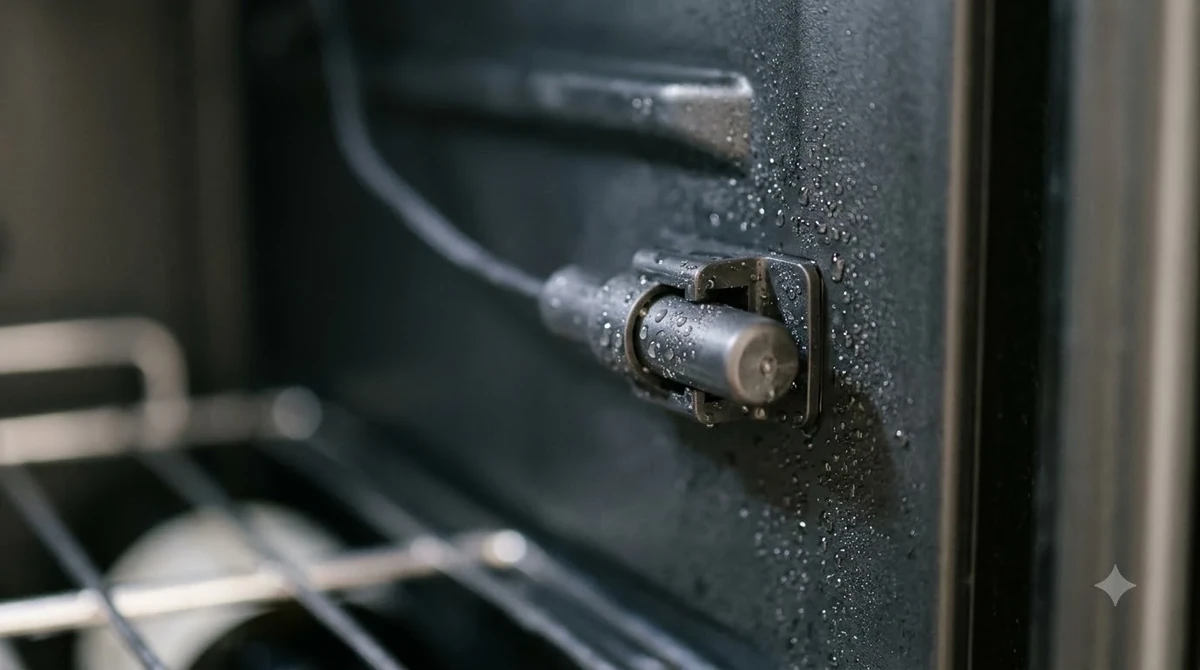
Look for the rating label inside the cabinet, around the door frame, or on the rear exterior panel, depending on the model. GE documentation for the GWS04HAESS, for example, provides a dedicated owner-support page with access to its manual and service scheduling. Record both the model and serial numbers before searching for replacement parts or contacting a technician.
Some GE wine centers have simple mechanical or electronic temperature controls, while others use digital displays and touch-sensitive buttons. A troubleshooting procedure that applies to one model may not apply to another. Even seemingly similar appliances can have different temperature sensors, control boards, lighting systems, and compressor arrangements.
Information to collect before troubleshooting
Write down the following details before investigating the appliance:
- Model number: The complete model designation identifies the appliance family.
- Serial number: This helps establish the appliance’s production information and may be useful when checking service eligibility.
- Current temperature: Record the displayed temperature and compare it with an independent refrigerator thermometer.
- Operating behavior: Note whether the compressor runs continuously, starts intermittently, or remains silent.
- Visible symptoms: Look for frost, condensation, damaged door seals, loose shelves, and water around the cabinet.
- Error messages: Photograph any displayed codes before resetting or disconnecting the appliance.
Use GE’s official manual and installation-instructions lookup to find documentation for the identified model. GE provides online literature for current appliances and many older products, making it possible to check operating instructions and model-specific troubleshooting information before arranging service.
Also determine whether the appliance is a wine-only refrigerator or a combination beverage center. Some models have separate storage zones or different temperature controls. Understanding the configuration prevents incorrect adjustments and makes it easier to describe the problem accurately.
GE Wine Fridge Not Cooling: Common Causes and Practical Checks
A GE wine fridge that runs but does not reach its selected temperature may have an incorrect setting, restricted ventilation, a poorly sealed door, or a cooling-system fault. Begin with the simplest possibilities and allow enough time for the appliance to stabilize before deciding that a component has failed.
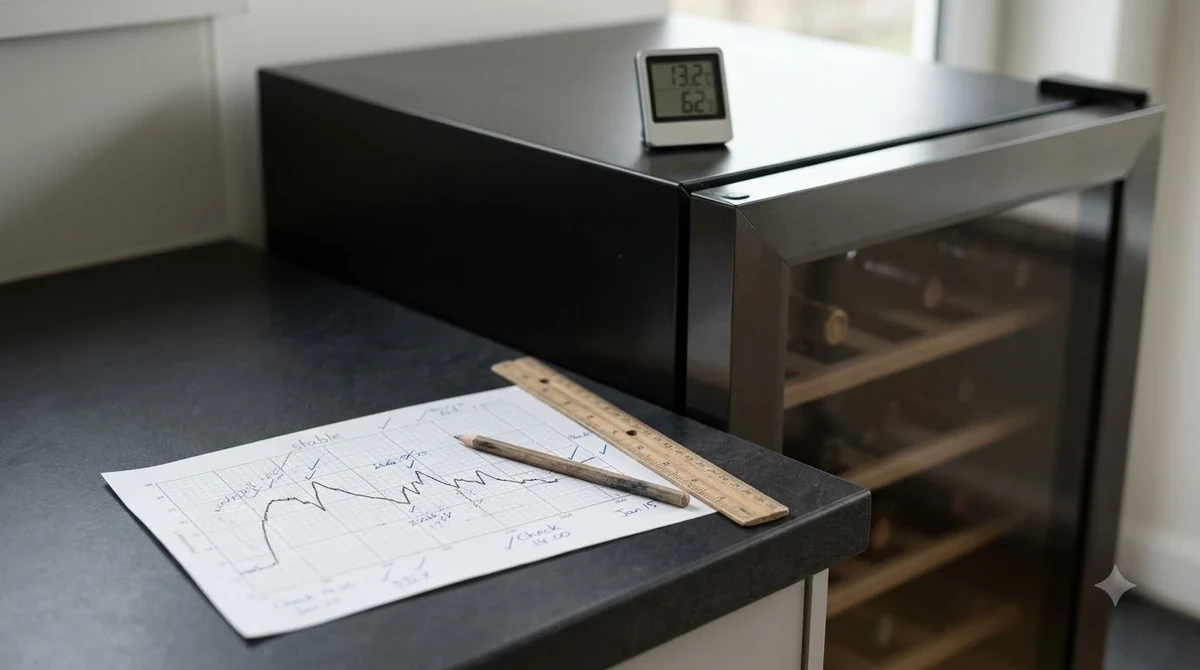
After connecting a wine cooler or changing its temperature setting, allow time for the cabinet and stored bottles to cool. GE’s MWR02 wine-cellar manual indicates that the appliance can require up to 12 hours to stabilize after startup. Loading several room-temperature bottles can also temporarily increase the interior temperature because the cooling system must remove additional heat.
Check the temperature setting
Confirm that the temperature setting is appropriate for the appliance and its intended contents. Some GE models use an automatic beverage setting, while others offer a manually adjustable temperature range. The MWR02 uses controls that adjust the temperature in 1°F increments, whereas other GE wine centers have different control arrangements.
A setting that is too warm can make the appliance appear to have stopped cooling even though the compressor and other components are operating correctly. Conversely, an unnecessarily cold setting can make the compressor run for extended periods.
Inspect the ventilation area
Wine refrigerators need suitable airflow around their cooling components. An appliance positioned too close to a wall, surrounded by stored household items, or installed in a hot location may struggle to remove heat.
GE’s MWR02 installation instructions specify the following clearances for that particular model:
| Installation location | Specified clearance | Purpose |
|---|---|---|
| Left side | 2 inches | Air circulation and access |
| Right side | 2 inches | Air circulation and access |
| Top | 2 inches | Ventilation |
| Rear | 3 inches | Heat dissipation |
These measurements belong to the MWR02 manual and should not automatically be applied to every GE wine refrigerator. Check the installation documentation for the specific appliance before moving it or changing its position.
Check the room temperature
Ambient temperature affects refrigeration performance. A wine cooler positioned beside an oven, heating appliance, sunny window, or other heat source may need to work harder to maintain its selected temperature.
GE’s condensation guidance identifies temperatures below 55°F and above 90°F as unsuitable installation conditions for the wine centers covered by that guidance. Moving an appliance away from direct sunlight and excessive heat can improve its operating environment.
Do not immediately assume that a warm cabinet means the compressor needs replacement. If the unit has recently been connected, received a large bottle load, or experienced frequent door openings, allow up to 12 hours for stabilization before evaluating its cooling performance again.
Power Problems, Blank Displays, and Electrical Troubleshooting
A GE wine fridge that will not start may have a disconnected power cord, an interrupted electrical supply, a tripped circuit breaker, or an internal electrical problem. Check the external power supply first, but leave electrical component testing to a qualified professional.
Begin by checking whether the power cord is fully inserted into a suitable grounded outlet. Look for visible damage to the cord, plug, or outlet. If the outlet appears damaged, smells burnt, or shows signs of overheating, stop using it and arrange an electrical inspection.
Check the circuit breaker
A tripped household breaker can interrupt power to a wine refrigerator. Check the electrical panel for a tripped circuit and follow the manufacturer’s and household electrical safety instructions before restoring power.
If the breaker trips again, do not continue resetting it. Repeated tripping can indicate an electrical fault, damaged wiring, a failing compressor, or another problem that needs professional investigation.
GE’s wine-chiller troubleshooting documentation lists a disconnected plug, tripped breaker, and blown fuse among the possible explanations for a blank display. These checks help narrow the problem without opening the appliance’s electrical compartment.
Understand display and control problems
Some GE wine centers have digital displays that show the selected or measured cabinet temperature. If the display is blank but the appliance has power, the issue may involve the control panel, wiring, or internal electronics.
Before assuming that the display has failed, verify whether the model has a separate power button, control lock, or display activation procedure. A locked keypad may prevent adjustments even though the cooling system continues operating.
Power interruptions can also affect stored settings. GE’s MWR02 documentation states that its wine chiller returns to a factory setting of 50°F after a power failure. Other models may behave differently, so consult the appropriate manual.
Tip: If the appliance has lost power, record the displayed temperature and any error messages before attempting a reset. Never bypass the grounding connection, remove electrical safety components, or use an extension cord as a substitute for a suitable dedicated outlet. If power interruptions continue, arrange a qualified electrical or appliance inspection.
For persistent electrical problems, use GE’s model-specific service resources rather than purchasing a generic control board. A replacement component must match the appliance’s exact model and electrical configuration.
Unusual Noises, Compressor Cycling, and Vibration
Not every unfamiliar noise indicates a mechanical failure. GE wine refrigerators can produce normal refrigerant sounds, cabinet expansion noises, and compressor operating sounds during ordinary cooling cycles.
A soft humming sound may come from the compressor or circulation components. Rattling and gurgling can occur as refrigerant moves through the cooling system, while popping and crackling can result from changes in cabinet temperature.
Distinguish normal sounds from warning signs
Pay attention to when the sound occurs and whether it changes over time. A brief gurgling noise near the end of a cooling cycle is different from persistent metallic grinding or loud electrical buzzing.
The following comparison can help organize the observations:
| Sound or behavior | Possible explanation | Recommended action |
|---|---|---|
| Soft humming | Normal compressor operation | Monitor operation |
| Occasional gurgling | Refrigerant circulation | Monitor if cooling remains normal |
| Light popping | Cabinet expansion or contraction | Monitor operation |
| Repeated rattling | Uneven installation or loose contact | Check leveling and surrounding objects |
| Persistent grinding | Possible mechanical problem | Arrange professional inspection |
| Repeated clicking with no cooling | Possible starting or electrical fault | Arrange professional inspection |
Correct vibration caused by installation
Make sure the wine refrigerator stands firmly on the floor. An uneven surface can cause vibration as the compressor starts and stops. Adjust the accessible leveling legs according to the owner’s manual, and remove objects resting against the cabinet.
GE’s MWR02 installation instructions describe adjustable front leveling legs and recommend a slight 1/8-inch backward tilt to help the door close. This is a model-specific instruction rather than a universal adjustment for every GE wine center.
Check that bottles and shelves are positioned securely. Bottles touching the rear wall or resting against one another can create additional noise when the compressor operates. Reposition them without blocking the internal airflow.
Understand frequent compressor operation
A compressor may run for longer periods during hot weather, after a large number of bottles have been loaded, or when the door is opened repeatedly. A very cold temperature setting can also increase operating time.
However, continuous operation accompanied by inadequate cooling deserves attention. Restricted airflow, a leaking door seal, a faulty temperature sensor, or a refrigeration-system problem may prevent the appliance from reaching its target temperature.
If the compressor makes loud abnormal noises, repeatedly attempts to start, or runs continuously without cooling the cabinet, arrange a technician’s inspection rather than attempting to replace electrical or refrigeration components.
Door Seals, Condensation, Frost, and Water Leaks
Door problems can affect cooling efficiency and cause moisture to collect inside or outside a GE wine refrigerator. Inspect the gasket, bottle arrangement, shelves, and door alignment before assuming that the cooling system has failed.
Inspect and clean the door gasket
The gasket creates a seal between the door and the cabinet. Dirt, food residue, deformation, tears, and loose sections can prevent the door from closing properly.
Disconnect the appliance before cleaning it. Use mild soap and water on the gasket, then rinse and dry it thoroughly. Avoid harsh chemicals that may damage the gasket material.
Inspect the entire perimeter after cleaning. Pay particular attention to the corners, hinge side, and lower edge. If the gasket has become brittle, torn, or permanently deformed, identify the correct replacement using the model number.
Check for exterior condensation
Moisture on the outside of a GE wine refrigerator does not necessarily mean that the appliance has a refrigeration leak. GE explains that low interior temperature settings combined with high heat and humidity can cause exterior door condensation.
Wipe the moisture away with a clean, dry cloth and observe whether it returns. Then check whether a bottle is preventing the door from closing completely and whether the gasket sits evenly against the cabinet.
If condensation persists in an otherwise dry environment, inspect the door seal and installation conditions. Water running continuously around the door or accumulating near electrical components should be evaluated by a qualified technician.
Deal with interior frost correctly
Some frost formation can occur in wine refrigerators, particularly when the door remains open for extended periods or humid air enters the cabinet. Excessive frost can reduce available storage space and interfere with normal operation.
GE’s MWR02 manual recommends defrosting when frost reaches approximately 1/8 inch thick. Its procedure involves unplugging the appliance, removing the wine, allowing the frost to melt, and wiping the interior dry.
Never use a knife, screwdriver, heat gun, hair dryer, or other heating device to remove frost. Sharp objects and excessive heat can damage the cabinet liner, refrigeration components, or other internal parts.
Investigate water around the appliance
Water near the bottom or rear of a wine refrigerator can have several explanations, including condensation, defrost water, or a problem involving the drainage arrangement. GE documentation for its MWR02 describes water collecting in the drain pan above the compressor following defrost.
Dry the floor and identify where the moisture appears again. Do not reach into the compressor compartment or handle exposed wiring to investigate a suspected leak. If water continues accumulating, schedule an inspection.
Temperature Sensors, Error Codes, and Replacement Parts
Persistent temperature inaccuracies and displayed error codes can indicate problems with the sensor or electronic control system. These faults generally require model-specific diagnosis because the meaning of a display code depends on the particular GE appliance.
Some GE wine refrigerators display an actual cabinet temperature, while others provide a selected temperature or use separate indicators for different wine categories. A small difference between the displayed and measured temperatures does not automatically establish a sensor failure.
Check the temperature measurement
Place a reliable refrigerator thermometer inside the cabinet and allow it to remain in position long enough to obtain a representative reading. Avoid placing it directly against a cooling surface or immediately beside the door.
Compare the reading with the displayed temperature and selected setting. Remember that air temperature can change during compressor cycles and after the door has been opened. The temperature of the wine itself changes more slowly than the surrounding air.
If the difference remains substantial after the appliance has stabilized, the temperature sensor, control board, or refrigeration system may require attention.
Recognize model-specific error codes
GE’s MWR02 manual identifies several malfunction indicators that require service:
- E1: Temperature sensor problem.
- E3: Self-diagnostic error.
- E4: Communication problem.
- L: Cabinet temperature is too cold according to the model’s diagnostic system.
The manual also describes an audible warning associated with these indicators. If one appears, record the code and contact a qualified service provider. Do not assume that another GE wine refrigerator uses the same code definitions.
Understand common replacement components
A technician may investigate several components depending on the symptoms:
- Temperature sensor: Measures cabinet conditions and communicates temperature information to the control system.
- Control board: Processes temperature information and coordinates appliance operation.
- Compressor: Circulates refrigerant through the cooling system.
- Starting components: Help the compressor begin operation.
- Condenser and evaporator components: Participate in heat transfer and refrigeration.
- Door gasket: Helps prevent warm, humid air from entering the cabinet.
- Interior lighting components: Provide cabinet illumination and may require model-specific replacement.
These parts are not interchangeable across every GE wine-center model. Before ordering anything, confirm the complete model number and use an appropriate parts diagram or GE-approved parts resource.
Replacing a sensor or control board without confirming the underlying fault can result in unnecessary expense. A technician can test the relevant electrical connections, sensor readings, and refrigeration performance before recommending a component.
Professional GE Wine Fridge Repair Versus Replacement
Professional repair is appropriate when a GE wine refrigerator has persistent cooling problems, electrical faults, repeated diagnostic errors, or suspected refrigeration-system damage. Whether repair or replacement makes more sense depends on the appliance’s condition, age, parts availability, and expected remaining service life.
Basic maintenance does not require specialist equipment, but sealed refrigeration systems and internal electrical components are different. Refrigerant handling, compressor replacement, wiring diagnosis, and control-board testing should be performed by qualified professionals.
When to call a repair technician
Arrange service if any of the following conditions occur:
- The compressor does not start despite a confirmed electrical supply.
- The appliance runs continuously but cannot maintain its selected temperature.
- The breaker trips repeatedly when the wine fridge is connected.
- The display shows a persistent sensor or diagnostic error.
- The compressor produces abnormal grinding or repeated starting noises.
- The power cord, plug, or electrical connections show visible damage.
- The cabinet develops persistent water accumulation.
- The cooling system appears to have lost its ability to refrigerate.
GE’s model-specific support pages provide access to owner manuals, troubleshooting resources, and service scheduling. When contacting a technician, describe the symptoms and provide the model number, serial number, temperature readings, and any recorded error codes.
Evaluate the cost and practicality of repair
Not every malfunction justifies replacing the appliance. A dirty gasket, incorrect temperature setting, uneven installation, or obstructed ventilation may be corrected without replacing major components.
More serious failures require a comparison of the proposed repair with the appliance’s overall condition. A replacement compressor or major electronic assembly may be difficult to justify if the wine fridge is already old, has experienced repeated breakdowns, or has limited replacement-part availability.
Consider the following factors:
- Appliance age: Older units may have more wear and a greater likelihood of additional component failures.
- Parts availability: Some older models may have discontinued or difficult-to-source components.
- Repair scope: A simple door-seal replacement differs considerably from a sealed-system repair.
- Storage requirements: A replacement should provide sufficient capacity and suitable temperature control for the wine collection.
- Previous repairs: Repeated failures can indicate that continued repairs may not be practical.
Owners comparing different appliance brands may also find it helpful to review Allavino wine fridge repair, Zephyr wine fridge repair, and the broader Brand Troubleshooting resources. Different manufacturers use different control systems and diagnostic procedures, so brand-specific instructions matter.
Before approving major work, request a written diagnosis that identifies the suspected failed component and the proposed repair. Ask whether the replacement part is appropriate for the exact model and whether the work includes a functional temperature check afterward.
Frequently Asked Questions
How long should a GE wine fridge last?
Actual service life depends on the model, installation conditions, operating environment, and maintenance history. GE does not establish one universal lifespan for every wine-center model. An appliance’s repair history, condition of its cabinet and door, and availability of replacement components are useful factors when evaluating its remaining service life.
Can a GE wine refrigerator be transported on its side?
Keeping a wine refrigerator upright during transportation is generally the preferred approach. GE’s MWR02 installation instructions recommend allowing approximately 2 hours of upright standing time before connecting the appliance after transportation. If a unit has been transported horizontally, consult its specific manual or GE support for the appropriate waiting period before restarting it.
Can a GE wine fridge operate in an unheated garage?
That depends on the appliance’s specified operating environment. GE’s condensation guidance identifies 55°F as the lower ambient-temperature boundary for the wine centers covered by that guidance. A garage that regularly falls below the model’s permitted ambient range may prevent the refrigerator from maintaining its intended storage conditions.
Why does my GE wine fridge feel warm on the outside?
A warm exterior cabinet does not automatically indicate a malfunction. Refrigeration appliances transfer heat from the interior to the surrounding environment, and some cabinet warming can occur during normal operation. However, a burning smell, unusually hot electrical connection, or damaged power cord requires immediate attention and professional inspection.
Should wine be removed while a GE wine fridge is being repaired?
Yes, removing the bottles is generally practical when the appliance cannot maintain a stable storage temperature or when an extended repair is planned. Transfer the wine to another suitable storage location with a consistent temperature and minimize exposure to heat and direct sunlight. Keep bottles away from areas where repair work, water, or electrical hazards may affect them.
Successful GE wine fridge repair begins with accurate model identification, careful observation, and simple checks of the power supply, temperature setting, ventilation, and door seal. When those checks do not resolve the problem, model-specific diagnosis can prevent unnecessary part replacements and identify whether professional service is needed. Maintaining a clean gasket, suitable installation conditions, and stable storage temperatures also helps protect both the appliance and the wine collection.
More in Storage & Fridge Care
 How Long Can You Store Wine in a Wine Fridge? Protect Bottle QualityUpdated Nov 20, 2026
 Can You Store Beer in a Wine Fridge? Keep Both Drinks FreshUpdated Nov 20, 2026
 Is It Worth Repairing a Wine Fridge? Spot the Cheap Fixes Before You ReplaceUpdated Nov 20, 2026
 Wine Fridge Condensation: Identify Causes and Fix Moisture ProblemsUpdated Nov 20, 2026
 Wine Fridge Too Cold: Protect Your Wine and Fix the TemperatureUpdated Nov 20, 2026
 How to Reset Wine Fridge: Restore Cooling and SettingsUpdated Nov 20, 2026