

We may earn a commission when you buy through links on this page, at no extra cost to you. Learn more.
The answer to “what is chambourcin” is a French-American red hybrid grape that makes deeply colored reds and rosés with bright acidity and gentle tannins. Bred in France by Joannes Seyve and commercially available since 1963, it is now grown in parts of the United States, France, and Australia. Expect dark-cherry and berry flavors, often with herbal or peppery notes, in styles ranging from dry red wine to rosé and sparkling rosé.
Chambourcin is a useful grape to know if you enjoy fruit-forward reds but prefer moderate tannin and lively freshness. Its hybrid background also helps explain why it has found a place in vineyards where disease pressure, wet weather, or a shorter growing season can make some traditional European varieties harder to manage.
What Is Chambourcin?
Chambourcin is a dark-skinned red wine grape belonging to the French-American hybrid family. It is an interspecific hybrid rather than a classic European Vitis vinifera variety, and its berries produce unusually dark juice for a red grape. That colored juice helps give the finished wine its deep ruby-to-purple appearance and makes Chambourcin useful both as a single-variety wine and as a blending grape.
French breeder Joannes Seyve developed the variety, which became commercially available in 1963. Its exact genetic background is complex: DNA research has identified ancestry from seven grape species, including European Vitis vinifera and North American species such as Vitis labrusca and Vitis riparia. That hybrid heritage is not just a technical footnote. It helps account for the combination of recognizable red-wine fruit, strong natural color, and vineyard resilience that has made the grape relevant to growers outside the most famous European wine regions.
The name can look intimidating on a wine list, but it is easier to say than it appears. Stone Hill Winery and Missouri Wines give the pronunciation as “sham-bor-SAN”; a short guide to how to pronounce chambourcin can help before ordering a bottle. It is also helpful to recognize that “hybrid” describes the grape’s ancestry, not a sweetness level or a lower standard of winemaking. A carefully made Chambourcin can be dry, structured, and suited to the dinner table.
Where the Grape Comes From and Where It Grows
Chambourcin originated in France, but its strongest modern associations extend well beyond its birthplace. It is found in the Loire Valley and in several American growing areas, particularly the East Coast and Midwest, with plantings also reported in the Pacific Northwest and Australia. These places share an interest in varieties that can deliver red-wine color and flavor while coping with conditions that challenge some traditional European grapes.
The grape ripens late in the season, so vineyard location and the length of the growing season matter. Stone Hill Winery notes that Missouri’s long, warm season gives the fruit time to reach full flavor. A grower in a cooler site may need to pay closer attention to site selection, crop load, and autumn weather; a late-ripening grape can struggle to finish evenly if the season turns cold or wet before harvest. The same trait that can be an advantage in a warm, extended autumn becomes a planning concern in a marginal site.
Chambourcin is valued for natural resistance to several vineyard diseases, although resistance does not mean immunity or a no-spray vineyard. Stone Hill describes its loose clusters and disease resistance as reasons it can be farmed with fewer inputs than European red grapes. Wine writer Jeff Siegel, citing New York grower J. Stephen Casscles, reports that Chambourcin may require as little as half the fungicide used for some Vitis vinifera varieties and can produce a secondary crop after late spring frost. Those are comparative observations, not guarantees for every vineyard or season. For a broader look at the grape’s place in regional wine, Wine Enthusiast’s Chambourcin profile discusses its hybrid background and expanding footprint.
Flavor, Body, Acidity, and Tannin
Most Chambourcin is recognized by its dark fruit, vivid color, refreshing acidity, and relatively gentle tannins. Black cherry is a common reference point, joined by blackberry, plum, and other dark-berry notes. Depending on climate, ripeness, fermentation, and aging, the aroma may also show herbs, black pepper, baking spice, earth, or dark chocolate. Those flavors make the wine recognizable as a red without requiring the dense tannic grip associated with a young Cabernet Sauvignon.
Its body generally falls in the medium-to-full range, although fresher examples can feel lighter, particularly when served slightly cool. Acidity is one of the grape’s defining features: it keeps ripe fruit from seeming heavy and gives the wine enough freshness to accompany food. Tannin is usually soft or moderate rather than aggressive. Wine Enthusiast compares its general profile with Cabernet Franc, while noting that Chambourcin is less tannic and can contribute spice, herbs, and dark-red fruit when the two are blended.
Winemaking can shift the balance considerably. Stainless-steel fermentation or limited oak influence tends to emphasize primary fruit and freshness, while barrel aging can add toast, cedar, smoke, vanilla-like spice, or a firmer finish. Stone Hill describes its own red as showing black cherry, dark berry, cracked black pepper, and dark chocolate, with fermentation on the skins and a year in French and American oak. That is one producer’s approach, not a required recipe for the variety. When comparing bottles, look at the stated style and producer notes rather than assuming every Chambourcin will taste alike.
Red, Rosé, and Sparkling Styles
Dry red wine is the most straightforward place to start, but Chambourcin is not limited to one format. Its strong natural color and lively fruit also suit rosé, and some wineries use it in sparkling rosé. It may appear as a single-variety bottling or in a blend, where its color and fresh fruit can support grapes with a different structure or flavor profile.
In a still red, the style can range from juicy and uncomplicated to more concentrated and oak-influenced. A younger, unoaked example is likely to emphasize cherry and berry, while a barrel-aged wine may show more spice, smoke, cedar, or chocolate. Rosé usually shifts the emphasis toward brighter red fruit and a lighter texture; sparkling rosé adds bubbles and is often served as an aperitif or alongside salty snacks. The exact sweetness can vary by producer, so the grape name alone does not tell you whether a bottle is bone-dry, off-dry, or sweet.
Missouri offers useful examples of this range. Stone Hill lists a dry Chambourcin, a dry rosé, and a sparkling Brut Rosé made with the grape. The winery’s red is a useful reference for the more structured, oak-aged expression, while its rosé bottlings show how the grape’s color and acidity can work in a lighter style. For another benchmark, the Stone Hill Chambourcin overview describes the range of styles and the producer’s tasting profile. To compare hybrid reds and other categories side by side, browse the broader Wine by Type reference.
Food Pairings That Bring Out Its Best
Chambourcin is a practical food wine because its fruit, acidity, and soft tannins can work with a wide range of familiar dishes. Start with grilled pork, burgers, roast chicken, turkey, or beef stew. Its dark-cherry character complements browned meat and savory seasoning, while its acidity helps refresh the palate between bites. Medium-bodied examples are often a better match for everyday meals than heavily extracted, high-tannin reds.
Rich tomato sauces are another natural partner. The acidity in the wine helps it hold its own beside tomatoes, while the fruit complements marinara, meat sauce, baked pasta, and pizza. Mushrooms, roasted vegetables, herbs, and smoky barbecue also make sense, especially with a Chambourcin that has some earthy or peppery character. For a more substantial meal, pair an oak-influenced version with short ribs, grilled steak, or slow-cooked beef; a lighter red or rosé can suit turkey, pork loin, and grilled chicken more comfortably.
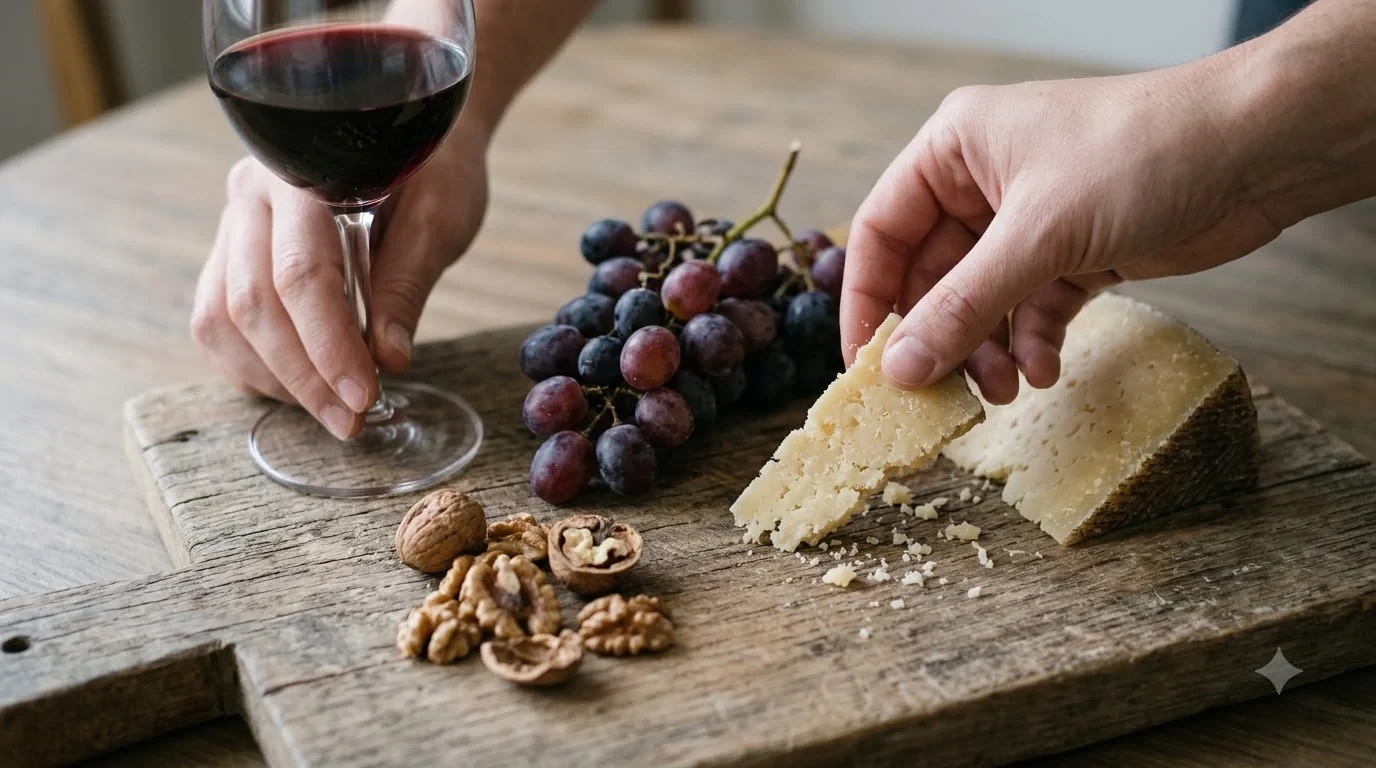
Cheese and fruit provide less formal options. Brie and Camembert have the creamy texture to soften the wine’s acidity, and walnuts add a pleasant savory contrast. Figs, strawberries, and dishes with a little berry sweetness can work with fruit-forward examples. For dessert, choose a Chambourcin that is at least as sweet as the food; a dry red can taste sharper and more bitter beside a sweet cobbler or chocolate cake. The dedicated chambourcin food pairing guide can help match a particular bottle to a menu. As with any red wine, adjust the pairing to the preparation rather than only the main ingredient. A grilled burger with mushrooms and a savory sauce is a better partner for a dry red than a very sweet glaze. Chili heat can make alcohol and tannin seem stronger, so choose a lower-alcohol, fruit-forward bottling for spicy barbecue or chili and avoid serving a powerful, hot-finish red with very hot peppers. Oily fish is generally a difficult match for tannic reds; if the meal centers on salmon or another oily fish, a bright rosé may be more flexible than a structured red.
How to Serve, Store, and Choose a Bottle
Serve a fresh, medium-bodied Chambourcin slightly cool rather than warm. A range of 55–60°F works well for lighter red styles, while a fuller, oak-aged bottle can be served closer to 60–65°F. Chilling briefly can sharpen the fruit and keep the alcohol from seeming too prominent, especially in a warm room. Rosé is usually more refreshing at 45–50°F, and sparkling rosé belongs in the same cool serving territory as other sparkling wines, around 40–50°F.
The table below gives practical starting points by style. These are serving targets, not rigid rules: a very light red can be cooler, while a concentrated oak-aged version can benefit from a few degrees more warmth. If the wine seems muted straight from the refrigerator, give it several minutes in the glass to open rather than warming the whole bottle quickly.
| Chambourcin style | Serving temperature | Good first pairing |
|---|---|---|
| Fresh, lighter red | 55–60°F | Turkey, pork loin, grilled chicken |
| Fuller, oak-aged red | 60–65°F | Short ribs, burgers, beef stew |
| Still rosé | 45–50°F | Salads, picnic foods, grilled vegetables |
| Sparkling rosé | 40–50°F | Salty snacks, soft cheese, appetizers |
When choosing a bottle, decide first whether you want a dry table red, a refreshing rosé, or a sparkling style. Then consider oak: if you prefer bright fruit, look for a fresher style with little or no barrel influence; if you enjoy spice and a firmer finish, an oak-aged version may be a better fit. The producer’s tasting notes can help distinguish cherry-forward wines from bottles with more pepper, earth, or chocolate. A Missouri bottling is a useful starting point, but Chambourcin from the Loire Valley, the eastern United States, or Australia may express its fruit and structure differently. For storage, keep unopened bottles away from heat, sunlight, and large temperature swings; a cool space near 55°F is a useful target, and bottles with natural corks are best stored on their sides. After opening, reseal the bottle and refrigerate it to slow oxidation, even if it is red. Bring the remaining wine back toward its serving temperature before pouring.
Tip: Chill a red Chambourcin for about 15–20 minutes before serving if the room is warm. Pour a small taste first; if the wine feels too cool and its aromas seem closed, let the glass sit for a few minutes.
Frequently Asked Questions
What does the name Chambourcin mean?
The name is a reference to Bougé-Chambalud, the French commune associated with breeder Joannes Seyve. It is a place-based name rather than a description of the grape’s flavor, color, or sweetness.
Is Chambourcin a natural or genetically modified grape?
Chambourcin is a conventionally bred interspecific hybrid, not a genetically engineered wine grape. It was developed through grape crossing, and its complex ancestry includes several Vitis species.
How many servings are in a bottle of Chambourcin?
A standard 750 ml bottle contains roughly 25.4 U.S. fluid ounces. At a 5-ounce pour, that is about five glasses, with a small amount left over depending on pour size.
How long does an opened bottle of Chambourcin keep?
Most opened still wines keep their best character for about 3–5 days in the refrigerator. Fruit aromas usually fade first, so taste a small pour before serving the remaining wine to guests.
What kind of glass should you use for Chambourcin?
A regular red-wine glass with a moderately wide bowl is suitable for still Chambourcin because it gives the wine room to release its aromas. For sparkling rosé, use a sparkling-wine flute or tulip glass to help preserve the bubbles.
Chambourcin is worth exploring for its deep color, lively acidity, and approachable tannins, especially if you enjoy red wines with cherry, berry, and spice notes. Try a dry red alongside grilled meat or tomato-based pasta, then compare it with a rosé to see how much the style can change the grape’s character.
More in Wine Types & Grapes
 What Does Mourvèdre Taste Like? Flavor Profile, Regions, and PairingsUpdated Nov 20, 2026
 What Does Marsanne Taste Like? Flavors, Styles, and Food PairingsUpdated Nov 20, 2026
 What Does Malvasia Taste Like? Styles, Flavors, and Food PairingsUpdated Nov 20, 2026
 What Does Grenache Blanc Taste Like? Flavor Profile, Styles, and PairingsUpdated Nov 20, 2026
 What Does Garnacha Taste Like? Key Flavors, Styles, and Pairing TipsUpdated Nov 20, 2026
 What Does Fruit Wine Taste Like? A Complete Flavor and Style BreakdownUpdated Nov 20, 2026