


We may earn a commission when you buy through links on this page, at no extra cost to you. Learn more.
Welschriesling wine is a crisp, refreshing white wine made from an Austrian grape variety known for its lively acidity, green apple flavors, citrus notes, and versatility at the table. Despite its name, it is not related to traditional Rhine Riesling. It grows throughout Central and Southeastern Europe, where it appears under names such as Graševina in Croatia and Olaszrizling in Hungary. Most examples are dry and light-bodied, although the grape can also produce sparkling wines and richly concentrated sweet wines.
Welschriesling is an excellent choice for drinkers who enjoy fresh, uncomplicated white wines with plenty of acidity. Its range extends from easygoing summer bottles in Austria’s Styria region to more substantial late-harvest wines from Burgenland. Understanding its regional names, flavor profile, and different production styles makes it easier to find a bottle that suits your preferences and your meal.
What Is Welschriesling Wine?
Welschriesling is a white wine made from the Welschriesling grape, a traditional Central European variety with an uncertain geographical origin. It is particularly important in Austria, Croatia, Hungary, and Slovenia, where local winemakers use it for dry still wines, sparkling wines, and sweet late-harvest bottlings.

The grape’s name can be misleading. Welschriesling is genetically distinct from Rhine Riesling, the famous German white grape associated with the Mosel and Rheingau. Sharing part of a name does not mean the varieties have the same ancestry, flavor profile, or winemaking traditions.
The Austrian government recognizes Welschriesling as a quality wine grape and identifies it as the country’s second most widely planted white variety after Grüner Veltliner. Its long history in Austria stretches back at least to the 19th century, when it occupied a substantial proportion of the vineyards in Styria. The Austrian government’s overview of Welschriesling provides additional information about the grape’s regional history, growing conditions, and wine styles.
The grape has several regional names, reflecting its long history across the former Austro-Hungarian territories. These names are useful when shopping for European wines because a bottle may not display the word Welschriesling even when it contains the same variety.
- Graševina: The Croatian name, particularly common in Slavonia and Baranja.
- Olaszrizling: The Hungarian name, used for a widely cultivated white grape.
- Laški Rizling: The Slovenian name.
- Riesling Italico: A name encountered in Italy and some international wine markets.
- Ryzlink Vlašský: The name used in Czechia and Slovakia.
These names all refer to the same grape variety, not different types of Riesling. If you want to understand the grape itself rather than the finished wine, our article on the Welschriesling grape provides additional background on its characteristics and cultivation.
The variety’s precise origin remains unresolved. Historical theories have suggested connections with Champagne in France or northern Italy, but neither proposed birthplace has been conclusively established. Its modern identity is much more closely associated with Central European wine culture.
Where Welschriesling Grows: Austria, Croatia, and Beyond
Austria is the best-known reference point for Welschriesling, particularly in Burgenland, Styria, and the Weinviertel. Croatia is another important producer, where the grape is known as Graševina and plays a major role in the country’s inland wine regions.
In Austria, three growing areas illustrate how location influences the finished wine.
Burgenland
Burgenland, in eastern Austria, is particularly interesting because it produces both fresh dry Welschriesling and concentrated sweet wines. The area around Lake Neusiedl is associated with late-harvest wines, including prestigious dessert styles made from grapes affected by noble rot.
The lake’s influence helps create conditions suitable for the development of Botrytis cinerea, commonly called noble rot, in favorable seasons. This beneficial fungus concentrates sugars and flavors in the grapes, allowing winemakers to produce richly flavored wines balanced by the variety’s natural acidity.
According to Austrian government figures for 2020, Burgenland had approximately 1,000 hectares of Welschriesling vineyards. The region is particularly important for drinkers interested in exploring the grape beyond its everyday dry style.
Styria
Styria, or Steiermark, lies in southeastern Austria and has a long tradition of Welschriesling production. The variety is a familiar choice in local Buschenschank wine taverns, where fresh regional wines accompany traditional food.
Styrian examples are generally associated with freshness, moderate body, and straightforward fruit expression. They often feature green apple, citrus, and herbal notes rather than pronounced oak or heavy winemaking influences.
Government figures for 2020 record approximately 780 hectares of Welschriesling in Styria. Although Burgenland and Lower Austria have larger total plantings, the grape accounts for a particularly notable share of Styria’s vineyard area.
Weinviertel and Lower Austria
The Weinviertel, in northeastern Lower Austria, is another important home for the variety. Its fresh, acidic wines are particularly useful for sparkling wine production, making this region an interesting starting point for anyone exploring Austrian Sekt.
Lower Austria had approximately 1,140 hectares of Welschriesling according to the same government figures. This makes it the largest of the three principal Austrian growing areas by planted area in those statistics.
Outside Austria, Croatia deserves particular attention. Graševina is the country’s most widely planted white grape variety, with important production centered on Slavonia and Baranja. Kutjevo, Đakovo, Daruvar, and Ilok are among the recognized wine-producing centers.
Kutjevo has also hosted Graševina Days, a festival dedicated to promoting the variety, since 2001. Croatian examples can range from light, fresh everyday wines to fuller bottlings and concentrated sweet wines.
Hungary, Slovenia, Czechia, and Slovakia also have established traditions of growing the grape. These regional differences explain why two bottles made from the same variety can offer noticeably different experiences.
For a broader comparison of international varieties, explore our guide to wine by type.
What Does Welschriesling Taste Like?
Dry Welschriesling generally tastes fresh, light, and crisp, with green apple, lemon, citrus peel, and delicate floral or herbal notes. Its most recognizable characteristic is lively acidity, which gives the wine an energetic finish and makes it particularly suitable for food pairing.
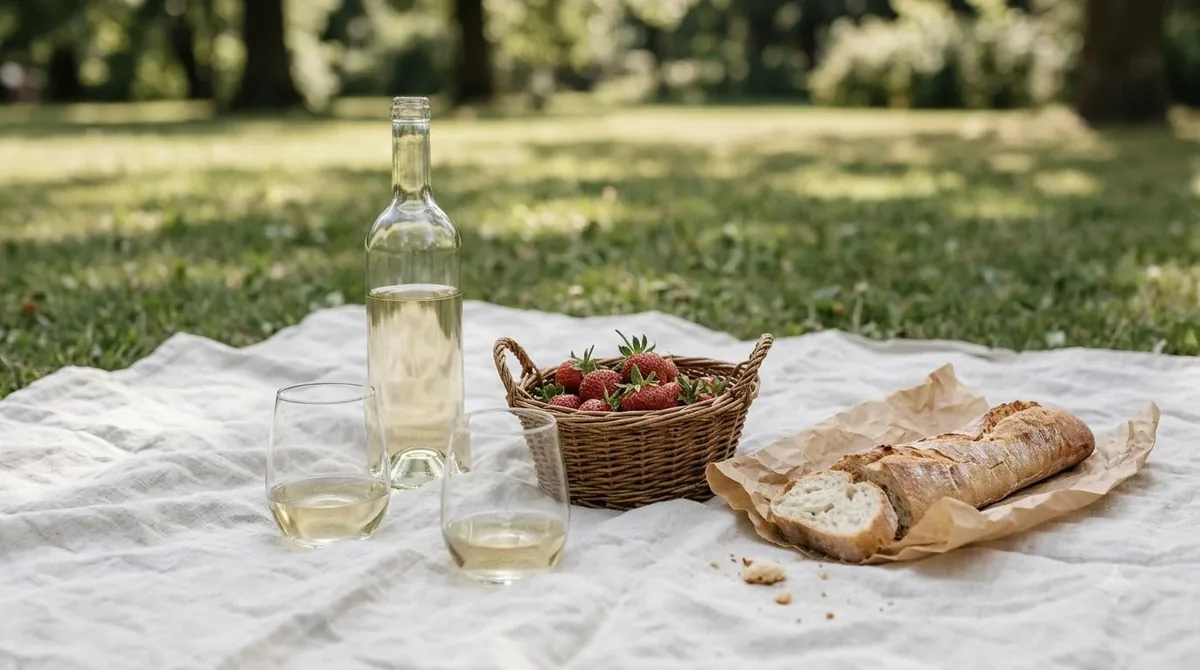
In the glass, young examples usually display a pale straw-yellow color with subtle green reflections. More concentrated or mature examples can develop deeper golden or yellow-green tones.
The Austrian government describes the grape’s typical aromatic profile as including gooseberry, green apple, peach, citrus, and white currant. Individual bottles vary depending on the growing region, harvest conditions, ripeness, and winemaking decisions.
Here are the main characteristics to expect from a typical dry example:
- Fruit: Green apple, lemon, gooseberry, white currant, and sometimes peach.
- Citrus: Lemon zest and fresh citrus flavors contribute to its bright character.
- Floral notes: Subtle hay flowers and delicate white-flower aromas can appear.
- Acidity: High acidity gives the wine its refreshing character and clean finish.
- Body: Usually light to medium-bodied, although richer examples are possible.
- Finish: Fresh, slightly herbal, and sometimes pleasantly tart.
Welschriesling is not usually an intensely aromatic wine. Rather than overwhelming the senses with powerful tropical fruit or perfume, a typical dry bottling emphasizes freshness, subtle fruit, and a balanced acidic structure.
How Does It Compare With Other White Wines?
Welschriesling is a useful alternative to several familiar white varieties, particularly for people who enjoy crisp wines but want something less widely known.
Compared with Sauvignon Blanc, it is often less aggressively aromatic and may show more restrained herbal character. Compared with Chardonnay, it generally emphasizes acidity and freshness rather than creamy texture or pronounced oak influences.
It also differs from Grüner Veltliner, another important Austrian white grape. Grüner Veltliner can show distinctive white pepper, citrus, and savory flavors, while Welschriesling tends to offer a simpler green-fruit and citrus profile in its everyday dry form.
Riesling is the most important comparison to understand because of the shared name. Traditional Rhine Riesling can offer intense floral, stone-fruit, and mineral characteristics, often with considerable aging potential. Welschriesling typically has a more restrained aromatic profile and is commonly enjoyed young.
Neither grape is automatically superior. They simply offer different drinking experiences, and both can produce impressive wines in the right location and style.
Dry, Sparkling, and Sweet Styles of Welschriesling
Welschriesling is more versatile than its reputation as a simple summer white might suggest. Most bottles are dry and refreshing, but the variety also works well in sparkling wine production and can produce complex sweet wines in favorable growing conditions.
The following table summarizes the principal styles and their typical characteristics.
| Wine style | Typical character | Common origin | Best use |
|---|---|---|---|
| Dry still | Green apple, citrus, crisp acidity | Styria and Weinviertel | Everyday drinking and seafood |
| Fuller dry | Riper fruit, greater texture, more concentration | Selected Austrian and Croatian sites | Roast poultry and richer fish |
| Sparkling | Fresh acidity, lively bubbles, citrus | Weinviertel and Austrian Sekt production | Aperitifs and celebrations |
| Late harvest | Ripe fruit, honeyed flavors, concentrated sweetness | Burgenland | Fruit desserts and cheese |
| Noble sweet | Dried fruit, honey, concentrated sweetness, balancing acidity | Burgenland | Desserts and blue cheese |
Dry Still Wines
Dry Welschriesling is the most familiar expression of the variety. It is usually fermented until most of the grape sugar has been converted into alcohol, resulting in a crisp wine with refreshing acidity and moderate alcohol.
Stainless-steel fermentation is common because it preserves the grape’s fresh fruit aromas. Some producers also use larger wooden vessels, lees contact, or longer maturation to create additional texture and complexity.
These wines are particularly appealing during warmer weather and work well as aperitifs. Their straightforward fruit profile also makes them useful companions for salads, seafood, and lighter meals.
Sparkling Welschriesling
The variety’s natural acidity makes it a suitable base for sparkling wine. In Austria, dry Welschriesling from the Weinviertel has traditionally been used in the production of Sekt.
Its freshness helps maintain balance after the wine develops carbonation. Depending on the producer and production method, the finished sparkling wine may emphasize lemon, green apple, and lively bubbles.
Do not assume every sparkling bottle containing Welschriesling is made using the same method. Production choices influence texture, aroma, and complexity, just as they do with other sparkling wines.
Sweet and Late-Harvest Wines
Burgenland is particularly important for sweet Welschriesling. In suitable conditions, grapes can develop noble rot, concentrating their natural sugars and producing wines with honey, dried fruit, and ripe fruit characteristics.
Prädikatswein is an important Austrian classification category for wines made from grapes harvested at specified levels of ripeness. Examples made from Welschriesling can include Beerenauslese and Trockenbeerenauslese.
These wines are very different from the crisp dry bottles associated with Styria. They have greater concentration, more pronounced sweetness, and the acidity needed to keep their flavors balanced.
Tip: When choosing Welschriesling, start with the desired sweetness level rather than assuming every bottle tastes the same. Look for a dry Austrian or Croatian example for refreshing everyday drinking, an Austrian Sekt for sparkling wine, or a Burgenland Prädikatswein for a concentrated dessert-style experience.
How to Serve and Store Welschriesling
Serve dry Welschriesling well chilled, generally around 45–50°F, to preserve its refreshing acidity and delicate fruit aromas. Fuller versions benefit from slightly warmer temperatures, while concentrated sweet examples can be served around 43–50°F.
Temperature makes a noticeable difference to the drinking experience. Excessive warmth can make a light wine seem less refreshing, while extreme cold can mute its aromas and make its acidity seem more pronounced.
Recommended Serving Temperatures
- Light, dry Welschriesling: 45–50°F.
- Fuller dry Welschriesling: 50–55°F.
- Sweet Welschriesling: 43–50°F.
- Sparkling Welschriesling: 40–50°F.
A medium-sized white wine glass is suitable for most still examples. It provides enough room for the wine’s green apple and citrus aromas to develop without requiring an oversized glass.
For sparkling versions, use a sparkling wine glass or a white wine glass that allows some aromatic development. A narrow flute preserves a more concentrated stream of bubbles, while a wider glass makes the wine’s aromas easier to appreciate.
Opening and Pouring
For a standard 750 ml bottle, plan on approximately five servings when pouring 5 ounces per glass. This is a practical serving size for a dinner or tasting, although smaller pours can be useful when comparing several wines.
Young dry Welschriesling generally does not require decanting. Open the bottle shortly before serving, pour it into chilled glasses, and allow the aromas to develop naturally.
If the bottle is too warm, place it in an ice bucket or refrigerator until it reaches the desired temperature. Avoid leaving it in the freezer for an extended period.
Storage and Open-Bottle Freshness
Store unopened bottles in a cool, dark location with a relatively stable temperature. Around 55°F is a useful target for long-term wine storage. Bottles sealed with cork should generally be stored horizontally to keep the cork from drying out.
Most straightforward dry Welschriesling is best enjoyed while young, when its fruit and freshness are at their most expressive. More concentrated, carefully made examples can have greater development potential, particularly some of the sweet Burgenland wines.
After opening, reseal still Welschriesling and refrigerate it. Most still wines retain their best qualities for approximately three to five days under suitable storage conditions. Sparkling versions are generally best consumed within one to three days, using an appropriate sparkling wine stopper.
Best Food Pairings for Welschriesling
Welschriesling pairs particularly well with seafood, freshwater fish, salads, poultry, mild cheeses, and lightly seasoned vegetable dishes. Its acidity cuts through rich textures, while its moderate body allows it to accompany food without overwhelming delicate ingredients.
Food pairing is especially straightforward with dry Welschriesling because its fresh citrus character and lively acidity complement many familiar dishes.
Seafood and Freshwater Fish
Fish is one of the most natural partners for this grape. Croatian recommendations frequently include trout, carp, and catfish, while Austrian producers also suggest seafood and richer fish dishes.
Try serving a chilled dry Welschriesling with grilled trout, pan-fried white fish, shrimp, or seafood pasta. Lemon-based sauces work particularly well because their acidity complements the wine’s citrus character.
For richer preparations, such as fish with butter sauce, choose a fuller example rather than the lightest available bottle. The wine’s acidity can refresh the palate between bites.
Shellfish and Mediterranean Dishes
Clams, mussels, and other shellfish are excellent options. Croatian-style clam stew prepared alla buzara is a particularly appropriate regional pairing, especially when garlic, herbs, and olive oil are used in the preparation.
Other suitable dishes include grilled calamari, shrimp risotto, seafood salads, and simply prepared white fish with olive oil. Avoid overly heavy sauces that completely overwhelm the wine’s delicate fruit.
Cheese and Vegetarian Food
Mild and soft cheeses are another good match. Brie, fresh goat cheese, and mild semi-soft cheeses provide enough richness to balance the wine’s lively acidity without dominating its flavor.
For a vegetarian meal, consider asparagus, green salads, vegetable risotto, and grilled zucchini. A salad with fresh herbs, citrus dressing, and a mild cheese is particularly suitable for a lighter Styrian example.
Poultry and Richer Meals
Roast chicken, turkey breast, and lightly seasoned poultry can work well with fuller dry Welschriesling. The wine’s acidity helps refresh the palate, especially when the meal includes roasted vegetables or a creamy side dish.
For traditional Austrian meals, consider mild preparations of veal, fondue, or raclette. These dishes have enough richness to complement the wine’s acidity while keeping the overall pairing balanced.
Pairing Sweet Welschriesling
Sweet Welschriesling requires a different approach. The wine should generally be at least as sweet as the dessert served alongside it; otherwise, the wine can taste sour or thin.
Try a concentrated Burgenland example with fruit tarts, apricot desserts, honey-based pastries, or blue cheese. The acidity helps balance sweetness, while the concentrated fruit flavors complement richer desserts.
For spicy food, choose a less alcoholic, appropriately sweet style rather than a powerful, high-alcohol wine. Alcohol and tannin can amplify chili heat, so keeping both moderate helps maintain balance.
Here is a practical summary of pairing options:
- Grilled trout: Dry Welschriesling with citrus and green apple notes.
- Clam stew: Fresh, acidic Austrian or Croatian Welschriesling.
- Brie: Light to medium-bodied dry wine.
- Asparagus risotto: A crisp, unoaked example.
- Roast chicken: A fuller dry bottling.
- Apricot tart: Sweet late-harvest Welschriesling.
- Blue cheese: A concentrated sweet example.
Frequently Asked Questions
Is Welschriesling the same as Riesling?
No. Welschriesling and Rhine Riesling are separate grape varieties, despite their similar names. Austrian historical records distinguish the two, and the names reflect different grape identities rather than a shared family relationship. The word Welsch has historically been used in German-speaking regions to describe something foreign or originating outside the local German-speaking area.
What does Graševina mean on a Croatian wine label?
Graševina is the Croatian name for Welschriesling. It is especially important in Slavonia and Baranja, where producers make a wide range of wines from the variety. The name is particularly useful to recognize when exploring Croatian restaurants, wine shops, and regional wine lists.
Is Welschriesling suitable for making wine spritzers?
Yes. Dry Welschriesling can be used to make a traditional white wine spritzer by combining wine with sparkling water. This style is particularly familiar in Austria, where refreshing wine-and-soda combinations are part of local drinking culture. Serve the mixture well chilled in a large glass.
What alcohol percentage does Welschriesling usually have?
Alcohol levels vary according to ripeness and winemaking style. One producer example from Gols in Burgenland specifies 11.2% alcohol by volume, illustrating the relatively moderate strength possible in a light, dry bottling. Late-harvest and concentrated versions can have different alcohol levels depending on fermentation and residual sugar.
Can Welschriesling be used in wine blends?
Yes. Its acidity makes it useful as a blending component when a finished wine needs additional freshness. Austrian wine production also uses the variety as a base for sparkling wines, demonstrating that its value extends beyond single-variety still bottlings.
Welschriesling deserves attention from anyone who enjoys fresh, high-acid white wines but wants to explore beyond familiar international varieties. From crisp Austrian bottles and Croatian Graševina to sparkling Sekt and concentrated Burgenland dessert wines, the grape offers several distinct drinking experiences. Start with a dry example served well chilled, pair it with seafood or mild cheese, and explore the regional styles to discover which expression you enjoy most.
More in Wine Types & Grapes
 What Does Mourvèdre Taste Like? Flavor Profile, Regions, and PairingsUpdated Nov 20, 2026
 What Does Marsanne Taste Like? Flavors, Styles, and Food PairingsUpdated Nov 20, 2026
 What Does Malvasia Taste Like? Styles, Flavors, and Food PairingsUpdated Nov 20, 2026
 What Does Grenache Blanc Taste Like? Flavor Profile, Styles, and PairingsUpdated Nov 20, 2026
 What Does Garnacha Taste Like? Key Flavors, Styles, and Pairing TipsUpdated Nov 20, 2026
 What Does Fruit Wine Taste Like? A Complete Flavor and Style BreakdownUpdated Nov 20, 2026