

We may earn a commission when you buy through links on this page, at no extra cost to you. Learn more.
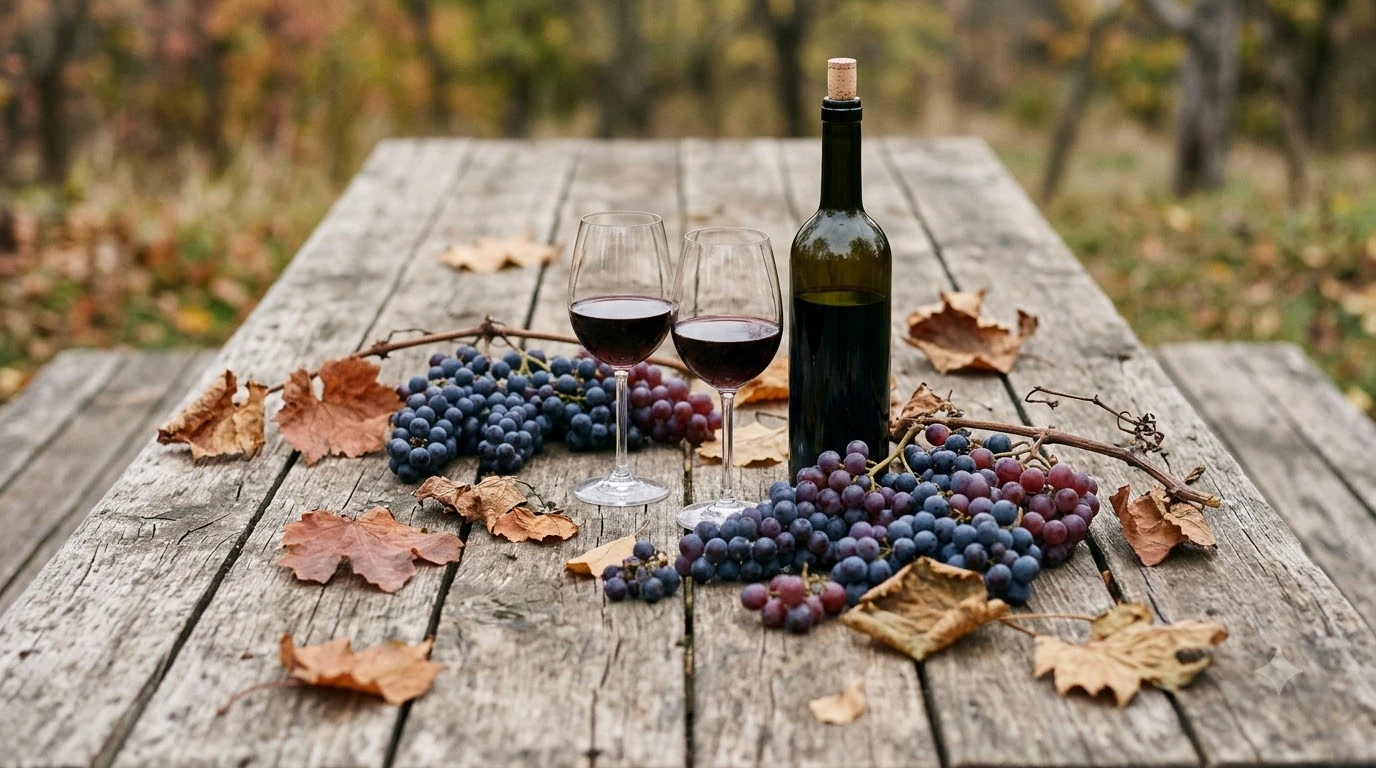
The leon millot grape is a dark-skinned French hybrid wine grape that ripens early and makes deeply colored, usually dry red wines with berry, pepper, and earthy notes. Bred in Alsace in 1911, it is valued in cool-climate vineyards because its fruit can mature before the end of a short growing season. The resulting wine is generally lighter in body and softer in tannin than many familiar full-bodied reds, although acidity, color, and weight vary with the site and winemaking choices.
Léon Millot is not a household name like Cabernet Sauvignon or Pinot Noir, but it has a meaningful place in northern vineyards from France to Canada and the northern United States. Learning its family history, growing habits, and flavor profile makes it easier to recognize what the grape contributes to a bottle—and why a grower may choose it over a later-ripening variety.
What Is Leon Millot? French Origins and Hybrid Parentage
Léon Millot is an interspecific hybrid developed in France, rather than a conventional Vitis vinifera grape. Eugène Kuhlmann bred it at the Institut Oberlin in Colmar, Alsace, in 1911 by crossing a 101-14 MGt rootstock seedling with Goldriesling, a white wine grape of Vitis vinifera ancestry. The first parent contributed genetic material associated with North American vine species, while Goldriesling contributed European wine-grape ancestry. The combination helps explain why the variety has a different balance of cold-climate adaptation and wine character from many classic European grapes.
The name refers to Léon Millot, a French viticulture figure associated with the Société Vosgienne de Viticulture. In early records, the selection circulated as 194-2 Kuhlmann; that name remains an officially recognized synonym for propagation material in France. It also appears under names such as Millot and Leon Millot Rouge. Those names refer to the same grape selection, not separate wine styles. The French Plantgrape varietal record classifies it as a wine grape and records its parentage and regulatory status.
Léon Millot belongs to the same breeding family as Maréchal Foch, another Kuhlmann-era hybrid made from the same broad cross. They are related selections, not interchangeable names. Nova Scotia grape references describe Millot as more vigorous and productive than Maréchal Foch, with smaller bunches and berries and ripening roughly a week earlier. Those differences matter in the vineyard and can also affect the timing and concentration of the finished wine.
Where the Grape Grows and Why Climate Matters
Léon Millot is most useful in regions where winter cold and a short summer make late-ripening grapes difficult to mature. Its established cool-climate homes include Alsace and the Loire in France, Nova Scotia and Québec in Canada, and parts of the Upper Midwest and Northeast in the United States; its early harvest window is a particular advantage where autumn rain can arrive before slow-ripening fruit is ready.
In France, the official vineyard-area series records a long decline in plantings, from 271 hectares in 1958 to 64 hectares in 2018. The variety remains more relevant in some northern wine regions than those national totals suggest. In Canada, Nova Scotia wine references include Léon Millot among the hybrid grapes that underpin the province’s cool-climate industry. The grape is also grown in Québec and other Canadian provinces, where growers need varieties able to finish ripening in a shorter season.
Cold tolerance should not be mistaken for immunity to every weather problem. The variety is winter-hardy, but published minimum-temperature estimates differ by source and site; a vineyard’s exposure, soil, vine age, crop load, and winter conditions all affect survival. More important for many growers, Léon Millot breaks bud early. A warm spell followed by a late spring freeze can damage emerging shoots and reduce the crop even when the dormant vine survives winter. A slope with good air drainage is generally safer than a frost pocket at the bottom of a hill.
Its early harvest can also be useful in humid places. Fruit that reaches maturity before the wettest part of autumn may face less pressure from late-season rain and bunch deterioration. That is not a guarantee of disease-free fruit: canopy management and protection against powdery mildew remain important. The variety is therefore a climate-fit choice, not a universal solution for cold or damp vineyards.
Vine Growth, Ripening, and Vineyard Challenges
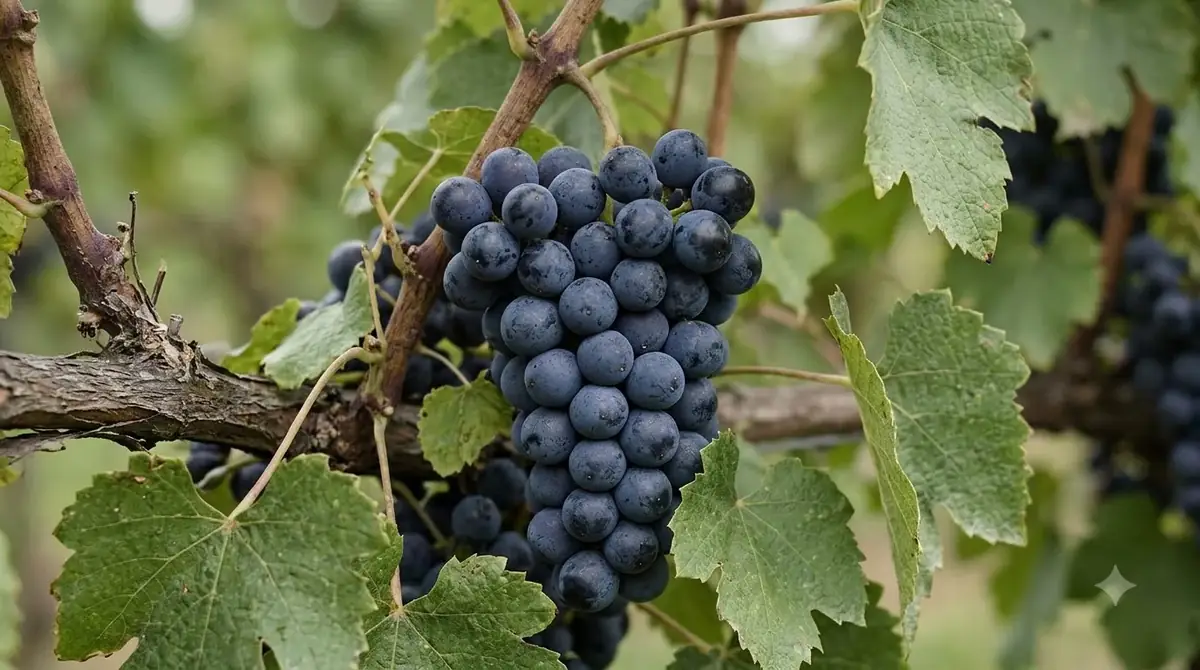
Léon Millot is a vigorous vine with a spreading, often horizontal growth habit, and it ripens very early—about a week and a half before Chasselas in the French reference observations. Its small, open clusters and small, round blue-black berries are useful identifying features, while its early budbreak and powdery-mildew susceptibility call for deliberate site selection and canopy work.
| Vineyard detail | Typical figure or description | Why it matters |
|---|---|---|
| Breeding year | 1911 | Places the variety in Kuhlmann’s early hybrid program |
| Cluster length | About 7–10 cm | Small, winged clusters are commonly described as loose |
| Cluster weight | About 90 g | Small bunches can make hand harvesting slower |
| Berry weight | About 2.5–3.5 g | Small, round berries carry dark skins |
| Budbreak | About 1 day before Chasselas | Early shoots can be exposed to spring frost |
| Ripening | About 1.5 weeks before Chasselas | Helps fruit mature in short growing seasons |
| French vineyard area | 271 ha in 1958; 64 ha in 2018 | Shows the long-term contraction of plantings |
Because the vine grows strongly and carries shoots horizontally or semi-procumbently, it generally benefits from long-cane pruning, such as a Guyot system. Growers need to manage excess shoots and leaf growth so fruit zones receive enough air and light. The small clusters may be loose rather than tightly packed, which can help in humid autumn weather, but their size also means more individual bunches must be picked to fill a harvest bin. Yield is described as moderate to high, and can exceed Maréchal Foch under suitable conditions.
Disease resistance is a point that deserves careful wording. Plantgrape describes good resistance to downy mildew but slight susceptibility to powdery mildew, and still recommends a minimum level of fungicide protection in high-pressure seasons. North American extension reports have sometimes rated powdery-mildew vulnerability more severely. The practical lesson is consistent even when ratings differ: do not treat Léon Millot as a no-spray vine. Regular scouting, an open canopy, and a locally appropriate disease program are important.
Leon Millot Wine: Flavor, Structure, and Color
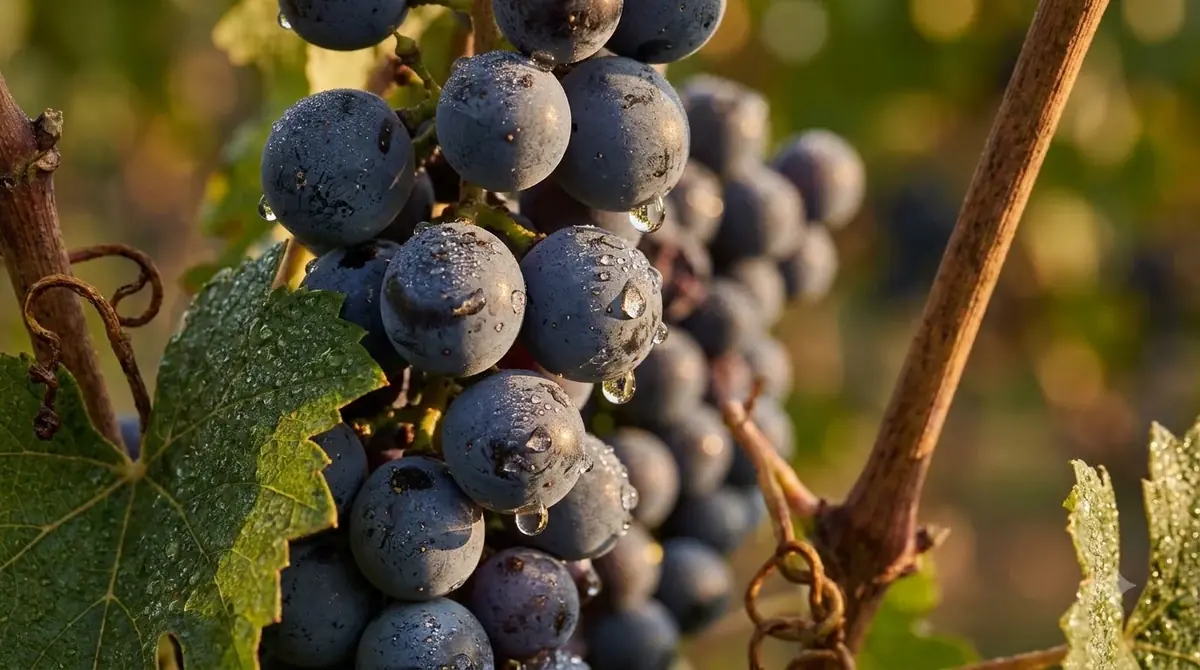
Wines made from Léon Millot are usually deep purple-red in color, light to medium in body, low to medium in tannin, and moderate to high in acidity. Blackberry, black cherry, and blueberry are common fruit descriptors, often joined by plum, pepper, chocolate, and earthy or woodsy notes; the balance shifts with ripeness, crop level, extraction, and the choices made in the cellar.
That profile makes the grape different from a deeply tannic red such as Cabernet Sauvignon. Léon Millot’s tannins are usually softer, so the wine is less dependent on rich protein-heavy food to feel balanced. Its acidity can make the fruit taste lively and keep a medium-bodied red from seeming heavy. Some examples have a rustic, forest-floor or barnyard edge, but the variety is not generally associated with the pronounced foxy aroma linked with certain Vitis labrusca-derived wines.
Color is one of its most useful traits. The skins contribute strong pigment, and historical accounts describe small portions of Léon Millot being added to pale red blends to deepen color and reinforce fruit. In cooler conditions, a varietal wine may feel bright, tart, and fairly light; a warmer site or a more extractive cellar approach can create a rounder wine with more weight. A bottle that tastes notably different from another Léon Millot is not necessarily an outlier—the grape responds clearly to growing conditions and winemaking.
Acidity deserves attention because it helps define the wine’s shape. Technical descriptions report moderate-to-high acidity, often with malic acid prominent in the must. Malolactic fermentation is commonly used to soften that sharper edge and build a smoother palate. Producers may also manage extraction and tannin to give the wine enough structure without losing the fresh berry character that makes it appealing.
Winemaking, Blending, and Serving
Winemaking choices have a substantial effect on Léon Millot: short skin contact can produce a fresh, vivid cherry-red style, while longer maceration and malolactic fermentation can build a darker, more structured red that can take some oak. The grape is bottled on its own in some places and used in blends elsewhere, so the name may describe either a varietal wine or one part of a regional cuvée.
For a fresher style, a winemaker may limit extraction to preserve red and dark berry notes and keep the palate nimble. Longer contact with the skins draws out more color and phenolic material, and malolactic fermentation can reduce the impression of sharp malic acidity. Oak is an option rather than a requirement: measured barrel aging can add spice and texture, but strong new oak can cover the variety’s more delicate fruit and earthy notes. A high-pH wine may also lose some of its vivid purple tone over time, so cellar decisions affect appearance as well as flavor.
Blending is a practical use for a grape with strong color and early-ripening fruit. A portion of Léon Millot can bring darker pigment, berry character, and freshness to a lighter red, while a softer partner can round out its acidity. It appears in blends with other cold-climate grapes in Canada, and some producers make rosé as well as still red wine. For more on the finished styles, see this overview of leon millot wine.
Serve a typical medium-bodied Léon Millot slightly cool, around 55–60 F, rather than at a warm room temperature. A modest chill keeps the fruit lively and helps the acidity feel refreshing. If the wine is particularly full or has substantial oak, it can be served closer to the upper end of that range. Use a standard 5-ounce pour; a 750-milliliter bottle yields about five glasses.
Tip: Place the bottle in the refrigerator for about 20 minutes before serving, then let it warm slightly in the glass. If it tastes too sharp straight from the fridge, give it a few minutes rather than serving it warm from the start.
Food Pairings and How to Choose a Bottle
Léon Millot’s combination of berry fruit, moderate-to-high acidity, and low-to-medium tannin makes it a flexible partner for everyday savory food. Pork, roast turkey, steak, tomato-based dishes, and foods with herbs or pepper are especially natural matches; the wine has enough freshness for tomato sauce without the firm grip of a heavily tannic red.
For pork, try roast loin, grilled chops, or sausages with fennel and herbs. The grape’s dark-fruit character complements browned meat, while acidity refreshes the palate between bites. Roast turkey works well with mushroom stuffing, pan gravy, or roasted root vegetables. For steak, choose a more concentrated, oak-aged example and serve it with grilled onions or a pepper sauce; a lighter version is better with burgers, meatloaf, or roast chicken thighs.
Tomato-based meals are a particularly sound choice because the wine’s acidity can stand up to the ingredient’s sharpness. Think of tomato braises, baked pasta, pizza with sausage, or a lentil-and-tomato stew. Salt and fat can soften tannin, which suits this grape’s typically modest tannin level, but very spicy dishes may make the alcohol feel hotter. Oily fish is usually a less convincing match for red wine, especially when the preparation is delicate; grilled salmon with herbs may work with a light, low-tannin example, but strongly tannic reds are a poor choice for oily fish.
When selecting a bottle, look for a description that gives a clue to its style: fresh berry, medium-bodied, or unoaked suggests a lively red, while words such as structured, barrel-aged, or reserve point toward a richer interpretation. Since many examples come from smaller cool-climate regions, the grape may appear as a blend rather than as the main label name. A regional wine shop or winery tasting room can often explain whether the bottle is varietal, blended, or made as rosé. To compare its place among other grapes and styles, browse Wine by Type; for a useful contrast in color and grape character, the Airén grape is a white wine variety rather than a dark-skinned red hybrid.
Frequently Asked Questions
These quick answers cover details that can appear in vineyard records and wine labels, including the synonym 194-2 Kuhlmann, the grape’s American trade names, and its official listings in Denmark and Sweden.
Does Léon Millot have a certified clone?
No certified clone is listed for the variety in the French Plantgrape record. That means growers cannot assume that planting material comes from a single officially certified selection, and vine performance can vary with the source of the material.
What other names has Léon Millot used in the United States?
Two American trade names recorded for the grape are Foster’s Leon and Wagner’s Leon. The names reflect its history in nursery and grower circulation rather than separate varieties.
Is Léon Millot officially listed outside France?
Yes. Plantgrape records it in the grapevine catalogues of Denmark, the Netherlands, and Sweden as well as France. Those listings matter for the legal propagation and naming of planting material within those countries.
Can Léon Millot be used in rosé wine?
Yes. Nova Scotia’s winery-variety guide identifies Petite Rivière’s Lulu Rosé as a blend of Léon Millot and Cayuga White. That example shows that the grape is not limited to dark red bottlings.
Is Léon Millot approved as a varietal name on United States wine labels?
PIWI Wines reports that the U.S. Alcohol and Tobacco Tax and Trade Bureau approves Léon Millot as a varietal name. Whether a producer uses the grape name prominently still depends on how the wine is made and marketed.
Léon Millot is a distinctive choice for drinkers interested in cool-climate reds: early-ripening fruit, deep color, lively acidity, and softer tannins set it apart from many familiar international varieties. A good bottle offers a clear look at how hybrid grapes can suit northern vineyards while still making characterful table wine.
More in Wine Types & Grapes
 What Does Mourvèdre Taste Like? Flavor Profile, Regions, and PairingsUpdated Nov 20, 2026
 What Does Marsanne Taste Like? Flavors, Styles, and Food PairingsUpdated Nov 20, 2026
 What Does Malvasia Taste Like? Styles, Flavors, and Food PairingsUpdated Nov 20, 2026
 What Does Grenache Blanc Taste Like? Flavor Profile, Styles, and PairingsUpdated Nov 20, 2026
 What Does Garnacha Taste Like? Key Flavors, Styles, and Pairing TipsUpdated Nov 20, 2026
 What Does Fruit Wine Taste Like? A Complete Flavor and Style BreakdownUpdated Nov 20, 2026