

We may earn a commission when you buy through links on this page, at no extra cost to you. Learn more.
The saint julien wine region is a compact Left Bank Bordeaux appellation known for Cabernet Sauvignon-led red wines that balance structure, dark fruit, and polished tannins. It sits in the Médoc between Pauillac and Margaux, with vineyards shaped by gravel ridges near the Gironde estuary. Its 11 estates in the 1855 Classification include five Second Growths, two Third Growths, and four Fourth Growths, giving the small appellation an unusually concentrated lineup of historic properties.
Saint-Julien is a useful name to know if you enjoy classic Bordeaux but want a clearer sense of what separates one Médoc commune from another. Its wines are generally more structured than many Margaux reds and, on average, less muscular than the most powerful Pauillacs, although individual estates and vintages differ. Understanding the geography, grape blend, classification, and serving style makes it easier to choose a bottle for dinner or a cellar.
Where Saint-Julien Fits on Bordeaux’s Left Bank
Saint-Julien occupies a narrow stretch of the central Médoc on Bordeaux’s Left Bank, between Pauillac to the north and Margaux to the south. The planted area is about 910 hectares, and Decanter describes the appellation as roughly 5.5 kilometers from north to south and 3.5 kilometers from east to west.
| Measure | Saint-Julien figure | Context |
|---|---|---|
| Planted area | About 910 hectares | One of the Médoc’s smaller communal appellations |
| Independent winegrowers | 19 | Listed by Bordeaux.com |
| 1855 Classified Growths | 11 | Five Second, two Third, four Fourth Growths |
| Annual production | About 5.5 million bottles | Decanter estimate |
| Geographic span | 5.5 km by 3.5 km | North–south by east–west |
| Cabernet Sauvignon plantings | More than 60% | According to Bordeaux.com |
The village and much of the vineyard area belong to the commune of Saint-Julien-Beychevelle, close to the Gironde estuary. That river position is more than a point on a map: the broad waterway moderates temperatures, reducing the risk of hard winter frosts and tempering summer heat. Estates close to the estuary include Château Beychevelle, Château Ducru-Beaucaillou, and the three Léoville properties. Farther inland, Château Gruaud-Larose, Château Lagrange, and Château Talbot offer a useful contrast in position while still producing wines associated with the appellation’s classic style.
Saint-Julien is one of the major communal appellations of the Médoc, often discussed alongside Pauillac, Margaux, and Saint-Estèphe. Its southern neighbor is not a continuous boundary of vines: a broad strip of Haut-Médoc vineyards separates Saint-Julien from Margaux. For context on the wider region and other French vineyard areas, the site’s Wine Regions overview is a useful starting point.
The appellation designation is reserved for still red wine. Some Saint-Julien estates also make white wine, but those bottles do not carry the Saint-Julien red appellation. Decanter notes that Château Talbot and Château Lagrange have long been known for white wines as well as reds. A château name identifies the producer; the appellation identifies the wine’s legally defined origin and style.
Gravel Ridges, River Influence, and Drainage
Saint-Julien’s signature soil is deep gravel deposited by the Garonne, with clay, quartz, and flint appearing in vineyard profiles. The Gironde estuary moderates the growing environment, while small local streams help drain the gravel plateaux, giving Cabernet Sauvignon favorable conditions for steady ripening.
The gravel is not simply a visual feature. Large stones absorb warmth during the day and release it after sunset, which can help Cabernet Sauvignon complete ripening in a relatively cool maritime setting. Gravelly soils also shed excess water, while deeper layers of clay and other materials can contribute to water availability during drier periods. The result is a landscape of well-drained rises rather than one uniform flat surface. The Bordeaux wine authority describes the gravel mounds as a defining part of the appellation’s character in its Saint-Julien appellation profile.
Water shapes the climate as well as the ground. Saint-Julien faces the Gironde estuary, whose mass moderates temperature swings and helps protect vines from frost; the Atlantic influence contributes to the region’s oceanic conditions. The exact effect varies by plot, since vineyards closer to the river can experience slightly different conditions from those farther west. Decanter highlights the combination of river proximity, gravel plateaux, and drainage from streams known locally as jalles. These small watercourses are part of the vineyard environment, not a grape variety or a separate appellation.
Within this compact area, riverside estates such as Beychevelle, Ducru-Beaucaillou, and the Léoville properties sit on deep gravel plateaux; Gruaud-Larose, Lagrange, and Talbot lie farther west. Their wines can still be concentrated and ageworthy, but soil and site affect texture. For a nearby comparison, the Saint-Estèphe wine region offers another expression of the Left Bank’s gravel and clay soils.
Cabernet Sauvignon Leads the Blend
Cabernet Sauvignon is the leading grape in Saint-Julien, accounting for more than 60 percent of vineyard plantings according to Bordeaux.com. Merlot is the main blending partner, adding roundness and fruit to Cabernet’s structure; Cabernet Franc, Petit Verdot, and Malbec can also appear in the region’s red-wine blends.
The dominance of Cabernet Sauvignon gives Saint-Julien wines their recognizable backbone. The variety contributes firm tannins, freshness, and the potential to develop with bottle age. In a young wine, that structure can feel assertive, particularly alongside dark fruit flavors. Merlot helps fill out the middle of the palate and soften the impression of Cabernet’s grip, making the finished wine feel more complete rather than simply powerful. France’s INAO describes the appellation’s wines as blends in which Cabernet Sauvignon predominates and Merlot brings roundness and fruit; its official Saint-Julien description also identifies the appellation’s red-wine character.
Blending is not a fixed recipe. Each estate balances varieties according to its parcels and the character of the harvest. Cabernet Franc can add aromatic lift; Petit Verdot can contribute color, spice, and structure; Malbec appears less frequently. A higher share of Cabernet Sauvignon may mean firmer tannins, while more Merlot can make a wine feel rounder in its youth. These are tendencies, not guarantees: vineyard location and cellar decisions also shape the wine.
This blend profile distinguishes Saint-Julien from the Right Bank appellation of Saint-Émilion, where Merlot often takes a more central role. Saint-Julien suits drinkers who like Cabernet-led wines but want concentration balanced by finesse, rather than structure alone.
1855 Classified Growths and the Châteaux to Know
Saint-Julien has 11 estates in the 1855 Bordeaux Classification, but none is a First Growth. The group consists of five Second Growths, two Third Growths, and four Fourth Growths, a concentration that helps explain the appellation’s reputation for consistency across a relatively small area.
The five Second Growths are Château Ducru-Beaucaillou, Château Gruaud-Larose, Château Léoville Barton, Château Léoville Las Cases, and Château Léoville Poyferré. These names offer several distinct ways to understand the commune: Gruaud-Larose’s vineyard surrounds the château on a gravel plateau, Léoville Las Cases is known for powerful structure and slow development, and Léoville Barton is often described as more restrained and classic. The three Léoville estates trace their history to one property that was later divided.
The Third Growths are Château Lagrange and Château Langoa Barton. Lagrange is the appellation’s largest estate, with 125 hectares under vine according to Decanter. The four Fourth Growths are Château Beychevelle, Château Branaire-Ducru, Château Saint-Pierre, and Château Talbot. Two non-classified estates also deserve attention: Château Gloria and Château du Glana. Decanter identifies both as respected producers outside the 1855 list; Gloria is particularly unusual because its vineyard is assembled from parcels scattered around the commune, including ground formerly associated with classified properties.
The classification is a helpful map for comparing a Second Growth such as Léoville Las Cases, a Third Growth such as Lagrange, and a Fourth Growth such as Branaire-Ducru. Look for differences in tannin, fruit weight, aromatic detail, and how quickly the wines open. The 1855 list is a historical ranking, not a complete inventory of every serious producer, so vintage character matters too.
What Saint-Julien Tastes Like and How It Ages
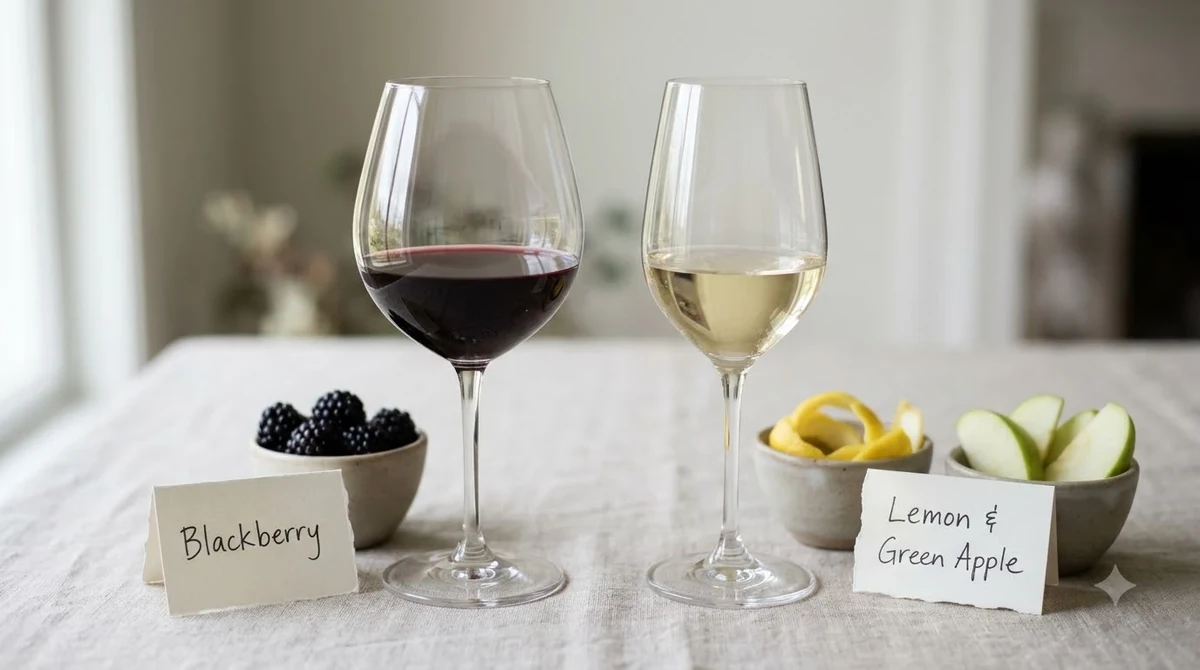
Saint-Julien reds are typically deep in color, medium- to full-bodied, and built around dark fruit, firm but refined tannins, and fresh balance. Common descriptors include blackcurrant, blueberry, blackberry, and plum, with tobacco, truffle, and leather notes developing as the wine ages.
In a younger bottle, dark fruit tends to lead, supported by a Cabernet Sauvignon frame that gives the wine shape and length. The tannins can feel firm, but the classic Saint-Julien profile is not only about power: the official appellation description emphasizes harmony, finesse, a full palate, and a long, spicy, fruity finish. The best examples combine a substantial texture with enough freshness to keep the finish from feeling heavy. That balance is a useful marker when comparing Saint-Julien with neighboring Médoc wines.
Age changes the emphasis. With time in bottle, primary fruit can become less prominent as savory and earthy notes such as tobacco, leather, and truffle emerge. Tannins also tend to integrate, and the aroma can become more layered. Bordeaux.com notes that top Saint-Julien wines can cellar for several decades in great vintages; that describes the strongest wines under good storage conditions, not a promise that every bottle needs decades before it is enjoyable. More approachable bottlings and lighter vintages can be satisfying earlier.
Vintage, producer, and storage all matter. A structured wine from a top estate may benefit from extended aging, while a lighter wine can be ready sooner. Growing conditions affect the balance of fruit, acidity, and tannin, so consider producer and vintage together instead of applying one drinking window to every Saint-Julien. Older bottles need gentler handling because mature aromas are more delicate.
Serving, Buying, and Pairing Saint-Julien
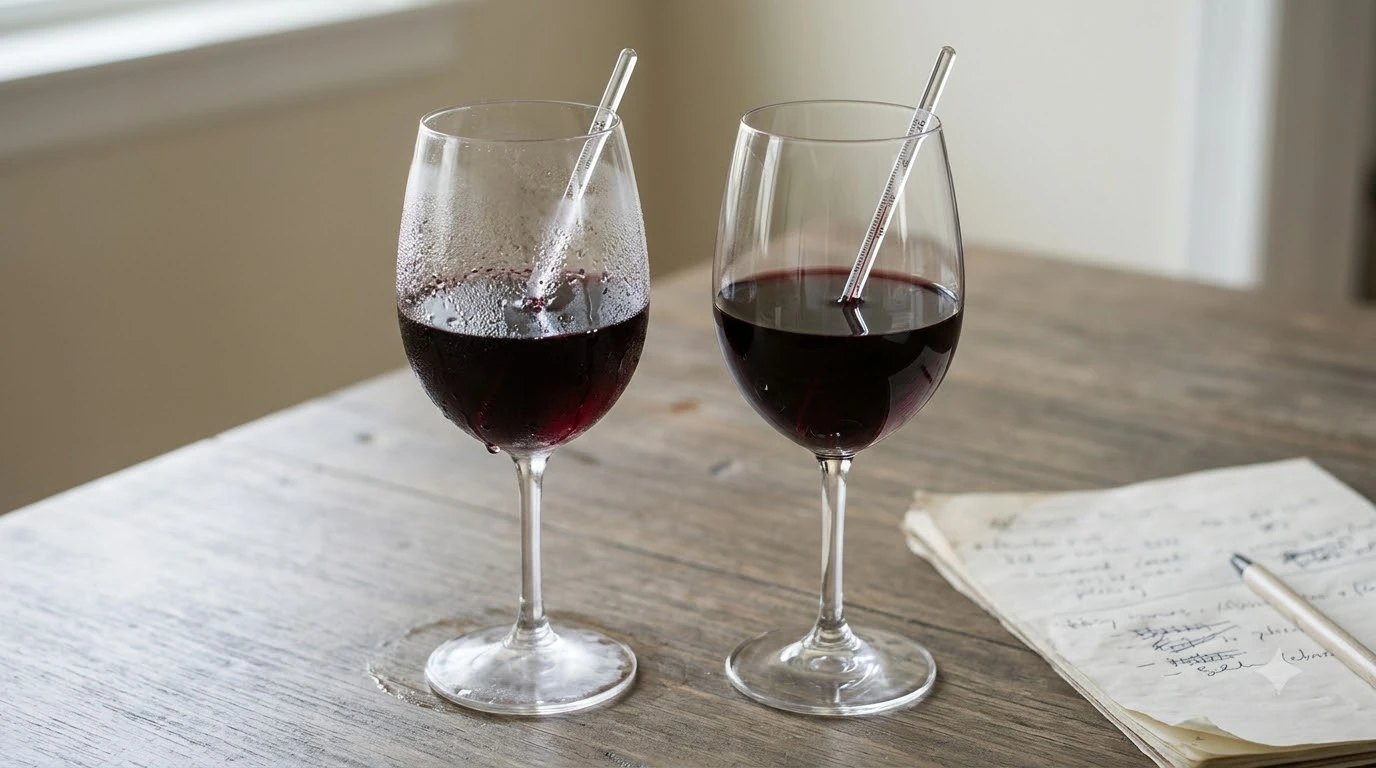
Serve Saint-Julien at about 60–65°F, the recommended range for full-bodied reds, and give a young, structured bottle 30–60 minutes in a decanter when it seems tight. Its Cabernet-based tannins pair naturally with savory foods such as roast lamb, grilled beef, and mature hard cheeses.
Temperature makes a noticeable difference. Too warm, and alcohol can seem pronounced; too cold, and aroma and texture may be muted. A bottle in a warm home may need a short refrigerator chill. A young, full-bodied Saint-Julien can benefit from 30–60 minutes in a decanter, while an older bottle should be handled gently and poured slowly if sediment has formed.
Food should meet the wine’s weight and tannin. Roast lamb, beef tenderloin, grilled ribeye, braised short ribs, and dishes with mushrooms are natural matches because their savory flavors stand up to the wine’s dark fruit and structure. Fat and salt soften tannin, so a well-seasoned roast or aged cheese can make a young Cabernet-led blend feel less austere. Roast chicken can work too, especially with browned skin, herbs, or mushroom-rich sides; Bordeaux.com specifically points to roast chicken and mature cheese as foods that suit Saint-Julien. Avoid making very spicy chili the centerpiece, since alcohol and tannin can intensify the sensation of heat. Oily fish is generally a poor match for a tannic red.
Tip: For a first Saint-Julien tasting, open one bottle from a classified château and one from a less famous producer at the same meal. Serve both at 60–65°F, taste them with roast lamb or aged cheese, and compare tannin, fruit, and finish rather than assuming the classification tells the whole story.
When buying, start with the producer and style you want rather than selecting by classification alone. A Second Growth may offer depth and long aging potential, while a Fourth Growth or a respected non-classified estate can be a better fit for a nearer-term meal. A 750-milliliter bottle provides about five standard 5-ounce pours, enough for a small dinner gathering. For storage, keep unopened bottles on their sides in a cool, dark place near 55°F, with a stable temperature and limited vibration. Once opened, recork the bottle and refrigerate it; most still wines are best used within 3–5 days, though fruit and aroma gradually fade.
Frequently Asked Questions
The questions below cover details that often come up after learning the basics, including the story linking Château Beychevelle with Henri III and the Barton family’s 1826 purchase of Léoville Barton. They add local history and vineyard context beyond the geography, grapes, and wine styles discussed above.
Why is Château Beychevelle associated with ships lowering their sails?
A local legend connects the estate’s name with ships lowering their sails in respect to Jean-Louis Nogaret de La Valette, Baron de Beychevelle, during the reign of Henri III. Bordeaux.com notes that the maneuver may instead have helped vessels enter the port during headwinds.
How long has the Barton family been associated with Léoville Barton?
The Barton family bought Léoville Barton in 1826, and the family still inhabits the estate. Decanter describes it as a benchmark for classic Saint-Julien, known for balance and weight without excess.
How much Saint-Julien production comes from classified growths?
Bordeaux.com says that 11 estates in the 1855 Classification account for 90 percent of Saint-Julien production. This share is a measure of production, not the percentage of vineyard area planted to classified estates.
How does harvest timing compare with nearby Cussac?
Philippe Dhalluin observed that harvest in nearby Cussac, in the Haut-Médoc, generally takes place about a week later than in Saint-Julien. He linked the difference to the precocity of Saint-Julien’s growing season.
What percentage of Médoc vineyards does Saint-Julien represent?
Bordeaux.com gives Saint-Julien about 6 percent of the Médoc vineyard area. Its small footprint contrasts with its high concentration of 1855 Classified Growths.
Saint-Julien offers a distinctive view of Left Bank Bordeaux: Cabernet Sauvignon at the center, gravel shaped by the Gironde, and a compact group of estates with varied expressions of a shared appellation. Start with a producer whose style appeals to you, serve the wine at the right temperature, and let its balance of fruit, structure, and savory detail show why this small Médoc region remains so highly regarded.
More in Wine Regions
 Willcox Wine Trail: Discover Arizona’s High-Elevation Wine CountryUpdated Nov 20, 2026
 Yakima Valley Wine Region: Find the Best Styles to TryUpdated Nov 20, 2026
 Vosne Romanee Wine Tasting: Identify Aromas and Choose Better PairingsUpdated Nov 20, 2026
 Yakima Valley Wine Festival: Find the Best Seasonal Wine EventsUpdated Nov 20, 2026
 Wales Vineyards: Discover Cool-Climate Wines and Where to VisitUpdated Nov 20, 2026
 Yountville Wine Festival: Discover Napa Wines and Local FoodUpdated Nov 20, 2026