

We may earn a commission when you buy through links on this page, at no extra cost to you. Learn more.
Kamptal wine is Austrian wine from Lower Austria’s Kamptal region, best known for lively Grüner Veltliner and mineral, aromatic Riesling. The region’s warm days, cool nights, and varied loess and primary-rock soils give these whites both ripeness and freshness. Its DAC rules also recognize Chardonnay, Pinot Blanc, and Pinot Gris, while a three-level origin system distinguishes regional, village, and single-vineyard bottlings.
Northwest of Vienna, the Kamptal combines a strong regional identity with meaningful differences from one slope and soil to the next. Understanding its grapes, vineyard names, and DAC label terms makes it easier to choose a bottle for dinner or decide whether a more structured single-site wine is worth seeking out.
Where Kamptal Sits Within Austria’s Wine Country
Kamptal is a wine-growing region in Lower Austria, named for the Kamp River, which flows through the valley before joining the Danube. It lies southeast of the Wachau and about 80 kilometers west of Vienna, putting it within the wider Danube-influenced wine country but giving it a distinct mix of valley and upland conditions.
Langenlois is the region’s principal wine town, and other important communities include Zöbing, Gobelsburg, Kammern, Strass, and Schönberg. The updated DAC system defines 12 village origins, including Langenlois, Engabrunn, Gobelsburg, Grafenegg, Hadersdorf, and Kammern. These place names matter because a label can identify not only Kamptal as a region but also a village or a named vineyard.
Kamptal is often considered alongside neighboring Wachau and Kremstal, but the differences are useful to understand. Wachau is especially associated with steep terraces along the Danube, while Kamptal’s Kamp valley and its transition toward the cooler Waldviertel create another pattern of exposure and nighttime cooling. Decanter places the region southeast of Wachau and notes the aging potential of wines from sites such as Heiligenstein and Lamm. For a broader overview of Austria’s appellations and their regional distinctions, the site’s Wine Regions resource provides helpful context.
Climate and Vineyard Soils Shape the Wines
Kamptal’s character comes from the meeting of warm Pannonian air from the southeast and cooler currents associated with the Waldviertel to the northwest. Hot, sunny days help grapes ripen, while cooler nights slow the loss of acidity and preserve aromatic detail; the growing season can also extend into a long, sunny autumn.

The regional product specification describes annual rainfall of roughly 550 to 600 millimeters and an average annual temperature above 9 degrees Celsius. Late frost remains a consideration in valley-floor locations into mid-May. These conditions help explain why the region can produce ripe, concentrated dry whites without losing all of their freshness, although vintage weather and vineyard exposure still affect the result.
Soils change markedly across the valley. Loess, a fine wind-deposited material, can be deep and moisture-retentive; it often supports fuller, more generously textured Grüner Veltliner. Primary rock, including gneiss and mica-rich formations, tends to be associated with a firmer, more linear impression. Gravel, clay, slate, and volcanic-influenced sandstone add further variation. The regional vineyard guide describes Heiligenstein’s reddish weathered desert sandstone and volcanic conglomerates, a striking contrast with the deep loess found at sites such as Dechant and Hasel.
Elevation and aspect matter alongside geology. On south-facing slopes, sunlight can encourage fuller ripeness, while higher or more exposed parcels can retain a cooler feel. Bründlmayer describes vineyards around Langenlois at roughly 200 to 300 meters, with hot summer days and cool nights shaped by air moving from the Waldviertel. These details are more useful than assuming that every wine labeled Kamptal will have one uniform flavor.
Grüner Veltliner Is the Region’s Signature Grape
Grüner Veltliner is the best-known expression of Kamptal and ranges from brisk, approachable regional wine to concentrated single-vineyard bottlings. Expect dry examples to show citrus, green or yellow apple, pear, fresh herbs, and the grape’s familiar peppery or savory edge.
Loess-rich sites can produce a broader, more rounded style, especially when grapes reach full ripeness. The regional vineyard notes describe Hasel as a source of full-bodied and dense Grüner Veltliner, with body, pronounced spice, and elegance. At Gaisberg, a lighter loess covering helps shape a distinctive version of the grape, while the cooler microclimate at Käferberg supports slow ripening and a more finely detailed expression.
Primary-rock and stony sites can lead to a firmer impression, sometimes with a salt-like or mineral character and a more taut finish. Producers may ferment and mature the wine in stainless steel, large old oak, or a combination of vessels. Stainless steel tends to preserve a direct fruit profile; larger, seasoned casks can add texture without making the oak flavor obvious. The choice is a producer decision, not a guarantee attached to the grape name.
Grüner Veltliner works especially well at the table because its freshness and gentle spice complement food without requiring a heavy sauce. Try it with Wiener schnitzel, roast chicken, herb-roasted vegetables, freshwater fish, or asparagus. A medium-bodied example can also handle dishes with ginger, scallions, and soy, provided the chili heat is not so strong that it overwhelms the wine.
Riesling Shows the Detail of Steep, Stony Sites
Kamptal Riesling is typically dry, aromatic, and driven by acidity, with citrus, stone fruit, floral notes, and a stony or mineral impression. It can feel more tightly structured than a broad, ripe Grüner Veltliner, especially when it comes from a steep, exposed vineyard.
Heiligenstein is one of the region’s best-known Riesling sites. Its reddish, weathered sandstone and volcanic conglomerates create a geological profile unlike the deep loess found elsewhere in the valley. The regional vineyard body describes the site’s south-open, shell-shaped slope as a microclimate that helps develop Riesling’s characteristic fruit. Wines from this slope can be concentrated and long-lived, with a firm line of acidity supporting the fruit.
Other named sites show different facets. Gaisberg crosses a geological and climatic transition, while Kogelberg’s terraces experience strong sunshine by day and cooler air from the Waldviertel at night. Steinmassl’s stony, crystalline subsoil and southeast exposure can also contribute to a more finely textured, savory style. A single-vineyard label therefore offers more than a prestige signal: it tells you that the producer is emphasizing a specific place rather than blending across the entire region.
Riesling’s high acidity makes it a natural partner for seafood, shellfish, roast pork, and dishes with citrus or herbs. It can also pair with lightly sweet or fruit-accented preparations, as long as the wine has enough residual sweetness to match the dish. For a fully dry Kamptal Riesling, keep very sweet sauces and intensely hot chili preparations in check.
Kamptal DAC Labels and the Updated Grape Rules
DAC stands for Districtus Austriae Controllatus, Austria’s controlled-origin designation. For Kamptal, the system ties a regional name to defined grape varieties, growing conditions, and a three-step origin hierarchy: Gebietswein, Ortswein, and Riedenwein. The category appears in the wine’s origin information and helps you understand how specifically the producer is identifying its source.
Grüner Veltliner and Riesling built Kamptal DAC’s reputation, but the rules were broadened for the 2024 vintage. Chardonnay, Weißburgunder (Pinot Blanc), and Grauburgunder (Pinot Gris) joined the permitted varieties, and the five grapes may be bottled alone or blended. The three Burgundy-family varieties must be stated on the legally required back label rather than the prominent front display label. The regulations also allow a limited 15 percent blending component without changing the designation. Austria’s Ministry of Agriculture explains these changes, along with the production and labeling rules, in its overview of the updated Kamptal DAC.
The three origin levels are not simply quality scores. They communicate scale and specificity. Gebietswein is the regional expression, Ortswein names a defined winegrowing village, and Riedenwein names a legally recognized single vineyard. The regional wine body uses Langenlois as an example of an Ortswein name and Heiligenstein or Lamm as examples of vineyard names. In practice, a village or vineyard wine usually tells you more about its source, but quality still depends on the producer, vintage, and site.
| DAC level | What the label identifies | Minimum or required alcohol | Earliest application for the state inspection number |
|---|---|---|---|
| Gebietswein | Kamptal region | 11.5–12.5% ABV | January 1 after harvest |
| Ortswein | One of the defined village origins | 11.5–12.5% ABV | February 1 after harvest |
| Riedenwein | A legally defined single vineyard and its associated village origin | At least 12% ABV | April 1 after harvest |
| Reserve | A later-release designation within the DAC rules | Subject to the wine’s category rules | July 1 of the second year after harvest |
There are two further changes worth knowing. For the 2025 vintage, Kamptal DAC grapes must come from vineyards certified under Sustainable Austria or organic rules; producers making less than 5,000 liters of Kamptal DAC in the relevant vintage are exempt from this requirement. The region’s definition of “dry” is also stricter than the general Austrian quality-wine standard: residual sugar must not exceed total acidity. For example, a wine with 7 grams per liter of total acidity can have no more than 7 grams per liter of residual sugar and still meet the Kamptal DAC dry rule.
Finally, Kamptal is a region, not a synonym for one wine style or even for DAC alone. Producers also make wines from varieties and styles outside the DAC framework. A bottle may come from the Kamptal but carry a different Austrian origin or quality designation, so the front and back labels together tell the most complete story.
How to Choose, Serve, and Pair Kamptal Wine
Start with the grape and the level of origin. Choose Grüner Veltliner for a versatile, gently spicy white that can move from an aperitif to the dinner table; choose Riesling for more aromatic lift, sharper acidity, and a stronger sense of stony structure. If the label names Langenlois, Zöbing, Heiligenstein, or Lamm, you are looking at a more precise village or vineyard indication than a regional bottling.
For a first bottle, a regional Gebietswein is a sensible introduction because it gives a broad picture of the appellation. Move to an Ortswein when you want to compare village character, then try a Riedenwein to understand the effect of a particular slope and soil. A vertical tasting of the same vineyard across two or three vintages can show how weather changes ripeness, acidity, and texture without changing the site name.
Serve most fresh, dry Kamptal whites at about 45 to 50 degrees Fahrenheit. A richer or more concentrated single-vineyard bottling can show better at 50 to 55 degrees, where its texture and aromas have more room to open. Chill the bottle in advance and allow it to warm slightly in the glass rather than serving it ice-cold, which can mute fragrance and make acidity seem more severe.
Tip: Pair Grüner Veltliner with schnitzel, roast poultry, asparagus, or herb-flecked vegetables; pair Riesling with shellfish, pork, or citrus-seasoned fish. For spicy food, keep the chili moderate because alcohol can make heat feel stronger, and choose a wine with enough fruit and freshness to meet the dish.
Kamptal’s crisp whites are also useful with dishes that are difficult for heavier reds. Oily fish, for example, can make tannic red wine taste harsher, while the acidity of Riesling or Grüner Veltliner refreshes the palate. Salt and fat in foods such as fried cutlets can soften a wine’s structure, which helps explain why Grüner Veltliner is such a natural schnitzel pairing.
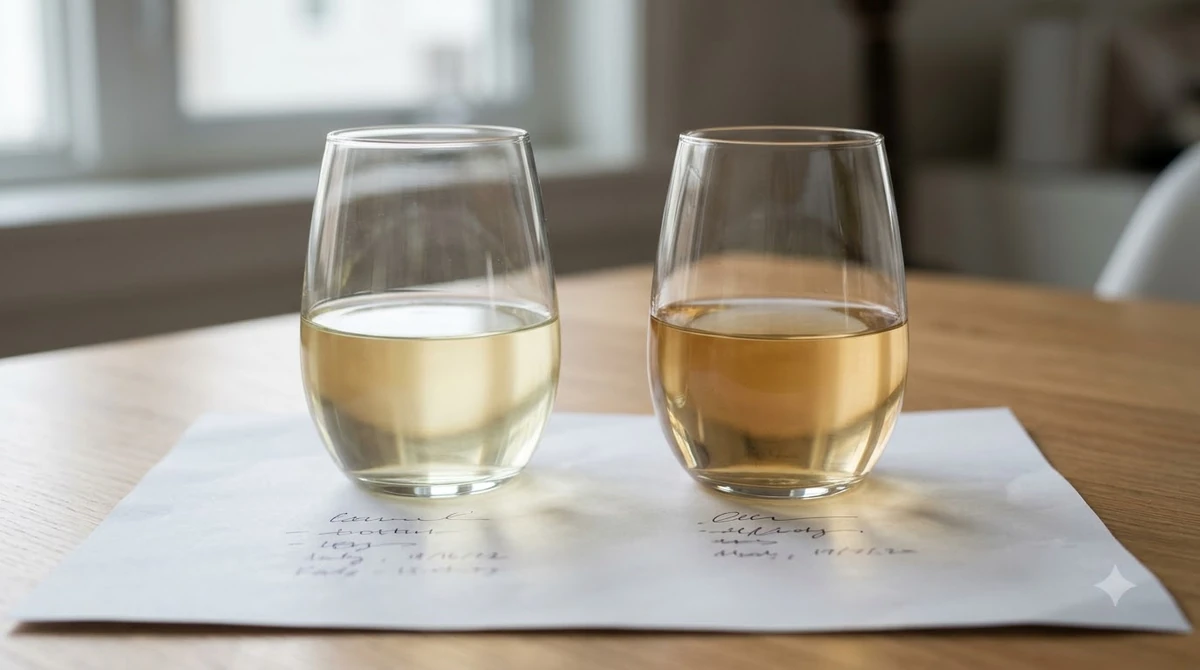
For a themed dinner, compare a loess-grown Grüner Veltliner with a stony-site Riesling beside the same roast chicken or freshwater fish. That simple side-by-side tasting reveals how grape variety, vineyard soil, and cellar choices shape texture. Readers exploring other regional producers can also use the site’s profile of the Kamptal wine region as a companion resource, or compare the geography with Red Hills wine to see how a place-based wine identity is expressed in a different climate.
Frequently Asked Questions
These five quick answers cover the DAC’s history, vineyard terminology, village names, aging potential, and the region’s less familiar red wines.
Is Kamptal wine always made from Grüner Veltliner?
No. The Kamptal DAC designation began with the 2008 vintage, when Grüner Veltliner and Riesling were its two defining varieties. The framework has since expanded, while producers also bottle wines outside the DAC designation.
What does Ried mean on an Austrian wine label?
Ried is the Austrian term for a registered vineyard, comparable to the French word cru. The regional vineyard directory also records long-established names such as Steinhaus, Loiserberg, and Schenkenbichl, each pointing to a distinct place rather than a grape variety.
Is Kamptal closer to Vienna or the Wachau?
It is roughly 80 kilometers west of Vienna and southeast of the Wachau. The region’s 12 defined DAC village origins include Engabrunn, Grafenegg, and Schiltern, along with better-known names such as Langenlois and Gobelsburg. That village-level map is more detailed than the broad regional label.
Can Kamptal Riesling age in the bottle?
Yes. Bründlmayer lists Heiligenstein at 36.7 hectares, with vineyards between 230 and 345 meters and a south-southwest aspect. Those site details help explain why producers regard it as a serious Riesling location, although the aging window still depends on the vintage and bottling.
Does Kamptal make red wine as well as white?
Yes. The regional vineyard guide calls Dechant a “red-wine island,” where deep loess and a sheltered southeast exposure encourage even ripening. Decanter has also highlighted interesting Kamptal Pinot Noir, a reminder that the area’s production extends beyond its celebrated white grapes.
Kamptal rewards readers who look beyond the grape name and pay attention to village and vineyard details. Start with a dry Grüner Veltliner or Riesling, then compare the regional, village, and single-vineyard levels to discover how Lower Austria’s soils and cool nights shape the wines.
More in Wine Regions
 Willcox Wine Trail: Discover Arizona’s High-Elevation Wine CountryUpdated Nov 20, 2026
 Yakima Valley Wine Region: Find the Best Styles to TryUpdated Nov 20, 2026
 Vosne Romanee Wine Tasting: Identify Aromas and Choose Better PairingsUpdated Nov 20, 2026
 Yakima Valley Wine Festival: Find the Best Seasonal Wine EventsUpdated Nov 20, 2026
 Wales Vineyards: Discover Cool-Climate Wines and Where to VisitUpdated Nov 20, 2026
 Yountville Wine Festival: Discover Napa Wines and Local FoodUpdated Nov 20, 2026