

We may earn a commission when you buy through links on this page, at no extra cost to you. Learn more.
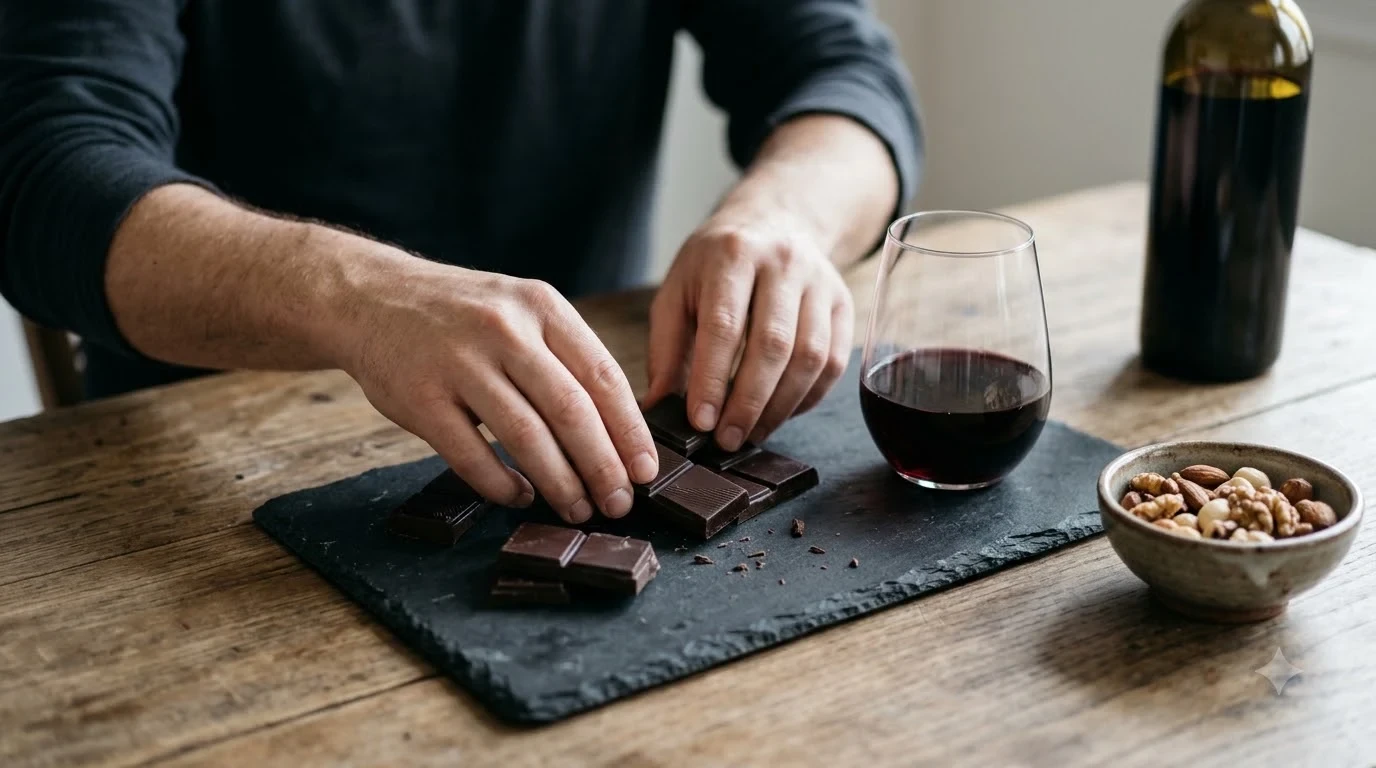
The best answer to what chocolate goes with red wine is a less-sweet dark chocolate with a ripe, softer-tannin red such as Merlot or Pinot Noir; sweet desserts are better with Ruby Port or Banyuls. Milk chocolate can work with a fruit-forward red in a modest portion, but the chocolate should not taste sweeter than the wine. Avoid stacking very bitter cacao against a highly tannic Cabernet Sauvignon.
Chocolate and red wine can be a memorable combination, but the familiar idea that any dark chocolate belongs beside any bold red is too simple. The type of cocoa, the amount of sugar, the wine’s fruit, and the level of tannin all change the result. Use the pairings below as starting points, then adjust the chocolate or wine when one side dominates.
The Core Rule: Balance Sweetness, Bitterness, and Tannin
The most reliable pairing starts with balance: wine should be at least as sweet as the chocolate, and the two should have similar intensity. This is why a sweet Port can be a more dependable match for dark chocolate than a dry, powerful red, even though both taste rich.
Chocolate contains bitter cocoa compounds, while red wine can have drying tannins from grape skins, seeds, and sometimes oak influence. When a strongly tannic wine meets very bitter chocolate, the combination can make the finish seem harsher and drier. Wine Enthusiast’s pairing advice warns against piling one bitter element on top of another; its experts also recommend considering the weight and structure of both foods.
Sweetness is just as important as body. A chocolate dessert that tastes sweeter than a dry Merlot can make the wine seem sour, less fruity, or thin by comparison. Le Cordon Bleu’s guidance is straightforward: the wine should be sweeter than the sweet food. That principle points toward fortified reds for sweet chocolate desserts, while a less-sweet square of milk or dark chocolate gives a dry red a better chance.
Think of acidity as a balancing tool rather than a cure-all. A lively Pinot Noir or Beaujolais can refresh the palate after creamy milk chocolate, but acidity alone will not make a bone-dry, high-tannin Cabernet an easy partner for a sugary brownie. Match sweetness first, then compare bitterness, weight, and flavor.
Chocolate Matches for Popular Red Wines
For most dry reds, a plain dark bar with moderate sweetness is a safer starting point than a sugary filling or an intensely bitter bar. Milk chocolate can suit a fruit-forward red in a small bite, but if it tastes sweeter than the wine, move to a sweet or fortified red instead. Match richness to body, then check that the chocolate does not overpower the fruit.
| Red wine style | Chocolate to try | Why it can work |
|---|---|---|
| Pinot Noir | Less-sweet dark chocolate around 50–65% cacao | Red-fruit character and fresh acidity suit moderate cocoa bitterness without heavy tannin. |
| Merlot | Dark chocolate around 60–70% cacao; milk chocolate only if not sweeter than the wine | Plum-like fruit and softer tannin can meet cocoa without making the finish too dry. |
| Zinfandel | Dark chocolate around 60–70% cacao | Ripe, jammy fruit and sweet spice can echo richer cocoa flavors. |
| Cabernet Sauvignon | Moderately sweet dark chocolate, about 60–70% cacao | Firm structure can suit intense cocoa, but excess bitterness and tannin may clash. |
| Syrah | Dark chocolate with a little salt or toasted nuts | Concentrated fruit and savory spice can connect with cocoa and roasted flavors. |
| Ruby Port or Banyuls | Rich dark chocolate, truffles, or ganache | Noticeable sweetness and concentration stand up to a dense chocolate dessert. |
Pinot Noir is a useful place to begin if you prefer a lighter red. Its generally higher acidity and low-to-medium tannin make it less forceful than Cabernet Sauvignon, and its cherry or raspberry notes can echo cocoa flavors. Try a small square of moderately sweet dark chocolate first; sweeter milk chocolate may make a dry Pinot seem sharper or thinner.
Merlot offers a broader bridge to cocoa because its tannins are usually softer than Cabernet’s and its fruit often leans toward plum. A bar around 60–70% cacao is a sensible trial with a ripe, fruit-forward Merlot. Some drinkers also enjoy fuller-bodied Zinfandel with dark chocolate when its jammy fruit and oak spice complement the cocoa, though this style can overwhelm a delicate chocolate cream.
Cabernet Sauvignon and Syrah need more care. Both can have substantial tannin, so a very bitter 85% bar may intensify dryness rather than create harmony. Choose a fruit-forward bottle and a chocolate with enough sweetness or fat to soften the wine’s grip; salted dark chocolate can be an interesting match with Syrah because the salt changes the way the bitterness is perceived.
Choose a Red Wine by Grape Variety
Grape variety gives you a useful first clue, but winemaking, climate, ripeness, and oak can change the final taste. The goal is to choose a specific bottle whose fruit and tannin fit the chocolate, not to assume every wine made from a particular grape will behave the same way.
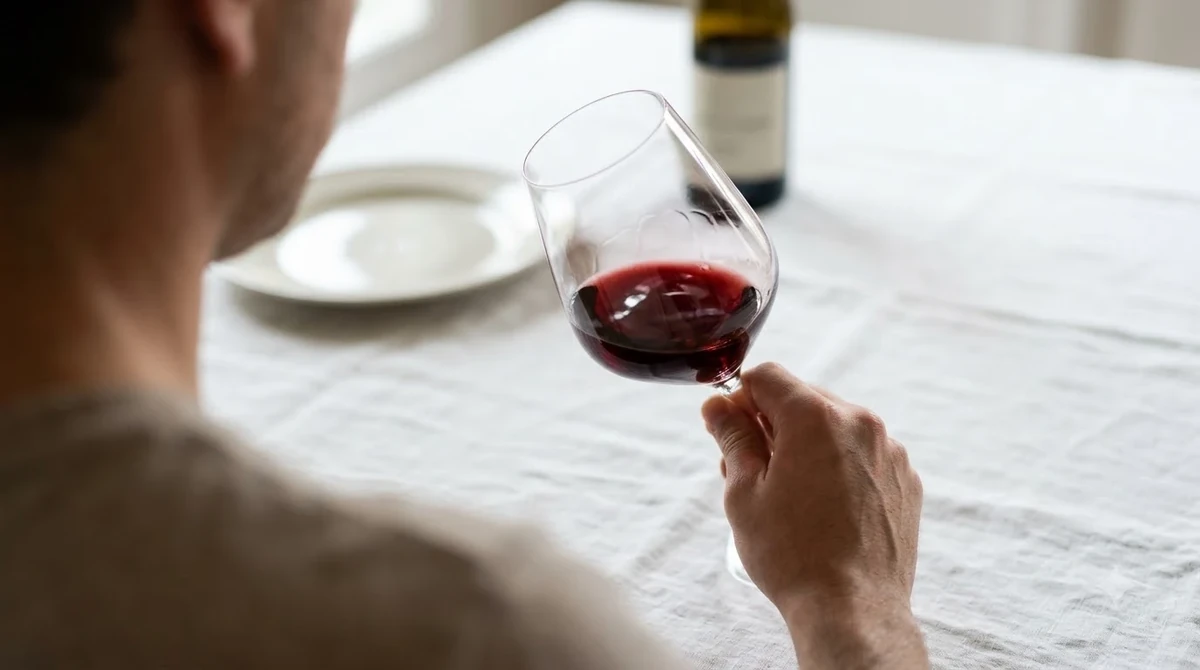
Pinot Noir: For a dry Pinot, choose a dark bar with restrained sweetness and bitterness; milk chocolate is better reserved for a red with enough sweetness to meet it. Pinot Noir is generally lower in tannin than Cabernet Sauvignon and has bright acidity, so its cherry or raspberry notes can echo cocoa flavors without overwhelming the palate. A heavily roasted, bitter bar may still make a delicate Pinot taste faint. Merlot: Look for a ripe, supple Merlot with plum and black-cherry flavors. Its tannin is often softer than Cabernet Sauvignon’s, making a medium-dark bar a sensible match. If the Merlot is especially oak-driven or firm, avoid a frosted cake or candy bar that tastes sweeter than the wine.
Cabernet Sauvignon: Cabernet usually has high tannin, so it needs a careful match. A moderately sweet dark chocolate square without a very bitter finish can work with a ripe, fruit-forward Cabernet, especially when the wine has enough fruit to keep the cocoa from taking over. Avoid treating a very dry, young Cabernet and an intensely bitter high-cacao bar as an automatic match; both can leave the palate feeling rough. Syrah and Shiraz: These wines can bring dark fruit, pepper, and a fuller structure. Try a dark chocolate with sea salt, toasted almond, or a restrained spice note, and keep the chocolate’s sweetness in line with the wine. A peppery Syrah can be more convincing with a savory chocolate accent than with a very sugary confection.
Read the Cocoa Percentage and Added Flavors
The cocoa percentage is a useful shopping clue, not a complete tasting description. A bar’s recipe, sugar level, cocoa origin, roast, and texture matter too, so use the number to narrow your choices rather than treating it as a guarantee.
Le Cordon Bleu describes dark chocolate as starting around 50% cocoa solids and milk chocolate as having more sugar with up to 40% cocoa solids. Chocolatier Chris Kollar suggests a 67–72% range as a workable starting point for dark chocolate with red wine because it can provide intensity without becoming excessively bitter or sweet. Those are broad guideposts, not rigid rules: a 70% bar from one maker can taste very different from a 70% bar from another. For an easy first tasting, set out milk chocolate, a medium-dark bar, and a darker bar. Taste each piece with the same red wine and note whether the wine’s fruit becomes clearer, disappears, or turns sharp. If the finish grows dry, move toward a sweeter chocolate or a red with softer tannins; if the chocolate tastes cloying, choose a less-sweet piece or a wine with more genuine sweetness.
Added ingredients can change the best match. Hazelnuts and almonds bring roasted, nutty notes that can suit Merlot, Zinfandel, or an aged fortified wine. Caramel adds sweetness and a buttery texture, so it often calls for a wine with enough sweetness to keep up. Orange peel can connect with citrus or spice notes in some wines, while a cherry filling can make a fruity red taste more coherent. Salted chocolate can be friendlier to a tannic red because salt changes the perception of bitterness, but it will not erase the dryness of a heavily structured Cabernet.
When a Sweet Red or Fortified Wine Makes More Sense
For sweet chocolate desserts, a sweet red or fortified wine is often the easiest answer. Ruby Port, Banyuls, and Recioto-style wines bring sweetness and concentrated fruit that dry table reds generally cannot match.
Port with dark chocolate is a classic because ripe fruit and sweetness can balance cocoa bitterness. A young Ruby Port is a good starting point for a dark chocolate truffle or a dense brownie, while a Tawny Port’s nutty, caramel-like character can suit chocolate with toasted nuts or caramel. Keep in mind that Port is fortified and usually richer in alcohol than an ordinary dry red, so a small pour is enough beside a small portion of chocolate.
Banyuls comes from Roussillon in southern France and is another strong option for dark chocolate. Decanter’s sommelier recommendations specifically highlight Banyuls with darker chocolate. Its sweet, concentrated profile makes more sense beside ganache or a dark chocolate tart than a lean, bone-dry red. Maury, another fortified wine from the same broad southern French area, can also be considered when the chocolate is dense and intensely flavored.
Recioto della Valpolicella, a sweet red from Italy’s Veneto region, can be a good match when you want red-wine character with dessert-level sweetness. It works best with chocolate rich enough to meet the wine; a sweet Lambrusco or Brachetto-style red can suit berry-filled pieces and chocolate-covered strawberries. Remember the dessert rule: wine should be at least as sweet as the dish. A sweet chocolate cake can make a dry red taste sour or hollow, even if it is full-bodied. For more ideas beyond a chocolate bar, use this guide to what dessert goes with red wine.
Build a Simple Chocolate-and-Wine Tasting
A small, orderly tasting makes it easier to see why a pairing works. Three chocolates and two reds are enough to reveal the difference between tannin, fruit, sweetness, and texture without turning the evening into a complicated event.
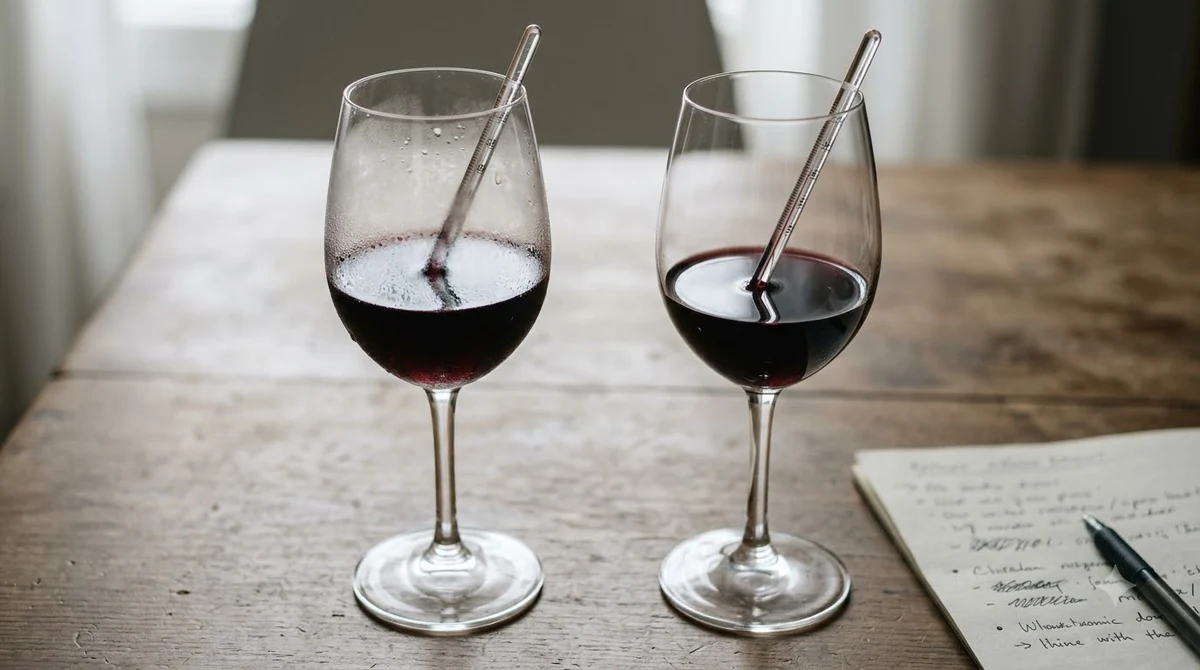
Choose one lighter red, such as Pinot Noir, and one fuller red, such as Merlot or Zinfandel. Add three chocolates: a less-sweet milk chocolate, a medium-dark bar around 60–70% cacao, and a darker or salted bar. For dessert, add a small pour of Ruby Port or Banyuls rather than expecting a dry table wine to match a very sweet cake. Serve light reds such as Pinot Noir around 55–60°F and fuller reds such as Cabernet Sauvignon or Syrah around 60–65°F; slightly cool bottles are often easier to enjoy than reds served warm in a heated room.
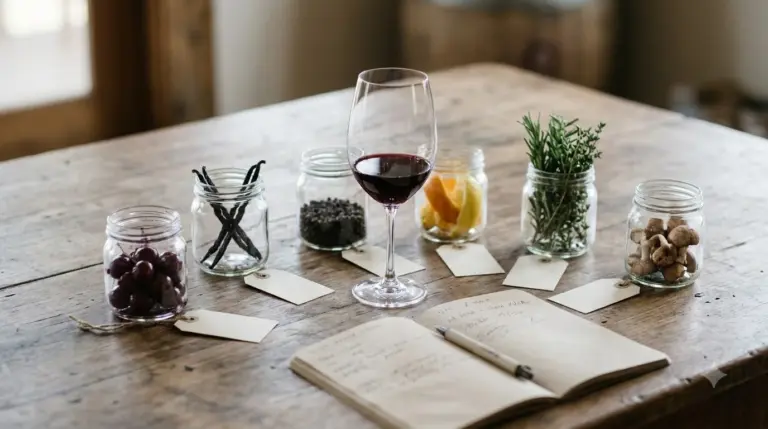
First taste the wine by itself, then take a small bite of chocolate and taste the same wine again. Notice four things: whether the fruit becomes stronger or weaker, whether the wine seems more acidic, whether the finish turns bitter or dry, and whether the chocolate feels sweeter. Record a few words rather than trying to find a perfect technical description. The best match is the one where both elements remain clear.
Tip: Start with milk chocolate and the lightest red, then move to darker chocolate and fuller wine. Taste the sweet fortified wine last, especially when serving Ruby Port or Banyuls, so its sweetness does not make the dry reds seem unusually sharp by comparison.
For a broader tasting board, add toasted almonds, fresh cherries, and a mild cheese. Compare what cheese goes with white wine or what cheese goes with champagne, and find more fundamentals in Wine Q&A.
Frequently Asked Questions
These quick answers cover less common matchups, including white chocolate, fresh cherries, and the effect of cocoa origin.
Does white chocolate pair with red wine?
It can, but white chocolate is usually easier with a sweet white wine or sparkling wine than with a dry red. It contains cocoa butter, sugar, and milk solids but no cocoa solids, which gives it a creamy profile rather than the bitter cocoa character found in dark chocolate. A light, fruity Brachetto can be an adventurous red option with a small piece.
Does the country where chocolate is made affect the pairing?
Yes. Cocoa origin and chocolate-making choices can influence fruit, earth, roast, and acidity-like impressions, so two bars with the same cocoa percentage may taste noticeably different. Wine Enthusiast notes that chocolate has its own sense of place, and even neighboring estates can produce distinct flavor profiles.
Should I choose chocolate by its cocoa percentage alone?
No. The percentage includes cocoa ingredients and does not tell you exactly how much sugar, bitterness, roast, or creamy texture you will perceive. Read the ingredient list and taste a small piece before deciding that a higher number will automatically pair better with a bigger red.
What red wine works with chocolate and fresh cherries?
Look for a sweet red with cherry or berry character, such as Recioto della Valpolicella or a late-harvest Zinfandel. Decanter contributor Fiona Beckett points out that cherries on the plate can steer the match toward a sweet red rather than a white dessert wine. This is especially useful when the dessert contains both chocolate and fruit.
Can I serve chocolate with an older bottle of red wine?
You can, but delicate aged wines are easy to overwhelm with dense chocolate, strong fillings, or heavy sweetness. Keep the chocolate plain and mild, serve a small portion, and taste the wine on its own first so its more subtle aromas are not lost. A young, fruit-forward red is generally a simpler starting point for a casual chocolate pairing.
The best chocolate for red wine is the one that leaves both the wine’s fruit and the chocolate’s flavor intact. Start with milk chocolate and Pinot Noir or Merlot, move to moderate dark chocolate with a ripe fuller-bodied red, and choose Ruby Port or Banyuls when the dessert is especially sweet or intense. A few small comparisons will show which balance you enjoy most.
More in Wine Basics
 What Is The Best Wine For Mimosas? Choose Bubbly That Balances Orange JuiceUpdated Nov 20, 2026
 Which Prosecco Is Best for Your Taste and OccasionUpdated Nov 20, 2026
 Which Wine Is Best For Health? Understand the Risks and BenefitsUpdated Nov 20, 2026
 Which Champagne Is Best for Your Taste and OccasionUpdated Nov 20, 2026
 What To Put In A Wine Gift Basket For A Thoughtful, Memorable GiftUpdated Nov 20, 2026
 What Is the Best Wine for Mulled Wine? Choose a Smooth, Fruity RedUpdated Nov 20, 2026