

We may earn a commission when you buy through links on this page, at no extra cost to you. Learn more.
Chablis vs Pinot Grigio is a choice between a Chardonnay-based white wine from northern Burgundy and a versatile white grape variety most associated with northern Italy. Chablis is usually more mineral, structured, and firmly dry, while classic Italian Pinot Grigio tends to be lighter, fruit-forward, and easygoing. Both can be crisp partners for seafood, salads, and simple meals, but their grapes, origins, and winemaking give them different personalities. Choose Chablis for a more focused, savory white and Pinot Grigio for a fresher, often gentler everyday pour.
The names can be confusing because one describes a place and the other names a grape. Once that distinction is clear, the choice becomes easier: consider how much weight, acidity, fruit, and savory character you want in the glass, then match that style to the meal.
Identity and Place: One Region Versus a Grape
Chablis is a protected wine region in northern Burgundy, France, while Pinot Grigio is the Italian name for a grape also known as Pinot Gris. That means a bottle labeled Chablis tells you where the wine comes from and which grape it uses; a bottle labeled Pinot Grigio tells you the grape, but you need the region to understand its likely style.
All Chablis is white wine made from Chardonnay. The regional authority divides it into four appellations: Petit Chablis, Chablis, Chablis Premier Cru, and Chablis Grand Cru. These are not four grape varieties or sweetness levels. They are legally defined origin categories with different vineyard zones and production requirements. The higher levels generally point to more specific sites and more layered expressions, although producer decisions and the character of a vintage still matter. A basic Chablis can be lively and direct; a Premier Cru or Grand Cru may offer greater depth, length, and capacity to develop in the bottle.
Pinot Grigio is not limited to Italy, even though northern Italy is its best-known home. It is the same grape as Pinot Gris in France, Grauburgunder in Germany, and Ruländer in some German-speaking regions. A brisk Italian Pinot Grigio differs from a richer Alsace Pinot Gris, even though both come from the same variety. The scale differs, too: the Chablis wine authority describes about 5,800 hectares across its appellation, while the Alto Adige wine consortium lists 715 hectares of Pinot Grigio there, equal to 12 percent of that region’s vineyard area. The Alto Adige figure is not a worldwide total for the grape. For another comparison built around grape identity and regional style, see Chenin Blanc vs Pinot Grigio.
| Comparison | Chablis | Pinot Grigio |
|---|---|---|
| What the name means | A French wine appellation | A grape variety and wine style |
| Grape | Chardonnay | Pinot Grigio, also called Pinot Gris |
| Appellation structure | 4 levels: Petit Chablis, Chablis, Premier Cru, Grand Cru | Depends on the country and region on the label |
| Regional scale example | About 5,800 hectares in Chablis | 715 hectares in Alto Adige, 12% of its vineyard area |
| Common impression | Dry, crisp, mineral, often savory | Usually crisp and fruity in the familiar Italian style |
Treat the name as a starting point, not a guarantee of flavor. A Chablis label gives a clear regional framework, whereas Pinot Grigio needs more context: look for Alto Adige, Trentino, Friuli, or another named origin to get a better sense of the style.
Grapes, Climate, and Soil Shape the Difference
Chablis gets its signature tension from Chardonnay grown in a cool northern Burgundy setting, while Pinot Grigio can take on different shapes as climate and growing conditions change. The contrast is not simply French versus Italian; it is a single appellation with a tightly defined grape against a variety that travels widely.
The Chablis vineyards sit on a geological landscape formed during the Jurassic period. The regional wine body describes two main soil types: older Kimmeridgian limestone and marl, and the more recent Portlandian limestone. Petit Chablis is found mainly on Portlandian soils on higher slopes and plateaus, while Chablis, Premier Cru, and Grand Cru sites are mainly associated with Kimmeridgian soils on hillsides. The Kimmeridgian layers formed more than 150 million years ago, when a shallow sea left limestone, marl, and small oyster fossils known as Exogyra virgula.
That geology helps explain why Chablis is often described as chalky, flinty, or saline. These are tasting impressions, not a claim that wine literally tastes like limestone. The cool climate is just as important: Chardonnay ripens while retaining freshness, and the wines often show lemon, green apple, and a taut finish rather than tropical fruit or obvious buttery richness. For a closer account, the Chablis wine authority’s explanation of its soils describes the Kimmeridgian and Portlandian formations.
Pinot Grigio’s regional expression is broader. In Alto Adige, the wine consortium points to warm sites on alluvial and gravel soils in the south, at elevations up to about 500 meters. Its description includes ripe apple, pear, and quince in fuller expressions, as well as leaner, mineral-toned wines with subtle linden-blossom aromas. In other parts of northern Italy, producers may emphasize citrus and orchard fruit, so the same grape can feel delicate or substantial depending on site, ripeness, and cellar decisions. Decanter identifies Pinot Grigio as a mutation of Pinot Noir; its grey-blue skins can add a faint copper tint if the juice spends time in contact with them. Most familiar white versions have little skin contact, but the grape’s color and structure allow more textured styles too.
Flavor, Body, and Winemaking Style
In a typical side-by-side tasting, Chablis is the more linear and savory wine, while a classic Italian Pinot Grigio is usually lighter, rounder in fruit, and less overtly mineral. Neither description is universal: a ripe Alto Adige Pinot Grigio can have real weight, and a Petit Chablis can be delicate and uncomplicated.
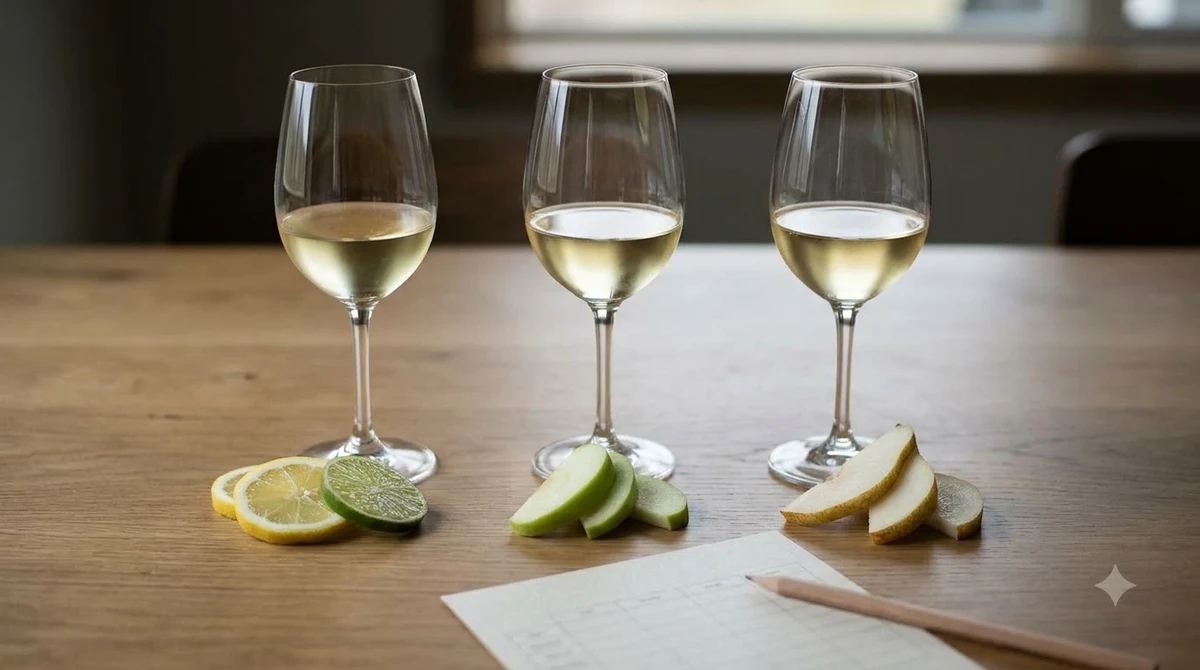
Chablis commonly shows lemon, lime, green apple, white flowers, wet stone, and sometimes a faint shell-like or salty impression. Its acidity gives the wine shape and makes the finish feel clean. The body is often light to medium, but Premier Cru and Grand Cru bottlings can feel broader, more concentrated, and longer on the palate. Oak is not a defining requirement for Chablis. Many bottlings are fermented or matured in stainless steel or neutral vessels to preserve freshness, while some producers use older barrels or other élevage choices to add texture without making the wine taste strongly of vanilla or toast.
Classic Italian Pinot Grigio leans toward pear, apple, lemon, and sometimes white peach, with a clean, direct finish. The lightest versions can seem almost neutral, while better examples bring more aroma, mineral detail, and enough weight for richer fish, poultry, or creamy vegetables. Wine Enthusiast describes the variety as capable of producing both zesty everyday wines and bottles with more personality; its feature on Italian Pinot Grigio styles also discusses skin contact.
One style to recognize is ramato, in which juice stays in contact with the skins longer than the minimal contact common in pale Pinot Grigio. Wine Enthusiast cites an example of roughly 10 hours, which can give the wine a copper or pinkish hue, more aroma, and extra texture. Ramato is still Pinot Grigio, not rosé made from a red grape. Outside Italy, Pinot Gris from Alsace may be fuller, more aromatic, spicy, and sometimes off-dry or sweet. For another refreshing-white comparison, Albariño vs Pinot Grigio contrasts Albariño’s often pronounced citrus and coastal character with Pinot Grigio’s broad range. Region, picking decisions, fermentation vessel, lees contact, and skin contact all influence the glass.
Food Pairings for Seafood, Vegetables, and Everyday Meals
Both wines are natural partners for seafood, but Chablis is usually the better choice for briny, delicate dishes, while Pinot Grigio is an easy match for lighter meals and fresh ingredients. The right pairing depends on intensity: the wine should refresh the palate without overpowering the food.
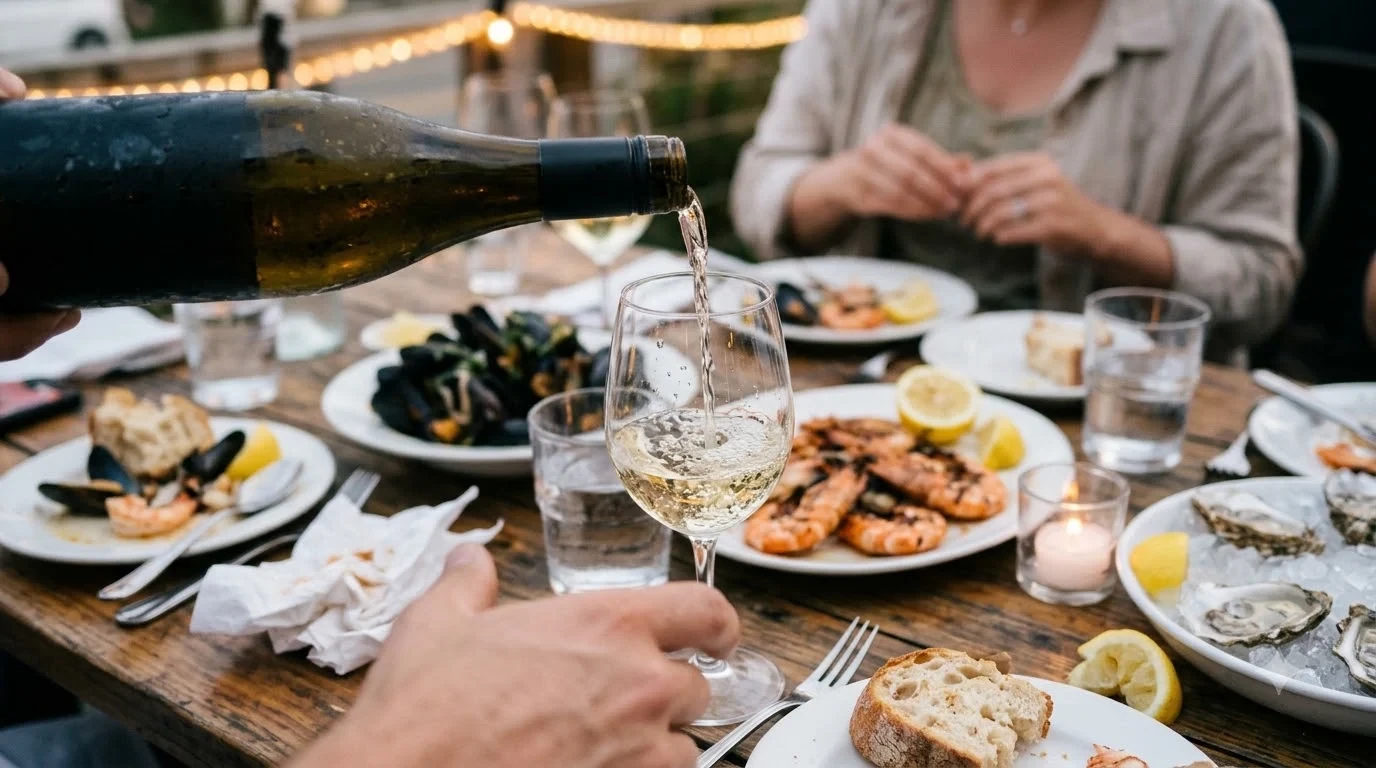
Chablis and oysters are a classic match because the wine’s high freshness and dry, mineral character sit comfortably beside the oysters’ saltiness and delicate texture. Try it with raw oysters, steamed mussels, poached cod, grilled sole, shrimp, or scallops with lemon. Chablis also works with sushi, especially simply seasoned fish and vegetable rolls, and with roast chicken or turkey when the preparation is not too heavily spiced. Goat cheese, asparagus, and vegetable tarts are useful alternatives when seafood is not on the menu. The regional Chablis material also suggests pairing the wines with poultry, white meats, and a range of dishes beyond the familiar shellfish match.
Pinot Grigio suits fried calamari, grilled prawns, fish tacos with mild toppings, light pasta with herbs, and salads with cucumber, fennel, or citrus. Its fruit can soften the sharp edges of vinaigrette, while its freshness cuts through a little oil from fried food. A fuller Alto Adige Pinot Grigio can handle egg dishes, delicate goat cheese, risotto with spring vegetables, or roast chicken. If the dish includes lemon, capers, or a vinegar dressing, choose a wine with enough acidity to keep the pairing lively rather than flat.
For either wine, consider the dominant flavor and cooking method, not only the main ingredient. A simply grilled white fish is different from fish served with a rich cream sauce; a lemon-dressed salad is different from one topped with sweet fruit or balsamic glaze. Match the wine’s acidity to the sharpness of acidic food; sharply acidic dishes need a wine with equal or higher acidity, and salt and fat cushion richer textures. Very hot chili sauces can make alcohol feel more pronounced, so keep heavily spiced dishes moderate. Choose Chablis for oysters, shellfish, simply cooked fish, or goat cheese when you want a savory edge; choose Pinot Grigio for vegetables, fried seafood, light pasta, or mixed appetizers where a softer white will not dominate. For a comparison of Italian sparkling and still options, see Pinot Grigio vs Prosecco; Prosecco is sparkling and made primarily from Glera, so bubbles and sweetness change the pairing question.
Serving, Storage, and Choosing a Bottle
Serve both wines cool, but avoid making them so cold that their aromas disappear. Chablis has more than one useful serving point depending on its appellation, while a light Italian Pinot Grigio is generally best at refrigerator-cool white-wine temperature.
The Chablis wine authority recommends about 8°C (46°F) for Petit Chablis as an aperitif and 9–10°C (48–50°F) with food. Chablis and Premier Cru are served at 10–11°C (50–52°F), while Grand Cru is served warmer, around 12–14°C (54–57°F), so its fuller texture and aromas have room to show. For most crisp, light-bodied Pinot Grigio, aim for 45–50°F; a richer, fuller example can be served closer to 50–55°F. If the bottle is too cold, give it several minutes in the glass rather than assuming it lacks flavor.
Use a white-wine glass with a bowl wide enough to collect aromas, and do not fill it to the rim. A 750 ml bottle provides about five 5-ounce glasses. Chablis usually needs no decanting, though the regional authority says some young examples benefit from about 30 minutes in a decanter. Most Pinot Grigio can be poured straight from the bottle; a broader ramato style may open up with a little time in the glass.
Tip: Chill the bottle ahead of dinner, then pour a small taste before serving the rest. If the wine seems muted, let it warm slightly; if it feels soft and heavy, a little more chill can restore its freshness.
Store unopened bottles in a cool, dark place near 55°F, away from sunlight and temperature swings, and keep cork-finished bottles on their sides for longer storage. Once opened, refrigerate either still white wine and aim to finish it within 3–5 days, closing the bottle between pours. When choosing Chablis, start with its four appellations: Petit Chablis is often the lightest, village-level Chablis gives the classic balance, Premier Cru can bring site-specific depth, and Grand Cru is the most concentrated tier, with seven named climats. For Pinot Grigio, seek a regional indication: Alto Adige and Trentino can offer freshness with more texture, while Pinot Gris from Alsace is more likely to be aromatic, rich, and potentially off-dry. Use the origin and producer description to set expectations, then explore more wine comparison guides.
Frequently Asked Questions
Is Chablis always made from Chardonnay?
Yes. The Chablis appellation is reserved for white wine made from Chardonnay, rather than being a general name for crisp French white wine. The Chardonnay grape is also called Beaunois locally in Burgundy, a historical synonym that may appear in regional material rather than on everyday retail labels.
Is Pinot Grigio the same grape as Pinot Gris?
Yes. Pinot Grigio and Pinot Gris are names for the same grape, and the different names often reflect regional language and winemaking tradition. The French word gris and Italian grigio both mean gray, referring to the grape’s grayish-blue skin.
Can Pinot Grigio be sweet?
Yes, although the familiar Italian Pinot Grigio style is usually dry. Pinot Gris from Alsace can be made in off-dry, sweet, or late-harvest styles, including wines made from very ripe grapes. The grape variety itself does not guarantee a particular level of sweetness.
Does Chablis taste oaky like some Chardonnay?
Not usually in the strongly vanilla-scented way associated with heavily oaked Chardonnay. Chablis producers can use oak, but many rely on stainless steel or older barrels that contribute little obvious wood flavor. The region’s cool climate and Chardonnay fruit are generally more apparent than toast or sweet spice.
How long can a bottle of Chablis age?
It depends on the appellation, producer, and vintage. Many basic Chablis wines are made to be enjoyed young, while well-made Premier Cru and Grand Cru wines can develop over a longer period; the Chablis regional body notes that some Premier Cru wines reach full expression after eight to ten years. Store any bottle intended for aging in a cool, stable place away from light.
Chablis is the more specific regional choice: Chardonnay shaped by northern Burgundy, limestone soils, and a tradition of dry, focused whites. Pinot Grigio is the more flexible grape category, ranging from light Italian refreshment to fuller Pinot Gris styles. Choose by the character you want with the meal, and use the region on the label to narrow the style before you open the bottle.
More in Wine vs Wine
 Chenin Blanc vs Pinot Gris: Acidity, Body, and Pairing DifferencesUpdated Nov 20, 2026
 Chianti vs Lambrusco: How Tuscany and Emilia-Romagna Reds CompareUpdated Nov 20, 2026
 Chianti vs Primitivo: Key Differences in Taste, Body, and PairingUpdated Nov 20, 2026
 Chianti vs Rioja: Key Differences in Taste, Aging, and PairingUpdated Nov 20, 2026
 Chianti vs Shiraz: How Acidity, Body, and Food Pairings CompareUpdated Nov 20, 2026
 Chianti vs Syrah: Key Differences in Taste, Body, and Food PairingUpdated Nov 20, 2026