

We may earn a commission when you buy through links on this page, at no extra cost to you. Learn more.
What is grillo? Grillo is a dry white wine grape native to Sicily, Italy, known for producing fresh, aromatic wines with citrus, floral, herbal, and subtly savory flavors. It is especially associated with western Sicily, where it has a long history in Marsala production. Today, Grillo is increasingly appreciated as a standalone white wine, offering bright acidity, moderate body, and a distinctive Mediterranean character.
If you enjoy Sauvignon Blanc, Pinot Grigio, or other refreshing white wines but want something with a little more texture and savory personality, Grillo deserves attention. Its combination of citrus freshness, herbal complexity, and occasional coastal salinity makes it a versatile choice for everyday drinking and food pairing. Understanding its Sicilian origins, production methods, and flavor profile will help you choose a bottle that suits your preferences.
1. Grillo Is a Traditional White Grape from Sicily
Grillo is an indigenous Sicilian white grape variety, particularly associated with the western part of the island and the province of Trapani. It produces dry white wines with good acidity, aromatic intensity, and enough structure to work with a wide range of Mediterranean dishes. Although its historical reputation is closely connected to fortified Marsala, modern producers have established Grillo as an appealing varietal wine in its own right.

The grape is a natural crossing of two Sicilian varieties: Catarratto and Zibibbo, also known as Muscat of Alexandria. These parents contribute different characteristics. Catarratto provides freshness, acidity, and citrus or grassy notes, while Zibibbo contributes floral and aromatic qualities. The combination helps explain why Grillo can feel both refreshing and expressive without becoming excessively perfumed.
According to the Consorzio di Tutela Vini DOC Sicilia, Grillo has been cultivated in Sicily since the late 19th century. Its vineyards are concentrated mainly in Trapani, with additional cultivation in Palermo and Agrigento. These areas offer varied growing conditions, including coastal influences, warmer inland locations, and higher-elevation vineyards.
Grillo is particularly well suited to Sicily’s Mediterranean climate. Long, sunny growing seasons allow the grapes to ripen fully, while suitable vineyard locations help preserve acidity and aromatic freshness. The grape’s natural ability to maintain a lively character in warm conditions is one reason it has become increasingly interesting to producers seeking distinctive regional white wines.
Today, many bottles carry the Sicilia DOC designation, which identifies wines produced under the region’s protected appellation regulations. A bottle labeled Sicilia DOC Grillo is a useful starting point for exploring the variety, although individual producers can create noticeably different styles through vineyard selection and winemaking decisions.
For readers exploring Italian white wine more broadly, Grillo belongs among the distinctive regional varieties featured in our guide to Wine by Type. It offers a particularly clear example of how local grapes can express the climate and food traditions of their home region.
2. The History of Grillo and Its Connection to Marsala
Grillo has two closely connected identities: a traditional grape used in fortified Marsala and a modern variety producing dry, unfortified white wine. Its importance in western Sicily grew through its association with Marsala, but changes in consumer preferences and winemaking helped create a new future for the grape.
Marsala is a fortified wine associated with the town of Marsala in western Sicily. Grillo became an important variety for its production because of its ability to provide structure and acidity. Depending on the style, Marsala can develop complex flavors through fermentation, fortification, blending, and extended maturation.
For much of its history, Grillo was valued primarily for its contribution to this fortified wine tradition rather than for bottles of dry varietal wine. However, changing commercial priorities during the 20th century affected the grape’s position. Wine Enthusiast reports that Grillo plantings declined during the 1960s as producers favored more vigorous grape varieties.
A significant turning point came in 1990, when Marsala producer Marco de Bartoli decided to vinify Grillo separately as a dry white wine. This helped demonstrate that the variety could produce distinctive table wines rather than serving only as a component of fortified wine.
The revival attracted further interest from Sicilian producers. Wine Enthusiast reported that Grillo plantings reached approximately 16,000 acres in 2014, representing a 180% increase compared with 2004. Although those figures describe an earlier period, they illustrate the scale of the variety’s growing importance during its modern revival.
Producers including Donnafugata, Tasca d’Almerita, Alessandro di Camporeale, and Baglio del Cristo di Campobello have helped establish Sicily’s reputation for expressive white wines. Their approaches demonstrate that Grillo can be made in several styles, from uncomplicated stainless-steel wines to more layered expressions involving lees aging or oak.
The distinction between Grillo and Marsala remains important. Grillo is the grape variety, whereas Marsala is a wine category made using permitted grape varieties and specific production methods. A bottle of dry Grillo is therefore not automatically Marsala, even when the two wines share the same historical connection.
For an account of the grape’s revival and its relationship with Sicily’s fortified wine tradition, see Wine Enthusiast’s examination of Grillo’s resurgence.
3. What Grillo Wine Tastes Like
Grillo is generally dry, refreshing, and aromatic, with citrus fruit, floral notes, herbs, and a savory finish. Most examples have medium-light to medium body and medium-high acidity, making them approachable without feeling thin or lacking character.
The exact flavor profile depends on where the grapes grow, when they are harvested, and how the wine is made. However, several characteristics appear frequently across different producers.
Fruit and floral aromas
Lemon, grapefruit, and citrus zest are common fruit characteristics. Some wines also show green apple, pear, white peach, or ripe stone fruit. More aromatic examples can develop tropical fruit impressions, including passion fruit and hints of pineapple.
Floral aromas add another dimension. Citrus blossom, white flowers, and occasionally honeysuckle can appear alongside the fruit. These characteristics are generally expressive rather than overpowering, helping Grillo maintain a refreshing personality.
Herbal and savory characteristics
Grillo is not simply a fruit-driven white wine. Thyme, sage, fresh herbs, and subtle mineral impressions can contribute to its savory side. Coastal vineyards may produce wines with a noticeable saline character, sometimes described as a sea-breeze or salty finish.
This combination of citrus, herbs, and salinity gives Grillo a recognizable Mediterranean personality. It can taste brighter and more herbal than a rich Chardonnay while offering more texture than some lighter Pinot Grigio wines.
Body, acidity, and alcohol
Grillo typically has medium-high acidity, which provides freshness and helps balance its fruit flavors. Its body generally falls between medium-light and medium, although lees aging and oak maturation can create richer examples.
Wine Folly places the typical alcohol range at approximately 11.5% to 13.5% ABV. This range is useful when comparing Grillo with other everyday white wines, although individual bottles can fall outside it.
The following table summarizes the typical characteristics of dry, unfortified Grillo.
| Characteristic | Typical Grillo Profile |
|---|---|
| Wine color | Deep straw yellow |
| Sweetness | Dry |
| Body | Medium-light to medium |
| Acidity | Medium-high |
| Tannin | None |
| Alcohol | 11.5–13.5% ABV |
| Serving temperature | 45–50°F |
| Typical glass pour | 5 oz |
| Standard bottle size | 750 ml |
These characteristics describe the general style rather than a fixed formula. A Grillo made from grapes grown at a warmer inland site may taste riper and fuller, while a wine from a breezy coastal vineyard may emphasize citrus, freshness, and salinity.
4. How Grillo Is Made and Why Production Matters
Grillo’s versatility comes partly from its ability to produce different styles through changes in harvesting, fermentation, and aging. Most dry examples emphasize freshness and aromatic clarity, but producers can use lees contact and oak to create more substantial wines with additional complexity.
Harvest timing is an important decision. Picking grapes earlier can help preserve acidity and produce a lighter, more citrus-focused wine. Allowing additional ripening can increase fruit intensity and body, potentially introducing riper peach, melon, and tropical fruit characteristics.
Stainless-steel fermentation
Stainless-steel fermentation is a common approach for fresh, aromatic Grillo. Temperature-controlled fermentation helps preserve delicate fruit and floral aromas while limiting unwanted oxidation. The resulting wine often emphasizes lemon, grapefruit, green apple, and fresh herbs.
This approach is especially suitable for bottles intended to be enjoyed relatively young. The clean winemaking style allows the grape’s natural characteristics to remain at the center of the wine rather than introducing strong flavors from oak barrels.
Lees aging and added texture
Some producers leave Grillo in contact with its lees, the spent yeast cells remaining after fermentation. This technique can add texture, a broader mouthfeel, and additional complexity without necessarily making the wine taste sweet or heavily oaked.
Tasca d’Almerita provides a useful example through its Tenuta Sallier de La Tour Grillo. The producer’s wine is made in Monreale, in the province of Palermo, and undergoes fermentation at 16°C for 15 days. It then spends four months on the lees in stainless-steel tanks.
The wine is listed at 13% ABV, with a residual sugar measurement of 0.7 grams per liter. This illustrates how a wine can have a substantial aromatic and textural profile while remaining firmly dry.
Oak-aged Grillo
Some winemakers also experiment with oak maturation. Depending on the type of barrel and the length of aging, oak can contribute additional texture and flavors such as toasted nuts, spice, or subtle vanilla.
However, oak is not a defining requirement for Grillo. Many excellent examples rely entirely on stainless steel, allowing their citrus, floral, and herbal characteristics to remain prominent. Drinkers who prefer crisp, uncomplicated whites may find these bottles especially appealing.
For a first bottle, a stainless-steel-fermented Grillo is a straightforward introduction. More structured examples with lees contact or oak are worth exploring if you prefer white wines with greater texture and a longer, more complex finish.
5. Grillo Compared with Other Popular White Wines
Grillo is a useful alternative to familiar white wines because it combines refreshing acidity with savory flavors and moderate body. Its closest comparisons are often Sauvignon Blanc and Pinot Grigio, although its Sicilian origins give it a different aromatic identity.
Grillo versus Sauvignon Blanc
Sauvignon Blanc is generally recognized for its high acidity and flavors of citrus, green fruit, herbs, and sometimes tropical fruit. Grillo shares some of these characteristics, particularly grapefruit, citrus blossom, and herbal aromas.
The difference is often in the balance. Grillo can feel rounder and more savory, with a slightly broader texture. Sauvignon Blanc, depending on its region and production method, may have sharper acidity and more pronounced green or grassy flavors.
Choose Sauvignon Blanc if you prefer especially bright, sharply defined acidity. Choose Grillo if you want similar freshness with a more Mediterranean combination of citrus, flowers, herbs, and savory notes.
Grillo versus Pinot Grigio
Pinot Grigio is frequently light-bodied, crisp, and relatively restrained in aroma, particularly in its straightforward Italian style. Grillo often has more pronounced floral and herbal aromas, a fuller mouthfeel, and a more noticeable savory finish.
Both wines can work well as aperitifs and with seafood. However, Grillo may be a better choice when a dish includes Mediterranean herbs, grilled vegetables, or richer seafood preparations that benefit from additional wine texture.
Grillo versus Chardonnay
Chardonnay varies considerably depending on where it is grown and how it is made. Unoaked Chardonnay can be fresh and citrus-driven, while barrel-aged versions may show butter, vanilla, toast, and a fuller texture.
Grillo generally offers a more herbal and saline profile, with medium-high acidity. It is a good option for drinkers who enjoy the freshness of unoaked Chardonnay but want a more distinctly Mediterranean aromatic character.
Grillo versus Vermentino
Vermentino is another Mediterranean white grape associated with coastal regions of Italy and other parts of the Mediterranean. It can show citrus, herbs, mineral notes, and a slightly salty finish, making it a natural comparison with Grillo.
The two varieties share a food-friendly character, although their individual expressions vary considerably by location and producer. Comparing a Sicilian Grillo with a Sardinian Vermentino is an interesting way to explore the diversity of Mediterranean white wine.
Tip: If you normally buy Sauvignon Blanc or Pinot Grigio, try a stainless-steel-fermented Grillo first. It offers familiar citrus freshness while introducing more herbal and savory flavors. Choose a lees-aged example later if you want greater texture and complexity.
6. Serving Grillo and Choosing the Right Food Pairings
Grillo is best served chilled, generally around 45–50°F, to preserve its acidity and aromatic freshness without suppressing its flavors. Its citrus character, moderate body, and savory finish make it particularly suitable for seafood, vegetables, pasta, and lighter Mediterranean dishes.
Temperature matters because an excessively cold wine can seem less aromatic, while a wine served too warm may feel heavier and less refreshing. A few minutes outside the refrigerator can help bring out the aromas if the wine initially seems muted.
Seafood and fish
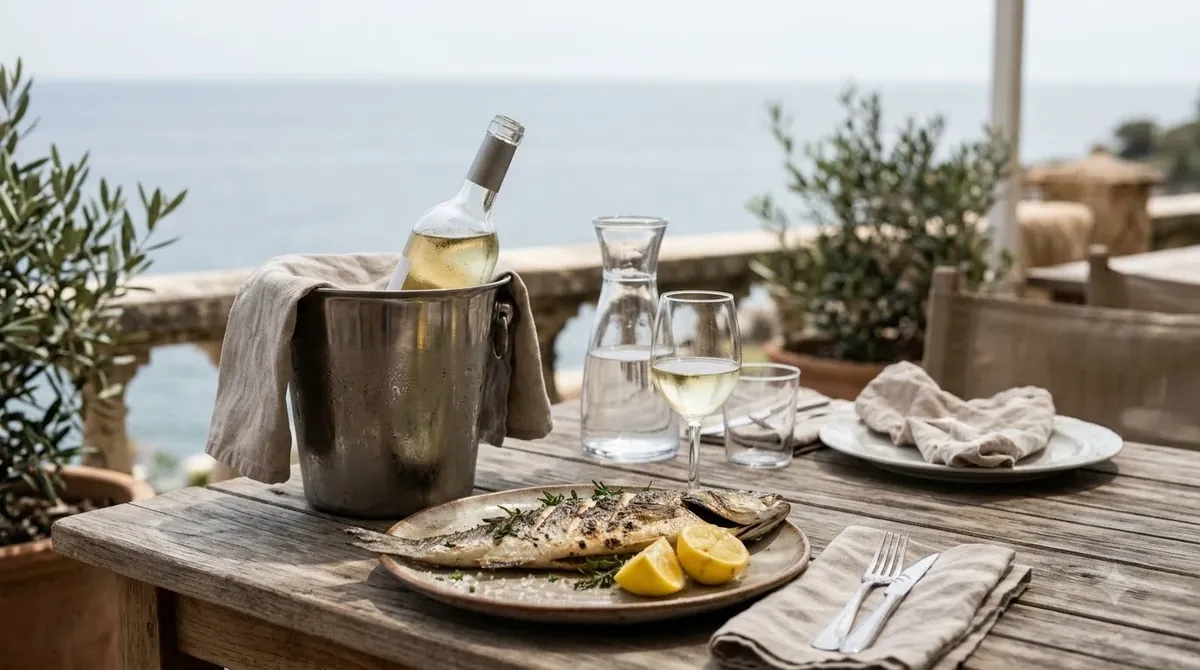
Seafood is one of the most natural matches for Grillo. Its acidity complements the delicate sweetness of shellfish, while its herbal and citrus notes work particularly well with lemon, olive oil, and fresh Mediterranean seasonings.
Try Grillo with grilled shrimp, steamed mussels, scallops, calamari, or a seafood pasta with garlic and parsley. Grilled white fish such as snapper or sea bass is another excellent option.
For richer fish dishes, a fuller Grillo with lees contact can provide enough texture to complement the food without overwhelming it. The wine’s freshness also helps balance olive oil and buttery sauces.
Vegetables and Mediterranean dishes
Grillo pairs naturally with grilled zucchini, eggplant, asparagus, artichokes, and roasted peppers. These vegetables often have earthy or slightly bitter characteristics that work well with the grape’s herbal aromas.
Sicilian caponata, a vegetable dish traditionally featuring eggplant and a sweet-and-sour flavor combination, is another interesting pairing. Grillo’s acidity can complement the dish’s vinegar component, while its savory finish connects with the vegetables and olive oil.
Pasta, cheese, and lighter meals
Seafood linguine, pasta with clams, lemon-based sauces, and vegetable pasta are all good choices. Grillo can also accompany pasta with pesto, particularly when the sauce includes basil, olive oil, and Parmesan.
For cheese, try fresh goat cheese, mozzarella, ricotta, or delicate semi-soft varieties. Their creamy textures can balance the wine’s acidity without overwhelming its aromas.
Salt and fat in food can soften the perception of acidity, making Grillo especially useful with dishes featuring olive oil, lightly salted seafood, or creamy cheese. However, very spicy dishes require more care because alcohol and tannin can amplify chili heat. Although Grillo has no significant tannin, a high-alcohol bottle may still make spicy food feel hotter.
Quick food-pairing reference
The following combinations provide a practical starting point for planning a meal around Grillo.
| Food | Why It Works |
|---|---|
| Grilled shrimp with lemon | Citrus freshness complements seafood |
| Mussels with garlic | Acidity balances the savory flavors |
| Seafood linguine | Herbal notes complement parsley and olive oil |
| Grilled sea bass | Moderate body suits delicate fish |
| Roasted zucchini | Herbal flavors complement vegetables |
| Sicilian caponata | Acidity works with sweet-and-sour flavors |
| Fresh goat cheese | Freshness balances creamy texture |
| Grilled cauliflower | Savory flavors complement the wine’s herbal character |
For more detailed combinations, including seafood, pasta, vegetables, and cheese, see our dedicated guide to Grillo food pairing.
7. Buying, Storing, and Understanding Grillo Wine
Choosing a bottle of Grillo is relatively straightforward once you understand the main production styles. Fresh stainless-steel examples are ideal for casual meals, while lees-aged or barrel-aged wines are better suited to drinkers looking for additional texture and complexity.
Start by looking for the grape name on the label. Many bottles are identified as Grillo or Grillo Sicilia DOC. The Sicilia DOC designation is particularly useful because it connects the wine with the grape’s traditional home and the region’s production regulations.
What to look for on the label
Consider the producer and the winemaking information when comparing bottles. Descriptions such as fresh, aromatic, stainless-steel fermented, or unoaked generally indicate a style focused on citrus and floral character.
Terms such as lees-aged or barrel-aged suggest a potentially fuller texture. These wines may show more developed flavors, making them suitable for dishes with richer sauces, roasted vegetables, or more substantial seafood preparations.
The grape’s color can also help you understand what to expect visually. Grillo commonly produces wines with a deep straw-yellow appearance, sometimes with golden or greenish reflections. The exact shade varies with ripeness, winemaking, and age. Our explanation of Grillo color explores these visual characteristics in more detail.
How long does Grillo last?
Many fresh, unoaked Grillo wines are best enjoyed within their first few years, when their citrus, floral, and herbal aromas are lively. Wine Folly suggests a typical cellar window of approximately three to five years, although individual wines can have different aging potential.
More structured bottles may develop additional complexity over time. Wine Enthusiast has highlighted examples of Grillo with moderate aging potential, particularly wines made with more substantial winemaking techniques. However, it is not necessary to age most everyday bottles before drinking them.
Store unopened bottles on their sides in a cool, dark environment, ideally near 55°F, where the temperature remains relatively stable. Avoid direct sunlight, significant temperature fluctuations, and locations close to heat-producing appliances.
Opening and serving a bottle
Once opened, Grillo should generally be refrigerated and enjoyed within three to five days. A suitable wine stopper helps limit oxygen exposure and preserve its aromas. Before serving another glass, allow the wine to warm slightly if it has become too cold in the refrigerator.
A standard 750 ml bottle provides approximately five glasses when each serving is 5 oz. This makes one bottle a practical amount for a small dinner with seafood, pasta, or a selection of Mediterranean appetizers.
Grillo does not normally require decanting. Simply open the bottle, pour a small amount into a white wine glass, and allow the aromas to develop for a moment. A glass with a moderately narrow opening can help concentrate its citrus and floral characteristics.
Frequently Asked Questions
Is Grillo a rare wine?
Grillo is a regional specialty rather than a globally dominant white grape, so its availability varies considerably by market. Its strongest presence remains in Sicily, although exports have introduced it to wine retailers and restaurants in other countries. Specialist Italian wine shops are often useful places to find producers beyond the most widely distributed labels.
Is Grillo suitable for vegetarians and vegans?
Grillo itself is made from grapes and does not inherently contain animal ingredients. However, some winemaking clarification methods use animal-derived fining agents, including egg whites or gelatin. Vegan certification or information from the producer can help identify bottles made without animal-derived processing aids.
Can Grillo be used in cooking?
Yes. Dry Grillo can be used in seafood risotto, white-wine sauces, and recipes involving mussels or clams. Its citrus and herbal character can add freshness to a sauce, while its acidity helps balance rich ingredients. Use a dry, unfortified example rather than assuming that every wine made from the grape has the same characteristics.
Is Grillo grown outside Sicily?
Yes. Grillo has also been planted in Australia, including wine-growing areas such as Adelaide Hills, McLaren Vale, and Barossa Valley. Its presence outside Sicily remains much smaller, but it demonstrates that the variety can attract interest in other warm-climate wine regions.
Does Grillo have another name?
Grillo is also associated with the synonyms Ariddu, Riddu, and Rossese Bianco in wine-variety references. The name Rossese Bianco is particularly interesting because genetic research has identified the grape grown under that name in Liguria as Grillo. These alternative names are less familiar to most consumers than Grillo itself.
Grillo is one of Sicily’s most interesting white grape varieties, combining citrus freshness, floral aromas, herbal complexity, and a savory Mediterranean character. Whether enjoyed as a simple aperitif or alongside grilled seafood and vegetable dishes, it offers a distinctive alternative to more familiar white wines. Start with a fresh, unoaked bottle to discover its classic style, then explore lees-aged examples to appreciate the variety’s additional depth.
More in Wine Types & Grapes
 Zinfandel Sugar Content: Dry Red vs. White Zinfandel GramsUpdated Nov 21, 2026
 Best Zinfandel Substitute Options for Sipping and CookingUpdated Nov 21, 2026
 Zweigelt Food Pairing: Best Dishes, Cheeses, and Serving TipsUpdated Nov 21, 2026
 Zinfandel Tannins Explained: How Structure Shapes Every BottleUpdated Nov 21, 2026
 Zinfandel Sweetness Level: Dry Red vs. Sweet White Zin ExplainedUpdated Nov 21, 2026
 Xinomavro Food Pairing: Best Dishes, Styles, and Serving TipsUpdated Nov 21, 2026