

We may earn a commission when you buy through links on this page, at no extra cost to you. Learn more.
Good red wine tasting notes describe what you see, smell and feel before you describe flavor, and they follow a fixed order: color, aroma, body, tannin, acidity, then finish. That order keeps the note useful, because structure tells you more about whether you will enjoy the next bottle than any single fruit word does. A note built this way takes about five minutes per glass once the steps become routine. Each stage adds one layer, so you can stop at any point and still have something worth writing down.
Most people taste a red and reach for words like smooth, jammy or earthy, but those words rarely help them choose the next bottle. Tasting notes are useful when they record specific, repeatable clues. Decanter’s consultant editor Steven Spurrier breaks the process into color, nose, palate and aftertaste, and that four-part sequence makes a solid template for home tastings. The sections below follow it, with the structural words added where they matter most for red wine. If you want a broader grounding in the vocabulary, our Wine by Type hub sorts reds by style and is a good place to start.
Start With Color: What the Glass Tells You Before the First Sip
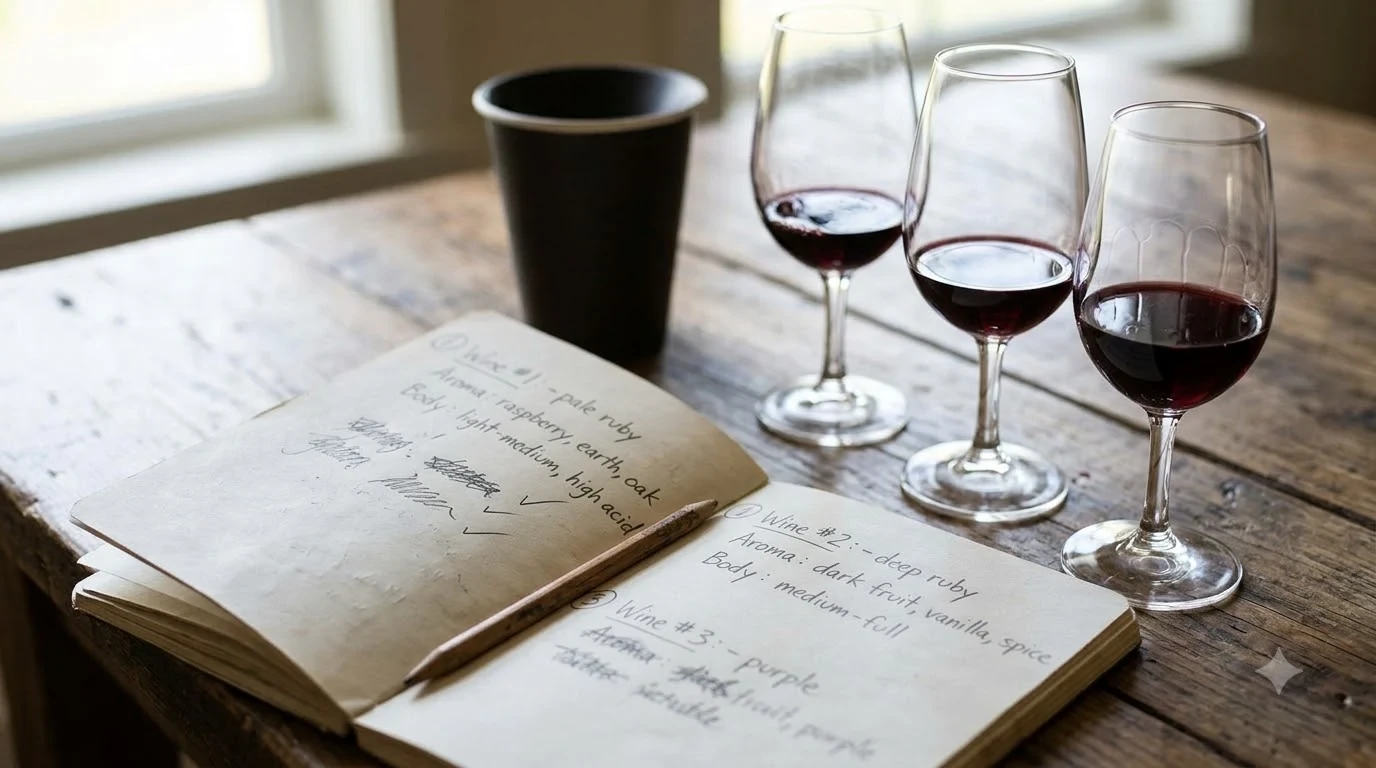
Color is the cheapest clue in the glass, and it takes about ten seconds to read. A pale ruby usually points to a lighter, brighter wine, while a deep purple usually points to a bolder one with more tannin.
Spurrier recommends filling the glass only about a quarter full, then tipping it against a white background. Tilting lets you see the color change from the center of the wine to the rim, and the rim is where age shows first. A brick-colored edge with an orange-brown tint usually means a bottle that has been aging for a while. Spurrier also points out that many people skip this step, even though it is both pleasurable and revealing.
The Napa Valley Wine Academy’s red wine chart gives a practical shorthand. Cherry red is common in younger reds such as Pinot Noir and usually signals bright acidity with cherry or cranberry fruit. Deep purple, which shows up in Syrah or Malbec, tends to mean high tannin, a fuller body and dark fruit like blackberry or plum. Deep ruby sits in the middle, often with moderate body and a soft, balanced structure, as many Cabernet Sauvignon and Merlot wines show.
Swirling adds one more clue. Rotating the wine lets oxygen in and releases aromas, and the streaks that run down the glass, called legs, show how viscous the wine is. Spurrier links pronounced legs to a lush, thick wine, and Napa Valley Wine Academy notes that thick, slow legs often mean higher alcohol or sugar. Light, fast legs tend to go with more delicate, refreshing styles, so a quick glance at the glass sets your expectations before you smell anything.
Reading the Nose: Primary, Secondary and Tertiary Aromas
The nose holds more information than the palate, and it sorts into three layers you can name one at a time. Spurrier calls the nose the most important part of tasting, because it picks up far more factors than the tongue can.
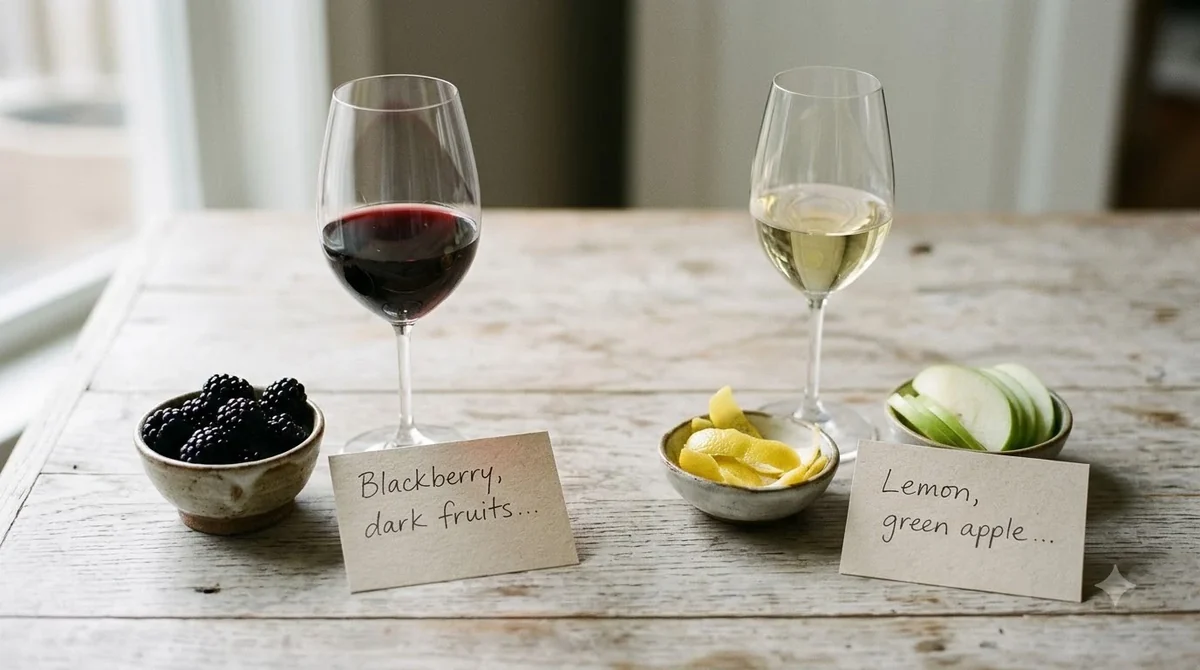
The first layer is primary aroma, which comes from the grape itself. In red wine that usually means cherry, raspberry, plum, blackberry, violet or green pepper. Primary aromas are strongest in young wines, which is why fresh fruit fades as a wine matures. The second layer is secondary aroma, which comes from winemaking, especially time in oak and malolactic fermentation. Vanilla, clove, toast, cocoa, coffee and smoke are typical examples.
The third layer is tertiary aroma, and it arrives with age. Dried fig or prune, leather, mushroom, tobacco, forest floor and dried flowers belong here, and they tend to turn a bright fruit profile into something more savory and earthy. The aroma table from Napa Valley Wine Academy lays out all three layers side by side, which makes it a handy reference during a tasting. The goal is not to memorize a long list. The goal is to notice which layer you are smelling and name it.
Specific examples help more than general adjectives. The same chart notes that Cabernet Sauvignon often smells of blackberry, green pepper and cedar, while an aged Pinot Noir may remind you of mushrooms or dried roses. When you write, match the smell to a concrete item the way those examples do, instead of settling for a loose word like “fruity.” A note that says “blackberry and cedar” is far easier to act on than one that says “nice nose.”
Technique matters as well. Swirl the glass, then take two or three short sniffs with your nose just above the rim. One long inhale tends to exhaust your sense of smell, so short sniffs give more information. If nothing stands out at first, that is normal. Spurrier’s advice is simply to smell the wine and let the impressions come.
Body: How Heavy the Wine Feels on Your Tongue
Body describes how heavy a wine feels in the mouth, and it comes mostly from alcohol, residual sugar and tannin. It is one of the easiest structural words to judge, and one of the most useful when you are shopping for a bottle, because it tells you how much weight to expect before the wine touches your palate.
VinePair’s structure guide describes body as the amount a wine fills your mouth and how much it seems to sit on your tongue. Alcohol adds weight, so higher-alcohol wines tend to feel fuller, and acidity can make a wine seem lighter than its chemistry suggests. Their comparison is easy to remember: light-bodied feels like skim milk, medium-bodied like whole milk, and full-bodied like cream.
Napa Valley Wine Academy ties the same idea to real numbers. Light-bodied reds are usually around 12% alcohol by volume, are often fresh and fruity, and are low in tannin. Gamay and Pinot Noir are the classic examples, both grown in cooler climates where alcohol stays low. Full-bodied reds reach 14.5% alcohol or more and carry strong tannin, with Zinfandel, Cabernet Sauvignon, Syrah or Shiraz, and Malbec as usual names. Medium-bodied reds sit between those two, and Merlot, Chianti and Sangiovese are reliable examples.
| Body | Typical examples | Typical alcohol | Tannin and acidity | Serve at |
|---|---|---|---|---|
| Light-bodied | Gamay, Pinot Noir | About 12% ABV | Low tannin; Pinot Noir has high acidity | 55-60 F |
| Medium-bodied | Merlot, Sangiovese, Chianti | Between the light and full ranges | Moderate tannin and acidity | 55-65 F |
| Full-bodied | Cabernet Sauvignon, Syrah, Malbec, Zinfandel | 14.5% ABV or more | High tannin in Cabernet Sauvignon; Syrah medium-plus to high | 60-65 F |
The body you expect should shape the note. If a wine feels thin for its alcohol and tannin, its acidity may be doing the lifting. If it coats the mouth and lingers, the note should say so directly, with a phrase such as “full body, warm finish.” Describing body early also makes food matching easier, which comes up again later.
Tannin and Acidity: The Structure You Feel, Not Taste
Tannin and acidity are the two structural elements that most separate red wine from white. Tannin dries the mouth, and acidity makes it water. Learning to tell them apart is the step that most improves a tasting note.

Tannin is a group of plant compounds called polyphenols, found in grape skins, seeds, stems and oak. VinePair describes tannins as coating the mouth and leaving a drying sensation. Because red wines ferment with their skins, they carry far more tannin than white wines. Napa Valley Wine Academy describes two textures: silky tannins that glide across the mouth, as in Pinot Noir, and firm, grippy tannins that linger, as in Cabernet Sauvignon or Nebbiolo. Tannin is a texture rather than a taste, which is why you feel it on your gums and cheeks instead of your tongue. For a closer look at a deeply colored, very tannic style, our petit verdot tasting notes show how that texture reads in a glass.
Acidity is the sense that a wine is lively and zippy, or that it makes your mouth water. VinePair notes that acidity can make red wine seem lighter even when its alcohol is around 15%, and it adds that Old World wines typically carry more acidity than New World wines. Napa Valley Wine Academy adds that acidity makes red fruit flavors pop and can tighten the feel of tannin. Low acidity combined with high alcohol makes a red feel plush and round instead.
Sweetness is a separate question, and it is one of the most misread parts of a red wine note. VinePair points out that nearly all red wine is completely dry, and that fruity, low-tannin, low-acid reds are often what people mean when they say they like sweet reds. Napa Valley Wine Academy defines a dry red as one with little to no residual sugar, so the drying feeling you sense comes from tannin rather than sugar. If you are unsure, VinePair suggests placing only the tip of your tongue in the wine, since that is where sugar is detected.
Flavor and Finish: Turning Impressions Into Tasting Notes
Flavor notes come last because they depend on the structure you have already mapped. The finish, the impression left after you swallow or spit, tells you whether the wine is balanced.
Spurrier describes the palate as a blunt instrument: the tip of the tongue picks up sweetness, the sides pick up acids, and the back picks up tannins. To bring the aromas back in, he suggests drawing a little air through the wine in your mouth before you spit or swallow. Flavors you name should match what you smelled, and if they contradict it, look again at the nose before you write.
Flavors usually follow aromas, but the tongue sometimes adds a surprise. Napa Valley Wine Academy gives examples: a floral aroma may taste like green tea, and black cherry may hint at dark chocolate or espresso. Oak flavors such as vanilla, toast or warm spice tend to come through more strongly as the wine opens, and so do earthy notes like mushroom or leather. Returning to the glass a few minutes later is a simple way to catch those changes.
For the finish, Spurrier describes the aftertaste as the final impression, and he says a good wine should feel harmonious, with no single element dominating. Write it as its own line: short, medium or long, clean or warm, and whether the flavors fade or keep unfolding. A finish that stays pleasant and balanced is a good sign, while a short or sharp one suggests a simpler wine.
A complete note can be short. For example: “Medium-bodied, bright acidity, soft tannin. Black cherry, cedar, dried herb. Clean finish with a little warmth.” Each part answers one question, and the whole thing takes less than a minute to write.
Tip: Write the structure words first, tannin, acidity, body and finish, and add the fruit words last. Structure is what you will recognize across different bottles, while fruit names shift from one taster to the next.
Matching Your Notes to Food and Serving Temperature
A tasting note becomes more useful when it leads to a decision, and body and tannin are the two parts that matter most at the table. Serving temperature decides how much of the note you actually get.
Napa Valley Wine Academy sums up pairing with three rules: acidity cuts fat, tannin grips protein, and sweetness softens spice. Pinot Noir and Gamay, with their bright acidity, suit roast chicken, turkey and mushroom dishes, while the firm tannins of Cabernet Sauvignon and Malbec suit grilled steak, burgers and barbecue. Medium-bodied savory reds such as Chianti or Merlot tend to work with tomato-based pasta and red-sauce pizza, because the wine’s acidity matches the tang of the tomato.
Salt and fat soften tannin, so a rich, salty dish can make a firm red taste smoother. Two combinations to avoid are oily fish with tannic reds, which clash, and very spicy food with high-alcohol, high-tannin wines, because alcohol and tannin both amplify chili heat. When the note says “high tannin,” reach for a dish with fat or salt.
Temperature changes how the note reads. Light reds do best around 55 to 60 F, and fuller reds around 60 to 65 F, which keeps the alcohol from feeling hot and lets fruit and tannin show clearly. Serving a full red too warm can make it taste heavy and boozy, so a short stop in the refrigerator before pouring is often worth it.
Your note also helps you decide when to pick a red for a meal rather than for sipping. Grenache, with its fruit and gentler tannin, often works as a bridge between lighter and bolder reds, and our grenache tasting notes show how that style reads in a glass.
Frequently Asked Questions
Does red wine get smoother as it ages?
Over time, tannins soften through a process called polymerization, which can make a red feel lighter and smoother in the mouth. In long-aged bottles, evaporation through the cork can concentrate alcohol and glycerol, which helps keep the wine lush and balanced.
How many glasses are in a bottle of red wine?
A standard 750 ml bottle holds about five glasses at a 5-ounce pour. That number is useful when you plan how many bottles a tasting needs, since a single bottle can cover several short pours across a few wines.
How long does an opened red wine keep?
Still red wines usually keep three to five days in the refrigerator after opening, and fortified wines can last several weeks. Bag-in-box wine often holds for four to six weeks, which makes it a practical choice for everyday pours.
Should I decant a young red wine before tasting?
Young, full-bodied reds usually benefit from 30 to 60 minutes in a decanter before tasting, which softens the tannin and opens the aromas. Lighter reds need much less air, so check them after a few minutes and stop when the flavors feel open.
How should I store bottles of red wine at home?
Store bottles on their side in a spot near 55 F, which keeps the cork in contact with the wine and the wine stable. Keep them away from heat and direct light, since both speed up aging and dull fresh fruit.
Good tasting notes are a habit rather than a talent, so keep a short log of the bottles you open. Over a few months, the words you use will become more precise. Your next bottle choice will get easier, because you will already know which structure you enjoy.
More in Wine Types & Grapes
 Zinfandel Sugar Content: Dry Red vs. White Zinfandel GramsUpdated Nov 21, 2026
 Best Zinfandel Substitute Options for Sipping and CookingUpdated Nov 21, 2026
 Zweigelt Food Pairing: Best Dishes, Cheeses, and Serving TipsUpdated Nov 21, 2026
 Zinfandel Tannins Explained: How Structure Shapes Every BottleUpdated Nov 21, 2026
 Zinfandel Sweetness Level: Dry Red vs. Sweet White Zin ExplainedUpdated Nov 21, 2026
 Xinomavro Food Pairing: Best Dishes, Styles, and Serving TipsUpdated Nov 21, 2026