

We may earn a commission when you buy through links on this page, at no extra cost to you. Learn more.
The short answer to “is moscato vegan” is sometimes—it depends entirely on how the winery clarifies the wine before bottling. While Moscato starts with fermented grape juice, many producers use animal-derived fining agents such as casein (milk protein), isinglass (fish swim bladders), gelatin, or egg whites to remove haze and sediment. Unless a bottle is explicitly labeled vegan, made with mineral or plant-based fining agents like bentonite clay, or left unfined, you cannot assume it fits a vegan diet.
Wine is made from grapes, yeast, and time, so it surprises many shoppers to learn that a sweet, fruit-forward bottle of Moscato might not be vegan. The catch happens behind the cellar doors during clarification, a routine winemaking step that turns cloudy young wine into the crystal-clear pour you see in the glass. Understanding what happens during production makes it much easier to spot genuinely plant-based bottles on store shelves.
What Makes Moscato Vegan or Non-Vegan
Moscato is vegan only when the winemaker avoids animal-derived processing aids from crush to bottling, particularly during the clarification stage known as fining. Even though fining agents are filtered out before the wine is bottled, trace amounts can remain, and their use disqualifies the finished wine from being vegan.

Freshly fermented wine naturally contains suspended proteins, yeast cells, polyphenols, and tiny grape solids that make the liquid look hazy. Left alone in a tank or barrel, gravity will eventually pull these particles to the bottom over many months. However, Moscato is prized for its fresh, aromatic, just-picked grape character and is typically bottled within weeks of harvest rather than aged for years, so winemakers rely on fining agents to speed up clarification and ensure heat stability.
As Wine Enthusiast explains in its guide to vegetarian and vegan wine, fining agents work like magnets by binding to negatively or positively charged particles in the wine so they clump together and sink. Traditional winemaking relies heavily on animal byproducts for this job because they are effective and inexpensive. In white and sparkling wines like Moscato, producers frequently turn to casein (a milk protein) to brighten color and strip away bitter phenolics, or isinglass (a protein harvested from fish swim bladders) to achieve brilliant clarity.
Other animal-derived options include gelatin from animal hides and bones, egg albumen (egg whites), and chitosan from crustacean shells. Fortunately, wineries do not need animal products to clarify Moscato. Many modern producers achieve the exact same visual clarity using bentonite (a negatively charged volcanic clay that binds to unstable proteins), activated charcoal, pea or potato proteins, or silica sol, all of which are completely vegan-friendly.
Common Fining Agents Used in Moscato Production
To determine whether a specific bottle of Moscato aligns with a plant-based lifestyle, it helps to recognize the difference between animal-based and vegan-friendly clarification aids. While neither type appears as an ingredient on standard US wine labels, wineries frequently disclose their fining methods on their websites or back labels.
| Fining Agent | Source Material | Purpose in Moscato | Vegan Status |
|---|---|---|---|
| Bentonite | Purified volcanic clay | Removes unstable proteins and prevents haze | Vegan |
| Casein / Skim Milk | Dairy milk protein | Brightens color and removes oxidized flavors | Not vegan (vegetarian) |
| Isinglass | Fish swim bladders | Creates crystal clarity without stripping aroma | Not vegan or vegetarian |
| Gelatin | Animal hides and bones | Softens harsh phenolics and settles solids | Not vegan or vegetarian |
| Egg Albumen | Chicken egg whites | Binds to excess tannins and astringent compounds | Not vegan (vegetarian) |
| Pea / Potato Protein | Plant legumes and tubers | Settles suspended solids and clarifies juice | Vegan |
| PVPP | Synthetic polymer | Absorbs excess color and bitter phenols | Vegan |
Notice that the distinction between vegetarian and vegan matters here. Wines fined with casein or egg whites are acceptable for lacto-ovo vegetarians because no animals are slaughtered to obtain the protein, yet they are strictly off-limits for vegans. By contrast, gelatin and isinglass come directly from animal tissue, making those bottles unsuitable for both vegetarians and vegans.
Beyond fining agents, a smaller subset of strict vegans also looks at vineyard practices and packaging. Some organic or biodynamic farms use bone meal, fish emulsion, or animal manure as soil fertilizers, and a few traditional bottlers still seal corks with beeswax or use milk-based glues in agglomerated corks. However, for the vast majority of vegan wine drinkers, avoiding animal-derived fining agents is the primary standard.
How Different Styles of Moscato Affect Vegan Status
Moscato is not a single wine, and the production style—from lightly frizzante Italian classics to sweet California still wines—influences how a winery handles clarification. Learning how to pronounce Moscato is easy, but navigating its regional styles requires looking at how each version is fermented and stabilized.
The benchmark Italian expression is Moscato d’Asti DOCG, made in Piedmont from Moscato Bianco grapes. According to Wine Folly’s overview of Moscato d’Asti, winemakers chill the fermenting must early to halt fermentation, leaving plenty of natural grape sugar alongside a low alcohol by volume (ABV) of around 4.5 to 6.5 percent and a gentle spritz. Because unfermented grape juice is rich in heat-sensitive proteins, producers must stabilize the wine carefully so it does not turn cloudy in warm shipping containers. Many Piedmontese estates use bentonite clay and cold sterile filtration, which keeps their bottles vegan, though others still rely on casein or gelatin.
If you are wondering is Moscato sweet or dry, most commercial bottles on American shelves—including Pink Moscato, Red Moscato, and fully sparkling Asti Spumante—are noticeably sweet. High-volume commercial brands often prioritize uniform shelf appeal and rapid production cycles, which historically led major mass-market producers to rely on inexpensive animal fining agents. Meanwhile, boutique wineries and natural wine producers making dry or off-dry Muscat Blanc à Petits Grains often skip fining altogether, relying on cold settling and fine mesh filtration instead.
How to Identify Vegan Moscato at the Store
Because wine labels in the United States are regulated by the Alcohol and Tobacco Tax and Trade Bureau (TTB) rather than the FDA, winemakers are not legally required to list fining agents on the bottle. Finding a verified vegan Moscato takes a quick label check and a few smart shopping habits.
Start by inspecting the back label for explicit third-party vegan seals or producer statements. Look for certified logos from organizations such as BevVeg, The Vegan Society, or Certified Vegan (Vegan Action), or simple printed phrases like “Vegan Friendly” and “No animal products used in production.” In the European Union, Australia, and New Zealand, allergen labeling laws require wineries to disclose milk and egg derivatives on the label if detectable residues remain, though fish-derived isinglass and pork or beef gelatin do not trigger those same allergen warnings.
Do not confuse “organic,” “biodynamic,” or “sustainable” with vegan. Organic certification regulates how grapes are farmed in the vineyard—prohibiting synthetic pesticides and chemical fertilizers—but says nothing about whether a winemaker uses egg whites, milk protein, or fish bladders inside the winery. A bottle can be certified organic and still be non-vegan, just as a conventional, non-organic Moscato clarified with bentonite clay can be completely vegan.
Tip: When standing in the wine aisle without a clear label statement, search the producer and vintage on Barnivore, a crowd-sourced vegan alcohol database, or check the winery’s official technical sheet online before buying.
Keep in mind that wineries occasionally change their cellar protocols from one vintage to the next depending on harvest conditions. If a vintage was unusually warm or the juice had higher protein levels, a producer that normally relies only on bentonite might add a small dose of casein or gelatin to a specific batch. Whenever you are buying for a special occasion or hosting vegan guests, verifying the current vintage directly on the producer’s website gives you the highest certainty.
How to Serve and Pair Vegan Moscato
Once you have selected a certified vegan bottle, proper temperature and thoughtful food pairings let its bright floral aromatics shine. Across the broader spectrum of wine by type, Moscato stands out for its low alcohol, vibrant acidity, and perfumed notes of orange blossom, white peach, honeysuckle, and Meyer lemon.
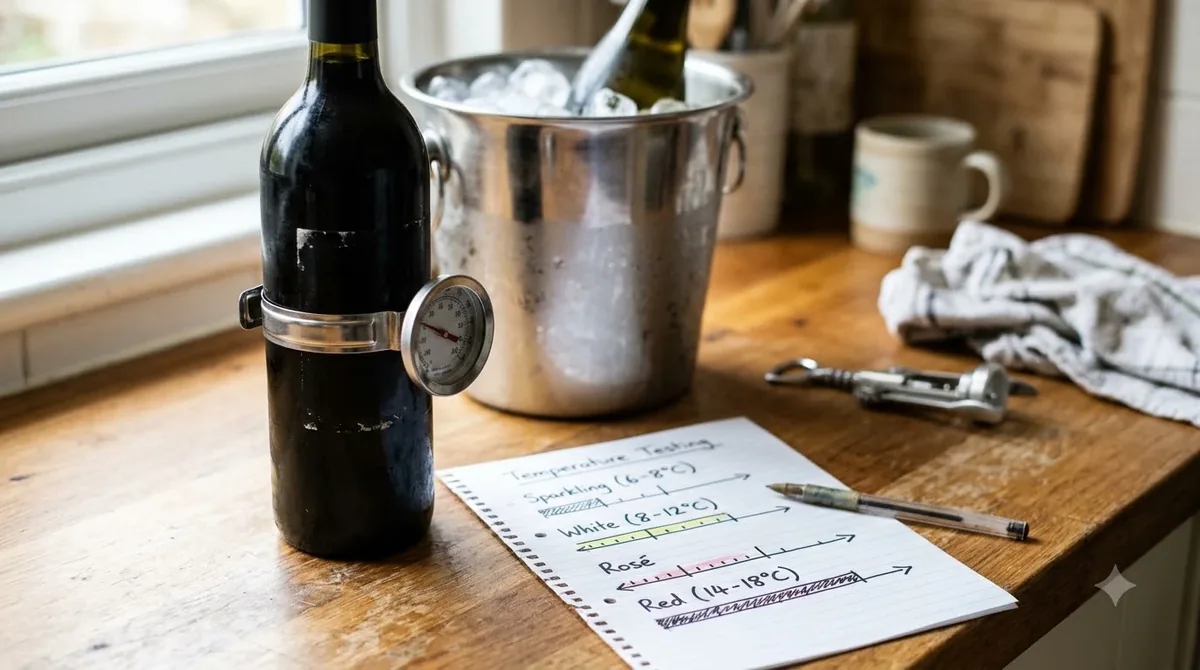
Serve vegan Moscato well chilled, ideally between 43 and 46 degrees Fahrenheit (6 to 8 degrees Celsius). Serving it straight from a standard refrigerator after two hours of chilling hits this sweet spot, keeping the gentle carbonation lively and preventing the residual sugar from tasting syrupy. Pour it into a tulip-shaped sparkling wine glass or an all-purpose white wine glass so the bowl captures its delicate bouquet without letting the bubbles dissipate too quickly.
At the table, Moscato’s natural sweetness makes it a versatile partner for both savory and sweet plant-based dishes. Because residual sugar cools down capsaicin heat on the palate, a chilled glass pairs effortlessly with spicy vegan Thai green curry, Sichuan mapo tofu, or chili-garlic noodles. For brunch or dessert, serve it alongside fresh stone fruit, lemon olive oil cake, vegan almond biscotti, or aged cashew-based cheeses where the wine’s crisp acidity cuts through the creamy richness.
Frequently Asked Questions
Is Pink Moscato vegan?
Pink Moscato is not automatically vegan and follows the exact same rules as white Moscato. While its blush tint usually comes from a splash of red wine like Merlot or Zinfandel, winemakers may still clarify the blend using casein, gelatin, or isinglass, or use animal-derived cochineal dye in rare flavored versions. Always check for a vegan label or confirm with the winery.
Are big-name Moscato brands vegan?
Many popular mass-market Moscato brands are not vegan because they use traditional animal fining agents like gelatin or milk proteins to clarify large batches quickly. However, a growing number of large producers have switched to bentonite clay and now mark their vegan-friendly vintages on the back label. Checking the specific brand and vintage before purchasing is essential.
Does vegan Moscato taste different from regular Moscato?
No, vegan Moscato tastes identical to traditionally fined Moscato when made well. Mineral agents like bentonite clay and plant proteins perform the exact same clarification and stabilization work as casein or isinglass without altering the grape’s signature peach, citrus, and floral flavors.
How long does vegan Moscato last after opening?
Once opened, a bottle of Moscato stays fresh in the refrigerator for about three to five days when sealed tightly with a sparkling wine stopper. If you are storing a bottle before popping the cork, learning how long Moscato lasts unopened will help you enjoy it while its fresh fruit aromatics are at their peak.
Asking whether Moscato is vegan comes down to looking past the grape and checking how the wine was clarified in the cellar. By seeking out bottles labeled vegan, looking for producers that rely on bentonite clay or unfined methods, and verifying vintages when labels are silent, you can easily pour a crisp, aromatic glass that fits a plant-based lifestyle.
More in Wine Types & Grapes
 Zinfandel Sugar Content: Dry Red vs. White Zinfandel GramsUpdated Nov 21, 2026
 Best Zinfandel Substitute Options for Sipping and CookingUpdated Nov 21, 2026
 Zweigelt Food Pairing: Best Dishes, Cheeses, and Serving TipsUpdated Nov 21, 2026
 Zinfandel Tannins Explained: How Structure Shapes Every BottleUpdated Nov 21, 2026
 Zinfandel Sweetness Level: Dry Red vs. Sweet White Zin ExplainedUpdated Nov 21, 2026
 Xinomavro Food Pairing: Best Dishes, Styles, and Serving TipsUpdated Nov 21, 2026