

We may earn a commission when you buy through links on this page, at no extra cost to you. Learn more.
A meritage grape is not a single variety at all. It is a red or white blend built from Bordeaux grape varieties, and only wines that meet the Meritage Alliance’s rules can carry the name. A red meritage combines two or more of eight approved varieties, usually built around Cabernet Sauvignon or Merlot. No single grape can make up more than 90 percent of the blend. The name rhymes with “heritage,” and it describes a style rooted in Bordeaux rather than a plant you can grow.
Shoppers who spot “Meritage” on a shelf often assume it names a grape, the same way Merlot or Pinot Noir does. It doesn’t. The word is a trademark for a blending style that American winemakers created in the late 1980s, when they wanted their Bordeaux-style wines to stand apart from generic red blends. Knowing the rules helps you read a label, choose a bottle that fits your meal, and understand why two bottles with the same name can taste quite different.
What a Meritage Actually Is
A meritage is a trademarked name for a Bordeaux-style blend, not a varietal. Its meaning becomes clear once you know where the word came from.
The story starts in Northern California. In 1988, a small group of vintners led by Mitch Cosentino, Julie Garvey and Agustin Huneeus set out to give their blends a name with the weight of a classic French label. Their problem was practical. American labeling rules tied a wine’s name to the grape it was made from, and most of their best wines were mixtures. Without a grape name, a blend of Cabernet Sauvignon and Merlot was stuck with labels like “red blend” or “table wine,” which carried little prestige. The group wanted a word that would make buyers think of a lasting tradition rather than a bottle of mixed grapes.
The winning word came from a naming contest. A wine buyer at a Newark, California, supermarket chain, Neil Edgar, submitted it, and the word combines “merit,” meaning worth, with “heritage,” which points to Bordeaux. The pronunciation follows the second half: it rhymes with “heritage,” not the French-style “Mare-a-TAZH” that many people try. The name is now a registered trademark of the Meritage Alliance, a non-profit group of commercial winemakers, and only its members can put it on a label.
Bordeaux shaped the whole idea. Its best red wines are blends, with Cabernet Sauvignon dominant in the Médoc and Merlot and Cabernet Franc carrying more weight in Saint-Émilion and Pomerol. Huneeus argued that because the grapes are not grown in Bordeaux, the wines needed a denomination of their own. The Alliance’s answer was to borrow the blending logic without borrowing the place name.
The Grapes Allowed in Red and White Meritage
A red meritage draws on eight approved varieties, and a white meritage draws on three. Every bottle needs at least two of its grapes from the list.
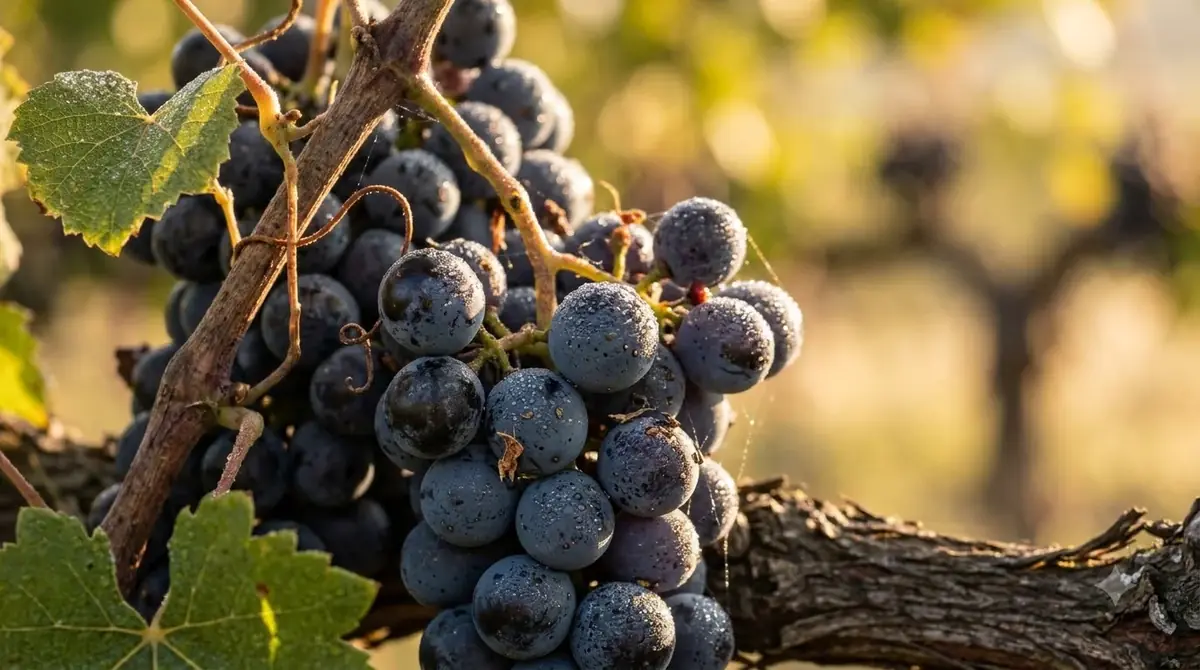
The red list includes the classic Bordeaux “big five”: Cabernet Sauvignon, Merlot, Cabernet Franc, Malbec and Petit Verdot. Three less common traditional varieties round it out: Carmenère, Gros Verdot and St-Macaire. A winemaker can combine any two or more, so a red meritage might be a Cabernet and Merlot pairing, a Merlot-led blend with Cabernet Franc, or a wider mix with a supporting share of Malbec or Petit Verdot. Winemaker magazine points out that the big three are the easiest to source if you buy in grapes, while Malbec and Carmenère can be harder to find.
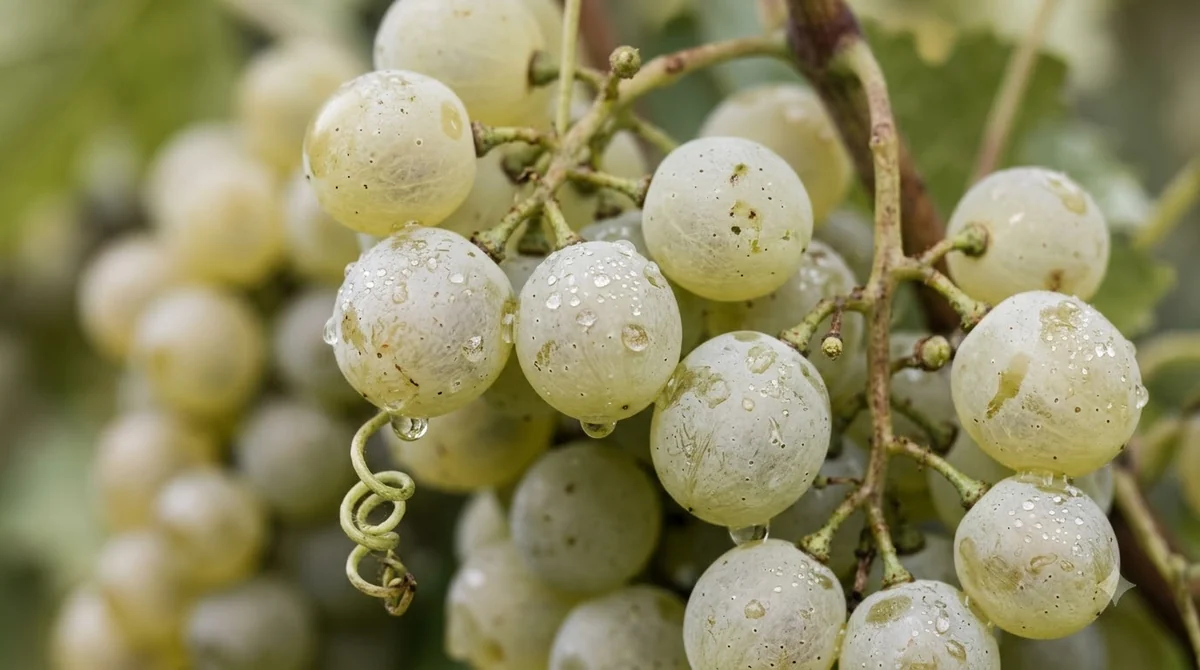
White meritage uses a much shorter list: Sauvignon Blanc, Sémillon and Sauvignon Vert, which is also called Muscadelle. Saveur describes white meritage as made by only a handful of wineries. When most people say “meritage,” they mean a red blend, and the red list is also where the Bordeaux roots show most clearly.
The list is strict. A wine that adds a grape from outside it can still be a fine blend, but it cannot carry the meritage name. That limit is the whole point of the category, because it keeps the name tied to a specific family of grapes.
The Rules Behind the Meritage Name
The Meritage Alliance sets three main conditions for the name: two or more approved varieties, no single variety above 90 percent, and membership with license approval. The rules are short, but they shape almost every bottle that carries the word.
The 90 percent ceiling does more than it appears to. Traditional American varietal labels required a minimum of 75 percent of the named grape, and meritage was built to escape that squeeze. A blend can lean hard on Cabernet Sauvignon, which is common in Bordeaux, and still qualify, as long as it isn’t almost entirely one grape. A wine that is 95 percent Cabernet Sauvignon can’t use the name at all. That explains why several celebrated Bordeaux-style bottles carry no meritage designation. Saveur names Insignia and Opus One in California, Almaviva in Chile, and Nicolas Catena Zapata in Argentina among the world’s finest bordeaux-inspired blends, and none of them is identified as a meritage.
Membership matters too. Wineries that want to use the name must join the Alliance and win license approval by following its guidelines. Canadian provinces handle it differently, which the FAQ below covers. Decanter’s explainer on Bordeaux blends takes a looser view of the wider category: a Bordeaux blend has no legal rule on percentages, and the term simply describes the grapes used. Meritage, by contrast, is a licensed trademark with fixed rules, so the name tells you more about the grape mix.
How Winemakers Build a Meritage Blend
Blending starts with separate lots of each variety, and the aim is balance. Most winemakers build the wine around one or two dominant grapes and add the others to fill in what is missing.
Guidance from Winemaker magazine starts with discipline. Ferment each variety separately, and blend only after every component wine is stable. Blending two or three stable wines can still produce an unstable result, so the finished blend should rest in bulk for at least a few weeks before bottling, and a month or two is often safer. Taste the components before settling on a ratio, because blending for balance can mean pairing an over-acidic lot with a softer one, or a pale wine with a deeper one.
Each grape has a job. Cabernet Sauvignon usually supplies the structure along with cassis and black currant notes. Cabernet Franc brings spice and a violet-scented aroma, and in a Saint-Émilion-style blend it can take the lead, though Merlot can lead there too. Merlot rounds and softens the wine and brightens the dark fruit with red cherry. Petit Verdot is the smaller player that adds color, tannin and depth. Guidance in Winemaker magazine favors finesse over power, so it recommends avoiding over-extracted, heavily oaked styles and letting acidity sit a touch higher than many typical California reds.
If you want to see how other red styles stack up, the Wine by Type guide lays out the main categories. Winemakers who want more color or a different profile from a non-Bordeaux source can’t use the meritage name for that wine, but a single variety such as the dornfelder grape shows a different kind of red entirely.
Typical Meritage Blend Ratios
Winemaker magazine lists blending ratios for several commercial bottlings, and five of them are shown below. They show Cabernet Sauvignon as the anchor in most cases, with Merlot and Cabernet Franc sharing the rest.
| Blend | Cabernet Sauvignon | Merlot | Cabernet Franc | Malbec |
|---|---|---|---|---|
| Woodward Canyon Walla Walla Valley Estate Red | 59% | 28% | 13% | – |
| Macari Bergen Road | 45% | 35% | 13% | 7% |
| Maleta Vineyards Meritage | 40% | 30% | 30% | – |
| Flora Springs Trilogy Meritage | 57% | 29% | 11% | 3% |
| Fess Parker American Tradition Reserve Meritage | 50% | 5% | 45% | – |
Across these five, Cabernet Sauvignon ranges from 40 to 59 percent, Merlot from 5 to 35 percent, and Cabernet Franc from 11 to 45 percent. Malbec appears in only two, at 3 and 7 percent, and Petit Verdot doesn’t appear in this group at all. The Wine by Type guide is a useful companion if you want to compare these blends with other red categories.
Those numbers have a direct effect on what you taste. A Cabernet-led blend, like the Woodward Canyon example at 59 percent, tends to feel firmer and more structured. A wine with a larger Merlot share feels rounder and easier to drink young. The Fess Parker example, with 45 percent Cabernet Franc, leans more on aromatic lift and spice. None of these comes close to the 90 percent limit, which shows how much room winemakers have within the rules. The split is a creative choice, and it can shift from one vintage to the next.
Taste, Serving, and Food Pairings for Meritage Grape Wines
Most red meritage is full-bodied, with firm tannins and medium acidity, so it rewards a little time in the glass, a serving temperature that is cool but not cold, and a rich food partner. Bordeaux-style reds tend to show black currant, black cherry, graphite, chocolate and dried herbs, and the grape mix decides which of those notes comes forward.
Structure and Taste
Cabernet Sauvignon carries most of the tannin in a typical blend, and Merlot softens it. The result feels grippy when young and smoother with time. Oak can add vanilla and spice, though Winemaker magazine’s advice leans toward restraint, so heavy oak is a style choice rather than a standard. Acidity stays steady, which keeps the wine fresh enough to match food.
Serving Temperature and Decanting
Full reds are best served between 60 and 65°F, which sits inside the 60 to 68 F range Wine Folly suggests for Bordeaux-style reds. A short stop in the refrigerator before pouring can bring a bottle down to that zone when a room runs warm. Young, firm blends often need air. Giving them 30 to 60 minutes in a decanter or a wide glass softens the tannins and lets the fruit open up. Older bottles with softer structure need less time.
Tip: If a young bottle tastes closed, harsh or drying, decant it for 30 to 60 minutes before you judge it.
Food Pairings
Red meritage pairs naturally with steak and other red meat. Wine Folly recommends keeping the seasoning simple, with salt and pepper, so the wine’s structure has room to show. Salt and fat soften tannin, which is why a seared, fatty cut tends to work better than a lean one. Oily fish clashes with firm reds, so a salmon fillet is a poor match for a big Cabernet-led blend. Spicy food is harder. Alcohol and tannin both amplify chili heat, so choose a lower-alcohol red or a cooler, fruit-forward wine for a fiery plate.
Storage follows the same logic as service. Keep unopened bottles on their sides in a cool, dark spot near 55°F. Once opened, a still red keeps for roughly three to five days when it is re-corked and refrigerated, so it is best to finish a bottle within that window.
Frequently Asked Questions
Quick answers to the questions buyers and home winemakers ask most often about the name, the grapes and the bottle.
Can wines made outside the United States use the Meritage name?
Yes, in limited cases. Wineries in Ontario and British Columbia have permission to use the term, and Ontario works under a letter of agreement with the Alliance. Ontario’s allowable red list leaves out St-Macaire, Gros Verdot and Carmenère, so a Canadian red has a narrower grape list than an American one.
Do home winemakers have to pay to use the name?
Commercial wineries must join, win license approval and pay a fee of one dollar per case. Home winemakers face fewer limits and can use the term on their labels more freely. Home winemakers who want to match the Alliance’s standard will still need two or more Bordeaux varieties and no more than 90 percent of one.
Do the grapes have to come from Bordeaux?
No. Winemaker magazine notes that grapes for these blends come from sources as varied as California, New York, Ontario, France, Italy, South America and Down Under. Home winemakers without access to local fruit can buy Bordeaux varieties as kits, concentrates, or pasteurized or frozen juice or must.
How long should a red meritage age?
Wine Folly recommends cellaring Bordeaux-style reds for 10 years or more. That makes it a sensible target for a serious bottle you plan to hold rather than open soon.
How much alcohol is in a typical meritage?
Wine Folly lists Bordeaux-style red blends at 13.5 to 15 percent alcohol by volume, with high tannins and a full body. Because alcohol amplifies chili heat, that range is worth remembering when you plan a spicy meal. Choosing a bottle at the lower end of the range is one simple adjustment.
Meritage is easiest to understand as a style rather than a grape. The approved varieties, the 90 percent ceiling and a few serving habits will help you pick a bottle with confidence, whether you’re buying one for a steak dinner or planning to hold it for years.
More in Wine Types & Grapes
 Zinfandel Sugar Content: Dry Red vs. White Zinfandel GramsUpdated Nov 21, 2026
 Best Zinfandel Substitute Options for Sipping and CookingUpdated Nov 21, 2026
 Zweigelt Food Pairing: Best Dishes, Cheeses, and Serving TipsUpdated Nov 21, 2026
 Zinfandel Tannins Explained: How Structure Shapes Every BottleUpdated Nov 21, 2026
 Zinfandel Sweetness Level: Dry Red vs. Sweet White Zin ExplainedUpdated Nov 21, 2026
 Xinomavro Food Pairing: Best Dishes, Styles, and Serving TipsUpdated Nov 21, 2026