

We may earn a commission when you buy through links on this page, at no extra cost to you. Learn more.
Typical aligote tasting notes are crisp and citrus-led, with lemon, green apple, white flowers, and sometimes hazelnut or flinty mineral notes. The defining feature is high, lively acidity, which gives the dry white wine a brisk, mouthwatering finish. Most examples are light to medium in body and are best approached as fresh, food-friendly Burgundian whites rather than as richer Chardonnay substitutes.
Aligoté has a long history in Burgundy, France, yet it is often less familiar than Chardonnay from the same region. A glass can be refreshing on its own, but its clean acidity also makes it particularly useful at the table, especially with seafood, goat cheese, and vegetable dishes. Understanding its aroma, structure, regional styles, and serving temperature makes it easier to recognize a balanced bottle and choose the right food.
The Core Flavor Profile
Aligoté is generally a dry white wine with a bright, fresh aromatic profile. Expect lemon, green apple, pear, and sometimes white peach, followed by floral notes such as acacia, linden, or hawthorn. The fruit tends to feel crisp rather than tropical or sugary, and the overall impression is usually clean, lifted, and refreshing.

On the nose, a young bottle may lead with lemon peel, tart apple, and white blossom. A swirl can bring out more delicate scents, including fresh grape, citrus pith, or a faint herbal edge. Some examples show hazelnut, almond, or grilled-nut notes, particularly when the winemaking gives the wine additional texture. These scents are supporting details rather than a reason to expect a heavily oaked or buttery white.
The palate often repeats the aromas with a more pronounced sense of acidity. Lemon and green apple provide the main line, while pear or white peach can add a softer fruit impression. A subtle saline, stony, or flinty note may appear toward the middle or finish. The finish is usually brisk and mouthwatering, encouraging another sip rather than leaving a sweet or heavy impression. These are the classic Aligoté markers described in Decanter’s overview of the grape, although individual producers and vineyard sites can shift the balance between citrus, orchard fruit, flowers, and savory notes. The Burgundy wine trade’s regional description also lists white-fleshed fruit, white blossom, peach, lemon, linden, acacia, hazelnut, and green apple among the grape’s aromatic possibilities; its overview is available from Bourgogne Wines’ Aligoté profile.
Acidity, Body, and Texture
Aligoté’s most dependable structural feature is high natural acidity. That freshness gives the wine its distinctive snap, keeps the fruit flavors focused, and makes it a natural match for dishes with citrus, salt, or a little richness. It should taste lively rather than soft or broad, even when the wine has some weight from lees contact or oak aging.
In body, Aligoté usually sits in the light-to-medium range. It is not typically as weighty as a rich, barrel-fermented Chardonnay, and it does not have the pronounced aromatic intensity associated with some Sauvignon Blanc. Think of a wine with a clear outline: the fruit is easy to recognize, the acidity is apparent, and the finish stays tidy. Alcohol warmth should not dominate the fruit or make the wine feel heavy.
Texture varies by producer and cellar choices. Stainless-steel fermentation commonly preserves a direct, crisp style, while time on fine lees can add a little roundness without removing the fresh edge. Oak aging is also used by some Burgundy winemakers, so not every Aligoté is austere or purely linear. A lightly oaked or lees-aged bottle may feel broader, with a hint of nut or spice, while a stainless-steel example is more likely to emphasize lemon, apple, and brisk acidity. Neither approach changes the grape’s basic identity: freshness remains the central point.
Burgundy Origins, Appellations, and Winemaking
Aligoté is closely associated with Burgundy, where it is grown from the Chablis area in the north to the Mâconnais in the south. Burgundy’s regional wine body says more than 1,800 of the roughly 2,000 hectares of Aligoté planted in France are in the region. Its two key Burgundy designations are Bourgogne Aligoté, a regional appellation, and Bouzeron, a village appellation in the Côte Chalonnaise.
Bourgogne Aligoté can come from eligible vineyard sites across Burgundy, so bottles under this name can express a range of local conditions. Bouzeron is a more specific clue: the regional body identifies it as the only village appellation among Burgundy’s village designations that permits a wine made exclusively from Aligoté. The appellation received AOC status in 1997. That does not mean every Bouzeron tastes identical, but the place name gives buyers a more focused geographic reference than the broad regional label.
Aligoté shares its parentage with Chardonnay: both are crosses of Pinot Noir and Gouais Blanc. The grape has been part of Burgundy’s viticultural history for centuries, and the Bourgogne Aligoté regional appellation was established in 1937. In the cellar, producers make choices that shape the final texture. Albert Bichot, for example, describes a Bourgogne Aligoté made with temperature-controlled stainless-steel fermentation and eight months of aging on fine lees. Other growers use oak, so it is useful to read the producer’s approach rather than assume every bottle follows one recipe. For a broader look at how grapes and styles differ, the site’s guide to Wine by Type can help put Aligoté in context.
A Practical Tasting Method
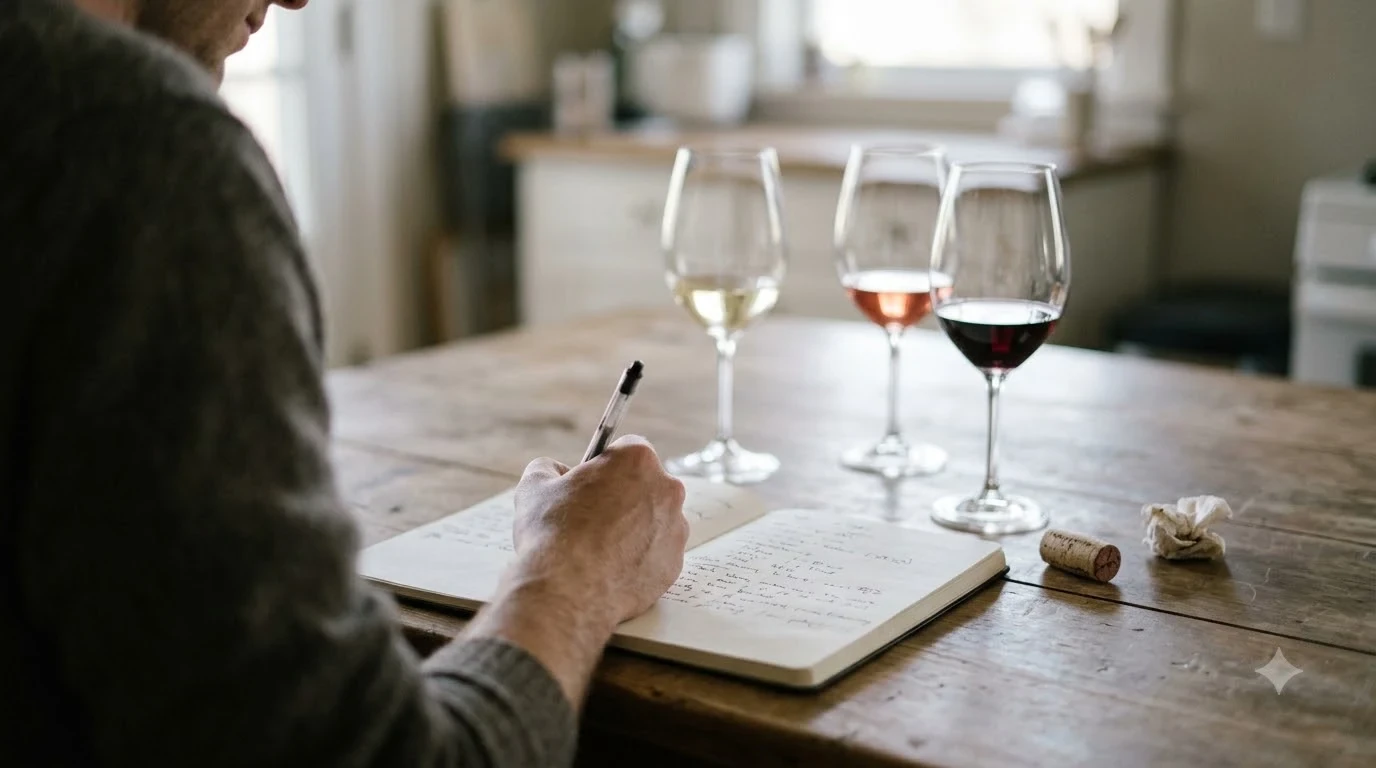
A simple three-stage tasting helps separate Aligoté’s fruit, structure, and finish. Begin with the wine in a clear glass and notice its color, then smell before tasting, and finally pay attention to how the acidity and flavors develop across the palate. A standard white-wine glass is sufficient; a large decanter is not needed for most young, fresh examples.
First, look for a pale lemon or pale gold color, sometimes with green reflections. Color alone cannot identify the grape, but it gives a useful first impression of a youthful white wine. Next, smell the wine before swirling. Try to identify one primary fruit aroma, such as lemon or green apple, and one secondary impression, such as white flowers, hazelnut, or flint. Swirl gently and smell again. More restrained bottles may open gradually, while fruit-forward examples can be expressive immediately.
On the palate, assess sweetness, acidity, body, and finish separately. Most still Aligoté is dry, so the fruit should not be mistaken for residual sugar. The acidity is usually the most noticeable structural feature: saliva gathers along the sides of the mouth, and the finish feels clean and brisk. Consider whether the texture is lean and direct or slightly rounded. Then check whether the finish recalls citrus, apple, nuts, or a mineral impression. Writing down those observations in plain language produces more useful tasting notes than relying on vague terms such as “crisp” alone. One useful format is to record the dominant fruit, the strongest non-fruit aroma, the level of acidity, the texture, and the finish. For example, a note such as “lemon and green apple, white blossom, high acidity, light body, saline finish” communicates more than a string of loosely related descriptors. Taste the wine again after five minutes; the extra air and slight rise in temperature can make a quiet floral or nutty note easier to identify.
Serving Temperature and Food Pairings
Serve Aligoté cool enough to keep its citrus character fresh, but not so cold that its aromas disappear. A practical starting point is around 48–52°F for a straightforward, youthful bottle. Some producers recommend a slightly warmer range, so allow the glass to warm gradually if the wine seems closed or its texture is difficult to notice.
Aligoté’s acidity makes it especially effective with foods that have salt, delicate richness, or a clean savory profile. Oysters, shellfish, grilled fish, and simply prepared white fish let the wine’s citrus and saline notes complement the food rather than overwhelm it. Goat cheese is another strong match: the wine’s acidity can meet the cheese’s tang, while the modest body does not bury its flavor. Burgundy’s regional wine body also points to seafood, oysters, line-caught bass, shellfish, poultry, roast pork, and fresh or aged cheese as pairings to consider.
For everyday meals, try Aligoté with a green salad, steamed vegetables, asparagus, a mushroom omelet, or a plate of mild charcuterie. Its bright acidity can cut through a little oil or butter, while salt in the dish can make the wine seem rounder. Avoid pairing it with very sweet sauces, which can make a dry wine taste sharp, and be cautious with intense chili heat. If the dish is strongly acidic, such as a lemon-heavy dressing, choose a wine with enough acidity to stand alongside it. Aligoté generally handles delicate flavors better than heavily smoked, very sweet, or highly spiced preparations.
| Producer example | Serving temperature | Suggested drinking window | Source detail |
|---|---|---|---|
| Albert Bichot Bourgogne Aligoté | 48–52°F (9–11°C) | Within 2 years | Eight months on fine lees in stainless steel |
| Maison Joseph Drouhin Bourgogne Aligoté | 53–55°F (12–13°C) | Optimal at 2–4 years; potential to 5 years | Fruit sourced mainly from Hautes Côtes de Beaune, Hautes Côtes de Nuits, and Côte Chalonnaise |
Tip: Start a young Aligoté at about 48–50°F, then let it warm in the glass. If the lemon and apple aromas seem muted straight from the refrigerator, give it a few minutes before deciding the wine lacks expression.
Choosing a Bottle and Understanding Age
For a first bottle, look for a dry Bourgogne Aligoté from a producer whose style is clearly described. Stainless-steel fermentation and early release usually point toward a direct, fruit-led wine, while lees aging or oak may suggest more texture. The label may also name Bouzeron, which identifies a more specific Aligoté-focused village appellation in the Côte Chalonnaise. Both styles can be worthwhile; the better choice depends on whether you want a brisk aperitif or a white wine with more detail at the table.
Most Aligoté is intended to be enjoyed relatively young, while its lemon, apple, and floral notes are fresh. Producer recommendations vary: Albert Bichot suggests drinking its example within two years to preserve fruit, while Maison Joseph Drouhin gives its Bourgogne Aligoté an optimal window of two to four years and an aging potential of five years. Those are producer-specific guides rather than universal deadlines. A high-quality wine with concentration and careful élevage may develop additional savory or nutty complexity, but a basic, bright bottling is usually not improved by long storage.
Store an unopened bottle in a cool, dark place with a steady temperature, ideally near 55°F, and keep a cork-finished bottle on its side. Once opened, close it securely and refrigerate it; most still wines retain their best character for about three to five days. Aligoté generally does not need extended decanting. Pour a modest glass, let it open for a few minutes, and see whether its aromas become more expressive. When comparing it with another high-acid white such as Sancerre, look at the grape variety and regional character as well as the acidity; the site’s Sancerre tasting notes offer a useful point of comparison. Aligoté’s appeal is its combination of crisp fruit, floral detail, and a distinctly Burgundian sense of place.
Frequently Asked Questions
These quick answers cover a few points that often come up when choosing or identifying Aligoté, including its relationship to sparkling Burgundy and its traditional place in local drinks.
Can Aligoté be used to make sparkling wine?
Yes. Aligoté is permitted in the production of Crémant de Bourgogne, the sparkling wine made in Burgundy. In that form, the finished wine’s bubbles and lees-derived character can change the tasting experience from the still, citrus-led profile described above.
Is Aligoté grown outside Burgundy?
Yes. In addition to Burgundy, Aligoté is grown in Bulgaria, Romania, Moldova, and Switzerland. Small plantings are also found in Washington State and California.
Does Aligoté ripen early?
Yes. Aligoté is considered an early-ripening grape and is relatively tolerant of cooler temperatures. Those traits help explain why it can be cultivated in a range of climates beyond its historic Burgundy home.
What is a Kir made with Aligoté?
Kir is a Burgundy aperitif made by combining a local dry white wine, traditionally Aligoté, with crème de cassis, a blackcurrant liqueur. The liqueur adds sweetness and dark-fruit flavor, so the resulting drink tastes very different from the unmodified wine.
Does Aligoté have another name?
Yes. Blanc de Trois, Vert Blanc, and Chaudenet Gris are recorded synonyms for the grape. These names are useful to recognize in grape references, although bottles sold as Bourgogne Aligoté or Bouzeron are generally identified by their appellation names.
Aligoté is a distinctive Burgundy white built around citrus fruit, floral aromas, and high acidity, with texture shaped by vineyard site and cellar decisions. Choose a fresh regional bottling for an easy aperitif or a more layered Bouzeron for seafood, poultry, and cheese, then serve it cool enough to keep its lively character in focus.
More in Wine Types & Grapes
 Zinfandel Sugar Content: Dry Red vs. White Zinfandel GramsUpdated Nov 21, 2026
 Best Zinfandel Substitute Options for Sipping and CookingUpdated Nov 21, 2026
 Zweigelt Food Pairing: Best Dishes, Cheeses, and Serving TipsUpdated Nov 21, 2026
 Zinfandel Tannins Explained: How Structure Shapes Every BottleUpdated Nov 21, 2026
 Zinfandel Sweetness Level: Dry Red vs. Sweet White Zin ExplainedUpdated Nov 21, 2026
 Xinomavro Food Pairing: Best Dishes, Styles, and Serving TipsUpdated Nov 21, 2026