

We may earn a commission when you buy through links on this page, at no extra cost to you. Learn more.
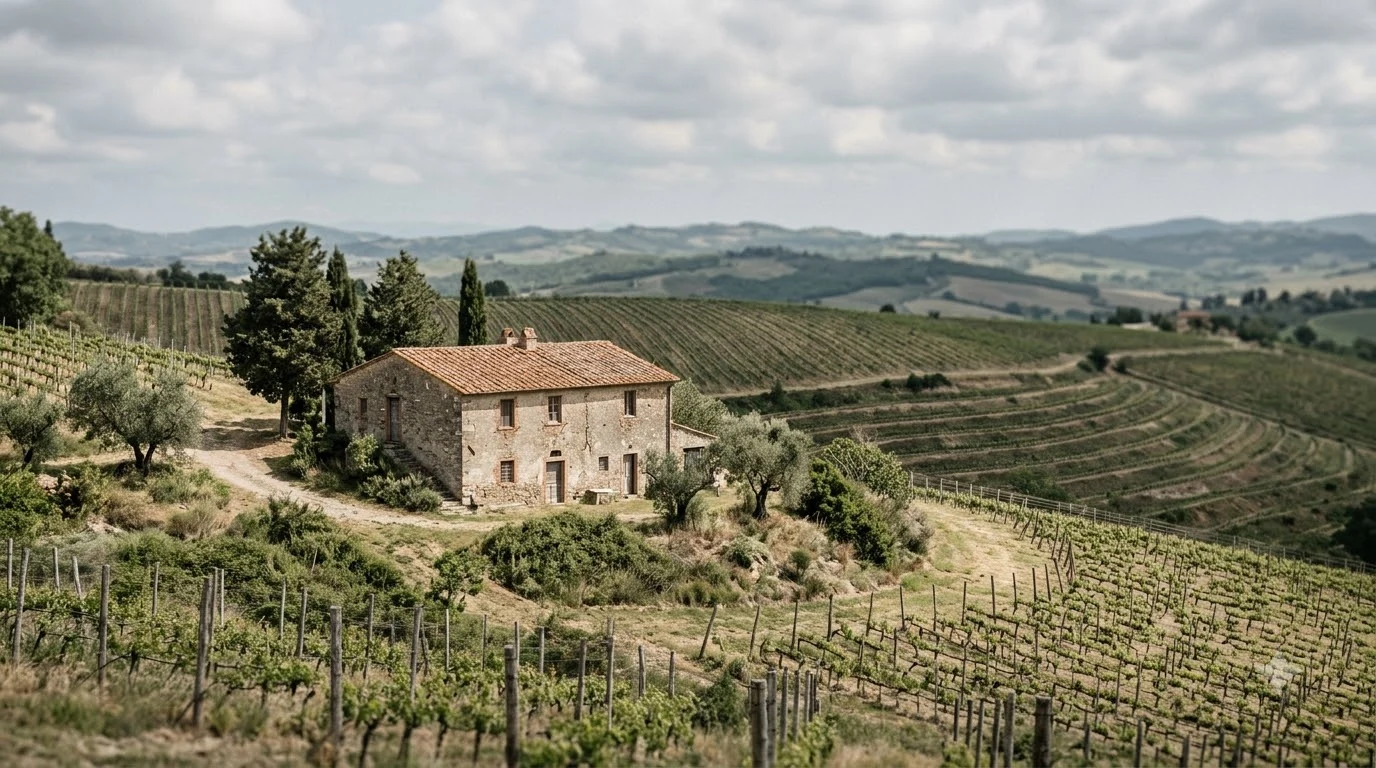
The lazio wine region in central Italy is best known for fresh whites such as Frascati, but it also makes distinctive reds from Cesanese and Nero Buono. Its vineyards stretch from the volcanic hills southeast of Rome to the coast and the inland slopes around Lake Bolsena. Learning the main appellations and grapes makes it easier to choose a bottle that suits a meal, whether the occasion calls for a crisp white or a savory red.
Lazio is often overshadowed by Tuscany, its northern neighbor, yet its wine culture is closely tied to Rome and the landscapes that surround the capital. Frascati remains the region’s most recognizable name, while smaller appellations reward drinkers who look beyond the familiar labels. The essential starting point is to understand how local grapes, soils, and food traditions shape the wines.
Where Lazio Sits and Why Its Landscape Matters
Lazio occupies central Italy’s western side, between the Tyrrhenian Sea and the Apennines, with Rome at its heart. Its position creates several wine-growing settings, from coastal vineyards to higher inland hills.
The region borders Tuscany and Umbria to the north and northeast, Abruzzo to the east, and Campania to the south. Vineyard areas extend across the provinces of Rome, Viterbo, Rieti, Frosinone, and Latina. Frascati and the Castelli Romani lie southeast of Rome; Montefiascone is farther north near Lake Bolsena; and the Cesanese districts are inland in Frosinone province. These distinct areas help explain why Lazio wines range from bright whites to structured native reds.
Rome shaped the local wine trade for centuries because vineyards near the capital could supply a large urban market. Frascati became the region’s best-known name, although its reputation was often built around easy-drinking wine rather than the full range of local quality. Today, producers are giving more attention to specific districts and grapes, including Bellone, Cesanese, and Nero Buono. For a contrast in how mountain terrain shapes regional wines, compare Lazio with the Savoie wine region, where altitude and local varieties also play central roles.
The Italian Trade Agency describes white wine as more than 80 percent of regional production, reflecting the importance of Malvasia- and Trebbiano-based wines. Red wine accounts for a smaller share, but includes some of Lazio’s most individual bottlings. That contrast between a broad white-wine tradition and localized red grapes is a useful starting point when choosing a bottle.
Volcanic Hills, Coastal Breezes, and Inland Valleys
Soil and elevation give Lazio’s appellations different growing conditions. Volcanic ground is important around the Castelli Romani and Lake Bolsena, while sandy coastal sites and inland hills create other settings for native grapes.
The Castelli Romani, a group of hill towns southeast of Rome, are closely associated with Frascati and neighboring white-wine appellations. Their volcanic origins left porous, well-drained soils that include tufa and other volcanic materials. The ground can shed excess water while retaining some moisture through warm periods. Abundant sunlight and breezes from the Tyrrhenian Sea help shape the growing season and can preserve freshness in grapes grown near the coast.
Farther north, Montefiascone and Lake Bolsena form another volcanic wine area, home to Est! Est!! Est!!! di Montefiascone. Coastal Cori and the inland Cesanese zone show why Lazio cannot be described by one soil type. Wine Enthusiast notes that Bellone grown in sandy coastal ground near Anzio can remain on ungrafted roots because phylloxera struggles in some sandy soils. Nero Buono is associated with volcanic slopes near Cori, while Cesanese is linked to the Ciociaria hills east of Rome. Their different settings help explain the contrast between brisk coastal whites and savory inland reds.
Frascati, Cannellino, and the Three DOCG Appellations
Lazio has three DOCG appellations: Frascati Superiore, Cannellino di Frascati, and Cesanese del Piglio. The first two represent the best-known white-wine area southeast of Rome, while the third gives the native Cesanese grape its highest appellation distinction.
Frascati DOC comes from the area around the town of Frascati and the wider Castelli Romani. Malvasia and Trebbiano are its traditional foundation, and the wines are generally dry, medium-bodied, and approachable. A basic Frascati often suits early drinking, while carefully made examples can show more depth and persistence. Its soft texture and fresh profile make it a practical choice for everyday meals, especially dishes with cheese, vegetables, or seafood.
Frascati Superiore DOCG has stricter production requirements than the basic DOC, and its wines often aim for extra concentration and aromatic definition. It is a useful choice beside carbonara, roast poultry, or other full-flavored dishes. Cannellino di Frascati DOCG is different: it is a sweet wine associated with late-harvest grapes and a traditional dessert-wine character. Pair it with fruit desserts, pastries, or blue cheese, making sure the food is not sweeter than the wine.
Cesanese del Piglio DOCG is Lazio’s leading red-wine appellation, from the inland hills of Frosinone province. The wines can show dark cherry, berry fruit, herbs, spice, and lively structure. Look for the DOCG name when you want a red with a strong local identity rather than a familiar international grape. The site’s Wine Regions overview offers additional context for understanding Italian DOC and DOCG names.
White Grapes: Malvasia, Trebbiano, and Bellone
Malvasia and Trebbiano form the backbone of Lazio’s best-known whites, while Bellone offers a more distinctive native alternative. These grapes appear in blends and single-variety bottlings, giving the region more range than the label of “Roman white wine” suggests.
Malvasia is a family of grapes rather than one single variety, and several forms are important in Lazio. Malvasia Bianca di Candia and Malvasia del Lazio are especially associated with Frascati blends. Depending on variety and harvest conditions, Malvasia can bring ripe orchard fruit, floral notes, and a rounded palate. Trebbiano often contributes freshness and a lighter profile, although the precise local form varies. Together, the grapes can create a white that feels soft in texture but still finishes cleanly.
Bellone deserves attention as a native white grape that can stand alone. Wine Enthusiast describes stone fruit, melon, and citrus notes, with some bottles showing herbs, tropical fruit, or toast. Producers around Cori and the coast have helped bring Bellone into focus through single-variety wines. Coastal examples can suggest salt and brisk acidity, making them natural partners for seafood, fried vegetables, or dishes with lemon. Read Wine Enthusiast’s profile of Lazio’s returning native grapes for further detail on Bellone, Nero Buono, and Cesanese.
Est! Est!! Est!!! di Montefiascone comes from northern Lazio near Lake Bolsena and is generally a dry white based on local combinations of Trebbiano and Malvasia varieties. Choose it for its style and producer rather than its memorable name. It can be a refreshing partner for fish, herb-flecked pasta, or antipasti. Marino, Colli Albani, and Colli Lanuvini are other white-wine names from the hills around Rome; tasting them beside Frascati shows how neighboring districts can give familiar grape families different expressions.
Red Grapes: Cesanese and Nero Buono
Cesanese is Lazio’s signature native red grape, while Nero Buono is a rarer variety centered on Cori. Both offer alternatives to international grapes and show how a specific growing area can shape a distinctive red wine.
Cesanese refers principally to two local varieties, Cesanese Comune and Cesanese di Affile. Its appellations include Cesanese del Piglio DOCG, Cesanese di Olevano Romano DOC, and Cesanese di Affile DOC, clustered in a relatively small area east and southeast of Rome. In the glass, Cesanese commonly combines berry fruit with herbs, cedar, and cooking spice. Decanter describes the wines as lively and medium-bodied, with cherry, raspberry, and green-pepper notes; Wine Enthusiast also points to high acidity and tannin, qualities that can support bottle development in well-made examples.
That combination of acidity and tannin makes Cesanese a good match for roast lamb, grilled pork, sausages, tomato-based meat sauces, and aged sheep’s cheese. A younger, fruit-forward bottle can suit charcuterie and grilled vegetables, while a more structured example can stand up to slow-cooked dishes. Serve lighter reds around 55 to 60 degrees Fahrenheit and fuller examples closer to 60 to 65 degrees. Decanter’s overview of Lazio wines also highlights the grape’s growing reputation and the range of regional styles.
Nero Buono is much more localized. Wine Enthusiast reports that 90 of the 91.5 hectares of the variety recorded in Lazio are around Cori. The grape can be difficult to grow, and its deeply colored wines often suggest black fruit, rhubarb, and black pepper. It is associated with volcanic soils and higher elevations near Cori, southeast of Rome, giving it a strong sense of place. Lazio also grows Sangiovese, Montepulciano, Merlot, and Syrah; Aprilia is associated with Merlot and Sangiovese, while Cerveteri, Cori, and Velletri include reds based on Montepulciano, Sangiovese, and Nero Buono. For a very different maritime region shaped by local grapes, the Tasmania wine region makes an interesting comparison with Lazio’s warmer central Italian setting.
Food Pairings, Serving Temperatures, and Choosing a Bottle
Lazio’s wines make the most sense alongside the food traditions of Rome and its surrounding countryside. Bright whites suit salty, fried, and seafood dishes, while Cesanese and Nero Buono can handle roasted meats, tomato-rich recipes, and aged cheeses.
Frascati is a versatile match for cacio e pepe, carbonara, and fried zucchini blossoms. Its freshness cuts through cheese, egg, and cured pork without overwhelming delicate flavors. Bellone suits seafood, grilled vegetables, and dishes with herbs or citrus; Est! Est!! Est!!! works with fish, simple antipasti, and herb-flecked pasta. For fried artichokes or supplì, choose a crisp white with enough acidity to refresh the palate. Acidic dishes need a wine with equal or higher acidity, or the wine can taste flat.
Cesanese pairs well with roast lamb, porchetta, grilled pork, and tomato-based meat sauces. Its acidity keeps the wine lively beside fatty meat, and its tannin feels softer with protein and savory depth. Nero Buono can meet roasted mushrooms, grilled sausage, braised beef, and aged cheeses. Salt and fat soften tannin, so structured reds often feel more balanced beside a savory meal than on their own; avoid pairing strongly tannic reds with oily fish.
Serve Lazio whites cool but not icy. Light Frascati and Est! Est!! Est!!! are usually best around 45 to 50 degrees Fahrenheit, fuller whites around 50 to 55 degrees, and sweet Cannellino around 43 to 50 degrees. For reds, aim for 55 to 60 degrees for lighter Cesanese and 60 to 65 degrees for fuller examples. These ranges preserve freshness and let the aromas show without making alcohol seem prominent.
| Wine style | Typical character | Serving range | Food match |
|---|---|---|---|
| Frascati DOC | Dry, fresh white | 45–50°F | Carbonara, fried vegetables |
| Frascati Superiore DOCG | More concentrated white | 50–55°F | Roast poultry, cacio e pepe |
| Cannellino di Frascati DOCG | Sweet late-harvest white | 43–50°F | Fruit tart, blue cheese |
| Cesanese del Piglio DOCG | Fresh, structured red | 55–65°F | Lamb, porchetta |
| Bellone | Bright, aromatic white | 45–50°F | Seafood, zucchini blossoms |
When shopping, start with the appellation and grape rather than assuming every Lazio wine tastes alike. Frascati is a reliable first step for a dry white; Frascati Superiore adds concentration; Cannellino is the sweet choice; and Cesanese del Piglio is the red to seek for a local specialty. For unusual native varieties, look for Bellone from Cori or the coast and Nero Buono from the Cori area.
Tip: For a first tasting, pour Frascati, Bellone, and Cesanese side by side. Use a 5-ounce pour and compare how acidity, texture, and fruit change with the grape and growing area.
Many Lazio whites are made to be enjoyed young, while structured Cesanese can develop more savory notes with time. Store bottles on their sides in a dark place near 55 degrees Fahrenheit, away from temperature swings; refrigerate opened still wine and aim to finish it within 3 to 5 days. For a broader European comparison, the Switzerland wine region also shows how local grapes and varied terrain define smaller wine areas, though its climate differs sharply from Lazio’s.
Frequently Asked Questions
Is Lazio the same as Latium?
Yes. Lazio is the Italian name, while Latium is the Latin form used in some English-language references. The ancient name is also related to the term “Latin,” reflecting the region’s place in early Roman history.
What does the name Est! Est!! Est!!! mean?
The name is tied to a medieval legend in which a servant marked inns serving good wine with the Latin word “Est,” meaning “it is” or “there is.” The story says repeated exclamation marks signaled exceptional enthusiasm for a wine in Montefiascone, though the tale is considered apocryphal.
What is the difference between DOC and DOCG?
Both are Italian protected-origin classifications, but DOCG adds tighter production controls and additional verification requirements. The letters on a bottle identify the appellation framework, not a guarantee that every producer’s style will be identical.
What did Pliny the Elder call Bellone?
Wine Enthusiast notes that Pliny the Elder referred to Bellone as uva pantastica or pane d’uva. The phrase is often translated as “grape as good as bread,” an ancient compliment to the variety’s fruit.
Does Lazio make sparkling wine?
Yes, including traditional-method bottlings based on Bellone and Nero Buono. Wine Enthusiast reports that Marco Carpineti devotes part of its production to sparkling wines from these native grapes, with the second fermentation taking place in the bottle.
Lazio offers much more than the familiar image of a simple white poured near Rome. Frascati, Bellone, Cesanese, and Nero Buono reveal different sides of a region shaped by volcanic ground, coastal air, and enduring food traditions. Start with one classic white and one native red, then explore the smaller appellations to find the styles that suit your table.
More in Wine Regions
 Willcox Wine Trail: Discover Arizona’s High-Elevation Wine CountryUpdated Nov 20, 2026
 Yakima Valley Wine Region: Find the Best Styles to TryUpdated Nov 20, 2026
 Vosne Romanee Wine Tasting: Identify Aromas and Choose Better PairingsUpdated Nov 20, 2026
 Yakima Valley Wine Festival: Find the Best Seasonal Wine EventsUpdated Nov 20, 2026
 Wales Vineyards: Discover Cool-Climate Wines and Where to VisitUpdated Nov 20, 2026
 Yountville Wine Festival: Discover Napa Wines and Local FoodUpdated Nov 20, 2026