

We may earn a commission when you buy through links on this page, at no extra cost to you. Learn more.
Pauillac wine comes from a small commune on the Left Bank of Bordeaux, where Cabernet Sauvignon-led blends from gravelly vineyards have long set the benchmark for structured red wine. The commune sits in the Haut-Médoc between Saint-Julien and Saint-Estèphe, and it holds 18 Grands Crus Classés from the 1855 classification. Three of Bordeaux’s five first-growth wines come from Pauillac, which makes the appellation one of the most recognized names in fine wine, as the Pauillac entry on Wikipedia outlines.
This guide explains what defines Pauillac wine, why its Cabernet-based blends age so well, how to serve them, and how to choose a bottle without overpaying for a famous name. It also points to other regional guides on this site, such as Arizona vineyards and Calistoga vineyards, for readers who want to compare how a warm-climate region approaches the same grapes.
Where Pauillac Sits in Bordeaux
Pauillac is a commune in the Haut-Médoc, the northern part of the Médoc peninsula on the left bank of the Gironde estuary. Its vineyards lie between Saint-Julien to the south and Saint-Estèphe to the north. The commune has about 3,000 acres of vines, or roughly 12 square kilometers, which is a modest area for a wine name that carries so much weight among collectors.
That small footprint is part of its identity. Pauillac is often described as the quintessence of Bordeaux wine, and the commune’s concentration of famous estates helps explain why its wines appear in so many collector cellars. Understanding the geography helps you see why the wines taste the way they do, because the Médoc’s gravel rises above the estuary and provides drainage that suits Cabernet Sauvignon.
The Grapes and Style of Pauillac Wine
Pauillac reds are built mainly on Cabernet Sauvignon, usually blended with Merlot and smaller amounts of other Bordeaux varieties. Cabernet Sauvignon is the world’s most popular red wine grape, according to Wine Folly’s Cabernet Sauvignon guide, and in Bordeaux it is most often blended rather than bottled alone. Wine Folly describes the grape as full-bodied, with medium-high tannins and medium-high acidity, and notes its typical alcohol range of 13.5 to 15 percent.
In the glass, a well-made Pauillac typically shows black currant, cedar, and graphite notes, with a firm structure that can feel tight in youth. Wines from the commune are often described as more structured and less overtly fruity than many New World Cabernets, which is why they reward patience. Younger bottles can be enjoyable with a meal, but the best examples usually show more complexity after several years in the cellar.
| Feature | What to expect with Pauillac |
|---|---|
| Main grape | Cabernet Sauvignon, usually blended with Merlot |
| Alcohol range | About 13.5 to 15 percent ABV, typical for Cabernet |
| Classified estates | 18 Grands Crus Classés under the 1855 classification |
| Serving temperature | About 15 to 20 °C (60 to 68 °F) |
| Aging potential | Ten years or more for many well-made examples |
Gravel, Structure, and Aging
The soils of the Left Bank are one of the reasons Pauillac has such a strong reputation. Wine Folly notes that gravelly soils are common in the Médoc and Graves, and gravel helps vines drain well and ripen Cabernet in a cool, maritime climate. That balance of ripeness and acidity gives the wine its backbone, which is also why tannins tend to be firm when the wine is young.
Because the structure is so firm, many Pauillac wines are best with time. Aging softens tannins, integrates oak, and lets the fruit and savory notes emerge. Wine Folly suggests Cabernet can age ten years or more, and many Pauillac estates are known for bottles that develop over a decade or longer. That said, not every vintage needs decades of cellaring, and the producer’s guidance and the vintage conditions are useful clues.
How to Serve and Decant Pauillac
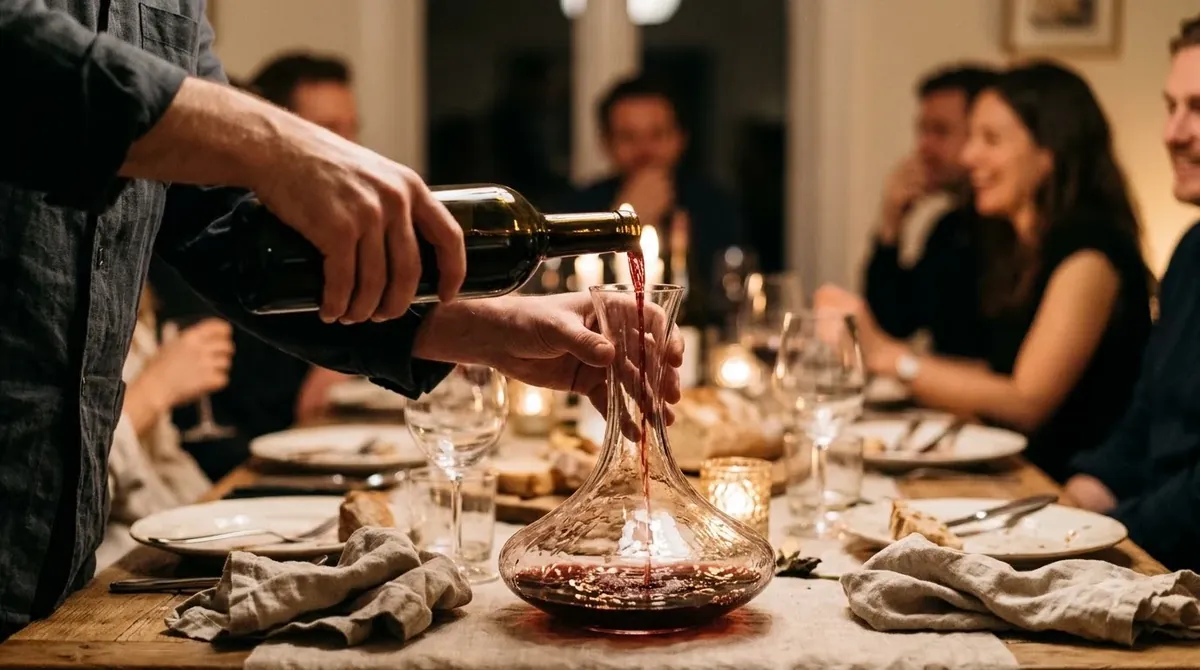
Serve Pauillac slightly cooler than room temperature, around 15 to 20 °C, a range that Wine Folly also gives for Cabernet. Wine Folly recommends an oversized glass and decanting for about an hour for Cabernet, which gives the wine time to open and softens any hard edges in a young bottle. Older bottles may need less time, since sediment and a delicate structure can break down faster after decades in the bottle.
Pairing is straightforward for these wines. Roast lamb, beef, and rich braises are classic matches, because the tannins and acidity work well with fat and protein. Hard cheeses such as aged Comté or Cheddar also complement a mature Pauillac. Lighter dishes with delicate sauces tend to be overpowered by the wine’s structure, so save the Pauillac for a main course with some weight to it.
How to Choose a Pauillac Bottle
For most buyers, the first decision is whether to look for a classified estate or a less famous producer from the same commune. Classified estates carry a long reputation and often a higher price, which reflects demand as much as quality. Other producers from Pauillac can offer the same style and structure in a more accessible format, especially in younger vintages. Ask a retailer about the vintage, the cellar time the producer recommends, and whether the bottle is ready to drink or needs time.
Vintage matters in Bordeaux, because weather in a given year can affect ripeness and tannin. A reputable merchant can tell you whether a year is generally considered drinkable young or better held. If you are buying for a special meal, choose a bottle from a vintage that suits your timing rather than assuming the most famous name is always the right choice.
Tip: Serve Pauillac with food and allow the wine to breathe in the glass. Many people find that a young bottle tastes much more open after an hour in a decanter, while an older bottle should be opened gently and poured with care.
Who Pauillac Wine Suits Best
Pauillac is a strong choice for people who enjoy structured red wines and who are willing to wait for the best bottles to develop. It suits dinner parties, celebrations, and collectors who value aging potential. It may feel too firm or austere for drinkers who prefer soft, fruit-forward reds, especially when the wine is young. For those readers, a lighter Merlot-based Bordeaux or a New World Cabernet with more immediate fruit can be a better first step before exploring the commune.
If you are building a broader understanding of Bordeaux, start with the wine regions guide. It explains how the Left Bank and Right Bank differ, which will help you place Pauillac in context alongside neighboring communes and other appellations.
Frequently Asked Questions
What grape is Pauillac wine made from?
Pauillac reds are built mainly on Cabernet Sauvignon, usually blended with Merlot and other Bordeaux varieties. The wines are typically full-bodied with firm tannins and good acidity.
How many classified estates are in Pauillac?
Pauillac has 18 Grands Crus Classés under the 1855 classification of Bordeaux wines. Three of the five first growths of Bordeaux come from the commune.
How long can Pauillac wine age?
Many well-made Pauillac wines can age ten years or more. Younger bottles often benefit from decanting, while older bottles need careful handling because they may have sediment.
What should I serve with Pauillac?
Roast lamb, beef, and rich braises work well, as do aged hard cheeses. The wine’s structure needs food with some weight, so it is usually best served with a substantial main course.
Pauillac wine rewards patience and good food. Choose a vintage that matches your timing, serve the wine at the right temperature, and give young bottles time to open. For more background on how Bordeaux’s regions differ, explore the wine regions guide and compare Pauillac with other appellations you enjoy.
More in Wine Regions
 Willcox Wine Trail: Discover Arizona’s High-Elevation Wine CountryUpdated Nov 20, 2026
 Yakima Valley Wine Region: Find the Best Styles to TryUpdated Nov 20, 2026
 Vosne Romanee Wine Tasting: Identify Aromas and Choose Better PairingsUpdated Nov 20, 2026
 Yakima Valley Wine Festival: Find the Best Seasonal Wine EventsUpdated Nov 20, 2026
 Wales Vineyards: Discover Cool-Climate Wines and Where to VisitUpdated Nov 20, 2026
 Yountville Wine Festival: Discover Napa Wines and Local FoodUpdated Nov 20, 2026