

We may earn a commission when you buy through links on this page, at no extra cost to you. Learn more.
santa margherita pinot grigio alcohol content is 12.5% ABV for the standard bottling listed by the producer. That places it in a familiar range for a dry northern Italian white wine, but it is a little stronger than a 12% reference wine used in many standard-drink examples. A measured 5-ounce pour contains about 0.625 fluid ounces of pure alcohol, so serving size matters as much as the percentage on the bottle.
Santa Margherita is known for a crisp, dry Pinot Grigio with apple and citrus character, and the producer’s published details give useful context for understanding its alcohol level. Here is how to interpret the 12.5% figure, why listings for other vintages may not match it exactly, and what that means when pouring, serving, or comparing the wine with other Pinot Grigios.
Santa Margherita’s Standard Pinot Grigio Is 12.5% ABV
The producer lists its standard Pinot Grigio at 12.5% alcohol by volume, or ABV. In practical terms, 12.5% of the wine’s liquid volume is pure ethanol; it is not a measurement of sweetness, body, calories, or how quickly a person will feel the alcohol.
The producer’s Pinot Grigio specifications identify the wine’s production zone as the Adige River Valley and give an altitude range of 985 to 1,475 feet. They also recommend serving the wine at 50 to 54 degrees Fahrenheit in a medium-sized tulip-shaped glass. Those details matter because the bottle is presented as a dry, aromatic northern Italian white rather than a low-alcohol spritzer or a sweet wine.
The producer’s tasting description points to a straw-yellow color, a clean and intense aroma, and a dry palate with Golden Delicious apple notes. Wine Enthusiast also describes ripe citrus, apple, a hint of almond skin, and lively acidity. These characteristics can make the wine seem especially refreshing, but a bright, crisp taste does not mean the wine contains little alcohol. Acidity and alcohol are separate elements of a wine’s structure.
VinePair’s review of the 2022 bottling lists 12.5% ABV as well. That independent listing supports the producer’s current figure for the familiar bottling. The most useful shorthand for shoppers is therefore 12.5% ABV, with the understanding that different vintages, regions, and special bottlings can carry different specifications.
Why Bottles and Online Listings May Show Different Figures
Alcohol content is not a universal, permanent number for every wine that carries the Santa Margherita name. The producer’s standard U.S. Pinot Grigio is listed at 12.5%, while archived reviews of older vintages have recorded 12% and some separate Pinot Grigio bottlings carry other figures.
For example, Wine Enthusiast’s review of the 2008 Santa Margherita Pinot Grigio from Alto Adige recorded 12% ABV, while its 2010 review listed 12.5%. These are different vintage entries, not proof that one source made a mistake. The 12.5% figure is the strongest general answer for the current standard wine, while the historic reviews show why an old bottle database may disagree.
Santa Margherita’s Italian site has a Pinot Grigio Valdadige DOC product page that states 12.50% alcohol by volume. The brand has also published technical information for distinct Pinot Grigio expressions. Regional sourcing, the specific product designation, grape ripeness, and vintage can all contribute to differences in the finished wine.
Vintage is one reason for variation. Grapes accumulate sugar as they ripen, and yeast converts fermentable sugar into alcohol during fermentation. If grapes are harvested at a different stage of ripeness or the winemaking target changes, the finished wine may not land at precisely the same ABV each year. Retail listings can also preserve an older specification after a producer updates a product page or a new vintage reaches stores. A database may be describing a 2008 or 2010 release even though the shopper is looking at a more recent bottle. Use the 12.5% figure as the typical answer for the standard current bottling, then use the label on the specific bottle as the final reference when its listed number matters.
What 12.5% ABV Means in a Glass or Bottle
ABV makes it possible to estimate the amount of pure alcohol in a pour. At 12.5% ABV, a 5-fluid-ounce glass contains 0.625 fluid ounces of pure alcohol, while a full 750-milliliter bottle contains 93.75 milliliters of pure alcohol before accounting for small measuring differences.
The U.S. National Institute on Alcohol Abuse and Alcoholism explains its standard-drink definition as 14 grams, or about 0.6 fluid ounces, of pure ethanol. Its reference example is 5 ounces of table wine at 12% ABV. Because Santa Margherita’s standard Pinot Grigio is 12.5%, a 5-ounce pour contains slightly more alcohol than that reference example: about 14.6 grams of ethanol by volume-and-density calculation.
| Pour or container | Wine volume | Pure alcohol at 12.5% ABV | Approximate U.S. standard drinks |
|---|---|---|---|
| Small pour | 3 fl oz | 0.375 fl oz | 0.63 |
| Measured glass | 5 fl oz | 0.625 fl oz | 1.04 |
| Large pour | 6 fl oz | 0.75 fl oz | 1.25 |
| Half bottle | 375 ml | 46.9 ml | about 2.64 |
| Full bottle | 750 ml | 93.75 ml | about 5.28 |
The estimates in the table use 0.6 fluid ounces, or 14 grams, of ethanol as one U.S. standard-drink equivalent. They are rounded for easy comparison rather than presented as laboratory measurements. A 5-ounce pour is just over one standard drink at 12.5% ABV, and a full 750-milliliter bottle contains a little more than five such equivalents.
A standard 750-milliliter bottle holds about 25.4 U.S. fluid ounces. That is just over five 5-ounce pours, which is why the familiar serving estimate is approximately five glasses per bottle. A 6-ounce home pour produces about four full glasses, not five, and each glass contains more alcohol than the 5-ounce example.
These calculations explain why the size of the glass can be misleading. The alcohol percentage stays the same, but the total ethanol rises in direct proportion to the amount poured. A 6-ounce serving contains 20% more wine than a 5-ounce serving, so it also contains 20% more alcohol at the same ABV.
How Its Alcohol Level Fits the Wine’s Style
At 12.5% ABV, Santa Margherita Pinot Grigio sits in the moderate range for a dry still white wine. It is not an especially low-alcohol wine, but it is also far from the high-alcohol style found in some ripe, full-bodied whites or powerful reds.
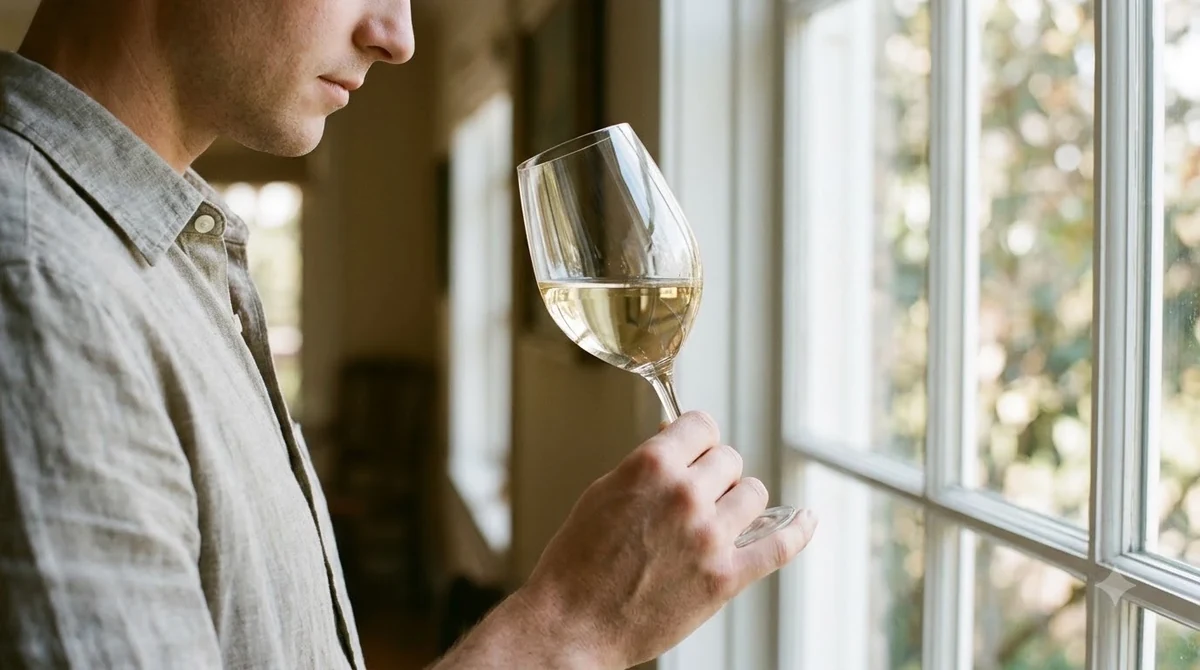
Alcohol contributes warmth and a sense of weight on the palate. Acidity contributes freshness and a mouthwatering edge. Santa Margherita’s crisp profile can make its alcohol feel less prominent than it might in a softer, richer wine, but that sensory impression does not change the amount of ethanol in the glass.
The distinction between the grape and the style is useful. Pinot Grigio and Pinot Gris are names used for the same grape variety, but the wines made from it range from light, dry, and brisk to richer, more textured, and more aromatic. Decanter’s discussion of Italian Pinot Grigio describes marked differences between northern Italian regions and notes that some expressive examples are made at higher ripeness and higher alcohol. The grape name alone does not establish a fixed ABV.
Santa Margherita describes a process designed to preserve delicate fruit and floral aromas by fermenting Pinot Grigio without prolonged skin contact. The company traces this approach to an inspiration in 1961, when its winemaker looked to traditional sparkling-wine techniques. The current producer page says the grapes are hand-harvested, soft-crushed, and fermented in temperature-controlled tanks. Its dry apple-and-citrus profile is therefore a product of both grape variety and winemaking choices, not simply the alcohol percentage.
For another perspective, a shopper comparing bottles can look at the stated ABV alongside body, acidity, sweetness, and origin. A Pinot Grigio at 12% may feel lighter than a more concentrated version at 13.5%, but a difference of half a percentage point is not enough by itself to predict flavor or quality. The producer, growing site, harvest decisions, fermentation, and serving temperature all contribute.
Serving Temperature, Food Pairings, and Freshness
Serve Santa Margherita Pinot Grigio cool rather than ice-cold. The producer recommends 50 to 54 degrees Fahrenheit, a range that keeps the wine refreshing while allowing its apple, citrus, and floral aromas to show.
Very cold temperatures can mute aroma and make a wine seem more neutral than it is. If the bottle has been stored in a typical refrigerator, allow it to warm briefly before pouring rather than serving it straight from the coldest part of the fridge. A medium-sized tulip-shaped glass, which narrows slightly toward the rim, is the producer’s recommended shape because it gathers the wine’s aromas without requiring a large bowl.
The winery suggests serving the wine as an aperitif or pairing it with fresh cheeses, white meats, soufflés, shellfish, seafood pasta, and seafood rice dishes. These are sensible matches for a dry white with lively acidity. The acidity can refresh the palate between bites of rich or lightly creamy food, while the wine’s apple and citrus notes work naturally with simply prepared fish and shellfish.
Try it with grilled shrimp, a seafood risotto, roast chicken, or a fresh cheese plate. For a dish with lemon, herbs, and olive oil, the wine’s dry profile can complement the seasoning without competing with it. Avoid matching it with very sweet desserts: a dessert generally tastes best when the wine is at least as sweet as the food. Extremely hot chili dishes can also make alcohol seem more prominent, so a milder preparation is usually the better match.
For storage, keep an unopened bottle away from heat and direct sunlight. The producer describes this Pinot Grigio as intended to be enjoyed fresh, with a stated aging potential of 1 to 2 years. After opening, keep the bottle in the refrigerator and use a stopper; a practical window for an opened still white wine is about 3 to 5 days, with the freshest aromas usually showing earlier.
Tip: Chill the bottle to about 50 to 54 degrees Fahrenheit, then pour a measured 5-ounce serving. That keeps the wine within the producer’s serving range and makes its 12.5% ABV easier to compare with other wines.
Comparing Santa Margherita With Other Pinot Grigio Bottles
When comparing Pinot Grigio, use alcohol level as one data point rather than as a shortcut for judging strength, quality, or style. A difference between 12% and 12.5% ABV is modest in percentage terms, while changes in acidity, residual sugar, body, and serving size can have a much larger effect on the experience.
For a like-for-like comparison, start with the same pour size and read each wine’s ABV. A 5-ounce glass at 12% contains 0.6 fluid ounces of pure alcohol; the same pour at 12.5% contains 0.625 fluid ounces. That is a difference of 0.025 fluid ounces of ethanol per glass. If the glass is 7 ounces, however, the total alcohol is greater regardless of which bottle has the lower percentage.
Brand comparisons are most useful when the specific bottle and vintage are clear. Readers looking at a value-oriented boxed wine can compare the black box pinot grigio alcohol content with Santa Margherita’s 12.5% listing, while those considering another familiar Italian label can check the cavit pinot grigio alcohol content. Use the same serving-size calculation for each rather than assuming that all Pinot Grigio is bottled at the same strength.
Packaging is not a reliable predictor of ABV. A boxed wine may be lighter, similar, or stronger than a bottled wine, depending on its blend and production choices. Likewise, a well-known producer name does not guarantee that every wine in its range has identical alcohol content. The Wine Brands section can help readers understand why labels within a category still need to be compared individually.
Finally, remember that ABV describes concentration, not the total alcohol in a bottle. Two bottles can both contain 750 milliliters, yet one at 12% has 90 milliliters of pure alcohol and one at 12.5% has 93.75 milliliters. For anyone tracking pours, the combination of bottle size, ABV, and actual serving size gives a more complete picture than the front label or grape name alone.
Frequently Asked Questions
The quick answers below address common questions about Santa Margherita’s alcohol figure, bottle size, and Pinot Grigio style. They also clarify how a producer’s current specification can differ from historical listings for older releases.
Is Santa Margherita Pinot Grigio considered a dry wine?
Yes. The producer describes its standard Pinot Grigio as dry and bone-dry, with Golden Delicious apple character. A dry wine can still smell fruity because fruit aromas do not necessarily indicate residual sugar.
Does Santa Margherita make Pinot Grigio from only one grape?
The producer identifies Pinot Grigio as the grape for its signature wine. Pinot Grigio is also known as Pinot Gris, and the grape’s berries can develop a grayish-pink or copper-toned skin color despite being used for white wine.
Why does the wine have a white color if the grape skins are tinted?
Color extraction depends on how long juice stays in contact with grape skins. Santa Margherita says its signature approach ferments the juice without skin contact, limiting the transfer of pigment that would otherwise give the wine a deeper pink or copper hue.
How long does Santa Margherita Pinot Grigio typically age?
The producer gives its signature Pinot Grigio an aging potential of 1 to 2 years and says it is meant to be enjoyed fresh. That is a guide to the intended drinking window, not a guarantee that every bottle will develop identically under every storage condition.
What glass does Santa Margherita recommend?
The producer recommends a medium-sized tulip-shaped glass that narrows toward the rim. The shape helps concentrate aromas such as apple and citrus while keeping the serving size easy to control.
For the standard Santa Margherita Pinot Grigio, 12.5% ABV is the practical figure to remember, while the bottle’s own details take priority for a particular vintage or separate bottling. Pair that percentage with a measured pour and the producer’s 50-to-54-degree serving range for a clear understanding of what is in the glass.
More in Wine Brands
 Underwood Wine Price: Compare Bottles, Cans, and Pack SizesUpdated Nov 21, 2026
 Zenato Wine Price: Compare Styles and Choose the Right BottleUpdated Nov 21, 2026
 Zuccardi Wine Price: Compare Bottles and Find the Right RangeUpdated Nov 21, 2026
 Yellow Tail Moscato Review: Taste, Sweetness and Serving TipsUpdated Nov 21, 2026
 Wolf Blass Yellow Label Review: Choose Your Best StyleUpdated Nov 21, 2026
 Wolffer Estate Rose Review: Choose the Right Bottle for Your TableUpdated Nov 21, 2026