


We may earn a commission when you buy through links on this page, at no extra cost to you. Learn more.
The best wine cellar humidifier reviews generally favor ultrasonic mist units for small closets, hygrostat-controlled units for larger rooms, and wick-based evaporative units for dry climates, with a separate hygrometer to confirm the air is moist enough. Humidity matters because low moisture can dry out organic corks over time. Before buying anything, measure the room for a week, then choose a unit that fits its size and climate.
Wine cellar humidifier reviews are easiest to read once you know what problem you are solving. A basement wine room in a humid region behaves very differently from a closet in a heated apartment. The Wikipedia entry on wine cellars notes that low humidity can dry organic corks, and that active humidification may be needed only in a very dry climate. It also describes an older method of spreading gravel on the floor and sprinkling it with water. That approach still has supporters, but it is hard to control, which is why most buyers now compare powered units with a built-in control or a separate gauge.
Quick Comparison
The table below sorts the main humidifier types by how they add moisture and where they fit best. These are general traits of each category, not ratings of individual models.
| Type | How It Adds Moisture | Upkeep | Noise | Best Fit |
|---|---|---|---|---|
| Ultrasonic mist | A vibrating plate turns water into fine mist | Frequent refills, distilled water recommended | Very quiet | Closets and shelf units |
| Evaporative wick | A fan moves air across a wet wick | Periodic wick replacement | Low fan hum | Dry climates, medium rooms |
| Passive tray or gravel | Water evaporates slowly from an open tray | Top up water, watch for mold | Silent | Earth or stone floors, small budgets |
| Hygrostat-controlled unit | Runs only when humidity drops below the set point | Regular reservoir cleaning | Varies by model | Walk-in and large cellars |
Best for Small Closets and Shelf Units: Compact Ultrasonic Mist
A compact ultrasonic unit is the most common choice for a wine closet or a cabinet holding a few dozen bottles. It sits on a shelf, uses little floor space, and adds moisture without heat or a fan.
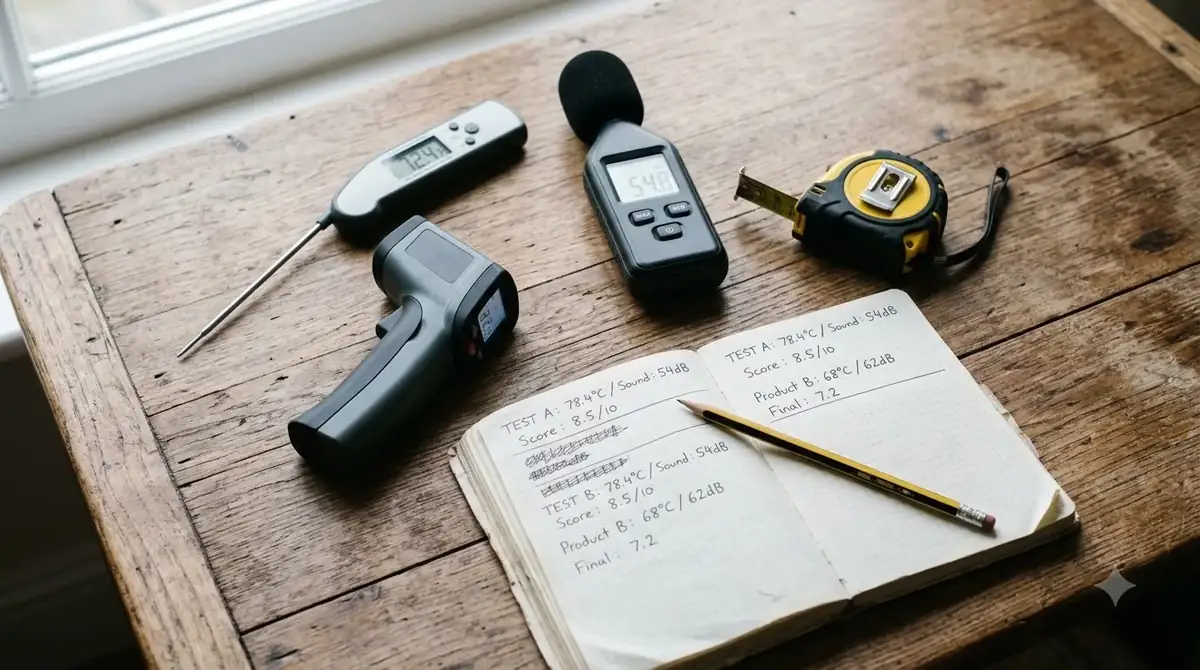
Why it stands out: Because the mist comes from a vibrating plate rather than a fan, these units stay quiet. That matters when the cellar sits in a living space such as a dining room or a den, where a humming appliance is noticed. Their small footprint also means they can be tucked beside bottles without crowding the rack.
Keep in mind: Tap water leaves white mineral dust on the plate and on nearby bottles, so distilled water is the usual recommendation. Empty and dry the reservoir between refills so that mold does not start in standing water. Ultrasonic units also need the most frequent attention of any type on this list.
Best for: Apartment owners with a closet cellar of up to a few dozen bottles, or anyone who wants humidity support without a drain or plumbing connection.
Best for Walk-In and Large Cellars: Hygrostat-Controlled Unit
Larger rooms need equipment that reacts to the air around it instead of running at full output all day. A hygrostat-controlled humidifier reads the humidity and switches on only when the level drops below the setting the owner chooses.
Why it stands out: A built-in control keeps the room closer to a steady reading and avoids the swings that happen when a fixed-output unit runs without feedback. Pairing the unit with a separate hygrometer lets you check the control. Many hygrometers drift over time, and the Wikipedia entry on hygrometers notes that many instruments need regular recalibration.
Keep in mind: Setup costs more, and output must match the room’s volume. A small humidifier in a large room will run constantly and still fall short. Check the stated coverage area, and make sure the door seals well, since a loose wine cellar door lets the humidified air escape.
Best for: Walk-in cellars and basement wine rooms where the owner wants a set-and-check system that needs little daily attention. For setup background, see the wine cellar humidifier guide.
Best for Dry Climates: Evaporative Wick Humidifier
In very dry regions, a fan-driven evaporative unit can add moisture faster than a passive tray. Air moves across a wet wick, and water leaves the wick and enters the room. The rate depends on how much air moves and how dry the room is.
Why it stands out: Evaporative designs do not rely on a mist plate, so they tolerate tap water better than ultrasonic units, although distilled water still extends the life of the wick. Because the air can only absorb so much water, these units tend to slow down as the room gets close to saturation, which gives a built-in margin against over-humidifying.
Keep in mind: The wick needs replacing on a schedule, and the fan adds a small amount of noise. Check that the wick is easy to reach and that replacement parts are available for the model before you buy.
Best for: Owners in arid climates with a medium-sized room who want steady output and can tolerate a little fan noise.
Best for Budget Setups: Passive Tray or Gravel Method
The traditional approach uses an open tray of water or a layer of gravel on the floor. Water evaporates slowly, raising humidity without any power, and the method has been used in older cellars for generations.
Why it stands out: The passive method costs little and makes no noise. The Wikipedia entry on wine cellars quotes older guidance that recommends about one inch of gravel on the floor, sprinkled periodically with a little water. Nothing needs to be plugged in, so there is no electrical risk in a damp room.
Keep in mind: Passive methods give little control. Output rises and falls with room temperature and airflow, and standing water can grow mold or leave the floor wet. In a truly dry room, a passive tray rarely matches a powered unit.
Best for: Cellars with an earth or stone floor and a naturally damp room, where humidity already sits in a reasonable range and only a small boost is needed.
Best for Mixed Use: Units with a Built-In Hygrometer
Some humidifiers include a display that shows humidity and temperature, so the owner can read the room without a second device. This suits people who want one unit to handle both moisture and monitoring.
Why it stands out: A built-in display removes the need to carry a separate gauge into the room. Hygrometers come in several types, and the Wikipedia entry on hygrometers notes that metal-paper coil devices, common in inexpensive gauges, can vary by 10 percent or more. A unit that reports its own reading gives a useful first check, even if it is not a laboratory instrument.
Keep in mind: Built-in sensors drift too. Compare the display with a separate hygrometer every few months, and do not treat one number as proof that conditions are stable.
Best for: Owners who want one device to handle both humidification and monitoring, especially in a mid-sized room.
How to Choose
Start with the room. Measure its volume and note whether it is a closet, a walk-in space, or a basement room. Small closets suit ultrasonic units, while larger rooms usually need a control that responds to the air. Then consider climate. A room that stays moist year-round may need only a passive tray, while a dry climate may call for an evaporative unit or a controlled system.
Next, plan for monitoring. A hygrometer tells you whether the humidifier is doing its job, and a gauge of either the coil or electronic kind is enough for most home cellars, as long as its reading is checked from time to time. Finally, think about upkeep. Ultrasonic units need frequent refills, evaporative units need wick changes, and passive trays need checks for mold. For more accessory ideas, browse the Accessories Library.
Tip: Place the humidifier away from the bottles and on a level surface, then check the reading each morning for the first week. Adjust the setting or the unit’s position before you assume the room is fine.
Frequently Asked Questions
What humidity level should a wine cellar keep?
The Wikipedia entry on wine cellars does not set one fixed figure, so the practical goal is a steady, moist room rather than a single number. The aim is to keep the air moist enough that corks stay supple, while avoiding standing water and mold. A hygrometer shows whether the room is close to that goal.
Can I use a regular household humidifier in a wine cellar?
A household humidifier can work, but it is built for living spaces and often runs on a fixed output or timer. A unit with a control or a built-in hygrometer usually gives steadier results in a cellar. Check the mist output and reservoir size before using one in a closed room.
Do I need distilled water for a cellar humidifier?
Distilled water is commonly recommended for ultrasonic units, because tap water leaves white mineral dust on the plate and nearby surfaces. Evaporative units also last longer on distilled water. Empty and dry the reservoir between refills to limit mold.
How can I tell if my wine cellar is too dry?
Track a hygrometer reading over several days rather than relying on one check. Look for corks that have pushed out of bottles, levels that drop over time, or a room that feels dry to the touch. A stable reading and healthy-looking corks are better signs than a single measurement.
Choosing among the best wine cellar humidifier reviews comes down to the room itself. Measure it, match the unit to its volume and climate, and check the result with a second instrument. Once the air is right, the bottles can rest undisturbed for as long as you plan to keep them.
More in Wine Accessories
 Coravin Vs Vacu Vin: Choose the Right Wine Saver for Your BottlesUpdated Nov 21, 2026
 Zwilling Wine Stopper Review: Preserve Open Bottles LongerUpdated Nov 21, 2026
 Wine Enthusiast Wine Preserver Review: Features, Benefits and LimitationsUpdated Nov 21, 2026
 Wine Enthusiast Wine Stopper: An Easier Way to Reseal Open BottlesUpdated Nov 21, 2026
 Vintorio Wine Opener: Two-Step Cork RemovalUpdated Nov 21, 2026
 Zwilling Wine Aerator Review: Aerate, Pour, and Seal With One ToolUpdated Nov 21, 2026