

We may earn a commission when you buy through links on this page, at no extra cost to you. Learn more.
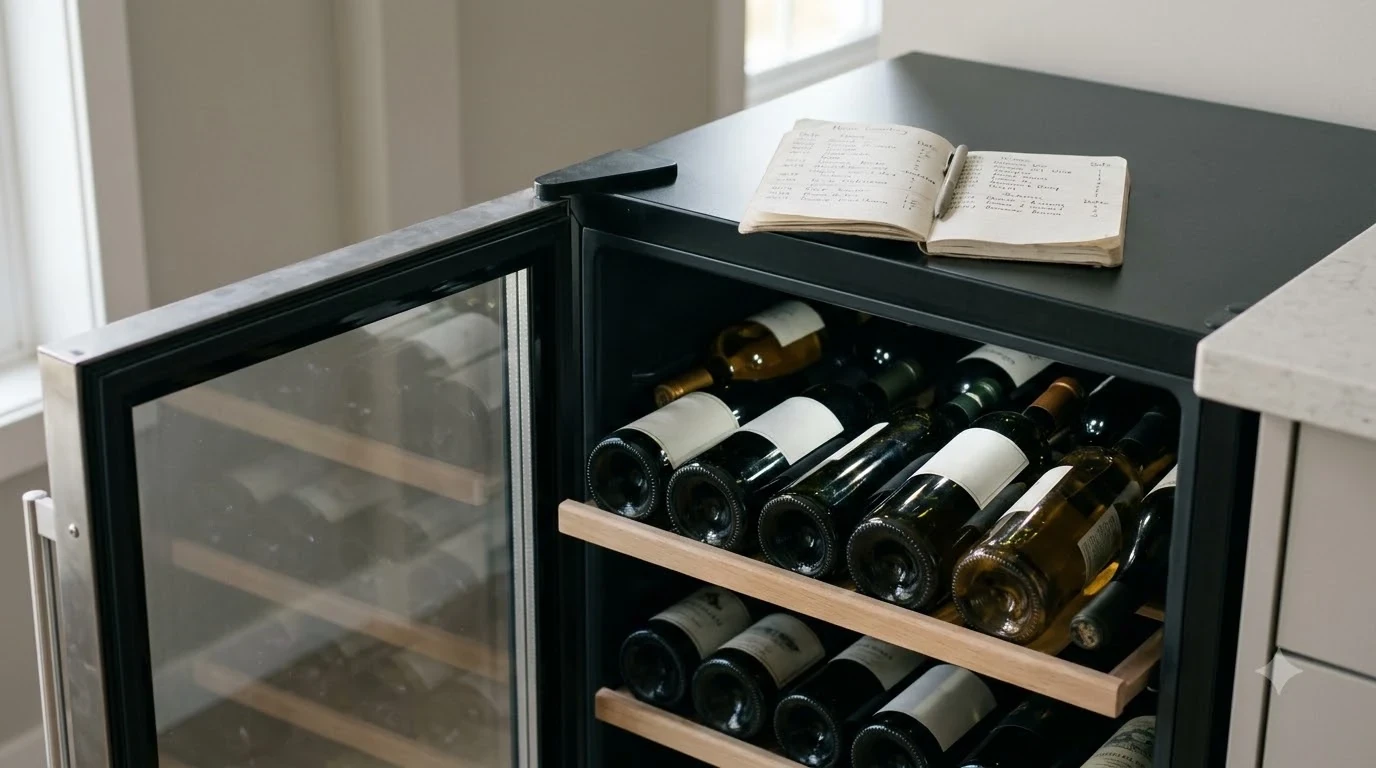
whynter wine fridge not cooling usually points to a temperature setting, blocked ventilation, a poor door seal, or an installation problem before it indicates a failed cooling system. Start by measuring the actual cabinet temperature, confirming the appliance has power, and checking the air intake and exhaust. Give the refrigerator enough time to stabilize after changing its setting or loading bottles. If it continues running without cooling, makes abnormal compressor sounds, or cannot maintain either zone, arrange professional service.
A wine refrigerator protects bottles by maintaining a consistent temperature, so a cabinet that stays warm deserves attention even when its display and lights appear normal. The best troubleshooting approach is to work from simple external checks toward possible mechanical faults. Whynter makes several types of wine and beverage refrigerators, and their cooling systems, installation requirements, and temperature ranges are not all identical. The model number on the appliance is therefore important throughout the process.
Confirm the Actual Temperature Before Troubleshooting
A wine fridge can appear warmer than expected without having a failed cooling system. First, compare the displayed reading with the temperature inside the cabinet, using an independent thermometer on a middle shelf and giving the reading time to stabilize.
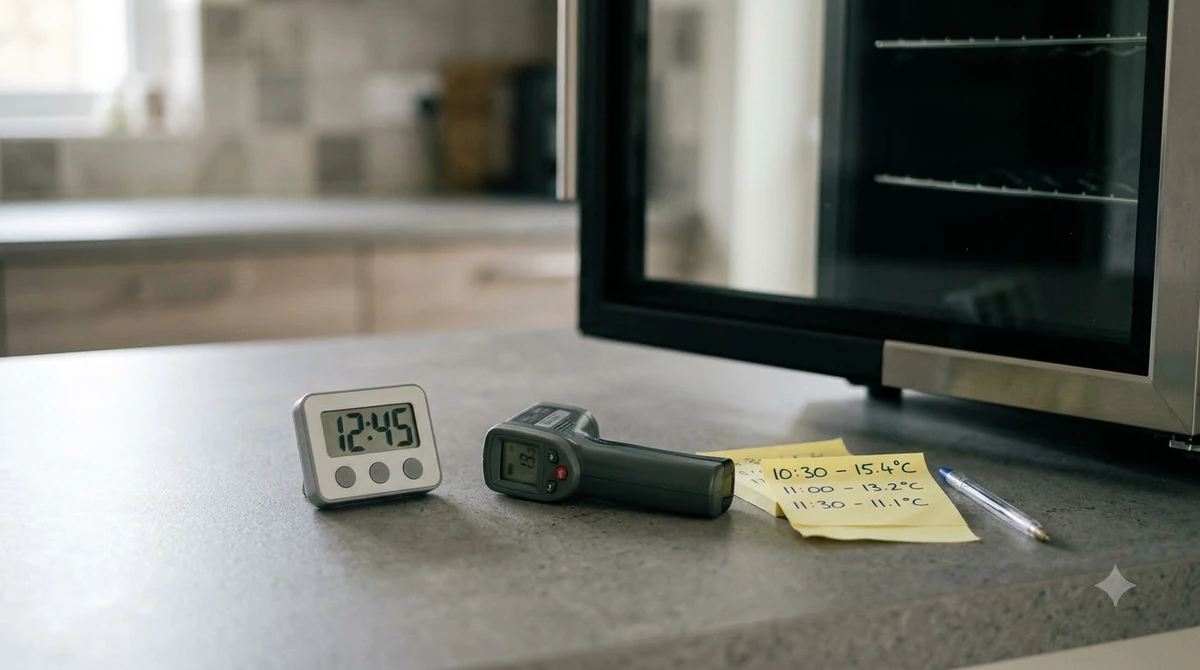
Digital displays are useful, but they measure the temperature at a particular sensor location. The displayed number may not represent every shelf, particularly in a cabinet with uneven airflow, a large bottle load, or two independently controlled compartments. Place a refrigerator thermometer away from the door, interior light, and direct contact with a bottle. Keep the door closed as much as possible while taking measurements.
Record the set temperature and the actual temperature at the same time. Repeat the measurement after several hours, then check again after a full 24 hours if the cabinet has just been started, loaded with room-temperature bottles, or adjusted to a different setting. A single reading immediately after opening the door is not enough to establish that the refrigerator has stopped cooling. Warm air enters whenever the door opens, and the internal temperature may temporarily rise.
Dual-zone Whynter models need a slightly more careful check. Measure each compartment separately and compare each result with its own setpoint. One zone may be operating normally while the other is too warm, which points toward a different problem than a complete loss of cooling. Write down whether the upper or lower compartment is affected, whether the temperatures are stable, and whether the display shows an error message.
Protect the wine while checking the appliance. If the cabinet temperature is climbing significantly, move valuable bottles to another refrigerator or a suitable temperature-controlled storage location. Avoid repeatedly moving bottles between warm and cold places while troubleshooting. Once the cooler is operating reliably again, return the bottles and allow the cabinet to stabilize before judging its performance.
Check Power and Temperature Controls
A reliable power supply and a reasonable temperature setting are the first two things to verify. Check the outlet, plug, display, and control setting before assuming that a compressor, fan, or temperature sensor has failed.
Look at the display with the door closed and confirm that it is illuminated. Check that the power cord is firmly connected and that the wall outlet is working. A simple way to test the outlet is to use another ordinary appliance that is known to work. If the refrigerator is connected to a switch-controlled outlet, confirm that the switch is on. Also check the household breaker or fuse if the appliance has lost power.
Do not open an electrical panel or remove internal covers to investigate a suspected wiring problem. A cooler that has no display, repeatedly loses power, or trips a breaker needs a qualified assessment. Stop using the appliance if the plug, cable, or outlet is visibly damaged or unusually hot. A power problem should be resolved safely before any further cooling tests.
Next, review the temperature control. A setting that is too warm can make a functioning wine refrigerator appear ineffective, while an extremely low setting may keep the cooling system running for long periods. Find the model’s published temperature range in its manual and make sure the requested temperature is within that range. Avoid making several rapid adjustments because it becomes difficult to tell whether the appliance is responding to the latest change.
| Situation | Time or clearance to consider | Practical check |
|---|---|---|
| Appliance transported upright | At least 2 hours unplugged, according to Whynter’s beverage-fridge FAQ | Allow the compressor oil to settle before starting that applicable model. |
| Appliance transported on its side | 24 hours unplugged, according to the same FAQ | Keep it upright during the settling period. |
| Empty cabinet after startup | A few hours is typical for the Whynter beverage model described in its FAQ | Measure the temperature rather than judging by sound alone. |
| Room-temperature bottles or drinks added | Overnight may be needed; allow up to 24 hours to stabilize | Keep the door closed and avoid adding another large load. |
| Freestanding beverage refrigerator | At least 4–6 inches at the rear and sides in Whynter’s general beverage-fridge guidance | Check the individual manual for exact clearance requirements. |
The timing figures above come from Whynter’s published guidance for its beverage refrigerator range. They are useful reference points, not a substitute for the instructions supplied with every wine-fridge model. A refrigerator that has been transported, installed in cabinetry, or loaded with bottles may need a different procedure from an established unit that suddenly stops cooling.
Tip: Write down the model number, displayed setting, actual shelf temperature, and time of each measurement. This simple record makes it easier to distinguish a slow initial cooldown from a persistent cooling fault.
Whynter’s product information includes a troubleshooting checklist covering power, the setpoint, ventilation, the door gasket, and dust around the vent or condenser area. The Whynter product FAQ and cooling checklist is useful background, but use the manual for the exact model installed in the home.
Clear Ventilation and Match the Installation Type
Restricted airflow is one of the first installation problems to investigate. A Whynter refrigerator needs a clear route for releasing heat, and the correct clearance depends on whether the particular model is designed for built-in or freestanding use.
Built-in models generally exhaust warm air through a grille at the front, often near the bottom of the cabinet. That grille must remain open. Look for dust, packaging material, rugs, decorative trim, furniture, or a cabinet plinth covering the vent. Even a narrow obstruction can interfere with the intended airflow. Keep the front grille clear instead of covering it to make the installation look more integrated.
Freestanding models have different requirements. Whynter explains that its freestanding beverage refrigerators release heat through the rear and sides, so they need open space around the cabinet. Its general guidance calls for at least 4–6 inches of clearance at the back and sides for those beverage models, although the individual wine refrigerator manual takes priority. A freestanding cooler pushed into a tight kitchen opening may run continuously because it cannot release heat efficiently.
Do not assume that every model can be installed under a counter. A built-in refrigerator can generally operate as a freestanding appliance, but a freestanding design should not be enclosed unless the manufacturer specifically approves that installation. Trapped heat makes the cooling system work harder and can prevent the cabinet from reaching its set temperature. If a refrigerator was recently moved into cabinetry, verify its installation classification before investigating expensive internal components.
Dust can also restrict ventilation. Unplug the refrigerator before cleaning accessible exterior grilles, then use a vacuum with a suitable attachment to remove loose dust around the vent or condenser area where the owner instructions permit access. Do not force a tool through a grille, bend a fan blade, or remove panels to reach internal components. Keep the surrounding floor and cabinet opening clean so dust does not immediately collect again.
Room conditions matter as well. A refrigerator placed beside an oven, in direct sunlight, or in a hot garage may be operating outside its rated ambient range. Check the room temperature and compare it with the appliance’s manual. A thermoelectric model can be particularly sensitive to warm surroundings. Moving a refrigerator to a suitable indoor location may solve a problem that would otherwise be mistaken for a failed part.
Inspect the Door Seal, Shelves, and Bottle Load
A door that does not close completely allows warm air to enter and makes stable cooling difficult. Inspect the gasket, door alignment, shelves, and bottle arrangement before concluding that the refrigeration system has failed.
Start with a visual inspection of the door seal. Look for dirt, dried spills, folded sections, cracks, or areas that have pulled away from the cabinet. Clean the gasket gently with a soft cloth and mild soapy water, then dry it. Make sure the door is not being held open by a bottle neck, a shelf that is not seated correctly, or an item sitting too close to the frame.
A simple paper test can help identify a weak seal. Close the door over a sheet of paper and gently pull it. Some resistance should be present. Repeat the test at several points around the perimeter, including the upper and lower corners. If the paper slides out easily at one location but holds firmly elsewhere, the gasket may not be making even contact. This test is a screening check rather than proof that a seal must be replaced.
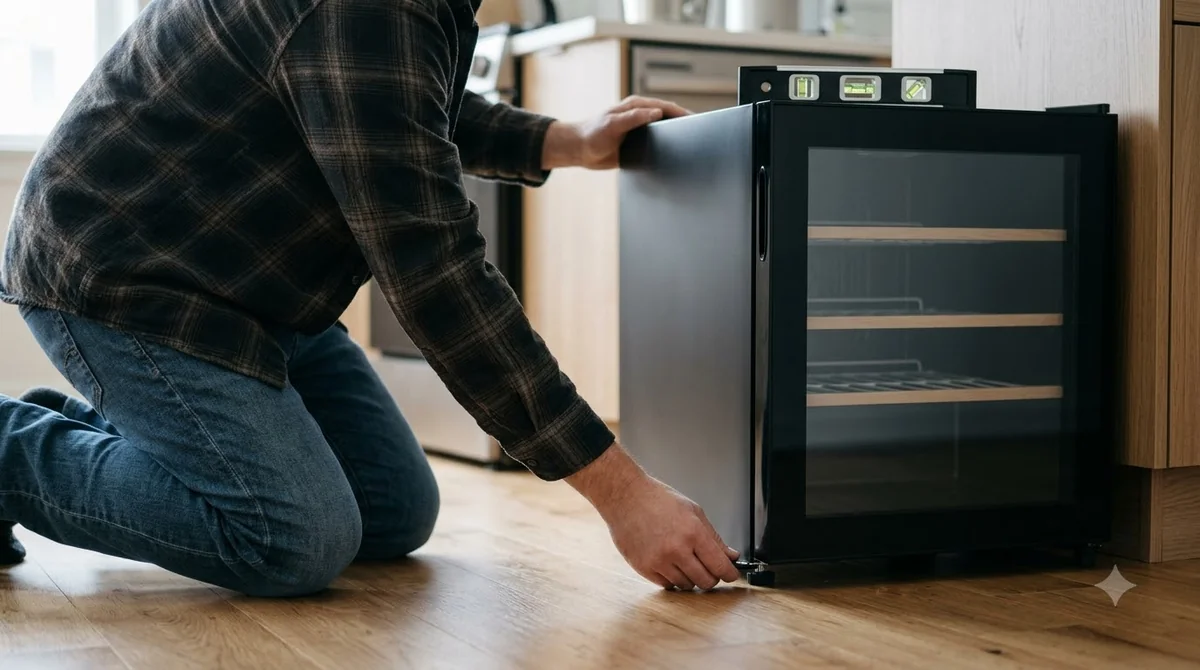
Check whether the refrigerator is level. A cabinet that tilts can prevent the door from sitting squarely against the gasket. Use the leveling method described in the owner’s manual, and do not try to correct a misaligned door by forcing it shut. If the door was recently reversed, verify that the hinges and related hardware were installed correctly. A door that appears closed but leaves a narrow gap can lead to long running times and inconsistent temperatures.
Inside the cabinet, make sure that bottles and shelves are not blocking air passages. Avoid packing bottles tightly against internal vents or the rear circulation area. Fan-forced models need space for air to move around the contents, so an arrangement that looks neat may still restrict circulation. If the refrigerator has removable shelves, check that each one is seated in its intended position and has not shifted forward enough to obstruct the door.
A large load of room-temperature wine can take much longer to cool than a few bottles added to an already cold cabinet. Add bottles in smaller groups rather than filling the cooler with warm wine at once. Limit door openings during the cooldown period and avoid leaving the interior light on longer than necessary. These steps reduce additional heat entering the cabinet while the cooling system is working to lower the temperature.
For comparisons with other brands, the same basic checks can help explain an allavino wine fridge not cooling or an Magic Chef wine fridge not cooling. The details of the installation and the model’s own airflow design still matter; similar symptoms do not mean the appliances use identical parts or repair procedures.
Compare Cooling Type and Model Temperature Limits
Not every Whynter wine refrigerator uses the same cooling technology or has the same temperature range. Confirm whether the model is compressor-cooled or thermoelectric and compare its published limits with the setting being requested.
Compressor refrigerators use a refrigeration circuit to move heat out of the cabinet. They are generally better suited to a wider range of room conditions than small thermoelectric models, but they still need correct ventilation and an appropriate ambient temperature. A compressor model that is enclosed despite being designed for freestanding use may run for long periods while struggling to cool. If the compressor repeatedly clicks without starting, that is a reason to stop experimenting with settings and arrange a professional diagnosis.
Thermoelectric wine coolers work differently. Their cooling performance depends partly on the temperature difference between the room and the cabinet. As the surrounding air gets warmer, the unit has less ability to lower the internal temperature. A small thermoelectric cooler installed in a hot kitchen or garage may therefore be unable to reach a low setting even when its fan is operating. A model that is working within its design limits can still be unsuitable for a particular room.
Model-specific published ranges illustrate why checking the manual matters. Cork & Cool lists 40–65°F for several Whynter compressor wine cabinets and 46–66°F for the WC-201TD thermoelectric example. These figures refer to those model examples, not every Whynter wine refrigerator. A separate Whynter beverage refrigerator, the WM-BSR-080SB-080SB, is listed with a compressor cooling system and a 34–54°F range. None of these specifications should be transferred to a different appliance simply because it carries the same brand name.
Match the requested setting to the cooler’s stated capabilities. If a model’s minimum temperature is higher than the temperature selected on the control panel, the appliance cannot deliver that setting. If the room is too warm for the model’s rated range, changing the control repeatedly will not correct the underlying mismatch. A cooler may need a different location or a different type of appliance rather than a component repair.
Think about the purpose of the cabinet, too. Wine intended for longer-term storage benefits from a steady environment near 55°F, while serving temperatures differ according to wine style. A refrigerator that can hold a stable temperature within its published range may be doing its job even if it does not chill every bottle to a very cold serving temperature. For another example of how model differences affect diagnosis, see the steps for a Haier wine fridge not cooling.
Recognize Fault Signs and Contact Whynter Support
Persistent warmth after the power, setting, ventilation, room conditions, door seal, and bottle load have been checked may indicate a component problem. Pay particular attention to a continuously running appliance, unusual compressor behavior, a failed fan, or one compartment that cannot maintain its temperature.
Some operating sounds are normal. A compressor refrigerator may make a low hum while cooling, and occasional gurgling can occur as refrigerant moves through the system. A fan may also run for extended periods while the cabinet is trying to reach a low setpoint. Sound alone does not prove that a component has failed. The important question is whether the cabinet temperature is falling and whether the appliance behaves consistently with its normal operation.
A different pattern deserves attention. If the compressor clicks repeatedly but does not appear to start, the unit runs constantly while the cabinet stays warm, or the fan stops moving air, arrange service rather than opening the appliance. A failed fan, temperature sensor, control component, compressor-start component, or sealed refrigeration system may produce overlapping symptoms. Professional testing is needed to identify the actual cause.
For a dual-zone wine refrigerator, compare the temperature of both compartments. If one zone is stable but the other keeps warming, describe which zone is affected and record the readings. A problem isolated to one section can point toward a fan, sensor, control, or airflow issue rather than a complete power failure. Report any displayed error code exactly as it appears, since the meaning and recommended response can differ between model families.
Do not open refrigerant tubing, attempt to recharge the system, or dismantle internal electrical assemblies. Refrigerant circuits require appropriate equipment and qualified handling. Removing panels can also expose live electrical components or damage wiring and fans. If basic owner checks do not resolve the problem, a qualified technician can test the system without relying on guesswork. Independent appliance service guidance likewise recommends professional diagnosis for a cooler that runs continuously without cooling or has abnormal compressor cycling.
Before contacting Whynter, collect the model and serial numbers, the displayed setting, actual temperature readings, room temperature, and a description of where the appliance is installed. Note whether the cooler is built-in or freestanding, whether it was recently moved, and whether the problem affects one zone or the entire cabinet. Include any error code and describe what happens when the compressor or fan should be operating. This information gives support a much clearer starting point than saying only that the refrigerator is warm.
Check the warranty and use Whynter’s official support channels before authorizing work on a covered unit. Keep receipts and records of the installation if they are available. For more help with general refrigerator care and other brand-specific symptoms, the Brand Troubleshooting section provides additional storage-care information.
Frequently Asked Questions
These five answers cover common follow-up concerns, including a 24-hour temperature check, the 4–6-inch freestanding clearance guideline, and when a service call is appropriate.
Why does my Whynter wine fridge show the correct temperature but the wine feels warm?
The display reports a reading from its sensor location, not the temperature of every bottle or shelf. A bottle stored near the door or in an area with limited circulation may be warmer than the displayed reading suggests. Compare temperatures with an independent thermometer in more than one cabinet location before deciding that the display or cooling system is faulty.
Can a Whynter wine refrigerator be installed in a garage?
That depends on the specific model’s permitted ambient operating range. A garage can experience larger seasonal temperature swings than an indoor room, and a unit that is not rated for those conditions may struggle even if it is functioning normally. Check the installation instructions for the exact model before placing it in a garage or outdoor space.
Why is there condensation on the glass door?
Condensation can form when humid room air meets a cooler glass surface. Frequent door openings, a gasket that does not seal evenly, and a humid room can make the moisture more noticeable. Wipe away moisture, check the door seal, and monitor whether condensation returns while the door remains closed.
Should I turn off a Whynter wine fridge if frost builds up inside?
Heavy frost can interfere with airflow and may prevent the cabinet from cooling evenly. Follow the defrost instructions for the specific model rather than scraping ice from an internal panel. Never use a sharp tool to chip away frost because hidden cooling lines and components can be damaged.
Can a Whynter wine fridge be repaired if the compressor does not start?
Possibly, but the symptom does not identify the failed part by itself. A technician may need to assess the compressor, starting components, control system, and electrical supply before recommending a repair. Provide the model number and the exact clicking, humming, or cycling pattern when arranging service.
A Whynter wine fridge that is not cooling should be checked methodically: verify the temperature, confirm the power and setting, restore the correct airflow, and inspect the door before assuming an internal failure. Use the model’s manual for temperature limits and installation clearances, then contact qualified support if the cabinet remains warm after the basic checks. Protect valuable bottles while the problem is being resolved and keep a record of the temperatures and symptoms.
More in Storage & Fridge Care
 How Long Can You Store Wine in a Wine Fridge? Protect Bottle QualityUpdated Nov 20, 2026
 Can You Store Beer in a Wine Fridge? Keep Both Drinks FreshUpdated Nov 20, 2026
 Is It Worth Repairing a Wine Fridge? Spot the Cheap Fixes Before You ReplaceUpdated Nov 20, 2026
 Wine Fridge Condensation: Identify Causes and Fix Moisture ProblemsUpdated Nov 20, 2026
 Wine Fridge Too Cold: Protect Your Wine and Fix the TemperatureUpdated Nov 20, 2026
 How to Reset Wine Fridge: Restore Cooling and SettingsUpdated Nov 20, 2026