

We may earn a commission when you buy through links on this page, at no extra cost to you. Learn more.
What does Riesling taste like? It usually tastes of lime, green apple and jasmine, with a sharp, refreshing acidity and sometimes a note of petrol or beeswax. Wine Folly lists those as the primary flavors and describes a light body with no tannin. Riesling can be bone-dry or very sweet, so the sweetness you taste depends on the bottle’s style as much as the grape.
Riesling is one of the most misunderstood white wines in the American market. Many drinkers assume it is always sweet, while others expect a dry wine that tastes like a Chardonnay. Neither is accurate. This guide explains what Riesling tastes like, how sweetness and climate change it, and how to serve and pair it with food.
The core flavor of Riesling
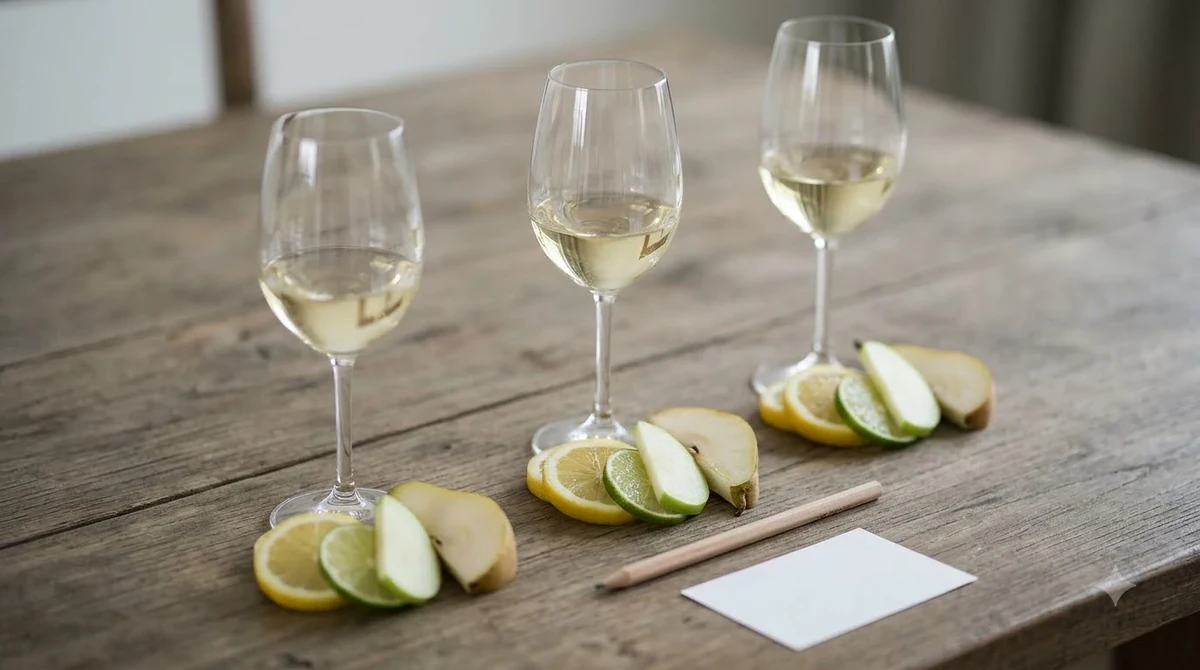
The main flavors of Riesling are citrus and orchard fruit. Wine Folly’s Riesling grape profile lists lime, green apple, beeswax, jasmine and petroleum as its primary notes. Those aromas are distinctive, and many people recognize Riesling by its bright, floral nose before they taste it.
The petrol note surprises people who have never tried it. It is most common in older or drier bottles and tends to show up as a faint, mineral character rather than an obvious fuel smell. Beeswax appears alongside it in more developed wines, adding a soft, honeyed texture that balances the sharp fruit.
Sweetness and dryness
Riesling is one of the few grapes that can produce wines across the whole sweetness range. Wine Folly notes that it can be bone-dry or very sweet, and its typical style on the page is off-dry. An off-dry Riesling has a little residual sugar that rounds out the acidity, so it tastes fruity without feeling syrupy.
Dry Riesling tastes leaner and more mineral, with the lime and green apple sharper and the floral notes quieter. Sweeter styles lean into ripe peach, honey and candied citrus. The acidity stays high in both, which is why even a very sweet Riesling rarely tastes heavy. When you buy a bottle, read the label for the sweetness word, such as “dry,” “off-dry” or “sweet,” so you know what to expect.
Body, acidity and alcohol
Riesling is a light-bodied white with no tannin. The structure comes almost entirely from acidity, which Wine Folly describes as high. That acidity makes the wine feel crisp and clean on the palate, and it is the reason Riesling pairs so well with fatty or spicy food.
Alcohol is relatively low. Wine Folly gives the range as under 10 percent ABV, which is lower than most dry whites and many reds. Low alcohol plus high acidity means a glass of Riesling feels refreshing rather than heavy, even at the sweeter end of the range. That is one reason it has a reputation for being an easy-drinking wine.
Where Riesling grows
Riesling grows best in cool climates, where the grapes ripen slowly and keep their acidity. Wine Folly names Germany and the United States as the main places it is grown, and it identifies Germany as the most important producer in the world. The cool conditions help explain the grape’s bright citrus and floral profile.
In Germany, Riesling is the signature white grape of many regions, and it produces everything from very dry wines to sweet dessert styles. Regional character varies, but the cool-climate origin is consistent. Wines from warmer sites tend to show riper fruit and less of the sharp citrus, which is why climate matters so much when you are trying to predict the taste.
How to serve Riesling
Wine Folly recommends serving Riesling at 38 to 45°F (3 to 7°C), in a white wine glass. Decanting is not needed. Chilling it properly keeps the acidity crisp and helps the aromas stay focused. Too warm and the sweetness can feel cloying, while very cold service can mute the floral notes.
Riesling is also a wine that ages well. Wine Folly suggests cellaring it for 10 years or more, and a good bottle can develop a honeyed, toasty character with time. Most everyday bottles are best within a few years of release, so keep the older bottles for special occasions.
Tip: If you are unsure about sweetness, taste a dry and an off-dry Riesling side by side. The difference will show you how much sugar your palate prefers.
Food pairing with Riesling
Off-dry Riesling is one of the most food-friendly wines. Wine Folly pairs it with spicy Indian and Asian cuisines, where the touch of sweetness tames the heat. It also suits duck, pork, bacon, shrimp and crab. The acidity cuts through rich or fried dishes, and the fruit complements sweet and savory flavors together.
For dry Riesling, think about fresh seafood, roast chicken, and vegetable-forward dishes with herbs. A lightly sweet, spicy Thai curry is a classic match for an off-dry style. Avoid pairing a very sweet Riesling with dishes that are also sweet, since the two can compete and make both taste flat.
Dry, sweet and aged styles
Dry Riesling is the most common style to try first. It tastes lean and mineral, and it works well as an aperitif or with fish. Off-dry Riesling is the everyday crowd-pleaser, with a rounded fruit profile and balanced acidity. Sweet and dessert styles are richer and more concentrated, and they go well with fruit tarts or a plate of soft cheese.
| Style | What you taste | Good with |
|---|---|---|
| Dry | Lime, green apple, mineral, petrol | Fish, salads, aperitif |
| Off-dry | Lime, apple, jasmine, gentle sweetness | Spicy Asian and Indian food |
| Sweet | Ripe peach, honey, candied citrus | Fruit desserts, soft cheese |
| Aged | Honey, toast, beeswax, softer acidity | Roast pork, rich dishes |
Aged Riesling changes character over time. The bright lime and green apple gradually give way to honey, toast and a fuller texture. Older bottles can be a revelation for drinkers who thought they did not like Riesling, because the fruit becomes softer and the acidity integrates more smoothly.
How Riesling compares with other whites
Riesling is often compared with Pinot Grigio and Sauvignon Blanc. Pinot Grigio is typically lighter and more neutral, with less aroma. Sauvignon Blanc tends to show grassy and tropical notes, while Riesling leans into floral and citrus character. The biggest difference is sweetness: Riesling can be sweet in a way that most of those other whites are not.
Compared with Chardonnay, Riesling is far lighter and has no oak. It tastes of fruit and flowers rather than butter and toast. If you enjoy a crisp white with aromatic character, Riesling is a good next step, and you can start with a dry bottle before trying a sweeter one.
Frequently Asked Questions
Is Riesling always sweet?
No. Riesling can be bone-dry, off-dry or very sweet. Check the label for the sweetness word, because the same grape can produce wines across the full range.
Does Riesling taste like petrol?
Some bottles show a faint petrol note, which Wine Folly lists among the primary flavors. It is a mineral aroma rather than an obvious smell, and most people notice it more in older or drier wines.
How long does Riesling last?
Most bottles are best within a few years, but good Riesling can age for a decade or more. Wine Folly suggests cellaring it for 10 years or longer, and older bottles tend to taste honeyed and softer.
Is Riesling a good wine for beginners?
Yes. Its light body, high acidity and fruit-forward style make it approachable. An off-dry bottle is a gentle introduction, and a dry one shows how versatile the grape can be.
Riesling rewards curiosity. Start with an off-dry bottle served cold, pair it with spicy or rich food, and then try a dry style to see how the grape changes. For more background on how wines taste, visit Wine by Type, or compare it with a full red in what does Malbec taste like.
More in Wine Types & Grapes
 Zinfandel Sugar Content: Dry Red vs. White Zinfandel GramsUpdated Nov 21, 2026
 Best Zinfandel Substitute Options for Sipping and CookingUpdated Nov 21, 2026
 Zweigelt Food Pairing: Best Dishes, Cheeses, and Serving TipsUpdated Nov 21, 2026
 Zinfandel Tannins Explained: How Structure Shapes Every BottleUpdated Nov 21, 2026
 Zinfandel Sweetness Level: Dry Red vs. Sweet White Zin ExplainedUpdated Nov 21, 2026
 Xinomavro Food Pairing: Best Dishes, Styles, and Serving TipsUpdated Nov 21, 2026