

We may earn a commission when you buy through links on this page, at no extra cost to you. Learn more.
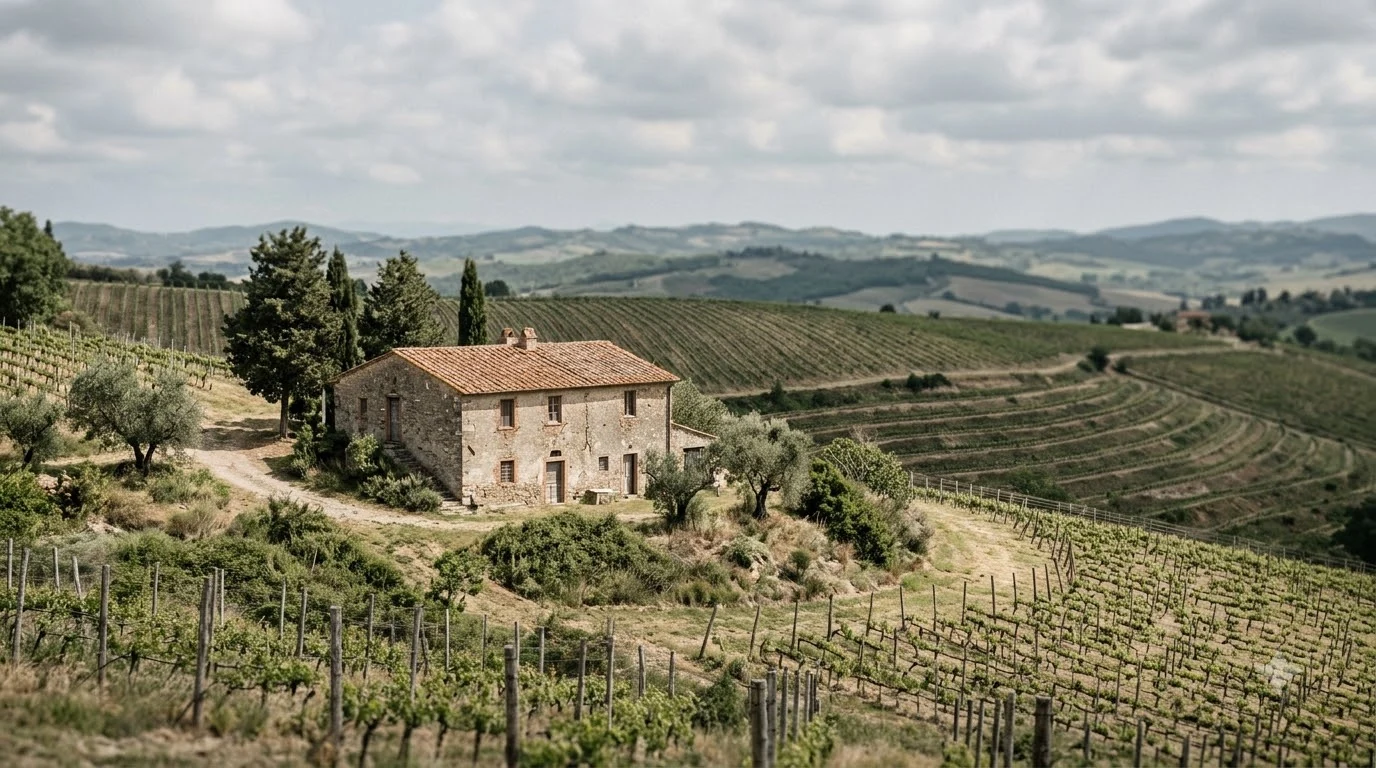
The Waipara wine region is a cool-climate valley in North Canterbury on New Zealand’s South Island, about an hour’s drive north of Christchurch, and it is best known for Pinot Noir and Riesling. According to the North Canterbury Wine Region, the wider district has more than 90 vineyards, most of them independently owned by local families. Low rainfall, long dry autumns, and clay and limestone soils give the wines concentration and a strong sense of place. The sections below cover the region’s history, climate, soils, grape varieties, serving tips, and how to plan a visit.
Marlborough is the name most people associate with New Zealand wine, but the Waipara wine region has built a loyal following for a different style. Growers work with a dry, sunny valley and a long growing season, and they focus on aromatic whites and cool-climate reds. This guide explains how the area developed, why its climate and soils matter, which grapes to look for, and how to visit. If you are new to New Zealand’s districts, start with the Wine Regions overview for context before you explore the valley in detail.
Where the Waipara Wine Region Sits in North Canterbury
The Waipara wine region is the best-known part of North Canterbury, a larger district on the east side of the South Island. It sits close enough to Christchurch that visitors can reach it from the city in under an hour, which makes it one of the more convenient wine areas for travelers arriving in the South Island’s main city.
Decanter describes the Waipara Valley as the heart and soul of the North Canterbury wine region, and it notes that the valley is compact enough for time-poor visitors to cover in a single day. The North Canterbury Wine Region’s own website places the valley an easy 45-minute drive north of Christchurch and says it includes the Omihi hills and the Glasnevin Gravels. Those local names are useful to know when you are reading about individual vineyards.
The wider district is divided into four sub-regions: Waipara, Waikari, the Canterbury Plains, and Banks Peninsula. Waikari sits inland from the valley and is the newest development in the district, while the plains and Banks Peninsula lie closer to Christchurch itself. Wines of NZ describes the Waipara valley as a sub-region of the larger Canterbury wine region, so you may see Canterbury, North Canterbury, or Waipara on bottles depending on the producer and the label. Knowing the difference helps when you read a back label or compare bottles from different shops.
A Short History of Winemaking in the Valley
Modern winemaking in the Waipara wine region began in the late 1970s and early 1980s, when a small group of trial growers and winemakers first tested what the area could ripen. The early names are still part of the local story.
Wine Anorak’s history of the district traces the origins to Lincoln College, where Danny Schuster, who had trained in viticulture and enology in Czechoslovakia, arrived in 1973 and worked with fruit scientist Dr David Jackson to assess Canterbury’s suitability for wine production. Trial plantings in the late 1970s evaluated 40 wine grape varieties, and a panel of 15 members helped assess the trial wines. That early groundwork gave growers evidence about which grapes could work in a region that had not made wine on a commercial scale before.
The turning point came with the St Helena Pinot Noir. The 1982 vintage won a gold medal at the Air New Zealand Wine Competition, and Wine Anorak notes it was only the second New Zealand Pinot Noir to win a gold medal. Brothers Robin and Norman Mundy planted the vines at Coutts Island, with Schuster as winemaker, and the result helped put the region on the map.
Other early names followed quickly. John McCaskey planted four hectares on the Weka Plains in 1981, and John Corbett established Waipara Riesling on the New Zealand wine map with gold medals for his 1986, 1988 and 1989 vintages. The Donaldson family bought the Pegasus Bay property in 1985, and the first Pegasus Bay release came in 1991.
Expansion into more unusual terroir came later. Bell Hill established a close-planted vineyard on an old limestone quarry in 1997, and Pyramid Valley was planted in 2000 on clay and limestone soils. Wine Anorak describes these ventures as having produced some stunning wines, which shows how the region’s reputation grew through experimentation as well as through its early pioneers.
Climate: Why Waipara Grapes Ripen Slowly and Cool
The Waipara wine region is one of New Zealand’s cooler wine-growing areas by heat accumulation, yet its low rainfall and settled autumns let the fruit reach full ripeness. Growers measure heat in growing degree days, and the figures below come from Wine Anorak’s physical characteristics series.
Waipara records roughly 1,090 growing degree days. That makes it cooler than Martinborough at 1,130 and Marlborough at 1,200, but warmer than Central Otago at 995.
| Wine region | Growing degree days |
|---|---|
| Waipara | 1,090 |
| Martinborough | 1,130 |
| Marlborough | 1,200 |
| Central Otago | 995 |
The Teviotdale Hills are central to the valley’s climate. They keep out the cool coastal easterly winds, which affect roughly 30 percent of summer days according to Wine Anorak, and the valley ends up about 1 to 2 degrees Celsius warmer than Christchurch. February averages 17.7 degrees Celsius, or about 64 degrees Fahrenheit, which is close to the February averages in Nelson and Central Otago.
Rainfall is low, at about 648 millimeters (roughly 25.5 inches) a year, and only about 360 millimeters (around 14 inches) falls during the October to April growing season. Wine Anorak attributes the dryness to the Southern Alps acting as a rain shadow. The North Canterbury Wine Region adds that the whole district enjoys long dry autumns and a varied gap between day and night temperatures, which helps build phenolic ripeness and complexity in the wines. For a different cool-climate reference point, see the savoie wine region.
Soils and Sub-Regions That Shape the Wines
The valley has unusually varied soils, and its sub-regions differ in elevation and geology in ways that push the wines in different directions. Three main soil types cover the river terraces, the valley floor, and the hillsides.

Wine Anorak reports that the Waipara Valley is considered to have the most diverse soils of any New Zealand wine region, and it describes three main types. On the river terraces, a thin layer of wind-blown loess sits over free-draining gravels, a setup the source compares to Martinborough. The valley floor has a deep layer of clay over gravels, with limestone-derived clays in the east and gravelly loams over alluvial subsoil in the south. The hill slopes are limestone-derived clays layered with fragmented limestone.
The North Canterbury Wine Region describes its sub-regions with more precise elevation and soil detail. Glasnevin, on the valley floor, sits on stones and gravels left by an ice-age glacier that heat up during warm days. Its soil is highly mineralized, free-draining and low in fertility, which reduces vine vigor and produces low yields of ripe, flavorful grapes.
| Sub-region | Elevation | Dominant soils |
|---|---|---|
| Waipara, Glasnevin | Valley floor | Gravels, free-draining, low fertility |
| Waipara, Omihi | 100 to 200 meters | Clay and limestone |
| Waikari | 250 to 300 meters | Chalky limestone to lime-rich clays |
Omihi, in the north of the valley, has clay and limestone hills rising roughly 100 to 200 meters above sea level, and the first hillside vineyard there was planted in 1986. The regional site says these soils give the wines texture, minerality and concentration. Waikari, inland from the valley, sits at 250 to 300 meters, and its vineyards are planted at high density on soils that range from pure chalky limestone to lime-rich clays. For more detail on each area, see the North Canterbury Wine Region’s sub-region guide.
Grape Varieties: Pinot Noir and Riesling Lead the Way
Pinot Noir and Riesling are the signature grapes of the Waipara wine region, while Chardonnay, Pinot Gris, and Sauvignon Blanc also have a place in the vineyards.
The North Canterbury Wine Region names Pinot Noir, Chardonnay and Riesling as the district’s most expressive varieties. Wines of NZ describes the valley’s distinctive style as richer and spicier Pinot Noirs and Rieslings. Pinot Noir in this style typically has low to medium tannin and bright acidity, which makes it easy to pair with food.
Riesling is the region’s aromatic white with high acidity, and that acidity keeps it fresh even when it carries some sweetness. Because acidic food needs wine with equal or higher acidity, a dry or off-dry Riesling suits citrus-dressed salads, pork with apple, and Thai or Szechuan dishes. Chili heat is amplified by alcohol and tannin, so a lower-alcohol Riesling is often a safer match for spicy food than a big red. If you want to compare cool-climate Riesling beyond New Zealand, the tasmania wine region is another useful reference point.
Pinot Noir from the valley works with a wider range of dishes than bold reds. Salt and fat soften tannin, which makes roast chicken, duck, and mushroom dishes good choices. Oily fish tends to clash with tannic reds, so a lower-tannin Pinot Noir is a safer partner than a heavy Cabernet Sauvignon. Chardonnay from the region has medium acidity and suits creamy or roasted dishes, while Sauvignon Blanc, with its high acidity, works well with fresh, herbal flavors.
Serving Temperatures and Storage for Local Wines
Serve Waipara Riesling cool and Pinot Noir lightly chilled, and plan to finish any opened bottle within a few days. Small temperature changes make a noticeable difference to aroma and texture.
Off-dry Riesling shows best at 43 to 50 degrees Fahrenheit, full-bodied Chardonnay at 50 to 55 degrees, and a light red such as Pinot Noir at 55 to 60 degrees. The table below summarizes those targets.
| Wine style | Serving temperature | Typical acidity |
|---|---|---|
| Off-dry Riesling | 43 to 50 degrees Fahrenheit | High |
| Full-bodied Chardonnay | 50 to 55 degrees Fahrenheit | Medium |
| Pinot Noir (light red) | 55 to 60 degrees Fahrenheit | High, with low to medium tannin |
A standard 750-milliliter bottle yields about five 5-ounce pours. Store unopened bottles on their side in a cool, dark place near 55 degrees Fahrenheit. Once opened, still wines keep for about three to five days in the fridge, so that is the window to plan around for both the Riesling and the Pinot Noir.
Tip: Keep an opened bottle of Riesling or Pinot Noir in the fridge and plan to finish it within three to five days, which is the typical window for still wines.
Visiting Waipara: Cellar Doors, Restaurants and Trails
A day trip from Christchurch is the most practical way to see the valley, and the main planning decision is when to eat. Two well-known winery restaurants serve lunch only, so timing matters.
Decanter’s New Zealand road trip guide names Black Estate and Pegasus Bay as the valley’s standout dining stops, and it notes that both are winners of the annual winery restaurant of the year award. Both are open for lunch only, so visitors who want dinner will need to drive to the small town of Amberley. Plan a long lunch at one of those wineries, then visit a few smaller cellar doors in the afternoon.
The North Canterbury Wine Region’s website lists local producers that sell directly online, including The Bone Line, Fernbank, Waipara Springs, Black Estate, Tiki Wines, and Crater Rim. If you want to bring bottles home, that list is a good place to start, because several of these producers accept orders through their own sites.
Decanter also notes that a vineyard cycle trail links a number of the region’s cellar doors. The trail is unsealed, so mountain bikes are recommended, although it can also be walked. Keep the route short enough that you still have time to get back to Christchurch comfortably.
Frequently Asked Questions
How is the Waipara wine region different from North Canterbury?
Waipara is the best-known sub-region inside North Canterbury, but the wider district also includes Waikari, the Canterbury Plains, and Banks Peninsula. The regional website notes that Banks Peninsula vines grow in basalt soils from an extinct volcano, while the plains vineyards sit on free-draining stony soils. It also describes the district’s land formations as some of the most diversified in the country.
Where can I study winemaking near the Waipara wine region?
Lincoln University, a short distance southwest of Christchurch, is home to viticulture and oenology education and research. According to the North Canterbury Wine Region, early vine plantings from Lincoln and the surrounding area helped shape New Zealand’s modern viticulture.
Where are the oldest Pinot Noir vines in New Zealand?
The regional website says the country’s oldest Pinot Noir plantings are on the plains near Lake Ellesmere, on the route toward Banks Peninsula. That history predates the valley’s better-known vineyards, so the Pinot Noir story in Canterbury starts well outside the valley.
Is there an event that showcases the region’s wines?
The North Canterbury Wine & Food Festival is held at Glenmark Domain and combines wine tasting with gourmet food and live music. It brings together the growers, makers, and chefs who work in the district, which makes it a practical way to meet several producers in one place.
How far is Waikari from the Waipara Valley?
The North Canterbury Wine Region says Waikari is about 15 minutes further inland from the valley. Wine Anorak describes the westward expansion through the Weka Pass into the foothills of the Southern Alps, where Waikari’s vineyards are located.
The Waipara wine region rewards visitors who want to see how history, climate, and soil come together in a glass of Pinot Noir or Riesling. Plan a day from Christchurch, book lunch in advance, and leave room for a bottle or two to take home. For a deeper look at each sub-region, the North Canterbury Wine Region’s guide is a good next step.
More in Wine Regions
 Willcox Wine Trail: Discover Arizona’s High-Elevation Wine CountryUpdated Nov 20, 2026
 Yakima Valley Wine Region: Find the Best Styles to TryUpdated Nov 20, 2026
 Vosne Romanee Wine Tasting: Identify Aromas and Choose Better PairingsUpdated Nov 20, 2026
 Yakima Valley Wine Festival: Find the Best Seasonal Wine EventsUpdated Nov 20, 2026
 Wales Vineyards: Discover Cool-Climate Wines and Where to VisitUpdated Nov 20, 2026
 Yountville Wine Festival: Discover Napa Wines and Local FoodUpdated Nov 20, 2026