

We may earn a commission when you buy through links on this page, at no extra cost to you. Learn more.
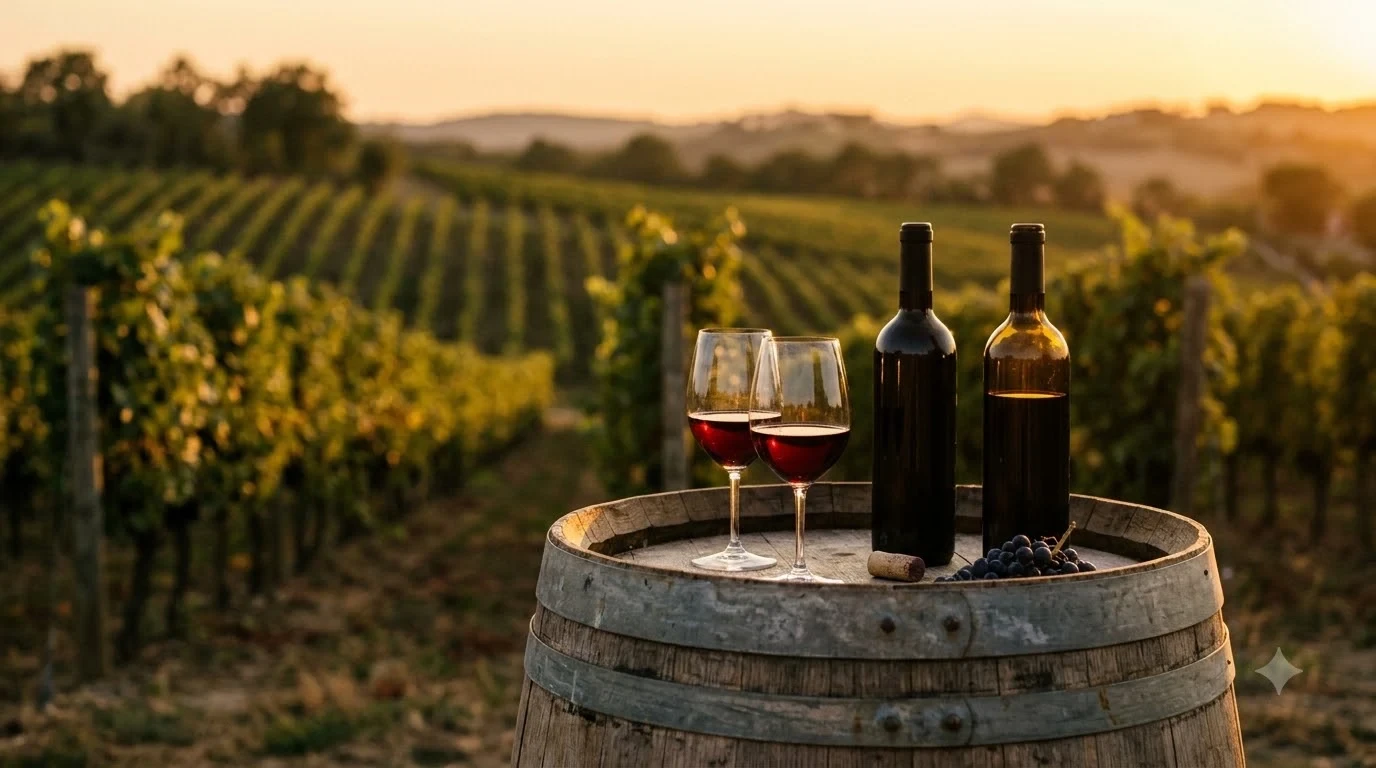
In France’s Touraine district, vouvray vineyards are hillside and plateau plantings along the Loire River, best known for producing Chenin Blanc in dry, off-dry, sweet, and sparkling styles. Their character comes from a layered landscape of soft tuffeau limestone, flinty clay, and varied exposures. The river tempers the climate, while individual slopes and parcels help explain why two Vouvray wines can taste quite different.
Vouvray is a white-wine appellation just east of Tours, in the central Loire Valley. Its appeal is not a single house style but the combination of a late-ripening grape, an influential river, and soils that change over short distances. Understanding the landscape makes it easier to read a bottle’s sweetness, texture, and likely food matches. Readers building a wider map of French and international wine areas can also browse our guide to Wine Regions.
Where Vouvray’s Vineyards Sit
Vouvray occupies the Loire’s right bank, north of the river and just east of Tours, in the Touraine part of the Loire Valley. The appellation’s vineyard area is spread across eight communes, creating a patchwork of plateau edges, slopes, and small valleys rather than one continuous hillside.
The Vins de Vouvray appellation body identifies eight communes: Tours, Vouvray, Chançay, Noizay, Reugny, Rochecorbon, Vernou-sur-Brenne, and Parçay-Meslay. Its regional overview describes about 2,300 hectares and around 150 estates across those villages. These figures help convey the scale: Vouvray is a substantial appellation, but the land is divided among many domaines and individual sites. A grower working a few parcels may farm markedly different exposures and soil profiles within the same village.
The Loire is more than a scenic boundary. Its broad valley and the smaller valleys that cut into the plateau affect airflow, temperature, and spring-frost risk. Vineyards rise from the river plain toward the limestone plateau, where slope, sunlight, and drainage vary. A south-facing parcel may warm earlier than a shaded hollow, which is why a village name alone cannot describe every Vouvray wine.
Vouvray faces Montlouis-sur-Loire across the water. Both Touraine appellations make white wines associated with Chenin Blanc, but Vouvray is on the north bank and Montlouis on the south. Their contrast shows how river position, slope orientation, and geology can distinguish neighboring areas that share a grape variety.
Tuffeau, Aubuis, and Perruches: The Vineyard Soils
The foundation of Vouvray’s vineyard landscape is tuffeau, a soft, porous chalky limestone formed during the Turonian age. Above that bedrock, clay-limestone and flinty clay layers vary in depth and composition, giving growers a range of water-retention and drainage conditions within a relatively compact area.
The official Vins de Vouvray description outlines a sequence of Turonian tuffeau, clay-siliceous deposits, and wind-blown loam nearer the surface. Decanter further describes two local soil terms: aubuis, a limestone-rich clay layer often found about 30 to 40 centimeters below the surface, and perruches, a deeper mixture of siliceous sand and clay. These are not simply geological labels. A shallow, stony soil over chalk can behave differently from a deeper clay-rich parcel, especially during dry spells or in a wet autumn.
Tuffeau is porous and can hold water, while the clay and flint above it influence drainage and the moisture available to vines. This balance matters for late-ripening Chenin Blanc. A site with enough water can sustain vines through summer, but excessive vigor may reduce fruit concentration. Soil, root depth, exposure, and vineyard work interact; no single soil term guarantees a particular flavor.
Descriptions such as chalky, flinty, or mineral are sensory shorthand, not claims that limestone literally tastes like wine. They point to freshness, firmness, or a stony finish that can accompany Chenin Blanc from calcareous ground. For a comparison of how terroir language applies elsewhere, see the varied slopes and parcels of Chianti Classico vineyards.
A Loire Climate Shaped by the River
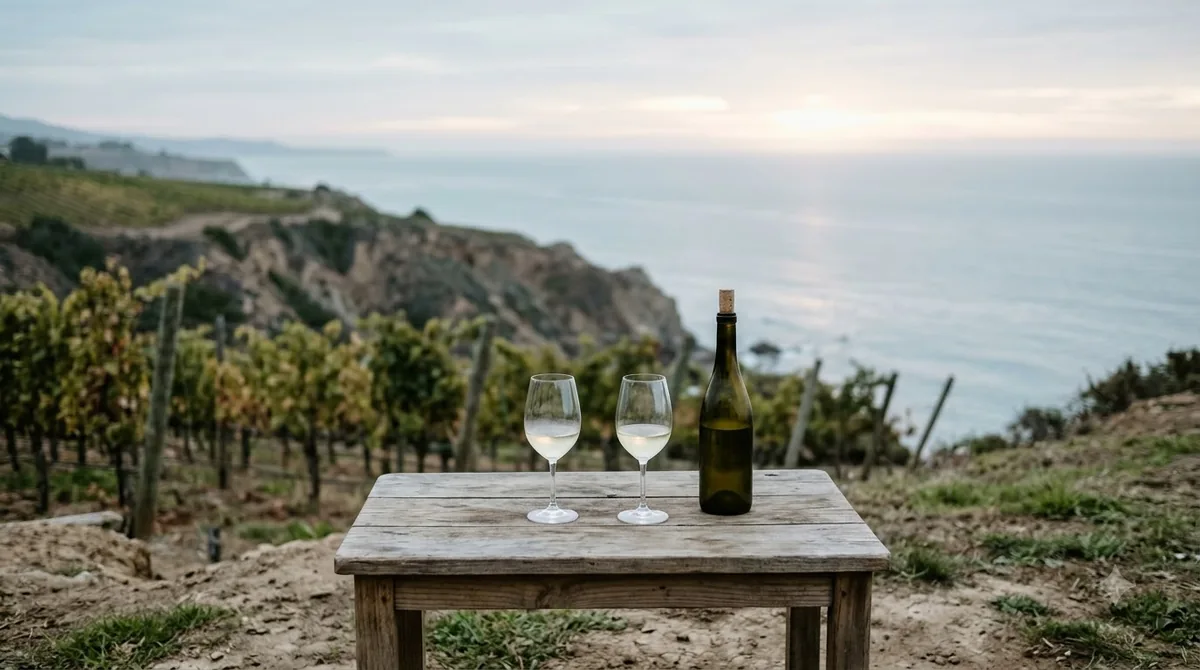
Vouvray sits where oceanic and continental influences meet, and the Loire moderates the conditions around its banks. The combination gives Chenin Blanc a long, sometimes challenging ripening season, with autumn weather helping determine whether a vintage produces mostly sparkling and dry wines or includes richer, sweeter bottlings.
The Vins de Vouvray regional body reports average annual rainfall of about 680 millimeters and notes that air circulates between the plateaus and the watercourse. Its description also points to summers that generally include at least one heatwave lasting several days. Those details show why the climate should not be reduced to “cool” or “warm.” Rainfall, heat, wind, slope exposure, and the river’s moderating influence all shape how grapes develop from flowering through harvest.
Chenin Blanc ripens late, making the final weeks of the season especially important. In a cool or wet year, grapes may not reach the concentration needed for still sweet wine, so sparkling wine can be a practical choice. A warmer autumn can bring fuller ripeness; when Botrytis cinerea, or noble rot, develops, grapes lose water and concentrate sugar, acidity, and flavor.
Vouvray’s valleys create smaller climate zones. Slope shape can influence cold-air movement, leaving one parcel more protected and another exposed; spring frost remains a concern when vines begin growing early. Vintage variation is central to Vouvray: weather helps determine which styles are possible and which parcels perform best.
Chenin Blanc and the Range of Vouvray Styles
Chenin Blanc is the signature grape of Vouvray, producing wines that range from taut and dry to gently sweet, richly botrytized, and sparkling. Its naturally high acidity gives the wines freshness across that range, while ripeness and residual sugar determine whether a bottle feels crisp, rounded, or dessert-like.
On a dry label, sec signals a dry style. Tendre generally indicates a softer, lightly off-dry impression, while demi-sec is sweeter and moelleux points to a sweet wine. Producers and vintages vary, so the label term is a useful starting point rather than a substitute for tasting or a technical description. Wine Enthusiast describes Vouvray’s aromas through notes such as quince, chamomile, honeysuckle, and apple, with sweeter examples often showing botrytis-derived character.
| Style | What to expect | Useful serving range |
|---|---|---|
| Sec | Dry, bright, with apple, citrus, and a firm finish | 45–50°F |
| Tendre | Softly off-dry, balancing fruit sweetness with acidity | 45–50°F |
| Demi-sec | Noticeable sweetness with refreshing Chenin acidity | 43–50°F |
| Moelleux | Richly sweet, often with ripe or botrytized fruit character | 43–50°F |
| Fines bulles | Sparkling Vouvray, with freshness and fine bubbles | 40–50°F |
Sparkling Vouvray is made by the traditional method, in which the second fermentation takes place in the bottle. VinePair notes that a substantial share of the appellation’s Chenin Blanc is used for sparkling wine, making bubbles a major part of the local identity rather than a minor exception. Bottles may be labeled brut or carry another sweetness indication, so a sparkling Vouvray should not automatically be assumed to be bone-dry.
Vintage and producer choices shape still wines, too. Dry Vouvray may lean toward lemon, green apple, pear, or chalky freshness; demi-sec can show ripe orchard fruit and honey, while sweet wines balance concentration with acidity. Chenin can therefore serve as an aperitif, accompany a main course, or finish a meal. The Wine Enthusiast Vouvray profile summarizes the grape’s aromas and sweetness spectrum.
Named Clos, Local Parcels, and Limestone Cellars
Vouvray’s small named places and walled vineyards are important clues to the region’s diversity. The appellation’s own site highlights names such as Clos Naudin, Clos du Bourg, and Clos du Petit Mont, while explaining that many clos sit near the limestone ridge above the valley caves.
A lieu-dit is a traditionally named small area, while a clos is a walled vineyard. These names preserve local knowledge but are not a simple ranking system. A clos may differ from a nearby parcel in soil depth, flint, slope, and exposure; pruning, crop level, picking date, fermentation, and aging shape the final wine as well. The name tells you where grapes come from, not exactly how the wine will taste.
One of the most distinctive features of Vouvray is the network of troglodyte caves cut into the tuffeau cliffs. Many began as limestone quarries, and their naturally stable environment makes them useful for fermentation, aging, and bottle storage. The Vins de Vouvray site describes high humidity and a fairly constant temperature of about 12°C inside these underground spaces. Such conditions reduce abrupt temperature swings and provide a cool setting for wines that need time in cellar.
Cellars do not replace careful winemaking, but their cool conditions suit sparkling bottles and aging still Chenin Blanc. Producers may use stainless steel, large vessels, barrels, or a mix, depending on the intended style. Vouvray’s range is supported by both the geology above ground and its historic cellars below. For an in-depth comparison of Vouvray’s soil layers and its neighbor across the Loire, see Decanter’s comparison of Vouvray and Montlouis, which explains why the two appellations share a bedrock but do not produce identical expressions of Chenin Blanc.
How to Choose, Serve, and Pair Vouvray
Choose Vouvray by sweetness first, then consider the food and the wine’s weight. A dry sec is a versatile table white, an off-dry tendre or demi-sec can work with spice and savory dishes, and a moelleux is best treated as a dessert wine or a deliberate sweet-salty pairing.
Chenin Blanc’s high acidity makes dry Vouvray a good match for lemon, vinaigrette, and other bright flavors, provided the food is not more acidic than the wine. Try sec with roast chicken, pork tenderloin, grilled apples, freshwater fish, or goat cheese. Acidity refreshes the palate, while apple and quince complement poultry, herbs, and fruit garnishes. A strongly tannic red is a poorer match for oily fish; white Vouvray has little red-wine tannin. For spicy food, slightly off-dry Vouvray can be more comfortable than a very dry wine: residual sugar softens chili heat, while acidity keeps the pairing fresh. Try tendre or demi-sec with Thai curries, Sichuan dishes, Indian food, or ginger chicken. Alcohol can amplify heat, so a gently sweet white is usually a better choice than a powerful red.
Sweet Vouvray works best when the food is no sweeter than the wine. Moelleux can accompany fruit tarts, poached pears, blue cheese, or foie gras, depending on its richness. A dessert that is much sweeter can make the wine seem thin; aim for the wine to match or exceed the dessert’s sweetness. Salt and fat soften bitterness and astringency, while Chenin’s acidity balances creamy textures.
Tip: Chill a still Vouvray to about 45–50°F, then let it warm slightly in the glass if its aromas seem muted. Serve a sweet bottling around 43–50°F and sparkling Vouvray around 40–50°F; very cold temperatures can hide detail, while warmth can make sweetness feel heavier.
A 750-milliliter bottle gives about five 5-ounce pours. Refrigerate opened still wine and finish it within three to five days; sparkling wine is best within one to three days with a proper stopper. Store unopened bottles in a cool, dark place near 55°F, on their sides if cork-finished. The producer, vintage, closure, and storage history all affect aging potential.
Frequently Asked Questions
These quick answers cover a few details that often come up when learning the Vouvray landscape, from local grape names to the region’s history. The appellation sits near Tours in Touraine, and its identity has been shaped by the Loire, Chenin Blanc, and generations of vineyard work.
Is Chenin Blanc known by another name in Vouvray?
Yes. The Vins de Vouvray regional body gives Pineau de la Loire as the local name for Chenin Blanc. The name appears in Loire wine history and helps explain why older descriptions of the region may use Pineau rather than Chenin.
What is the story behind Vouvray’s short-pruning tradition?
The local appellation history links the tradition to Saint Martin, who founded the Abbey of Marmoutier in 372. According to the regional story, his donkey nibbled vines and revealed the benefit of shorter pruning, a memorable legend rather than a documented viticultural experiment.
When did Vouvray receive official appellation recognition?
Vouvray was officially recognized as an Appellation d’Origine Contrôlée in 1936. The regional body says a wine brotherhood was created in 1937 to promote the appellation and its wines.
Were the caves beneath Vouvray’s vineyards built as wine cellars?
Many began as quarries where tuffeau was extracted to build houses, churches, and other local structures. The regional account also records later uses that included mushroom cultivation and shelter for members of the Resistance during the Second World War, before describing their role in wine production and storage.
How did Vouvray wine reach northern European markets?
The Loire served as a trade route, and the regional history says wines traveled in traditional wooden boats known as gabares. Dutch brokers helped market Vouvray to northern European countries through the end of the 19th century, linking the vineyard area to a much wider wine trade.
Vouvray rewards attention to both place and style: the riverbank setting, tuffeau and clay soils, and late-ripening Chenin Blanc all contribute to its range. Start with the sweetness level that suits the meal, then explore different growers and named sites to see how much expression this compact part of the Loire can offer.
More in Wine Regions
 Willcox Wine Trail: Discover Arizona’s High-Elevation Wine CountryUpdated Nov 20, 2026
 Yakima Valley Wine Region: Find the Best Styles to TryUpdated Nov 20, 2026
 Vosne Romanee Wine Tasting: Identify Aromas and Choose Better PairingsUpdated Nov 20, 2026
 Yakima Valley Wine Festival: Find the Best Seasonal Wine EventsUpdated Nov 20, 2026
 Wales Vineyards: Discover Cool-Climate Wines and Where to VisitUpdated Nov 20, 2026
 Yountville Wine Festival: Discover Napa Wines and Local FoodUpdated Nov 20, 2026