

We may earn a commission when you buy through links on this page, at no extra cost to you. Learn more.
The best temperature for champagne is 46–50°F (8–10°C) for most bottles, including standard nonvintage Brut Champagne. This range keeps the wine refreshing while allowing its citrus, fruit, toast, and floral aromas to develop. Vintage, rosé, and fuller-bodied Champagnes can benefit from slightly warmer serving temperatures, while extremely cold Champagne may taste less expressive. For reliable results, chill the bottle in an ice-and-water bucket for approximately 20–30 minutes or refrigerate it for several hours.
Champagne is sensitive to serving temperature because it combines acidity, carbonation, delicate aromas, and, depending on the cuvée, different levels of sweetness and richness. A bottle served too warm can lose its refreshing character, while one served straight from an extremely cold freezer may seem muted. The goal is not to make Champagne as cold as possible. It is to bring the wine into a temperature range where its bubbles, texture, and aromas work together. Whether you are opening an everyday Brut, a Blanc de Blancs, a rosé, or a special vintage bottle, a few straightforward chilling and serving techniques make a noticeable difference.
Who This Champagne Temperature Guide Is For
Most Champagne drinkers should begin with 46–50°F, the standard recommendation from the Comité Champagne. This guide explains when to stay within that range, when to serve a bottle slightly warmer, and how to reach the right temperature without rushing the process.
This advice is useful for anyone buying Champagne for a celebration, preparing a dinner party, or deciding how long to chill a bottle before guests arrive. It also helps shoppers compare different styles before purchasing. A crisp, youthful Brut served as an aperitif has different serving priorities from an older vintage Champagne intended to accompany a substantial meal.
The standard range is a reliable starting point because it balances freshness and aromatic expression. At 46–50°F, Champagne is cool enough to maintain its lively character without suppressing every delicate aroma. The official Champagne industry guidance recommends 8–10°C, equivalent to approximately 46–50°F. That is the most useful everyday target for most American households.
There are exceptions. Wine Enthusiast recommends 41–45°F for sparkling wines generally, with vintage Champagne served somewhat warmer at 45–50°F. The Union des Maisons de Champagne also discusses serving temperatures that allow the wine to warm naturally in the glass. These recommendations reflect different serving preferences and the distinction between bottle temperature and drinking temperature. For another practical perspective, Wine Enthusiast’s wine-serving temperature guide compares sparkling wine recommendations with those for other wine styles.
For shoppers selecting a bottle, temperature should complement the wine’s style rather than dictate the purchase. A dry Champagne with pronounced acidity can make an excellent aperitif, while a sweeter cuvée may be more enjoyable when its fruit and sweetness remain perceptible. Explore dry Champagne if you prefer crisp, less-sweet styles, or consider sweet Champagne if you want a rounder, sweeter profile.
Key Factors to Compare Before Serving Champagne
Start with the bottle’s style, body, age, and intended occasion. Standard Brut generally fits the 46–50°F range, while fuller-bodied and mature Champagnes can benefit from a modest temperature increase.
Temperature affects more than the initial sensation of coldness. It changes how readily aromas emerge, how lively the wine seems, and how sweetness is perceived. The Comité Champagne identifies Chardonnay with citrus, floral, and mineral character, while Pinot Noir contributes body, structure, and red-fruit notes. These characteristics help explain why different cuvées can benefit from slightly different serving approaches.
| Champagne style | Suggested serving temperature | Best use |
|---|---|---|
| Nonvintage Brut | 46–50°F (8–10°C) | Aperitifs and celebrations |
| Extra Brut and Brut Nature | 46–50°F (8–10°C) | Seafood and light appetizers |
| Blanc de Blancs | 46–50°F (8–10°C) | Oysters and delicate seafood |
| Champagne Rosé | 48–52°F (9–11°C) | Salmon, poultry, and fruit-based dishes |
| Vintage Champagne | 48–54°F (9–12°C) | Roasted poultry and richer meals |
| Prestige cuvée | 48–54°F (9–12°C) | Special occasions and detailed tasting |
| Sec and Demi-Sec | 46–52°F (8–11°C) | Fruit desserts and sweet-savory dishes |
These ranges are practical serving targets rather than rigid rules. The Comité Champagne recommends 46–50°F for Champagne generally, while Laurent-Perrier specifies 48–50°F for its Brut La Cuvée, 48–52°F for its rosé, and 50–54°F for prestige and vintage Champagnes. The slightly warmer targets for richer bottles allow more aromatic detail to emerge. A bottle can also warm a few degrees after it enters the glass, so the first pour does not have to represent the temperature of every subsequent sip.
Sweetness deserves particular attention. The official Champagne classification places Brut below 12 grams of sugar per liter and Demi-Sec between 32 and 50 grams per liter. Serving a sweeter Champagne excessively cold can make its sweetness less noticeable. A slightly warmer serving temperature helps preserve the impression of ripe fruit and balance.
Glassware is another factor. A narrow flute emphasizes the stream of bubbles, but a tulip-shaped glass provides more room for aromas to develop. A larger white wine glass can be useful for an older, complex Champagne served at a leisurely dinner.
Tip: Aim for 48°F when you need one simple target for a mixed group of Champagne drinkers. It sits comfortably inside the official 46–50°F range and gives a standard Brut room to warm gradually in the glass.
Step-by-Step: How to Chill Champagne Correctly
The easiest way to chill Champagne is to use an ice bucket containing both ice and water. Refrigeration also works well when planned ahead, but the starting temperature of the bottle determines how long either method takes.
Follow these steps to avoid the common problem of opening a bottle before it has reached a suitable temperature. An unopened bottle that has been stored in a cool wine cabinet will need less chilling than one sitting in a warm kitchen.
-
Check the starting temperature.
A bottle stored in a cool cellar or wine cabinet may already be close to its serving range. A bottle sitting in a room at approximately 68–70°F will need considerably more time. Avoid estimating the chilling time solely from the bottle’s appearance or the outside temperature.
-
Choose an ice bucket or refrigerator.
For a quicker method, place the bottle in an ice bucket filled approximately halfway with ice and water. The water helps transfer cold around the bottle more evenly than ice cubes alone. For a slower approach, place the unopened bottle in the refrigerator for several hours.
-
Allow sufficient chilling time.
The Comité Champagne recommends approximately 20–30 minutes in an ice bucket for its standard preparation advice. The Union des Maisons de Champagne provides longer estimates for bottles starting at warmer temperatures: approximately 40 minutes for a bottle at 11°C in a 20°C room, and at least two hours for one starting at 20°C. Refrigerator estimates from that organization are approximately 2.5 hours for an 11°C bottle and three hours for a 20°C bottle.
-
Measure the temperature when precision matters.
A clean wine thermometer provides a more dependable answer than guessing. Aim for 46–50°F for standard Brut and consider a slightly warmer target for vintage or fuller-bodied Champagne. Measure the wine temperature rather than assuming the refrigerator’s displayed setting represents the liquid temperature inside the bottle.
-
Remove the bottle and open it safely.
Dry the bottle if necessary. Remove the foil and loosen the wire cage while maintaining a firm grip on the cork. Keep the bottle pointed away from people, hold the cork securely, and rotate the bottle gently to release it without allowing the cork to fly.
-
Pour in two stages.
Start with a small amount, allow the initial foam to settle, and then continue pouring slowly. Fill each glass approximately two-thirds full rather than to the rim. This leaves room for aromas to develop and helps control the foam.
-
Monitor the wine as it warms.
Champagne naturally becomes warmer after pouring. Take the first few sips at the intended serving temperature, then notice how the aromas and texture develop. If the wine becomes too warm during a long meal, return the bottle to its ice bucket between pours.
The two chilling methods have different advantages. An ice bucket is convenient for entertaining because the bottle remains cold while guests are served. A refrigerator is useful when preparing ahead, particularly when the bottle is already stored at a moderate temperature.
For a dinner party, an effective approach is to refrigerate the bottle several hours beforehand, then transfer it to an ice-and-water bucket shortly before serving. This makes it easier to maintain the desired temperature throughout the meal. Avoid repeatedly moving the bottle between very warm and very cold environments.
Types of Champagne and Their Ideal Serving Temperatures
Different Champagne styles do not always benefit from identical serving conditions. A fresh nonvintage Brut usually performs well around 46–50°F, while mature, rosé, and prestige bottlings can reveal more complexity at approximately 50–54°F.
Brut Champagne is the practical starting point for most buyers. Its balance of acidity, fruit, and relatively restrained sweetness makes it versatile for appetizers, seafood, and celebrations. Keep a standard Brut around 46–50°F. This is a particularly useful range for familiar bottles from established producers and for guests who prefer a refreshing aperitif.
Extra Brut and Brut Nature are drier styles that can emphasize freshness, mineral character, and precise acidity. They work well with oysters, shellfish, and salty appetizers. Serving around 46–50°F keeps their lively character in focus without making the wine unnecessarily cold. If you are comparing labels, the distinction between Extra Brut and Brut Nature is useful because their permitted residual sugar levels differ.
Blanc de Blancs is made exclusively from white grapes, principally Chardonnay. The Comité Champagne associates Chardonnay with citrus, minerality, and white-flower aromas. A temperature around 46–50°F suits many examples, especially those served with oysters, scallops, and lighter seafood. A more mature or complex Blanc de Blancs may benefit from warming toward the upper end of the range.
Champagne Rosé often has a fuller fruit profile, with red-fruit notes and a broader impression on the palate. A range around 48–52°F is a useful starting point. Laurent-Perrier recommends 9–11°C for its rosé Champagne. This slightly warmer approach can make the wine’s fruit more apparent while preserving its refreshing acidity.
Vintage Champagne deserves particular attention because extended development can create more complex aromas and textures. Toast, biscuit, nuts, dried fruit, and other mature characteristics can become easier to appreciate when the wine is not served extremely cold. Wine Enthusiast recommends 45–50°F for vintage Champagne, while other Champagne specialists discuss warmer temperatures for particularly mature or full-bodied examples.
Prestige cuvées are often intended for slower appreciation rather than quick aperitif service. Their structure and aromatic detail may justify serving around 50–54°F. Laurent-Perrier recommends 10–12°C for its prestige and vintage Champagnes. This is a producer-specific recommendation that illustrates why richer bottles may need a different approach from standard Brut.
Sec and Demi-Sec Champagne contain more residual sugar than Brut. A moderate serving temperature helps their fruit and sweetness remain perceptible. The Union des Maisons de Champagne specifically cautions against excessive chilling of these sweeter styles. If you are serving Demi-Sec with a fruit tart or another sweet dessert, avoid making the wine so cold that its flavor seems muted.
These distinctions also help when choosing what to buy. Readers comparing producers and styles can use our best Champagne brands overview to identify bottles suited to different occasions. The producer’s house style, grape blend, sweetness, and maturity all matter alongside the serving temperature.
Common Champagne Chilling and Serving Mistakes
The biggest mistakes are serving Champagne too cold, leaving it too warm, relying on ice alone, and using unsuitable glassware. Each can change how the wine’s aromas, sweetness, and bubbles are experienced.
Serving Champagne straight from the freezer is one of the easiest ways to suppress its character. Extremely cold wine can seem less aromatic and less expressive, particularly when the bottle contains a mature or delicate cuvée. Freezers also introduce an avoidable risk: a bottle can be forgotten and exposed to prolonged freezing conditions. An ice bucket or refrigerator offers more control.
Assuming colder is always better creates another problem. Champagne needs to be refreshing, but its aroma is part of the experience. A very cold bottle may initially deliver a strong sensation of freshness while concealing its fruit and more subtle notes. If a bottle tastes muted, allow a small amount to warm naturally in the glass before deciding that the wine itself lacks character.
Leaving Champagne on a warm table can also undermine the intended experience. A bottle served at the correct temperature will gradually warm in a heated room, particularly during a long dinner. Keep the bottle in an ice bucket when guests are not being served, and avoid placing it beside a stove, radiator, or sunny window.
Using ice without water is less effective than using a mixture of both. Water fills the spaces between ice cubes, increasing contact with the bottle’s surface. A bucket containing ice and water is therefore a better choice than a container holding only a few scattered cubes.
Overfilling the glass makes it harder to appreciate the wine’s aromas and encourages spills. A two-thirds pour gives Champagne space to release its fragrance. The Comité Champagne recommends serving in two stages, which also helps control the initial foam.
Using a poorly cleaned glass can affect bubble formation. Detergent residue may interfere with the wine’s effervescence, so careful washing and rinsing matter. A clean tulip glass is a particularly useful everyday option because its wider bowl allows aromatic development while its narrower opening concentrates the fragrance.
Opening the bottle carelessly is both a safety and presentation mistake. Champagne is under pressure, and the cork can travel unexpectedly if released without control. Keep a hand on the cork, point the bottle away from everyone, and turn the bottle rather than forcing the cork upward.
Finally, avoid treating every Champagne as though it were identical. A youthful Brut, a sweeter Demi-Sec, and a mature vintage bottling may all benefit from slightly different serving temperatures. The broad recommendation is a starting point, not a reason to ignore the character of the wine.
Champagne Care and Storage Tips
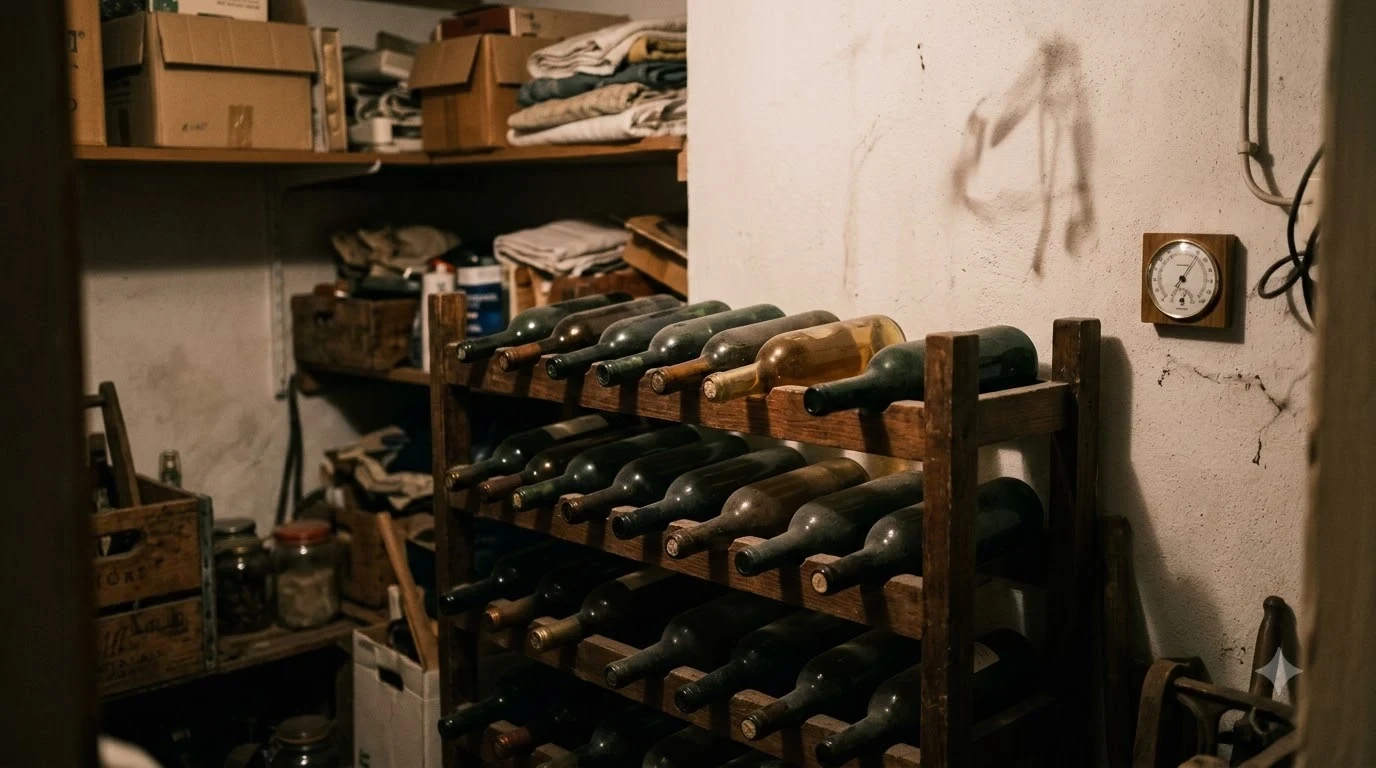
Good storage makes it easier to serve Champagne at the right temperature later. Keep unopened bottles in a cool, stable, dark environment and use controlled chilling shortly before serving rather than storing every bottle at extremely cold temperatures.
The Comité Champagne recommends storing bottles at a constant temperature between 10 and 15°C, equivalent to approximately 50–59°F. It also recommends protecting bottles from light, vibration, and odors. A dedicated wine cabinet or suitable cellar is preferable to a kitchen shelf exposed to repeated temperature changes.
Bottles may be stored upright or on their sides according to the Comité Champagne’s storage guidance. The important priorities are a stable environment, protection from light, and freedom from strong odors. Avoid storing Champagne near cleaning products, spices, or other strongly scented household items for extended periods.
A regular refrigerator is useful for short-term chilling, but it is not necessarily the ideal permanent storage location for valuable bottles. Frequent door opening introduces temperature changes, and food odors can become a concern during extended storage. The Union des Maisons de Champagne advises that prolonged refrigerator storage can allow odors to affect the wine through the cork.
For bottles intended for a celebration, plan the chilling schedule in advance. Move a bottle from storage to the refrigerator several hours before serving, or use an ice-and-water bucket when guests arrive. If the bottle is already cool, it may require much less time than one starting at room temperature.
After opening, use a proper airtight sparkling-wine stopper and return the bottle to the refrigerator. A stopper helps preserve carbonation, although an opened bottle will gradually lose its lively effervescence. For the best experience, plan to enjoy the remaining Champagne promptly rather than leaving it open for an extended period.
Glassware deserves regular care, too. Wash Champagne glasses by hand in hot water, avoid detergent residue, and dry them carefully. The Comité Champagne recommends this approach because residues can interfere with the formation of bubbles. Keep the glasses clean and ready before opening the bottle so that the wine can be served without unnecessary delays.
When planning a purchase, storage conditions should also influence the style and quantity you select. A bottle intended for immediate service does not require the same long-term arrangements as a vintage cuvée you intend to keep for a special occasion. For additional buying advice, visit our wine-buying guide for help comparing wine styles, labels, and purchasing considerations.
Frequently Asked Questions
Does Champagne have a different serving temperature from other sparkling wines?
Champagne generally follows the same broad chilling principles as Cava and Prosecco, but its mature and complex examples may benefit from warmer service. Champagne is produced in a specific French appellation, while Cava and Prosecco have their own production traditions and styles. A single temperature recommendation does not account for every sparkling wine’s structure or maturity.
Can Champagne be served in a regular white wine glass?
Yes. A white wine glass with a rounded bowl is useful for older or aromatic Champagne because it gives the wine more room to release its fragrance. A tulip-shaped glass is another strong option. A narrow flute emphasizes visible bubbles, but it provides less room for aromatic development than a wider glass.
Why does Champagne sometimes foam excessively after pouring?
Excessive foam can result from pouring too quickly, using a glass with residue, or disturbing the wine during service. The shape and cleanliness of the glass influence bubble formation. Pouring a small amount first and waiting before completing the pour helps manage the foam.
Does Champagne lose its carbonation if it is chilled and warmed repeatedly?
Temperature changes alone do not immediately remove all the carbonation from an unopened bottle. However, repeated handling, agitation, and opening the bottle can make service less predictable. Keep the bottle undisturbed, maintain a reasonably stable temperature, and avoid unnecessary movement before opening.
Should Champagne glasses be chilled before pouring?
Pre-chilling the glasses is generally unnecessary when the Champagne is already at its intended serving temperature. A frozen or frosted glass can create an excessively cold first impression and may introduce unwanted condensation. A clean glass at a moderate room temperature is a dependable choice for most occasions.
For most bottles, 46–50°F is the dependable answer to the question of how cold Champagne should be served. Adjust slightly warmer for richer vintage, rosé, and prestige styles, and use an ice-and-water bucket or advance refrigerator chilling to reach the target. With the right temperature, clean glassware, and careful pouring, Champagne can show its freshness, aromas, and fine bubbles to much better effect.
More in Wine Buying Guides
 Cheap Red Blend: How to Find a Flavorful Bottle for LessUpdated Nov 20, 2026
 Pinot Grigio Gift: How to Choose a Bottle They’ll EnjoyUpdated Nov 20, 2026
 Best White Wine at Total Wine for Every MealUpdated Nov 20, 2026
 Wine Fridge Replacement Shelves: Find the Right FitUpdated Nov 20, 2026
 Best Sparkling Wine Under 20: Find Bubbles Worth BuyingUpdated Nov 20, 2026
 Best Wine For Birthday Celebrations With Perfect Party PairingsUpdated Nov 20, 2026