

We may earn a commission when you buy through links on this page, at no extra cost to you. Learn more.
The stolzle decanter is a strong choice for wine drinkers who want handmade, lead-free crystal glass, practical 750 mL capacity, and elegant presentation for red wine. The Decanter Classic is particularly appealing for Cabernet Sauvignon, Syrah, and Bordeaux blends, while the Professional offers a lighter alternative with a narrower opening. Both have attractive traditional designs, although their relatively substantial glass construction and hand-cleaning requirements deserve consideration before buying.
Stölzle Lausitz makes several decanters rather than one universal design, so choosing the right model involves more than comparing appearance. Capacity, opening width, overall dimensions, handling weight, and cleaning requirements all affect how well a decanter fits a wine collection and everyday serving routine. The Classic is a sensible starting point, but the Professional and Bordeaux models offer different proportions for different preferences. This review examines their practical differences, explains what to expect from the glass, and identifies the buyers most likely to appreciate each design.
Stölzle Decanter Classic: Specs and Key Features
The Decanter Classic combines handmade lead-free crystal glass with a broad, rounded body designed for wine aeration and presentation. Its 750 mL capacity accommodates a standard bottle, while its traditional silhouette makes it suitable for both dinner parties and regular red wine service.

The manufacturer’s product specifications identify the Classic as a handmade, mouth-blown vessel in the Classic line. It has a relatively broad body measuring 216 mm across, with an 84 mm upper opening and an overall height of 217 mm. Those dimensions give the decanter a substantial footprint without making it particularly tall.
Its weight is 709 g before wine is added. That is a meaningful consideration because a full 750 mL bottle of wine adds approximately another 750 g of liquid. Consequently, the filled vessel requires a reasonably secure grip, especially when pouring for several guests. People who prefer lightweight serving accessories may find the Professional more manageable.
| Specification | Decanter Classic | Decanter Professional |
|---|---|---|
| Construction | Handmade, mouth-blown | Handmade, mouth-blown |
| Material | Lead-free crystal glass | Lead-free crystal glass |
| Capacity | 750 mL | 750 mL |
| Empty weight | 709 g | 571 g |
| Height | 217 mm | 217 mm |
| Maximum diameter | 216 mm | 205 mm |
| Upper diameter | 84 mm | 50 mm |
| Bottom diameter | 86 mm | 95 mm |
| Dishwasher guidance | Product page says dishwasher-resistant | Follow individual product care guidance |
These figures come from the manufacturer’s individual Classic and Professional product specifications. The most noticeable difference is not capacity but geometry. The Classic has a wider upper opening and broader maximum body, whereas the Professional has a narrower neck and weighs 138 g less. That difference can influence filling, handling, storage, and the way wine spreads through the vessel.
The Classic is also designed with a shaped pouring spout. Stölzle describes the spout as helping provide controlled, drip-free serving. This is an appealing feature for formal dinners, although actual pouring control also depends on how comfortably the user can support a full decanter.
Another important feature is the lead-free crystal construction. The material gives the vessel a clear appearance that displays the color of red wine without an opaque or heavily tinted surface. The handmade designation also makes the Classic more presentation-oriented than an ordinary household water pitcher.
What Owners May Appreciate About the Design
The main attractions of the Stölzle Classic are its clear crystal appearance, traditional proportions, and capacity for a complete bottle. These characteristics make it a practical centerpiece for serving Cabernet Sauvignon, Syrah, and other structured reds at a dinner table.
There is an important distinction between documented product features and verified customer sentiment. The available manufacturer and retailer pages do not establish a substantial body of independently verified owner feedback for this particular model. One retailer even displays a first-review invitation rather than an established collection of customer testimonials. Therefore, claims about widespread owner satisfaction would be premature.
Nevertheless, several design characteristics explain why a buyer might find the Classic appealing. The broad body provides a generous surface for wine exposure, while the transparent material makes the wine itself part of the presentation. Its 750 mL capacity also avoids the need to divide an ordinary bottle between multiple serving vessels.
For people who enjoy hosting, the visual effect can be as important as the functional benefit. A decanter creates a more deliberate serving ritual than placing an opened bottle on the table. It also allows guests to see the wine’s color and clarity, which can be particularly attractive with deeply colored Cabernet Sauvignon or dark Malbec.
Crystal clarity and table presentation
Clear glass is especially useful when serving red wines with pronounced color. A deep ruby Pinot Noir, dark purple Syrah, or nearly opaque young Cabernet Sauvignon can look different under dining-room lighting. A transparent vessel allows those differences to remain visible rather than hiding them behind decorative coloring.
The Classic’s handmade construction is another selling point for buyers who appreciate traditional glassmaking. It has a recognizable decanter silhouette rather than the minimalist shape of a narrow carafe. That makes it suitable for traditional dining rooms, formal entertaining, and collections that already include coordinated crystal stemware.
A practical capacity for regular bottles
The 750 mL capacity is one of the strongest practical advantages. A standard wine bottle contains the same nominal volume, so the Classic can accommodate a complete bottle without requiring a second transfer. This is particularly convenient when preparing a red wine for a meal rather than serving individual glasses directly from the bottle.
The manufacturer also identifies several suitable red wine styles, including Bordeaux blends, Barolo, and Rioja. These are useful examples because their structure and aromatic complexity can make decanting an appealing serving step. However, decanting does not guarantee that every wine will improve, and older delicate bottles may need gentler handling than a young, tannic red.
Common Complaints and Practical Limitations
The most important potential drawbacks are the Classic’s 709 g empty weight, its broad storage footprint, and the extra attention required for cleaning. These are not manufacturing defects, but they may affect whether the vessel suits a small kitchen or someone who prefers low-maintenance glassware.
Weight becomes more significant after filling. A full 750 mL bottle contributes approximately 750 g of wine, bringing the combined weight close to 1.46 kg before accounting for any variation in the actual liquid density. Pouring repeatedly from that weight can be uncomfortable for someone with limited grip strength or a preference for lightweight serving equipment.
The broad 216 mm diameter also requires sufficient cabinet and countertop space. Buyers should measure their storage location rather than assuming that every decanter will fit into a conventional glassware cabinet. Its 217 mm height is manageable for many shelves, but the broad lower section may be the more significant restriction.
Cleaning is another consideration. Although the Classic product page identifies this particular model as dishwasher-resistant, Stölzle’s general care instructions state that most of its decanters should be washed by hand unless the individual product page provides different instructions. The Classic’s specific designation therefore matters, but buyers who prefer consistent hand care across their glassware collection may find that approach simpler.
The pouring experience depends on more than the spout
A shaped pouring lip can help control the stream, but the relationship between the neck, body, and center of gravity also matters. Serious Eats explains that a decanter’s neck length and weight distribution influence how much effort is needed to lift and pour from a filled vessel.
The Classic’s broad body and comparatively substantial empty weight make it more of a traditional serving piece than a lightweight utility carafe. That is not necessarily a disadvantage. It simply means that buyers should prioritize stability and grip rather than judging the design only by its appearance.
Another limitation is that a wide vessel does not automatically make every wine better. Young, structured reds can benefit from exposure to oxygen, but delicate older wines may lose some of their more subtle aromatic characteristics if exposed too aggressively. The Classic should be viewed as a versatile serving decanter, not a guarantee of better wine.
Who Should Buy the Stölzle Decanter and Who Should Skip It
The Classic is best suited to people who regularly serve full-bodied red wine, appreciate handmade crystal glass, and have enough room for a broad 750 mL vessel. It is less suitable for buyers who prioritize lightweight handling, compact storage, or a decanter that requires very little cleaning attention.
Cabernet Sauvignon drinkers are an especially natural audience. The grape generally produces wines with substantial tannin, and a young bottle can benefit from aeration before dinner. Syrah, Malbec, and Bordeaux blends are also listed by Stölzle as suitable choices for this decanter.
For an occasional wine drinker, the Classic may be more of a presentation purchase than a necessity. A decanter is not required to enjoy a good bottle. Simply opening a wine and allowing it time in the glass can sometimes provide sufficient air exposure, especially when drinking a lighter or more delicate style.
Buy it if presentation matters
Consider the Classic if a traditional crystal appearance is important and the decanter will regularly appear on a dining table. Its handmade construction and broad transparent body make it appropriate for entertaining, particularly when serving a 750 mL bottle of red wine to several guests.
It also makes sense for someone building a coordinated glassware collection. Stölzle offers different categories of stemware, including wine glasses for different wine styles. Matching the visual character of a decanter with the glasses on the table can create a more consistent serving setup without requiring every piece to be identical.
Skip it if handling convenience comes first
Buyers who regularly pour wine with one hand may prefer a lighter vessel. The Professional weighs 571 g empty, compared with the Classic’s 709 g, and holds the same 750 mL volume. That difference is worth considering if the decanter will be used frequently rather than reserved for special dinners.
It may also be unnecessary for someone who mainly drinks sparkling wine, delicate Pinot Noir, or light-bodied whites. A traditional broad red wine decanter is not the only option for those styles. Some white wines benefit from decanting, but the need depends on the wine rather than the formality of the occasion.
Tip: Before purchasing, measure the decanter’s widest point and the height of the storage shelf. For the Classic, allow for its 216 mm maximum diameter and 217 mm height, with additional clearance for comfortable handling.
How It Compares to Alternative Stölzle Decanters
The Classic, Professional, and Bordeaux are three useful options to compare because they offer different proportions while maintaining a 750 mL capacity. The Professional prioritizes a lighter body and narrower opening, while the Bordeaux introduces a taller profile for a more pronounced presentation.
The Classic remains the balanced traditional option. Its 216 mm maximum diameter and 84 mm upper opening give it a broad profile, and its 709 g weight creates a substantial feel. The Professional is 138 g lighter and has a 50 mm opening, making its silhouette more restrained.
The Bordeaux has a different emphasis. According to the manufacturer’s specifications, it measures 255 mm tall and weighs 679 g. Its upper diameter is 85 mm, with a maximum diameter of 180 mm. This makes it taller and narrower than the Classic, which may appeal to buyers who prefer a more vertical appearance.
The smaller Fire decanter is another option for people who do not always need a full-bottle vessel. Its 375 mL capacity is half the nominal volume of a standard bottle, making it a more specialized choice for smaller servings or partial-bottle use.
| Model | Capacity | Weight | Height | Maximum diameter |
|---|---|---|---|---|
| Classic | 750 mL | 709 g | 217 mm | 216 mm |
| Professional | 750 mL | 571 g | 217 mm | 205 mm |
| Bordeaux | 750 mL | 679 g | 255 mm | 180 mm |
| Fire | 375 mL | 591 g | 200 mm | 140 mm |
Classic versus Professional
The Professional is the most straightforward alternative if the Classic seems too heavy. Both models accommodate a standard bottle and stand 217 mm tall, but the Professional is 138 g lighter. Its narrower upper opening also creates a different pouring and aeration profile.
The Classic has the advantage of a wider upper opening, which can make transferring wine from a bottle more straightforward. The Professional may appeal to people who prefer a narrower-necked appearance and a somewhat lighter vessel. Neither should be assumed to produce a universally better result; the wine’s age, structure, and intended serving time remain important.
Classic versus Bordeaux
The Bordeaux is taller, at 255 mm, while the Classic measures 217 mm. The Bordeaux also weighs 30 g less, despite its additional height. Its maximum diameter of 180 mm gives it a narrower overall footprint than the Classic’s 216 mm.
For a buyer with a preference for a taller serving piece, the Bordeaux deserves consideration. The Classic is the better fit for someone who wants a more expansive, rounded profile. Both hold 750 mL, so capacity is not the deciding factor.
How other decanter designs compare
Independent decanter testing provides useful context for these choices. Serious Eats evaluated 11 vessels and highlighted the importance of a stable base, manageable weight, accessible opening, and controlled pouring. Its recommendations included the Godinger Wine Decanter Carafe for general use and the Riedel Wine Friendly Decanter for older, delicate wines.
The Riedel Wine Friendly design takes a narrower-body approach intended to provide gentler aeration. The Godinger model uses a wider base and angled opening to encourage oxygen exchange and easier pouring. These examples demonstrate that decanter design involves compromises between aeration speed, handling, sediment management, and presentation.
The Stölzle Classic is a traditional alternative for buyers who value handmade crystal construction and a substantial serving vessel. It should not be treated as a direct performance winner over those alternatives because no comparable independent head-to-head test of the Stölzle model was identified.
For a coordinated serving setup, buyers can also explore red wine glasses and glassware brands before deciding which pieces belong in their collection.
Using and Cleaning a Stölzle Decanter
Good cleaning habits are particularly important with crystal decanters because wine residue can remain in the lower body and become difficult to remove. Stölzle recommends rinsing its decanters immediately after use and hand-cleaning most models unless the individual product instructions state otherwise.
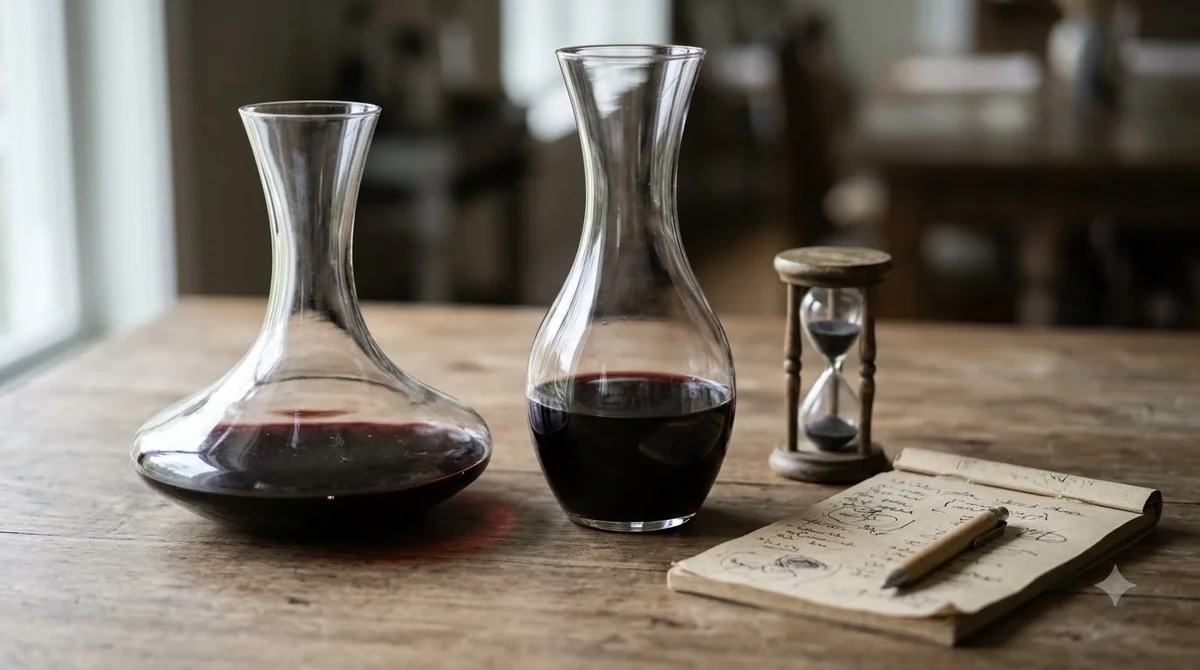
For regular use, rinse the vessel with clean water soon after serving. Red wine residue should not be left sitting inside the decanter for extended periods. The manufacturer explains that prolonged contact with wine residue can affect the glass, making prompt cleaning a sensible habit.
For more thorough cleaning, Stölzle recommends filling the decanter with warm water and allowing it to stand overnight. The following day, rinse the vessel and use approximately 500 mL of distilled water, gently swirling it before emptying. This process helps remove remaining residue without relying on strong detergents.
Cleaning stubborn wine stains
Some red wines leave visible marks, particularly when a decanter has been used repeatedly without immediate rinsing. Stölzle identifies citric acid or vinegar as possible cleaning aids, provided the vessel is thoroughly rinsed afterward. Cleaning beads and specialized tablets are other options for more persistent deposits.
Avoid using ordinary soap or detergent inside the decanter unless a specific cleaning product is recommended for glassware. Soap can leave a scent or residue that is difficult to remove from the interior, potentially affecting the aromas perceived when wine is served.
For additional guidance, the manufacturer’s Stölzle glass care instructions explain the recommended approach to decanter cleaning, including immediate rinsing, overnight soaking, distilled-water rinsing, and the use of cleaning beads.
Using the decanter for different wines
The Classic is particularly suited to young, full-bodied reds. Cabernet Sauvignon, Syrah, and Malbec are natural candidates because their tannin and concentrated structure can make aeration useful. Bordeaux blends and Barolo are other styles identified by the manufacturer.
For a young full-bodied red, allowing approximately 30 to 60 minutes in a decanter is a reasonable starting point. Taste the wine periodically rather than assuming that a longer period is always better. Some bottles open quickly, while others change more gradually.
Older red wines require a different approach. Their sediment may need separation, but their delicate aromas can be sensitive to excessive oxygen exposure. Pour slowly and stop before the sediment enters the decanter. If the wine is particularly fragile, a narrower vessel or gentler serving approach may be more appropriate.
White wine can also benefit from decanting in certain circumstances. Some fuller-bodied Chardonnay styles and aromatic whites may open up with air, although a broad traditional red wine decanter is not essential for ordinary white wine service. For sparkling wine, preserving bubbles is generally more important than maximizing oxygen exposure, so a dedicated champagne flute is a more suitable serving accessory.
Independent advice on decanter shape
Decanter design influences how wine interacts with air. In its wine decanter evaluation, Serious Eats explains that wider bases create a larger exposed wine surface, while opening width affects the exchange of oxygen. The publication also discusses how angled necks and sloping sides can improve pouring control and sediment separation.
These observations provide useful context for the Classic’s broad body. Its design is consistent with the principle of increasing wine exposure to air, but the exact effect depends on how much wine is inside and how long it remains there. Decanting should be guided by the individual bottle rather than by a fixed expectation that every wine needs the same treatment.
Frequently Asked Questions
Is Stölzle Lausitz the same company as Stölzle Glass?
Stölzle Lausitz is the name used for the glassware brand and its official product range. The company’s website also presents OBERGLAS 1806 as a separate brand within its online catalog. Buyers should use the full Stölzle Lausitz product name when checking specifications and replacement information.
Does lead-free crystal glass contain ordinary glass ingredients?
Lead-free crystal is a type of glass formulated without lead oxide, using alternative mineral ingredients to achieve clarity and other desirable glass properties. It should not be confused with lead crystal, which uses lead compounds in its formulation. Stölzle identifies its Classic and Professional decanters specifically as lead-free crystal glass.
Can a wine decanter be used as a water carafe?
A clean glass decanter can physically hold water, but its shape may make everyday refrigerator storage less convenient than a purpose-built water pitcher. The broad base and open neck can also make it easier for dust or other odors to reach the interior when left uncovered. A dedicated carafe is generally more practical for frequent water service.
How many servings can a 750 mL Stölzle decanter provide?
A 750 mL bottle provides approximately five standard 5-ounce wine servings. The same amount fits the stated capacity of the Classic and Professional models. Actual serving counts vary with glass size, and leaving room in the vessel may be preferable when a wine needs additional air exposure.
Does a handmade Stölzle decanter have to look perfectly identical to another one?
Handmade glass production can result in small variations between individual pieces. Minor differences in appearance or proportions do not automatically indicate damage or a manufacturing problem. Buyers should distinguish ordinary production variation from cracks, chips, or other defects that compromise safe use.
The Stölzle Decanter Classic is a compelling choice for wine drinkers who appreciate traditional crystal presentation, full-bottle capacity, and a broad design for structured red wines. The Professional is the more attractive alternative for buyers who want the same capacity with less empty weight, while the Bordeaux suits those who prefer a taller silhouette. Choosing between them ultimately comes down to handling comfort, available storage, cleaning preferences, and the wines most often served.
More in Wine Glasses
 Zwiesel Glas Champagne Flutes for Durable Everyday Sparkling WineUpdated Nov 20, 2026
 Vera Wang Crystal Wine Glasses: Design, Quality and Buying AdviceUpdated Nov 20, 2026
 West Elm White Wine Glasses: Compare Designs for Better Everyday Wine ServiceUpdated Nov 20, 2026
 Zalto Stemless Wine Glasses: Discover Their Distinctive DesignsUpdated Nov 20, 2026
 Viski Champagne Glasses That Match Your Style and Sparkling WineUpdated Nov 20, 2026
 Vista Alegre Decanter Review: Crystal Style and Wine ServiceUpdated Nov 20, 2026