

We may earn a commission when you buy through links on this page, at no extra cost to you. Learn more.
The best st helena wine tasting experience pairs a well-planned visit to historic winery estates with time in the town’s compact downtown tasting rooms. St. Helena sits in the heart of Napa Valley, where Cabernet Sauvignon is the signature grape but Cabernet Franc, Merlot, Syrah, Zinfandel, and Sauvignon Blanc also have a place. A little advance planning helps you compare vineyard settings, wine styles, and hospitality without rushing through the day.
St. Helena works especially well for visitors who want more than a sequence of tasting counters: it combines long-established wineries, newer tasting experiences, restaurants, and a walkable Main Street. The guide below explains how the appellation shapes the wines, where to focus your visit, what to look for in the glass, and how to organize a satisfying day in Napa Valley.
Why St. Helena Produces Distinctive Napa Valley Wines
St. Helena is a warm Napa Valley appellation on the narrower northern valley floor, and its mix of valley-floor vineyards, hillside benches, and varied soils helps explain the range of Cabernet styles found here. The Mayacamas and Vaca mountain ranges frame the area, while the local appellation organization identifies 21 soil types across its vineyard landscape. For a broader town-and-region overview, see our guide to St. Helena wine country.
The appellation’s shape matters. Its narrow middle section can retain daytime warmth, while mountain runoff and ancient waterways have formed alluvial fans. Gravelly loam appears in western areas, volcanic soils are more prevalent to the east, and individual vineyard positions differ in exposure, drainage, and afternoon shade. That variety gives tasters a reason to compare wines from more than one producer rather than treating every St. Helena Cabernet as interchangeable.
Warm conditions are a defining feature: Napa Valley Vintners notes that St. Helena receives only occasional morning fog and can sometimes be hotter than Calistoga, while Appellation St. Helena describes summer days in the mid-90s and nights in the 40s or 50s. Cabernet from warmer sites can show ripe dark fruit and a fuller impression of alcohol and body. Western benchland is an important counterpoint; producers such as Spottswoode, Anomaly, and Corison are identified by Napa Valley Vintners as examples where protection from hot afternoon sun can support a more elegant style. For details on the boundaries and growing conditions, read the Napa Valley Vintners profile of the St. Helena AVA.
Where to Taste: Main Street Rooms and Historic Estates
St. Helena offers a useful choice between downtown tasting rooms and larger winery properties, and the two formats create different kinds of visits. The city’s visitor directory lists more than 25 tasting rooms, taprooms, and bars, while Visit California describes the primary downtown core as a walkable half-mile stretch.
For a history-focused visit, consider Charles Krug, Beringer, and Merryvale. Charles Krug opened for public tastings in 1882, and Visit California identifies it as the home of California’s first tasting room. Beringer is described as the region’s oldest continuously operating winery, while Merryvale was the first Napa Valley winery to open after the repeal of Prohibition in 1933. The city directory lists Charles Krug at 2800 Main Street, Beringer at 2000 Main Street, and Merryvale at 1000 Main Street; it also lists Clif Family Winery at 709 Main Street and The Saint at 1351 Main Street.
Choose a visit for its particular focus. Clif Family is noted for small-production wines, wine-and-food pairings, and its Bruschetteria food truck. HALL Wines is recognized for art and sculpture around its glass-house tasting room, while Rombauer Vineyards offers garden views toward the Mayacamas Mountains. Spring Mountain Vineyard adds a historical angle: it placed fourth in the 1976 Judgment of Paris tasting. For a current starting list of addresses, use the City of St. Helena’s tasting-room directory; individual wineries set their own hours, reservation rules, and tasting formats.
How to Plan Appointments and Build a Tasting Route
A comfortable St. Helena day usually works better with two or three planned stops than with an attempt to visit every winery on a map. Reserve the winery experiences that matter most, leave room for a meal and a downtown walk, and allow enough time at each appointment to ask questions rather than watching the clock.
Start by choosing a theme. A history-minded visitor might pair Charles Krug with Beringer and finish with a tasting room on Main Street. Someone focused on Cabernet could choose one estate that pours several vineyard-designated wines and a second producer with a contrasting style. Visitors who want food as part of the experience can consider Clif Family’s wine-and-food options, then keep the rest of the day flexible for a restaurant or a casual stop downtown.
Check the visit details before booking: ask how long the tasting lasts, whether it is seated or standing, how many wines are included, whether food is served, and whether the group size is limited. Downtown rooms may offer a more spontaneous stop, while vineyard or production tours can be separate from public tasting-room access. Group nearby stops together; the half-mile downtown core is walkable, but outlying estates and hillside properties require a vehicle or arranged transportation. Plan a designated driver or hired driver before the first pour, and ask in advance whether non-drinkers can join the experience.
Tip: Keep the schedule to two or three winery appointments, leave one unbooked break for lunch or downtown, and confirm each reservation’s duration and address the day before you go.
Which Grapes and Wine Styles Should You Look For?
Cabernet Sauvignon is the natural benchmark in St. Helena, but tasting only Cabernet can hide some of the appellation’s range. Cabernet Franc, Merlot, Syrah, Zinfandel, and Sauvignon Blanc are also frequently cultivated, so a good flight can show both the region’s red-wine strengths and a contrasting white.
St. Helena Cabernet often leans toward ripe, concentrated fruit, with dark cherry, cassis, plum, or blackberry impressions and a firm tannic frame. Warm valley-floor conditions help explain this generous profile, although site and producer choices influence the final wine. Cabernet Sauvignon typically has high tannin, so notice how the wine feels across the gums and along the finish, not just its fruit aromas. Cabernet Franc can bring aromatic lift and herbal or savory accents; Merlot generally has medium tannin and a softer texture, while Syrah can add dark fruit, spice, and medium-plus to high tannin.
Zinfandel often shows a riper, more overt fruit character, while Sauvignon Blanc offers a bright, high-acid contrast before a flight of substantial reds. Chardonnay is found elsewhere in Napa Valley, but the varieties most frequently cultivated in St. Helena listed by Appellation St. Helena include Sauvignon Blanc rather than Chardonnay. For a useful primer on how American appellations are defined, see our overview of Wine Regions. Compare balance rather than asking which wine is objectively best: note fruit ripeness, oak, acidity, and whether tannin feels polished or drying. A powerful wine can still be balanced, while a more restrained wine may reflect a cooler or more shaded vineyard position.
How to Taste and Compare a Flight
A thoughtful flight gives you a clearer sense of St. Helena than a list of unrelated pours. Taste lighter wines before fuller reds, compare similar grapes side by side when possible, and record a few impressions about fruit, acidity, tannin, oak, and finish for each glass.
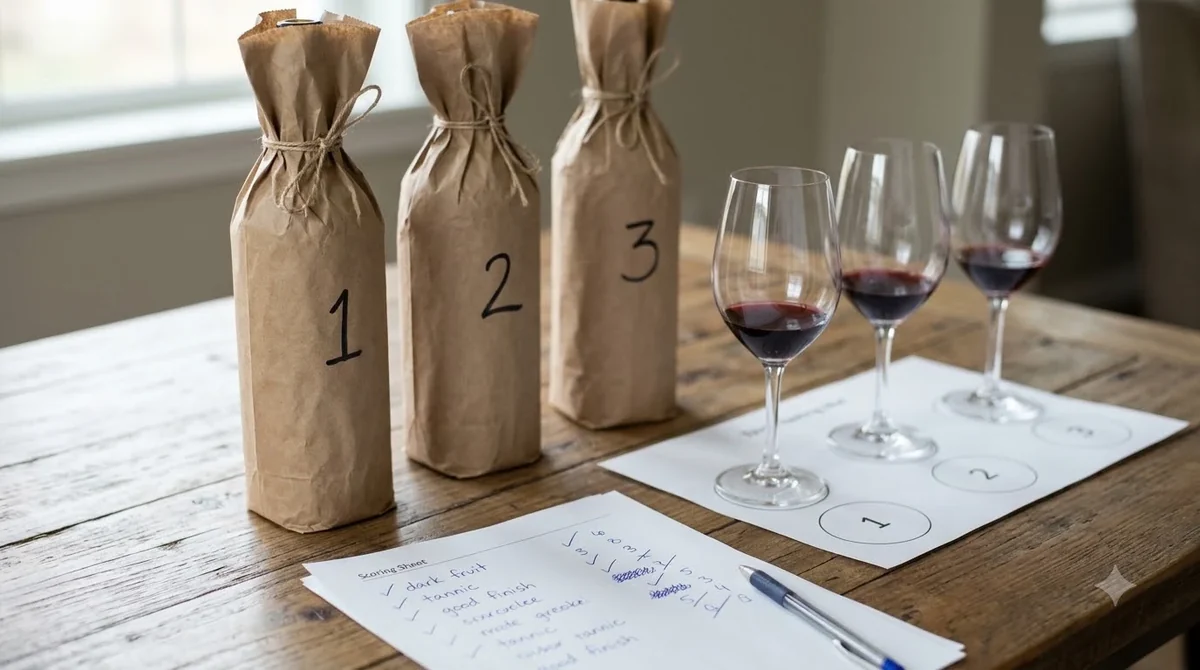
Begin with appearance, then swirl gently and smell before tasting. Look for aroma families such as fresh or dried fruit, herbs, spice, flowers, earth, and oak-derived notes such as vanilla or toast. On the palate, separate acidity, tannin, alcohol, and body: acidity creates freshness, tannin produces a drying or gripping sensation, alcohol can add warmth, and body describes the wine’s weight. Then consider whether the finish fades quickly or remains for several seconds.
Serving temperature affects what you notice. Full-bodied reds such as Cabernet Sauvignon, Merlot, and Syrah generally show well around 60–65°F rather than at warm room temperature. Sauvignon Blanc is often more refreshing around 45–50°F, while a fuller white such as Chardonnay is usually served around 50–55°F. The table gives practical comparison points for common wines you may encounter in St. Helena.
| Wine to compare | Typical structure | Serving temperature | What to notice |
|---|---|---|---|
| Cabernet Sauvignon | High tannin, full body | 60–65°F | Dark fruit, grip, length |
| Merlot | Medium tannin, softer texture | 60–65°F | Plum fruit, supple feel |
| Syrah | Medium-plus to high tannin | 60–65°F | Dark fruit, spice, structure |
| Sauvignon Blanc | High acidity, lighter body | 45–50°F | Citrus, herbal notes, freshness |
| Chardonnay | Medium acidity, fuller body | 50–55°F | Texture, fruit, oak influence |
Make comparisons specific. If you taste two Cabernets, ask whether one has firmer tannins, more obvious oak, or fresher acidity. If you taste Cabernet Franc beside Cabernet Sauvignon, notice how the aromas and texture differ. A small amount of focused attention can make a short flight more informative than a long series of hurried sips.
Food Pairings, Breaks, and the Pace of the Day
Food is part of a successful tasting itinerary because it gives the palate a change of texture and helps guests compare wines in a dining context. In St. Helena, plan a real meal between appointments or choose a winery experience that includes food rather than relying on a few crackers to carry you through several hours.
Cabernet Sauvignon is a natural match for grilled beef, lamb, burgers, and aged hard cheeses; protein and fat soften the perception of tannin. Roasted mushrooms and savory herb dishes can also work well with Cabernet. Merlot is flexible with roast chicken, pork, meatloaf, and mushroom dishes, while Cabernet Franc suits grilled vegetables, tomato-based dishes, and herb-seasoned poultry. Syrah can pair with grilled lamb, sausages, and barbecue with moderate sweetness.
Sauvignon Blanc suits goat cheese, green salads with bright vinaigrette, asparagus, and shellfish because its acidity can meet the sharpness of acidic food. Chardonnay works with roast chicken, creamy vegetable dishes, and richer seafood preparations. Keep the core rules in mind: wine should be at least as sweet as dessert; acidic food needs equal or higher acidity; salt and fat soften tannin; chili heat is amplified by alcohol and tannin; and oily fish can clash with tannic reds.
Use the town’s food options to create breathing room. Visit California highlights Clif Family’s food pairings and Bruschetteria food truck, while downtown St. Helena has restaurants and cafés within its central walking area. A sit-down lunch is a practical moment to drink water, review notes, and decide whether you want another formal tasting or a relaxed walk before returning to your lodging. The goal is not to maximize the number of pours; it is to remember the wines and enjoy the place.
Frequently Asked Questions
These quick answers cover a few details that help put the town and its wine region in context, including the appellation’s boundaries, early history, and non-wine attractions. They are useful to know before you set an itinerary around Charles Krug, Beringer, or the downtown tasting rooms.
Is St. Helena a town or an American Viticultural Area?
It is both: the town shares its name with the surrounding St. Helena AVA, a sub-appellation within Napa Valley. Napa Valley Vintners states that the AVA was officially recognized in 1995 and includes more than 400 vineyards with over 6,800 acres planted to grapevines. The town itself was incorporated on March 24, 1876.
How large is the St. Helena appellation?
Appellation St. Helena describes its area as roughly 12,000 acres, with approximately 6,800 acres planted to grapes. Its FAQ places it north of Rutherford and south of Calistoga, with boundaries that run from Zinfandel Lane in the south to Bale Lane in the north. The AVA therefore covers more than the central business district visitors see on Main Street.
What was the area called before the town became St. Helena?
Napa Valley Vintners records that the Wappo people lived in the area in a village called Anakotanoma, translated as “Bull Snake Village.” The nearby mountain was called Kanamota, or “Human Mountain,” before later naming history connected it to St. Helena. This history predates the region’s commercial wineries by many generations.
What can visitors do if they want a break from wine tasting?
The Culinary Institute of America at Greystone offers cooking demonstrations and tours. Nearby Bale Grist Mill State Historic Park preserves a 19th-century grist mill with a 36-foot water wheel, giving visitors a closer look at an earlier part of Napa Valley’s agricultural history. These stops can add variety to a day built around winery appointments.
Why do some sources write “Saint Helena” rather than “St. Helena”?
Napa Valley Vintners uses “Saint Helena AVA” in its formal appellation page, while local tourism and winery materials commonly shorten the name to “St. Helena.” Both spellings refer to the same Napa Valley sub-appellation in this context. Searching both forms can help visitors find winery information and regional resources.
St. Helena rewards visitors who leave room for contrast: a historic estate, a downtown tasting room, and wines from more than one vineyard setting can tell a richer story than a packed itinerary. Choose a few reservations that match your interests, give each glass time, and let the town’s food, history, and landscape be part of the experience.
More in Wine Regions
 Willcox Wine Trail: Discover Arizona’s High-Elevation Wine CountryUpdated Nov 20, 2026
 Yakima Valley Wine Region: Find the Best Styles to TryUpdated Nov 20, 2026
 Vosne Romanee Wine Tasting: Identify Aromas and Choose Better PairingsUpdated Nov 20, 2026
 Yakima Valley Wine Festival: Find the Best Seasonal Wine EventsUpdated Nov 20, 2026
 Wales Vineyards: Discover Cool-Climate Wines and Where to VisitUpdated Nov 20, 2026
 Yountville Wine Festival: Discover Napa Wines and Local FoodUpdated Nov 20, 2026