

We may earn a commission when you buy through links on this page, at no extra cost to you. Learn more.
Sparkling wine sangria is a chilled punch made with bubbly wine, usually cava, combined with fruit, a splash of brandy or orange liqueur, and sometimes seltzer. Because the fizz comes from the wine itself, the drink feels lighter and livelier than a traditional still wine version. Food Network recipes built on this idea typically use two bottles of cava, a little liqueur, and a generous amount of berries.
This guide explains how to make sparkling wine sangria, which bubbly styles suit the drink, and how to keep the fizz from fading. It also compares the approach with traditional red sangria so you can decide which version fits your next gathering.
What Is Sparkling Wine Sangria?
Sparkling wine sangria is a twist on the classic Spanish punch. Instead of a still red or white wine base, it uses a sparkling wine as the main ingredient, and the bubbles lift the fruit and spirit flavors. The result is a drink that works well for brunch, summer parties, and holiday receptions where guests want something festive but not heavy.
Most versions follow a similar pattern. Fruit is macerated or floated in the drink, a sweet liqueur or brandy adds depth, and chilled sparkling wine is poured in at the end. According to Daisy Martinez’s cava sangria recipe on Food Network, the sparkling wine is added gently at the end so it keeps its bubbles. If you want the flavor profile of the drink in more detail, see cava sangria for a closer look at the Spanish version.
Best Sparkling Wines for Sangria
The sparkling wine you choose shapes the whole punch. Cava, the Spanish sparkling wine, is the most common choice in published recipes because its crisp, dry character fits fruit and brandy well. Dry styles keep the drink balanced, while very sweet bottles can make the finished punch feel syrupy.
Many of the recipes reviewed for this guide call for cava specifically, and some name a particular Spanish brand. You do not need that exact bottle. Look for a dry or extra dry label, and avoid anything marked sweet or demi-sec if you want the fruit to shine. Chill the bottles well before you start, since a cold base holds its fizz longer once it is mixed.
Prosecco and other dry sparkling wines can also work. Their softer fruit notes pair nicely with berries and stone fruit. Check the label for the sweetness level, and read the Wine by Type section of this site if you want a broader guide to sparkling styles before you buy.
Sparkling Wine Sangria Recipe
The basic method is simple. You combine the flavorings in a pitcher or punch bowl, then add the sparkling wine just before serving. Keeping the wine for last is the single most important habit for a lively drink.
- Chill the sparkling wine, any seltzer, and the spirits thoroughly before you begin.
- Stir the brandy or orange liqueur together with a little sugar in a large pitcher until the sugar dissolves.
- Add your chopped or whole fruit. Lightly muddle berries if you want their juice to color the drink.
- Set aside some berries to float on top or to decorate individual glasses.
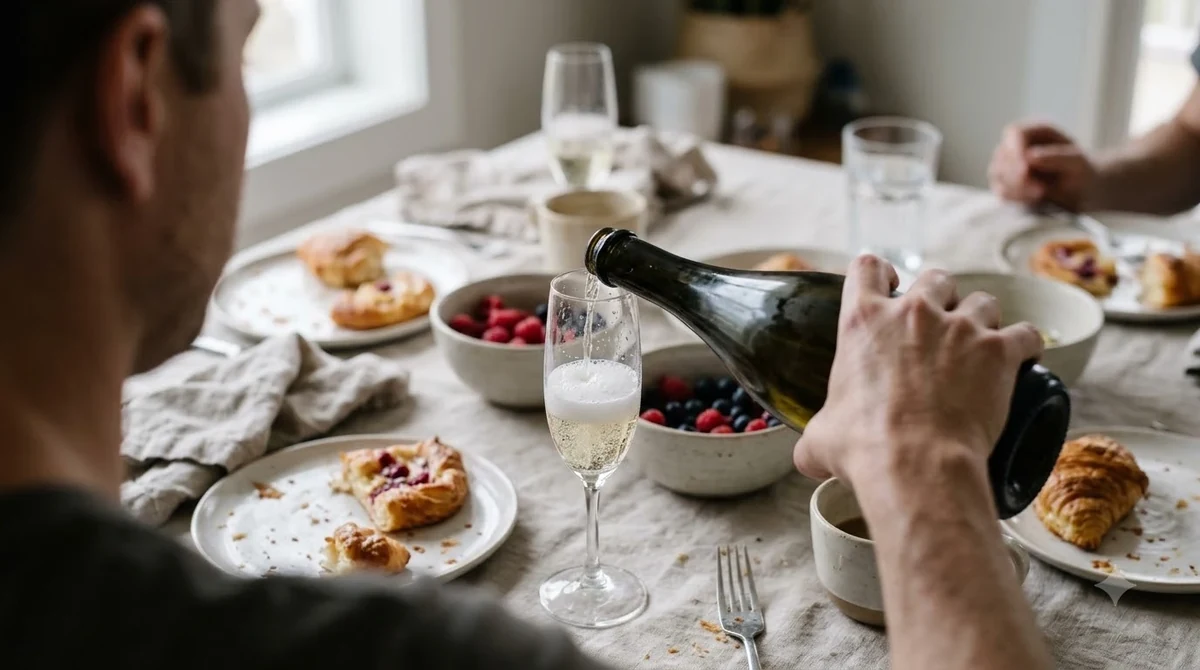
- Pour the sparkling wine gently down the side of the pitcher or bowl so it loses as little fizz as possible.
- Serve right away over ice or straight from the chilled pitcher.
Quantities vary a lot between recipes. The published versions reviewed for this guide range from one bottle to two bottles of sparkling wine for a crowd, with some adding seltzer and others skipping it. Use the recipe you trust most as a starting point, and adjust the sweetness to taste rather than following one set formula.
Fruit, Garnish and Keeping the Bubbles Fresh
Fruit gives sparkling wine sangria its color and aroma, so choose pieces that hold their shape in liquid. Berries such as blueberries, blackberries and raspberries are the most common choice in the recipes reviewed here. Stone fruit like peaches also appears in several versions, especially when peach brandy is part of the base.
Keep the bubbles alive by avoiding vigorous stirring after the wine goes in. Serve the drink soon after mixing, and pour smaller portions into glasses rather than letting a full pitcher sit at room temperature. One Food Network recipe by Rachael Ray notes that a single grape placed in the bottom of each glass can help retain some fizz, which is a small but popular trick. Treat it as a home habit rather than a guaranteed fix.
Garnish each glass with a few berries rather than heaping fruit into the pitcher. This keeps the drink looking fresh, and guests can see the sparkle. Add ice carefully, since ice melts and dilutes the wine over time, so start with a few cubes and top up as needed.
Sparkling Wine Sangria vs. Traditional Sangria
Traditional sangria is usually built on a still red wine, often with citrus, a sweetener and a spirit, and it is left to rest so the flavors blend. Sparkling wine sangria skips that long rest. The bubbles arrive at the end, which makes the drink brighter, lighter and quicker to prepare. For a sense of how the classic red version tastes, read what does sangria taste like.
The biggest difference is texture. Still wine sangria feels round and soft, while the sparkling version feels crisp and effervescent. Red sangria tends to lean on tannin and fruit depth, and sparkling versions lean on acidity and fresh berry flavor. Neither is better in every situation, so choose based on the occasion and the guests.
Sparkling wine sangria also tends to be served colder and sooner after mixing. Red sangria can be made a day ahead, while the bubbly version is best made shortly before serving. Plan your timing around that difference when you host.
Calories and Serving Tips
Calorie counts for sparkling wine sangria depend on the recipe, the serving size and how much liqueur you add. The recipes reviewed for this guide list values from about 240 to 437 calories per serving, but each one uses a different serving size and base. Compare the listed serving sizes before you judge which drink is lighter.
| Recipe source | Listed servings | Sparkling base | Listed calories per serving |
|---|---|---|---|
| Daisy Martinez, Food Network | 12 six-ounce servings | Two 750-ml bottles of cava, plus seltzer and peach brandy | 240 |
| Rachael Ray, Food Network | 4 servings | One bottle of Spanish sparkling wine, plus two liqueurs | 278 |
| Michael Chiarello, Food Network | 6 servings | Two bottles of sparkling wine or cava, plus brandy and orange liqueur | 437 |
Serving size is the easiest way to manage intake. A six-ounce pour is a reasonable portion for a punch, and a smaller glass helps guests pace themselves. If you want to understand the numbers more fully, the guide on calories in sangria explains how the main ingredients add up.
Drink responsibly and offer water or a non-alcoholic option alongside the punch. Sparkling wine sangria is easy to sip quickly because it tastes light, so pour measured glasses and keep the pitcher out of reach once the party winds down.
Frequently Asked Questions
What sparkling wine is best for sangria?
Dry sparkling wines work best because they keep the drink balanced. Cava is the most common choice in published recipes, and dry prosecco is another popular option. Avoid very sweet bottles, since they can make the finished punch heavy.
Can I make sparkling wine sangria ahead of time?
It is best to mix the fruit and spirits ahead, then add the sparkling wine just before serving. Adding the bubbles early causes the drink to lose its fizz. Keep the fruit base chilled until your guests arrive.
How do I keep sparkling wine sangria fizzy?
Chill every ingredient thoroughly and add the sparkling wine last. Pour it gently down the side of the pitcher and avoid stirring hard afterward. Serve the drink soon after mixing and pour smaller portions to keep the rest cold.
Is sparkling wine sangria the same as red sangria?
No. Red sangria uses still red wine and usually rests for a while to blend its flavors. Sparkling wine sangria uses bubbly wine added at the end, which makes it lighter, crisper and quicker to prepare.
Sparkling wine sangria is a flexible punch that rewards careful timing and a dry, well-chilled base. Start with a trusted recipe, choose fresh fruit, and add the bubbles last. For more background on the drink, explore Wine by Type and plan your next batch around your guests’ tastes.
More in Wine Types & Grapes
 Zinfandel Sugar Content: Dry Red vs. White Zinfandel GramsUpdated Nov 21, 2026
 Best Zinfandel Substitute Options for Sipping and CookingUpdated Nov 21, 2026
 Zweigelt Food Pairing: Best Dishes, Cheeses, and Serving TipsUpdated Nov 21, 2026
 Zinfandel Tannins Explained: How Structure Shapes Every BottleUpdated Nov 21, 2026
 Zinfandel Sweetness Level: Dry Red vs. Sweet White Zin ExplainedUpdated Nov 21, 2026
 Xinomavro Food Pairing: Best Dishes, Styles, and Serving TipsUpdated Nov 21, 2026