

We may earn a commission when you buy through links on this page, at no extra cost to you. Learn more.
Shiraz color is typically deep ruby to dark purple, and the wine is among the most intensely colored red wines you can pour. Shiraz is the Australian name for the syrah grape, and its dark skins give the wine a concentrated shade that often looks nearly black in the glass. This guide explains what drives that color, how it changes with age, and what it can tell you about a bottle.
Few red wines make as strong a first impression as shiraz. Pour a glass and the color is so dense that light barely passes through the edge. That depth is one of the reasons shiraz is so easy to recognize, and it also shapes how the wine tastes and ages. Understanding the color helps you read a label, judge a glass, and decide whether a bottle fits your meal.
What gives shiraz its deep color
Shiraz is made from a dark-skinned grape, and most of the color in red wine comes from the skins. During fermentation the juice stays in contact with the skins, which releases pigments and tannins into the wine. The grape skins are thick and rich in color compounds, so the resulting wine tends to be intensely pigmented.
The Wine Folly grape guide to syrah notes that the grape has some of the most intense color concentration among the world’s red wines. The same guide lists the grape as typically known as shiraz in Australia, where it is one of the most widely planted varieties. Whether the bottle says shiraz or syrah, the color tends to be dense.
How shiraz color changes with age
Young shiraz usually shows the deepest color. In the first years after bottling, the wine often looks purple or dark ruby, with the edges sometimes still bright. This youthful shade reflects the fresh fruit and the strong pigments that have not yet softened.
Over time the color shifts. Shiraz that has aged for several years usually loses some of its purple tint and moves toward garnet or brick at the rim. The core can still look dark, but the edge becomes lighter as the wine develops. A bottle that looks almost black at the center may still show a brick-colored edge after a decade, which is a useful sign of maturity.
| Stage | Typical color | What it usually signals |
|---|---|---|
| Young shiraz | Deep purple to dark ruby | Fresh fruit, concentrated pigment |
| Mid-age shiraz | Ruby with garnet tones at the rim | Softening tannins, developing complexity |
| Mature shiraz | Garnet to brick at the edge | Savory notes, lighter fruit |
Tip: Tilt the glass against a white background. The rim tells you more about age than the center. A bright purple rim suggests a young wine, while a brick rim points to a bottle that is further along.
Australian shiraz versus northern Rhône syrah
Style and climate also affect color and how dark the wine looks. According to the Wikipedia overview of shiraz, Australian shiraz from hot regions tends to be full-bodied and fruit-driven, with softer tannins. Those warm-climate wines usually look dense and jammy, with a deep color that reflects ripe fruit.
Syrah from the northern Rhône in France is often more restrained. The same overview describes those wines as more elegant, tannic, and smoke-flavored, with a leaner fruit component. The color can still be deep, but the wine usually shows a slightly more open edge and a cooler, more mineral character. Labeling offers a shortcut: Australian and South African wines are mostly labeled shiraz, while European wines are usually labeled syrah.
What shiraz color tells you about flavor
Color is only one clue, but it connects to structure. Deep color usually means the wine has strong tannins and a fuller body. Shiraz with intense color is often rich in dark fruit such as blackberry and plum, with spice and pepper notes that show up on the palate. The Wine Folly guide lists the grape with medium-high tannins and medium acidity, so the color is a good hint that the wine will feel firm and concentrated.
A lighter shiraz is not necessarily a weak one. Cooler sites and lighter winemaking can produce wines that are more transparent in the glass and more focused in flavor. Judging the color alongside the producer and region gives a better sense of what to expect than color alone.
How shiraz color compares with other red wines
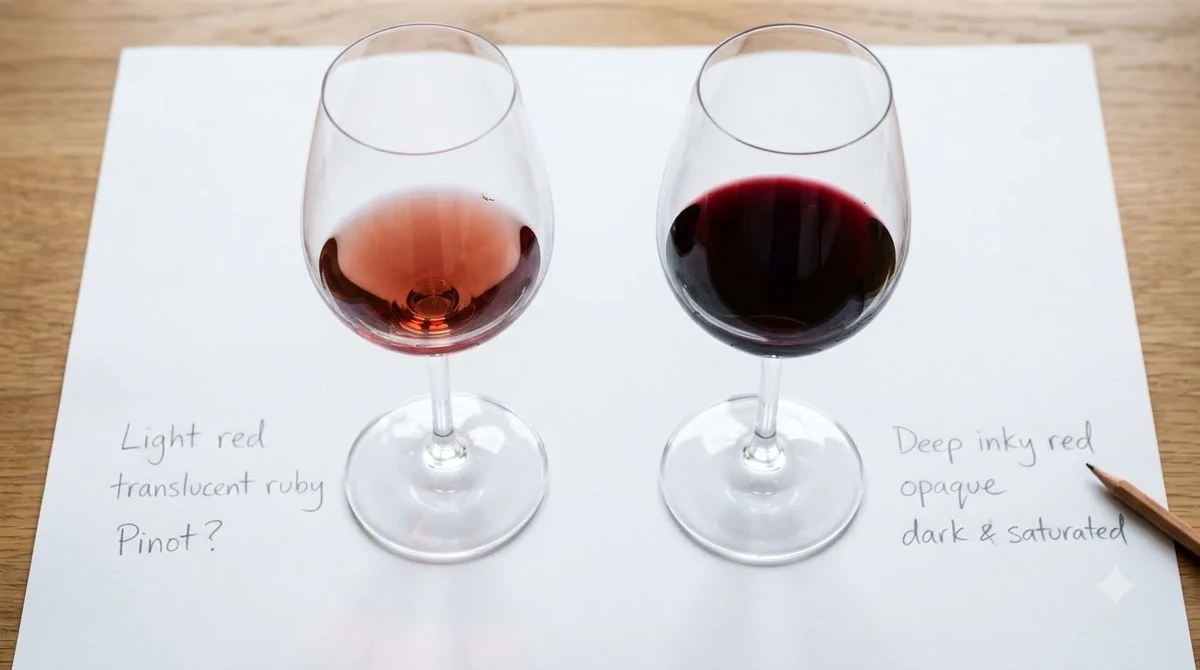
Shiraz is often compared with other dark reds, and its color stands out because of how dense it looks. Compared with a pale pinot noir, shiraz is far more opaque. Compared with a dark sherry or port style, shiraz stays red in the glass rather than moving toward brown. Those differences help you spot a red wine style quickly, even before you taste it.
For a useful contrast, the sherry color guide shows how oxidation moves a wine from pale to dark brown. Shiraz follows a different path: it starts very dark and softens toward garnet over time. Lovers of bright sparkling wine may also enjoy the prosecco color guide, which shows the opposite end of the color spectrum.
Common mistakes when judging shiraz color
A frequent mistake is to assume that the darkest bottle is automatically the best. Color reflects grape ripeness, skin contact, and aging, but it does not measure quality on its own. A very dark shiraz can still be unbalanced if its fruit is overripe or its tannins are harsh. A lighter-colored wine from a cool site may be more finely structured and pleasant to drink.
Another mistake is to read a dark glass as a sign of sweetness. Shiraz is normally made dry, so the depth of color does not mean residual sugar. Sweetness, if any, is stated on the label or described by the producer. Looking at color, then checking the back label for region, vintage, and style, gives a more accurate picture.
Lighting also changes what you see. A glass held under warm restaurant lights can look darker than the same wine in daylight. Comparing two shiraz wines side by side, in the same light, is the most reliable way to judge their color differences.
How to serve shiraz and match it with food
Shiraz shows its best character when it is served slightly below room temperature, around cellar temperature rather than warm. Decanting a young bottle can soften its tannins and let the aromas open. Older bottles usually need less air, since their structure has already settled.
Because shiraz is full-bodied, it pairs well with grilled meats, barbecue, hearty stews, and spiced dishes. Richer styles from warm regions can handle bold sauces, while cooler-climate syrah works well with roasted lamb or mushroom dishes. Matching the wine’s weight to the food matters more than the color.
Frequently Asked Questions
What color is shiraz?
Shiraz is usually deep ruby to dark purple when young, and it can look nearly black in the center. With age the rim softens toward garnet or brick.
Is shiraz the same as syrah?
Yes, they are the same grape. Shiraz is the common name in Australia and South Africa, while syrah is the usual name in Europe and much of the United States.
Why is shiraz so dark?
Shiraz has dark skins and a high concentration of color compounds. During fermentation the juice stays in contact with the skins, which pulls color and tannin into the wine.
Does shiraz color mean the wine is heavy?
Deep color often signals a fuller body and firm tannins, but it is not a perfect guide. Region, climate, and winemaking all shape how heavy the wine feels.
Shiraz color runs from deep purple in young bottles to garnet and brick as the wine ages, and the depth of color hints at the fruit and tannin you will taste. Check the rim for age, read the label for region and style, and pair the wine with food that matches its weight. For more about red and white wine types, browse the wine by type section.
More in Wine Types & Grapes
 Zinfandel Sugar Content: Dry Red vs. White Zinfandel GramsUpdated Nov 21, 2026
 Best Zinfandel Substitute Options for Sipping and CookingUpdated Nov 21, 2026
 Zweigelt Food Pairing: Best Dishes, Cheeses, and Serving TipsUpdated Nov 21, 2026
 Zinfandel Tannins Explained: How Structure Shapes Every BottleUpdated Nov 21, 2026
 Zinfandel Sweetness Level: Dry Red vs. Sweet White Zin ExplainedUpdated Nov 21, 2026
 Xinomavro Food Pairing: Best Dishes, Styles, and Serving TipsUpdated Nov 21, 2026