

We may earn a commission when you buy through links on this page, at no extra cost to you. Learn more.
Looking at sauvignon blanc carbs, a standard five-ounce pour of dry wine contains roughly 2 to 4 grams of total carbohydrates, with zero dietary fiber and typically less than 1.5 grams of sugar. Because winemakers ferment nearly all the natural grape sugars into alcohol, this crisp white wine ranks among the lowest-carb still wines available. Most of the roughly 120 calories in a glass come directly from alcohol rather than carbohydrates.
Tracking macronutrients does not require giving up a cold glass of white wine at dinner, provided you understand how fermentation shapes what ends up in your glass. Unlike beer or sweet cocktails, dry table wines leave behind very little unfermented sugar, though regional styles, ripeness at harvest, and pour size can shift the numbers slightly from one bottle to the next.
Sauvignon Blanc Carbs and Nutrition by Pour Size
Understanding sauvignon blanc carbs starts with measuring a true standard pour, since oversized restaurant goblets and generous home pours can quickly double your intake. According to Wine Folly’s guide to carbs in wine, a five-ounce serving of dry white wine contains between 0 and 4 grams of net carbohydrates depending on the winemaker’s fermentation choices.
In the United States, federal wine labels rarely include a nutrition facts panel, so drinkers rely on standard laboratory averages compiled from dry table wines. A baseline five-ounce glass (147 grams) of Sauvignon Blanc at roughly 13 percent alcohol by volume delivers about 119 to 120 calories, 3 grams of total carbohydrates, 1.4 grams of sugars, 0.1 grams of protein, and 0 grams of fat. Because wine contains no dietary fiber, total carbohydrates and net carbohydrates are identical.
The biggest variable in real-world tracking is glassware volume. Modern stemmed wine glasses frequently hold 16 to 22 ounces of liquid, meaning an unmeasured pour often reaches seven or eight ounces rather than the standard five. Pouring eight ounces bumps your carbohydrate count from roughly 3 grams to nearly 5 grams and pushes total calories past 190.
| Serving Size | Volume | Total Carbs | Sugars | Estimated Calories |
|---|---|---|---|---|
| Tasting Pour | 2 fl oz | 1.2 g | 0.6 g | 48 kcal |
| Standard Glass | 5 fl oz | 3.0 g | 1.4 g | 119 kcal |
| Generous Restaurant Pour | 6 fl oz | 3.6 g | 1.7 g | 143 kcal |
| Large Home Pour | 8 fl oz | 4.8 g | 2.2 g | 190 kcal |
| Half Bottle | 375 ml (12.7 fl oz) | 7.6 g | 3.5 g | 302 kcal |
| Full Bottle | 750 ml (25.4 fl oz) | 15.2 g | 7.1 g | 604 kcal |
Where Carbs in Sauvignon Blanc Come From
Every carbohydrate in a glass of Sauvignon Blanc comes from residual sugar—the natural grape fructose and glucose that yeast did not convert into ethanol during fermentation. Wine grapes start on the vine packed with fermentable sugars, and the winemaker decides when to stop the yeast’s work.

During alcoholic fermentation, yeast cells consume glucose and fructose, producing ethanol and carbon dioxide as byproducts. When a winemaker allows fermentation to run until virtually no sugar remains, the resulting wine is labeled and classified as dry. In a bone-dry Sauvignon Blanc, residual sugar levels often sit below 2 grams per liter, which translates to less than 0.3 grams of actual sugar in a five-ounce glass.
Winemakers occasionally leave a tiny fraction of unfermented sugar in the tank on purpose, particularly when working with fruit from cooler growing regions. Sauvignon Blanc naturally carries high levels of malic and tartaric acid, giving the wine its signature mouthwatering snap. Leaving 2 to 4 grams per liter of residual sugar softens those sharp acidic edges without making the wine taste noticeably sweet on the palate.
Beyond residual sugar, trace amounts of glycerol—a natural sugar alcohol formed during fermentation that adds subtle weight and texture—account for the small gap between measured sugar grams and total carbohydrate grams on nutritional databases. Neither added cane sugar nor corn syrup is permitted in quality dry table wines, though mass-produced entry-level bottles sometimes retain higher residual sugar to appeal to broader palates.
How Regional Styles Affect Residual Sugar and Carbs
Where the grapes are grown plays a direct role in both flavor intensity and how much residual sugar remains in the finished bottle. If you have ever wondered where Sauvignon Blanc is from, its benchmark regions span cool maritime valleys and sun-drenched coastal plains that produce noticeably different styles.
In France’s Loire Valley—home to classic appellations like Sancerre and Pouilly-Fumé—cool temperatures keep grape sugar levels modest at harvest. Winemakers ferment these wines completely dry, yielding lean, mineral-driven bottles with crisp citrus and flint notes that consistently sit at the very bottom of the carbohydrate range, often around 1 to 2 grams per glass.
New Zealand’s Marlborough region produces the world’s most recognizable style of Sauvignon Blanc, bursting with passionfruit, lime, and freshly cut grass. Because Marlborough’s cool climate preserves razor-sharp natural acidity, winemakers frequently retain 2 to 5 grams per liter of residual sugar to balance the palate. Even so, a five-ounce pour of Marlborough Sauvignon Blanc still averages roughly 2.5 to 3.5 grams of carbohydrates.
California and Bordeaux offer riper, fuller-bodied expressions that sometimes spend time aging in oak barrels or resting on spent yeast cells (lees). While oak aging adds creamy, waxy textures and notes of white peach or toasted brioche, barrel contact itself does not add carbohydrates to the wine. However, warmer growing climates yield riper grapes with higher initial sugar, resulting in slightly higher alcohol by volume—often 13.5 to 14.5 percent—which increases total calories even when the wine ferments fully dry.
Tip: Check the producer’s website for a downloadable technical sheet (often labeled “tech sheet”) if you want exact numbers; reputable wineries routinely list residual sugar in grams per liter alongside alcohol percentage and total acidity.
Sauvignon Blanc Carbs Compared to Other Wines
Across the broader spectrum of wine by type, dry Sauvignon Blanc sits firmly in the low-carb tier alongside Pinot Grigio, Chablis, and Brut Champagne. Carbohydrate levels across still wines depend far more on sweetness level and fermentation dryness than on whether the grape skin is green or red.
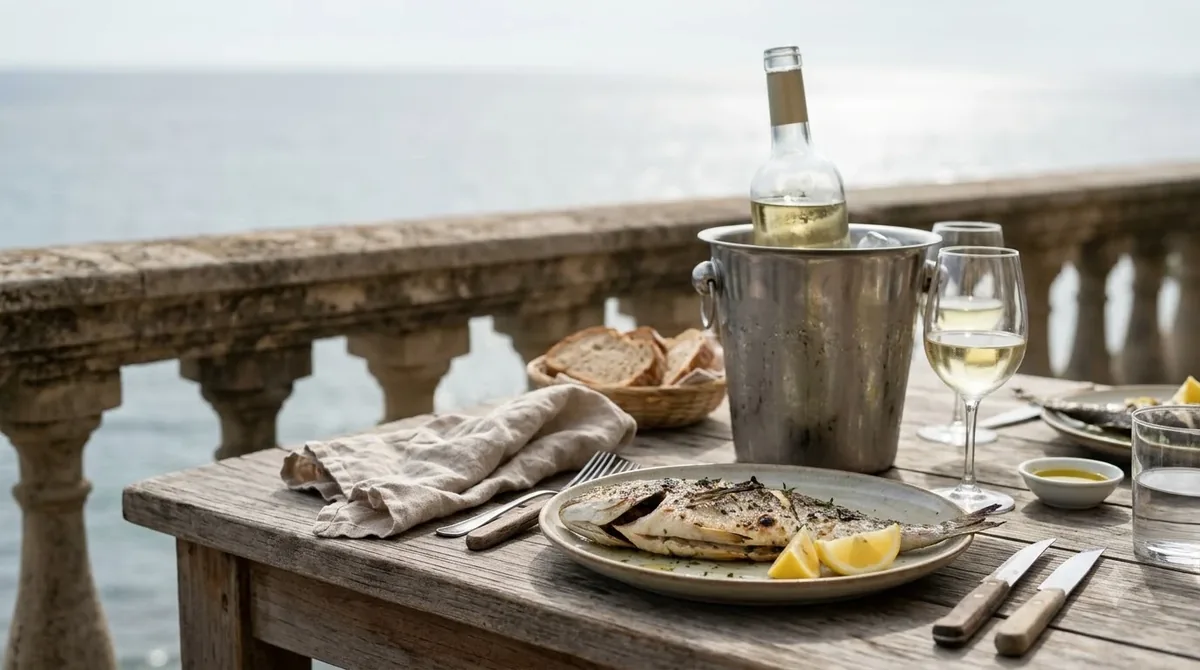
Dry white wines and light-bodied dry reds share nearly identical carbohydrate profiles. For example, comparing Sauvignon Blanc with pinot noir carbs reveals that both average roughly 3 grams of carbohydrates per five-ounce serving when fermented dry, though Pinot Noir typically carries a touch more alcohol and slightly higher calories. Hybrid white varieties follow a similar pattern; crisp, cool-climate styles like seyval blanc wine also finish with minimal residual sugar when vinified dry.
The numbers diverge sharply once you move into off-dry, sweet, or fortified categories. Off-dry German Riesling Kabinett, mass-market Prosecco, and sweet Moscato d’Asti stop fermentation early to preserve fruit sweetness, pushing carbohydrate counts from 8 grams to nearly 20 grams per pour. Non-alcoholic wines can also surprise carb counters; as VinePair’s expert guide to carbs in wine explains, dealcoholized wines undergo standard fermentation before alcohol removal and often retain 6 to 7 grams of carbohydrates per glass, sometimes with added grape juice to restore body.
| Wine Style (5 oz Pour) | Sweetness Level | Typical Carbs | Typical Sugar | Average ABV |
|---|---|---|---|---|
| Sauvignon Blanc | Dry | 2 – 4 g | Under 1.5 g | 12.5% – 13.5% |
| Pinot Grigio | Dry | 2 – 4 g | Under 1.5 g | 12% – 13% |
| Brut Champagne | Dry | 2 – 4 g | Under 1.5 g | 12% – 12.5% |
| Pinot Noir | Dry | 3 – 4 g | Under 1 g | 13% – 14% |
| Off-Dry Riesling | Off-Dry | 8 – 11 g | 6 – 9 g | 8.5% – 10.5% |
| Moscato d’Asti | Sweet | 18 – 20 g | 15 – 17 g | 5% – 6% |
How to Spot Low-Carb Bottles Without Nutrition Labels
Because the Alcohol and Tobacco Tax and Trade Bureau (TTB) does not mandate nutrition panels on standard wine bottles in the United States, shoppers have to read bottle clues to gauge residual sugar. Fortunately, three reliable indicators on the front and back labels point straight toward the driest bottles on the shelf.
First, look at the alcohol by volume (ABV) printed on the front label. Winemaking follows a straightforward chemical trade-off: yeast converts grape sugar into alcohol. When harvested grapes have moderate sugar levels and ferment completely dry, the finished wine lands between 12 and 13.5 percent ABV. Unusually low alcohol—such as 8 to 10 percent ABV in a standard still white wine—often signals that fermentation was halted early, leaving unfermented sugar behind.
Second, pay attention to regional appellations and French terminology. Bottles labeled Sancerre, Pouilly-Fumé, Touraine, or Bordeaux Blanc are governed by strict appellation rules and traditional winemaking practices that favor bone-dry fermentation. On French sparkling or still labels, terms like “Brut Nature,” “Extra Brut,” or “Sec” (when applied to still wines) indicate minimal residual sugar.
Third, avoid vague marketing language on back labels that hints at sweetness. Phrases such as “crowd-pleasing softness,” “lush tropical sweetness,” or “balanced with a touch of sweetness” indicate higher residual sugar. Conversely, tasting descriptors like “crisp,” “zesty,” “flinty,” “bone-dry,” and “bracing acidity” consistently align with wines containing under 3 grams of carbohydrates per glass.
Calories vs. Carbs: What Actually Matters in the Glass
A common misconception among wine drinkers is that low carbohydrates automatically equal low calories. In dry Sauvignon Blanc, carbohydrates contribute only around 10 to 12 calories per five-ounce serving—roughly 10 percent of the glass’s total energy content.
The remaining 105 to 110 calories come directly from ethanol. Alcohol contains roughly 7 calories per gram, nearly double the 4 calories per gram found in carbohydrates and protein. Consequently, a high-alcohol dry wine at 14.5 percent ABV will always contain significantly more calories than a lower-alcohol dry wine at 11.5 percent ABV, even if both bottles have 0 grams of residual sugar.
For drinkers keeping an eye on both numbers, cool-climate Sauvignon Blanc offers a natural sweet spot. Regions like the Loire Valley, coastal Chile, and cooler parts of South Africa routinely produce vibrant, expressive bottles around 12 to 12.5 percent ABV that deliver full varietal character without heavy alcohol or lingering sugar.
Frequently Asked Questions
Does Sauvignon Blanc have more carbs than Chardonnay?
Dry Sauvignon Blanc and dry Chardonnay contain virtually the same amount of carbohydrates, averaging 2 to 4 grams per five-ounce pour. While oaked Chardonnay tastes richer and creamier due to malolactic fermentation and barrel aging, those textural differences do not add carbohydrates, though riper Chardonnay styles may carry slightly higher alcohol and calories.
Is New Zealand Sauvignon Blanc higher in carbs than Sancerre?
New Zealand Sauvignon Blanc from Marlborough often retains slightly more residual sugar—typically 2 to 5 grams per liter—to balance its intense natural acidity. That translates to roughly 0.5 to 1 extra gram of carbohydrates per glass compared to bone-dry French Sancerre, keeping both styles firmly in the 2 to 4 gram range.
Why do some Sauvignon Blanc wines list zero carbs?
Winemakers achieve zero-carb Sauvignon Blanc by fermenting the grape juice until all measurable glucose and fructose are converted into alcohol, leaving residual sugar below 0.5 grams per liter. Under U.S. nutritional rounding guidelines, beverages with less than 0.5 grams of carbohydrates per serving can legally round down to 0 grams on voluntary nutrition labels.
Does chilling Sauvignon Blanc change its carbohydrate content?
Serving temperature has no effect on the actual carbohydrate or sugar content of wine. However, colder temperatures suppress how strongly taste buds perceive sweetness while emphasizing crisp acidity, which makes a well-chilled Sauvignon Blanc taste drier than the same wine served at room temperature.
With roughly 3 grams of carbohydrates and minimal residual sugar per five-ounce glass, dry Sauvignon Blanc fits easily into carbohydrate-conscious routines without sacrificing flavor or complexity. Focusing on standard pour sizes, cool-climate regions, and dry tasting descriptors makes it simple to pick a bottle that matches your preferences every time.
More in Wine Types & Grapes
 Zinfandel Sugar Content: Dry Red vs. White Zinfandel GramsUpdated Nov 21, 2026
 Best Zinfandel Substitute Options for Sipping and CookingUpdated Nov 21, 2026
 Zweigelt Food Pairing: Best Dishes, Cheeses, and Serving TipsUpdated Nov 21, 2026
 Zinfandel Tannins Explained: How Structure Shapes Every BottleUpdated Nov 21, 2026
 Zinfandel Sweetness Level: Dry Red vs. Sweet White Zin ExplainedUpdated Nov 21, 2026
 Xinomavro Food Pairing: Best Dishes, Styles, and Serving TipsUpdated Nov 21, 2026